Asian Voices at the World Parliament of Religions
Room No. 3: After the Parliament
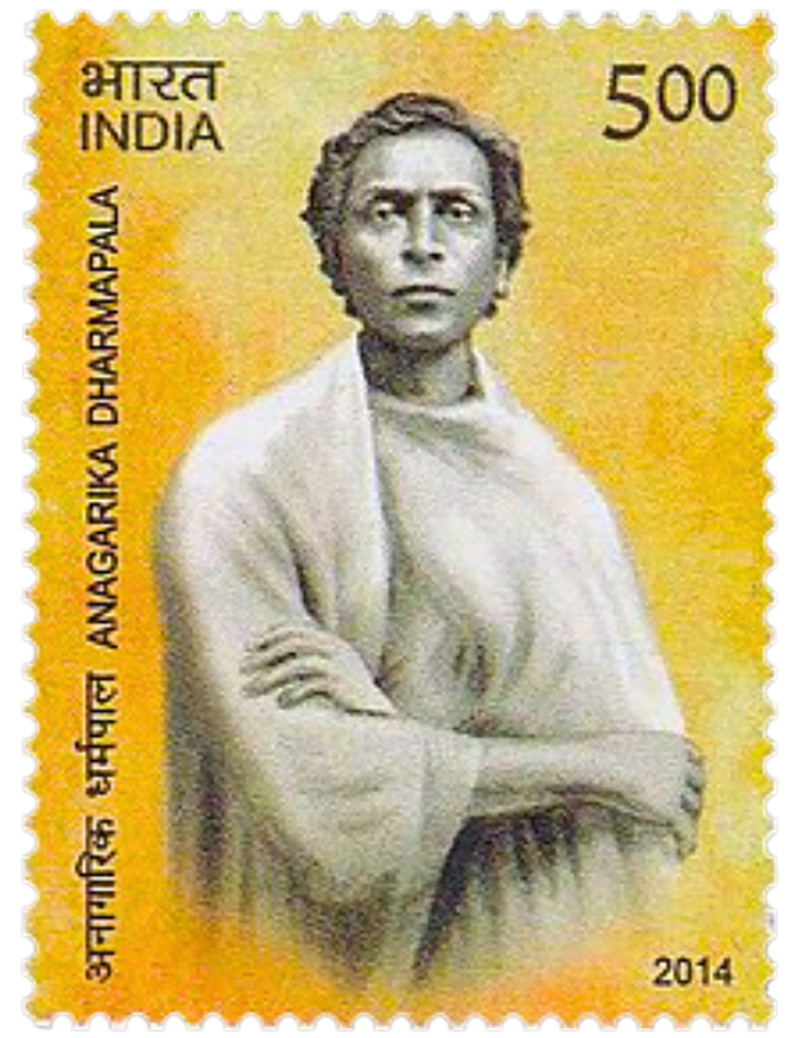
Anagarika Dharmapala
(1864-1933)
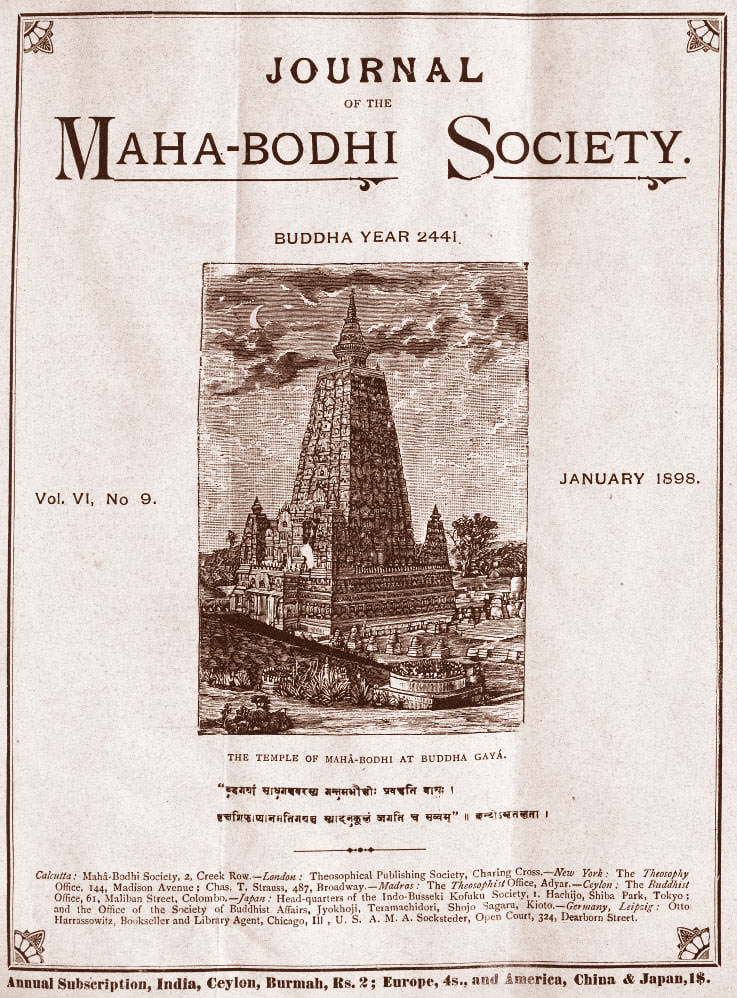
The Journal of the Maha-Bodhi Society, Vol. VI, No. 9, January 1898.
Another important figure to become acquainted with Paul Carus was the charismatic and combative representative of “Southern” Buddhism, Anagarika Dharmapala. Carus encouraged Dharmapala to continue his advocacy of Buddhism after the official end of the Parliament. On September 26, 1893, Dharmapala’s preaching resulted in an event that would be repeated often in the ensuing decades. Dharmapala spoke about Buddhism and theosophy in Chicago’s Athenaeum Building under the auspices of the Theosophical Society, which was reported in the Journal of the Maha-bodhi Society:
. . . the announcement came from the platform that an unusual event was about to take place. C. T. Strauss was about to be admitted to the faith of Buddha. The ceremony was simple, yet impressive. Mr. Strauss took his place upon the platform before the priest, Dharmapala pronounced the in Sanskrit the formula oath of the Buddha. Mr. Strauss repeated it after him. That was all. It was ended in a moment, and Mr. Strauss was an accepted and approved Buddhist of the Maha-bodhi Samaj. According to Dharmapala’s biographer, this simple ceremony moved Charles T. Strauss, a Jewish-born businessman from New York City, to become “the first person to be admitted to the Buddhist fold on American soil.”1
Dharmapala did not stay much longer in the United States after this seminal event. He sailed for India, via Japan and China, on October 10, 1893. But he was received warmly on his journey. In Hawaii, he was greeted by a small party of Theosophists, including Mrs. Mary E. Foster, a wealthy descendent of Hawaiian royalty. She was particularly impressed by Dharmapala and became one of the most important financial supporters of the Mahabodhi Society and its campaign to revive the Buddhist temple on the site of the Buddha’s awakening in Bodha Gaya, India. He also was greeted warmly by the Japanese Buddhists he had met at the Parliament. But the warmest reception was reserved for his homecoming in Ceylon (Sri Lanka), where he was welcomed with drums, elephants, and a procession of monks.2

After the Parliament, Dharmapala focused his efforts on the campaign of the Mahabodhi Society and his efforts to promote Buddhism in Ceylon, but he returned to the U.S. in 1896 at the encouragement of Paul Carus. He was not optimistic about the journey. He felt that there were so many important points of disagreement between Buddhism and Christianity that he would receive a hostile reception. Nevertheless, in San Francisco in May 1897, he presided over the first official celebration in America of Wesak, which Theravada Buddhists believe commemorates the birth, awakening, and death of the Buddha.

Letter from Anagarika Dharmapala to J. D. Buck of the Cincinnati Theosophical Society, written Oct. 30, 1896 on Open Court Publishing Company letterhead. (Source: Theosophical Society in America Archives)
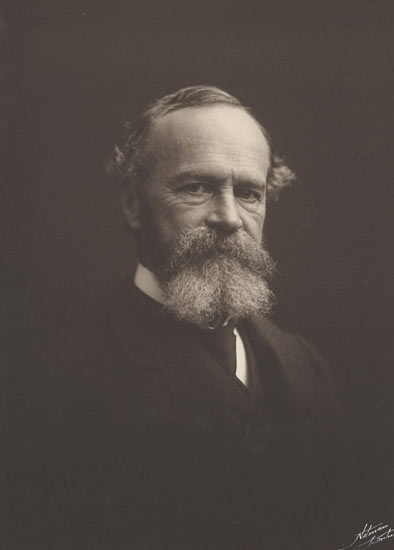
William James, in an undated portrait photographed at Boston’s Notman Studio. (Source: Houghton Library, Harvard University. MS Am 1092 1185).
On his third visit, during the years 1902-1904, he focused principally on technical schools, thinking that the East needed to learn from the technical skills of the West, just as the West needed to study at the feet of the Buddha. His biographer reports that on this journey, attended a lecture by William James at Harvard. James saw him in the audience and said, “Take my chair. You are better equipped to lecture on psychology than I.” After Dharmapala gave an outline of Buddhist doctrines, William James turned to the class and said, “This is the psychology everybody will be studying twenty-five years from now.”
William James himself did not live to see the dramatic expansion of interest in Buddhist psychology in the later decades of the twentieth century, but his comment about Dharmapala’s account of the Buddha’s teaching was deeply prescient. He anticipated the rich and sophisticated exploration of Buddhist psychology by psychiatrists, psychotherapists, cognitive scientists, and Buddhist practitioners that has enlivened so much of Buddhist practice in recent decades, not only in Dharmapala’s own Theravada tradition but in the many different varieties of the Mahayana, from Zen to the Tibetan Vajrayana. There is no question that Dharmapala, in his own modest way, laid the groundwork for the study of Buddhism and psychology in the later twentieth century.
![William James, The Varieties of Religious Experience 1902 [book title page]](https://asiaworldsfairs.org/wp-content/uploads/2026/02/William-James-The-Varieties-of-Religious-Experience-1902-book-title-page.jpg)
Title page from William James, The Varieties of Religious Experience (London and Bombay: Longmans, Green and Co., 1902).