Asian Voices at the World Parliament of Religions
Room No. 3: After the Parliament
Institutional Impact
of the Parliament
The success of the Parliament of World’s Religions astonished religious leaders, scholars, and many members of the public. F. Max Müller, the Oxford philologist and Orientalist, remarked in his essay “The Real Significance of the Parliament of Religions” [Arena vol. 61 (December 1894)] that “I repeat once more, without fear of contradiction, that the Chicago Parliament stands unique, stands unprecedented in the whole history of the world.” As Richard Seager has noted, “ It was a grand, idealistic, and fundamentally liberal call inviting the Asians to share in an expansive, global vision, but one cast wholly in western, Christian terms and partaking of an often-smug largess that depended upon the West’s racial, political, economic, and religious hegemony.”1
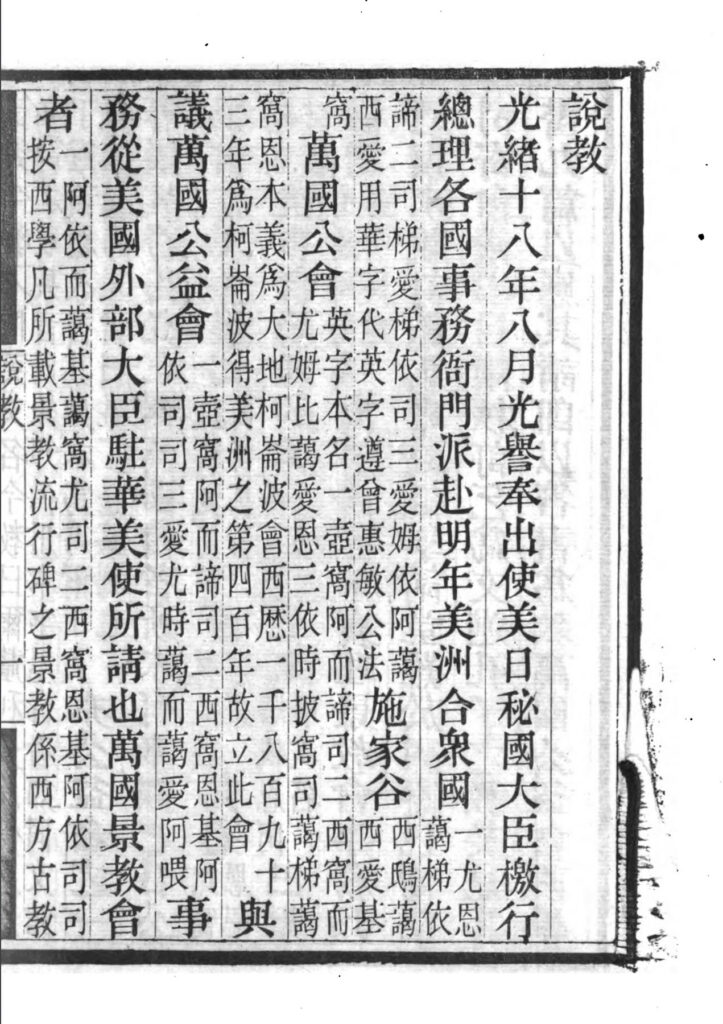
Page from Pung Kwang-yu’s book, Shuo Jiao 說教 (On Religion) (1896)
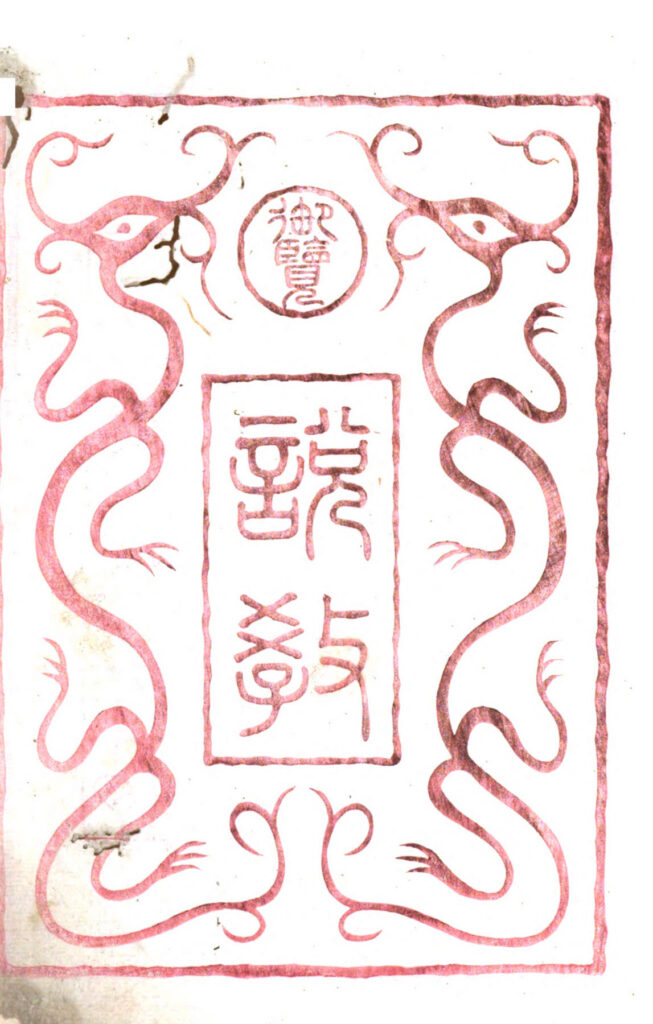
Title page of Pung Kwang-yu’s book, Shuo Jiao 說教 (On Religion) (1896)
The Asian delegations responded with heartfelt and enlightening accounts of their own faiths, espousing hopes of religious harmony while also offering surprisingly sharp critiques of Western policies and racist and imperialistic attitudes that to the Asian delegates did not match the ethics so eloquently described by Christians. The words of the speakers and the dozens of books that came out of that Parliament in September 1893 continued to be discussed and debated long after the Columbian Exposition was dismantled. Global interfaith movements expanded throughout the 20th century, and indeed the Parliament itself has recently reconvened a number of times to bring together the religions of east and west, meeting in Chicago (1993), Cape Town (1999), Barcelona (2004), Melbourne (2009), Salt Lake City (2015), Toronto (2018) and virtually (2021), with presentations by the Dalai Lama, President Jimmy Carter, and several Nobel Peace Laureates. The most recent Parliament, held in Chicago in 2023, bore the theme “A Call to Conscience: Defending Freedom & Human Rights,” resonating a clear echo of the social justice themes voiced by many of the Asian speakers from 1893.
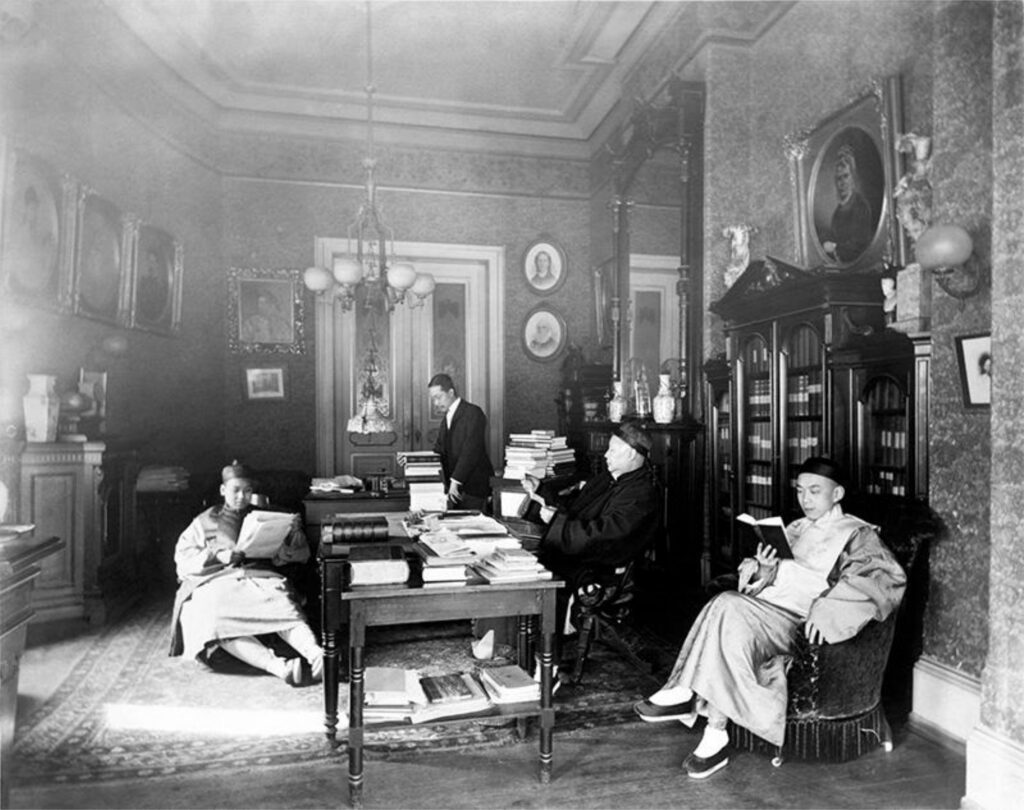
Wu Tingfang and the Chinese delegation in their office in Stewart’s Castle, Washington, D.C. Photo by Frances Benjamin Johnston. (Source: Library of Congress, LC-USZ62-77434)


While the enduring power of these individual Asian participants in Chicago more than a century ago is notable, perhaps one of the most profound impacts of the 1893 Parliament of World Religions was the formation of institutions that continue to the present day. One prominent example of such an institution sits on a leafy side road on the Boston University campus, The Ramakrishna Vedanta Society of Boston. In summer 2024, the curator of this online exhibition, Prof. David Eckel, interviewed the current swami of this society, Tyagananda, who speaks eloquently and personally of the enduring impact of Swami Vivekananda and others from Chicago more than a century ago.
Prof. David Eckel Interviews Swami Tyagananda
Ramakrishna Vedanta Society, Boston, June 2024
Videography by Cassidy Chen and Robert Murowchick
Post-production and editing by Cassidy Chen
Footnotes
- Richard Seager, The World’s Parliament of Religions: The East/West Encounter, Chicago, 1893 (Bloomington: Indiana University Press, 1995). ↩︎