Exhibiting Taiwan to Japan and The West, and Design Inspirations From World’s Fairs
Modernization On the Eve of Colonization
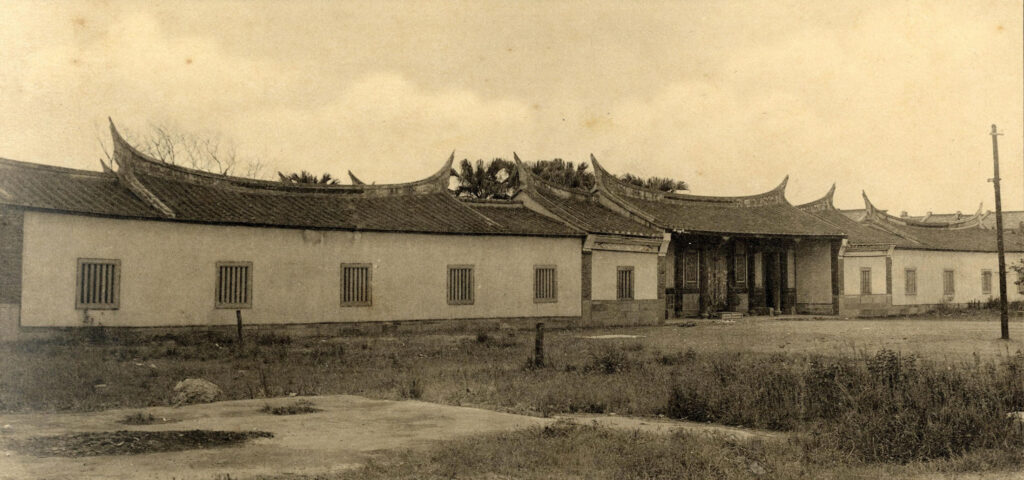
Before becoming Japan’s colony in 1895 after the Sino-Japanese War, Taiwan was a province of China’s Qing Dynasty. Apart from aboriginal settlements, most cities in Taiwan were inhabited by the Han Chinese who came to settle in Taiwan beginning in the 16th century, mostly from the impoverished southeastern coastal provinces of Fujian and Guangdong. They brought with them the architectural language of their homeland, that of Minnan 閩南, or southern Fujian, style, characterized by courtyard layout and pavilions constructed with cypress wood and red bricks and roof tiles.
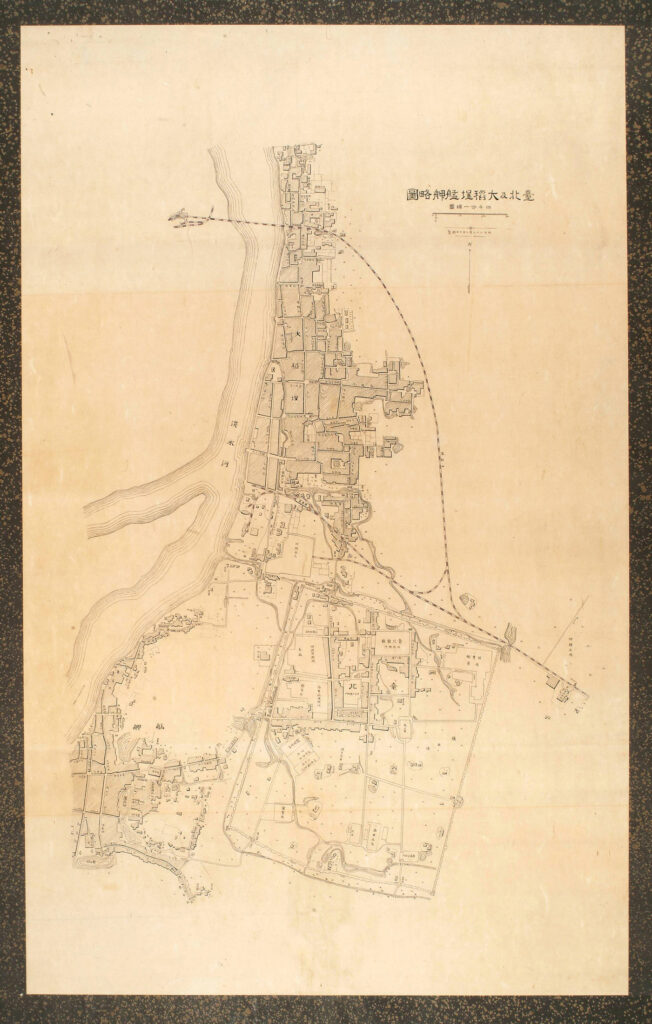
Some cities were planned according to the rules of feng shui 風水 or Chinese geomancy. Due to increased pressure from the West for China to open up for trade and Taiwan’s strategic importance for the Qing government as an island outside the coast of China, some modernization already had been underway for some years under LIU Mingchuan 劉銘傳, the Qing governor of Taiwan from 1884-1891. In 1885, Taipei was partially electrified, one of the first such cities in the Qing empire and three years ahead of Tokyo. Liu also constructed Taiwan’s first segment of railway around Taipei. However, these modernization efforts remained piecemeal and sporadic. It would have to wait until Japanese colonization for modernization to truly take root.

Transformations In Architecture And Urban Landscape Under Japanese Rule
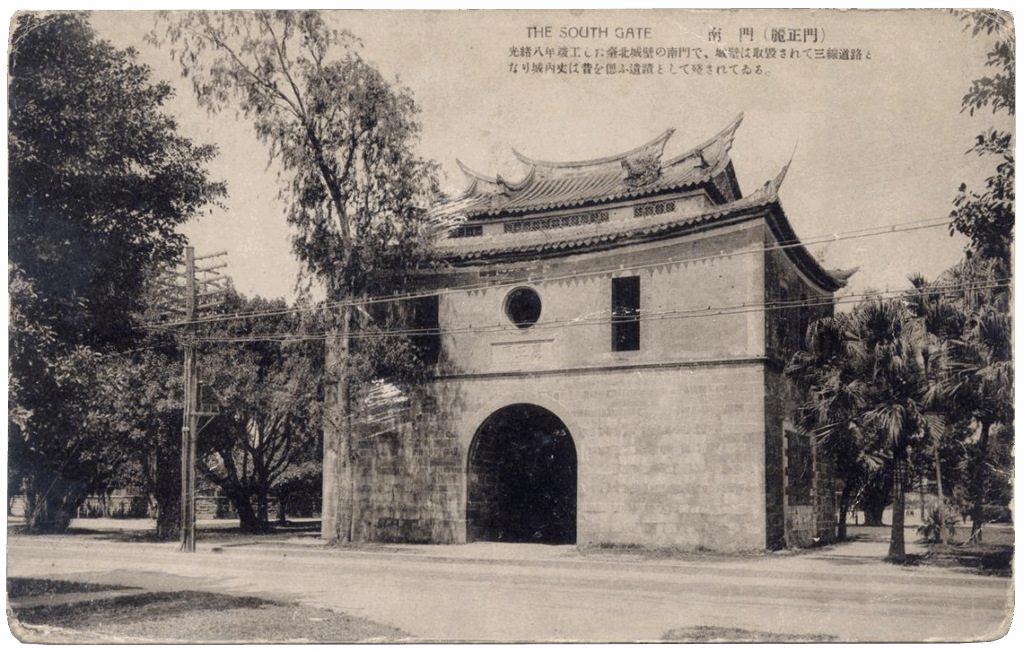
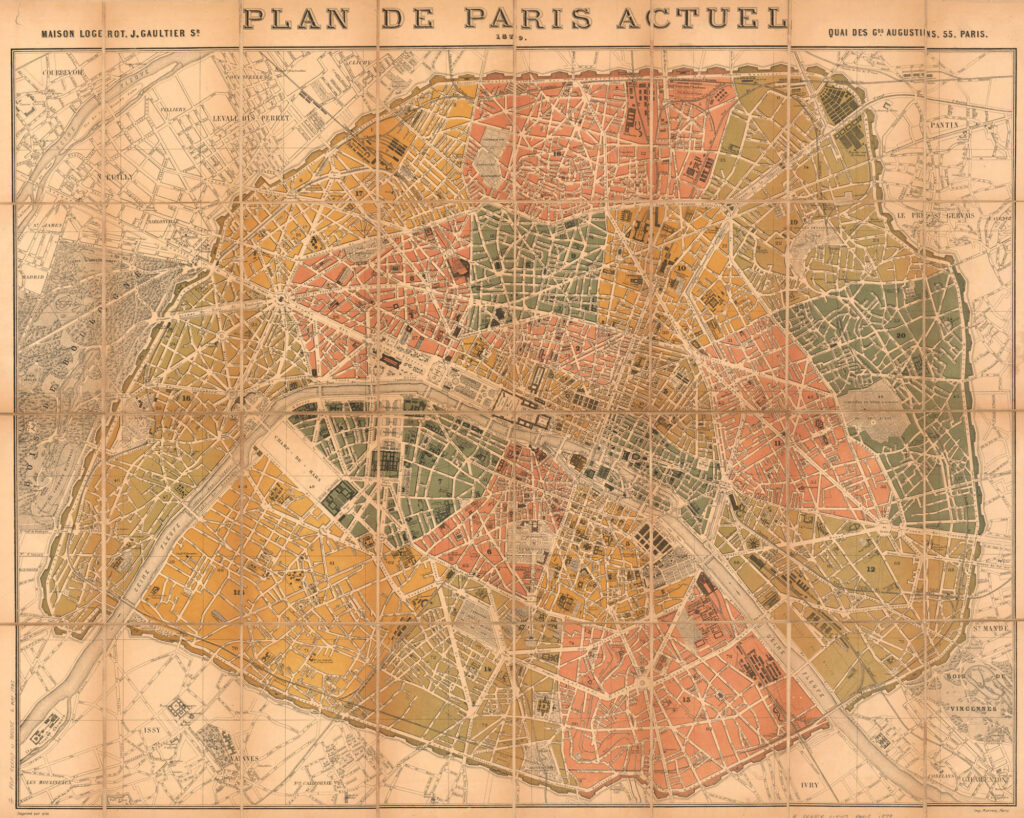
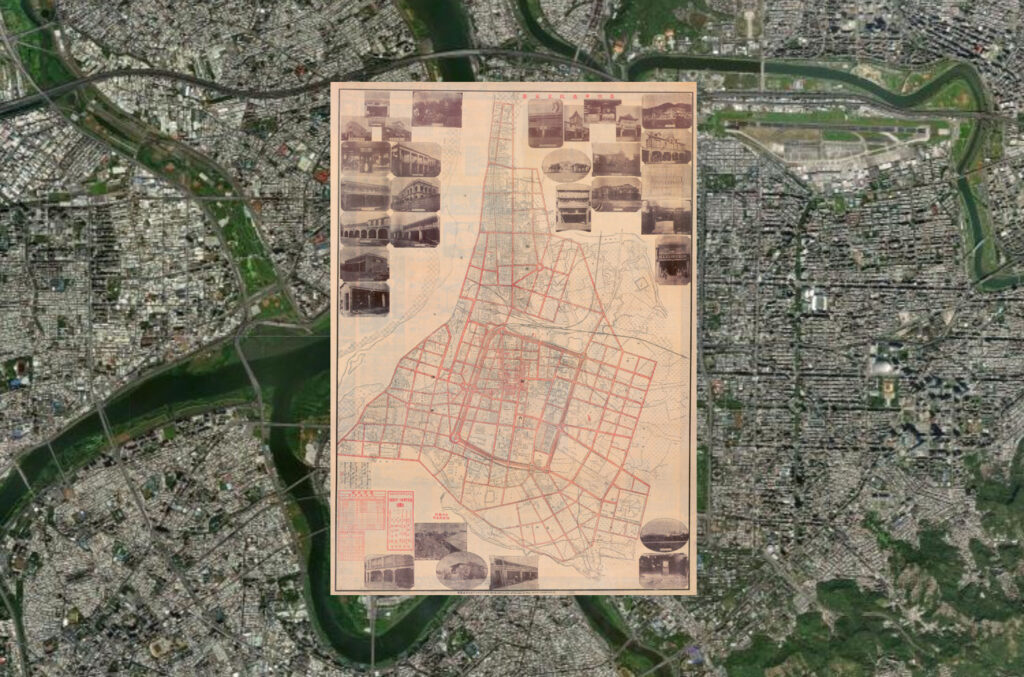
After the Sino-Japanese War, China ceded Taiwan to Japan in 1895. After the initial chaos of colonization, the Japanese state was eager to modernize Taiwan and promote it as its “model colony,” both to the Japanese public, some of whom remained skeptical about the benefits of holding an overseas colony, and to Western imperial powers with whom Japan wanted to compete on the world stage. Under the legendary civil affairs chief Gotō Shimpei 後藤新平, a railway system and an electric grid were constructed across the island. Under the banner of “city improvement plans,” Qing-era city walls were demolished and modern urban planning was introduced following European models such as Baron Georges-Eugène Haussmann’s renovation of Paris from 1853-1870, and Vienna’s circular boulevard system known as the Ringstrasse, built from 1857 to 1865. The demolition of walls in Taipei made way for wide “three lane avenues” (三線道路) and the city was transformed into an orderly grid in combination with radiating boulevards lined with Western-style architecture.
The newly planned Taipei would create the setting for the two main fairgrounds during the 1935 exposition. The first main fairground would occupy the area around the demolished West Gate, taking advantage of the vista created by the demolition of the city wall and city gate. The second main fairground would be constructed on the first urban park in Taiwan, the Taihoku New Park 臺北新公園, which occupied the grounds of the demolished Qing-era temple of Mazu.
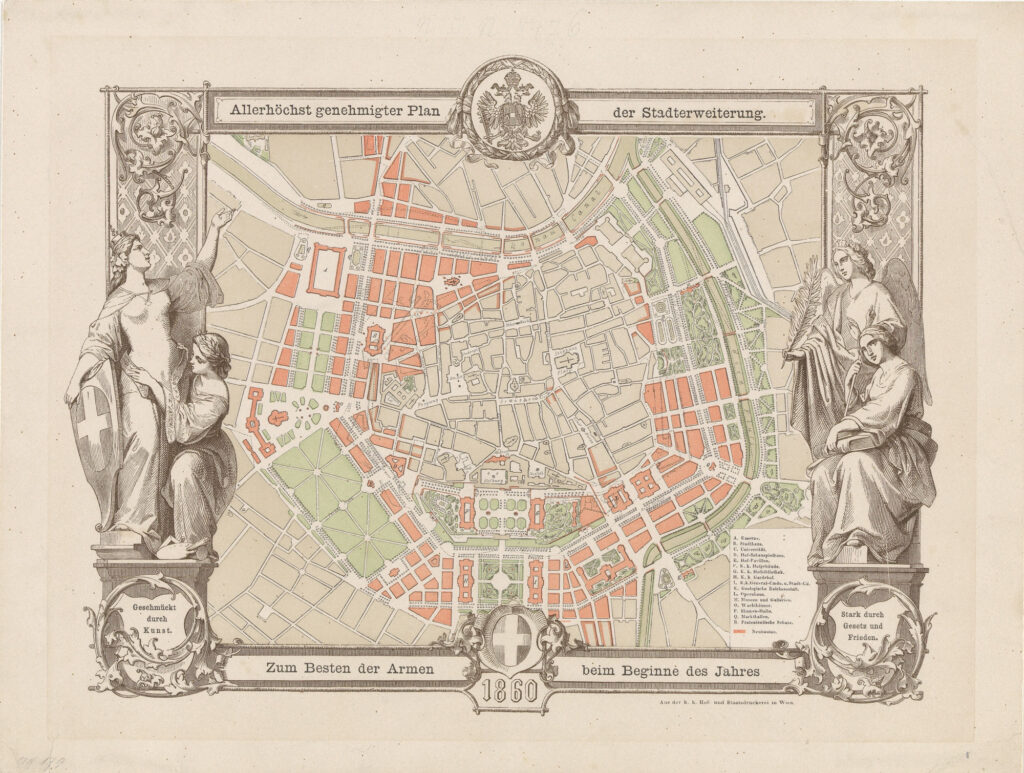
Imperial-Royal Court and State Printers at Vienna, Allerhöchst genehmigter Plan der Stadterweiterung (Authorized City Expansion Plan), 1860. (Source: Wien Museum)
Modernist Architecture on the Island Before the 1935 Fair
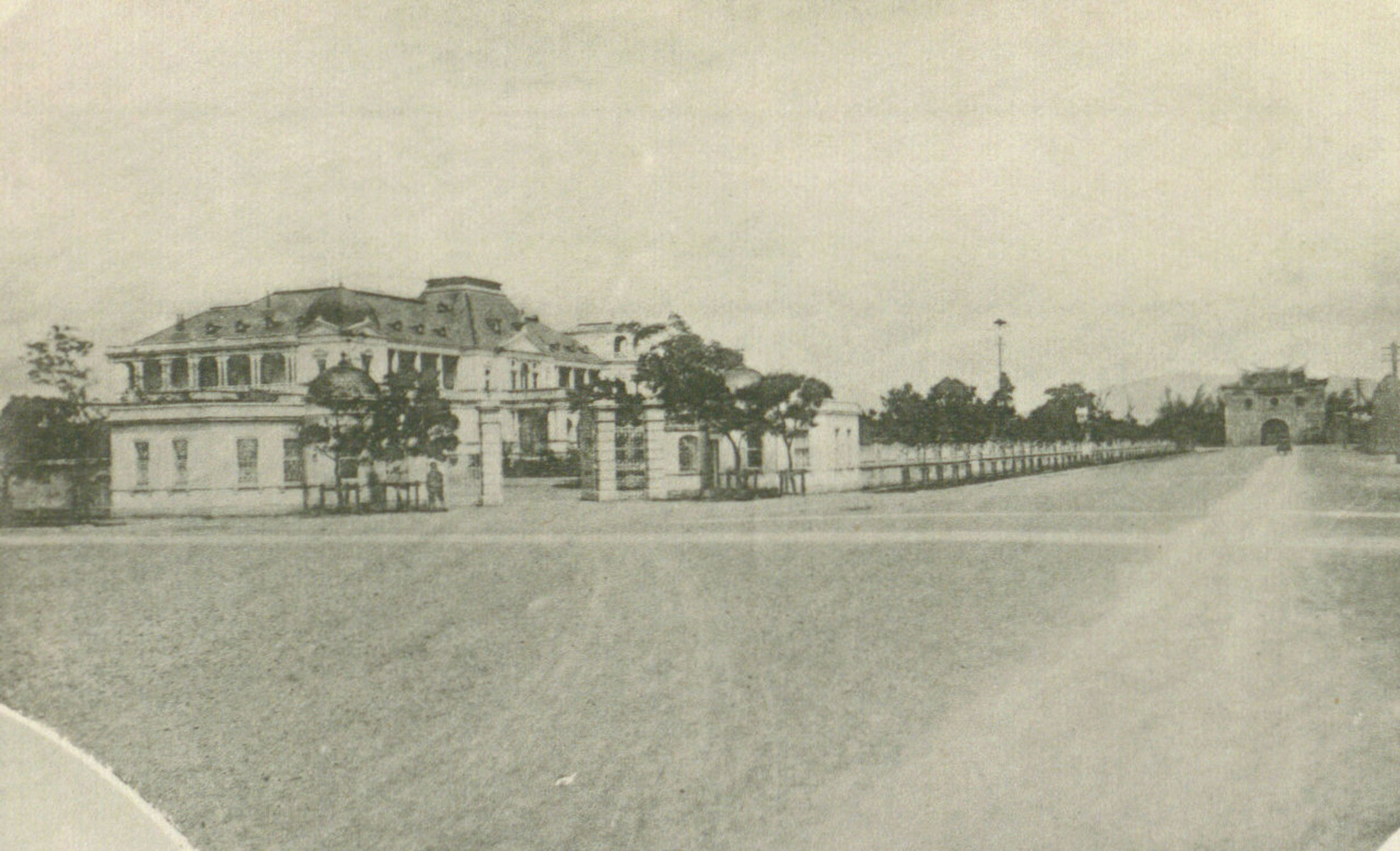
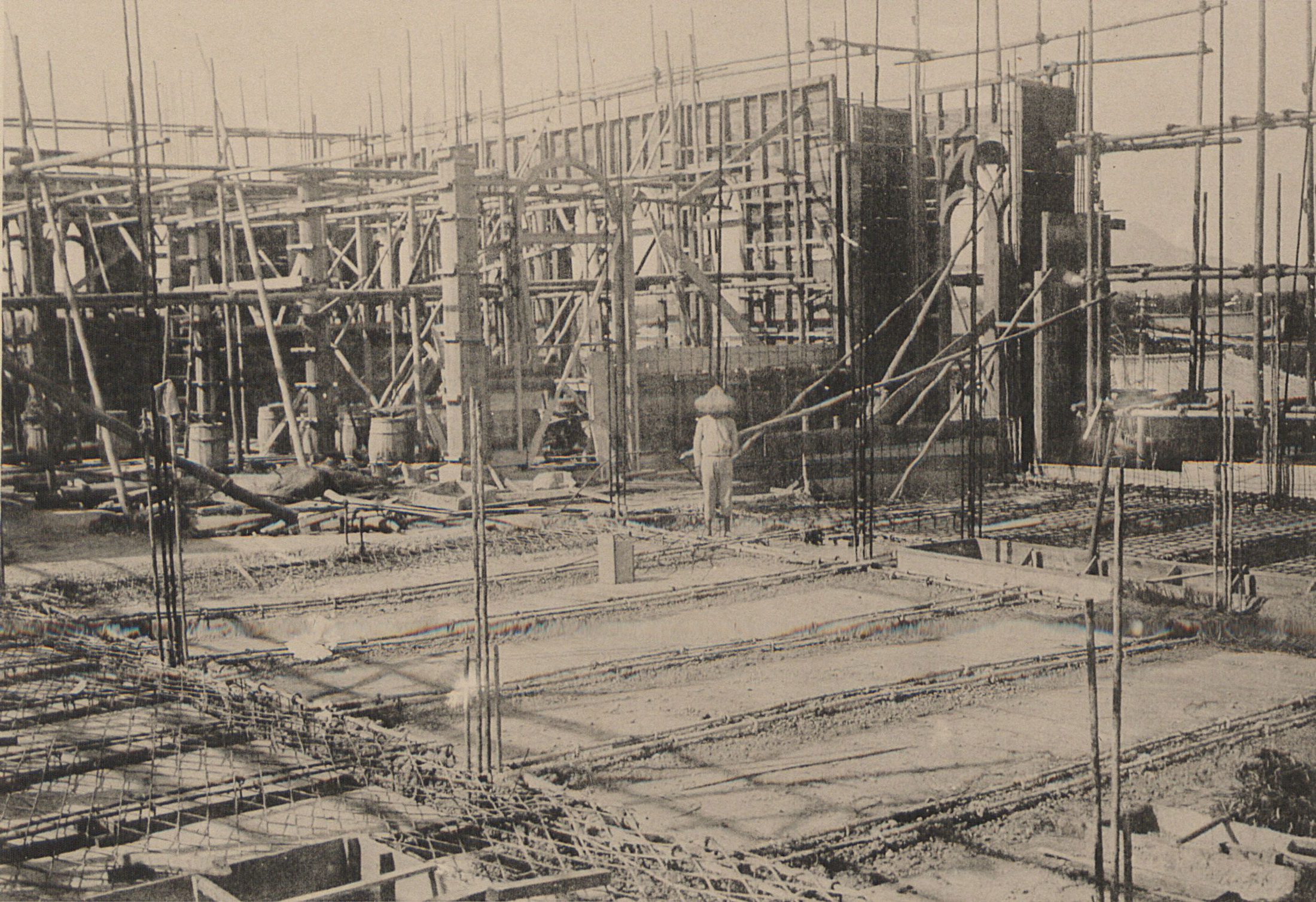
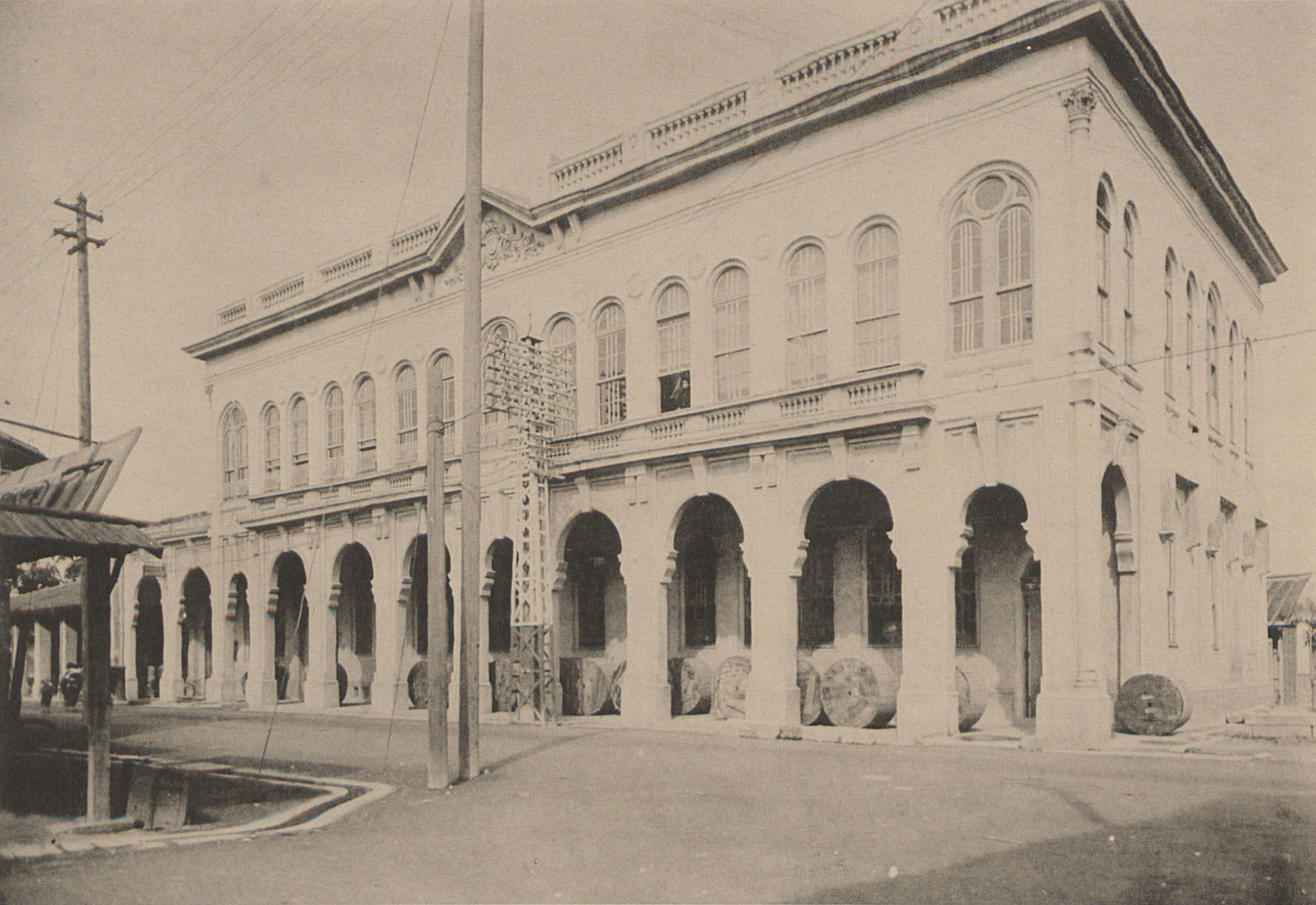
Even though the 1935 Taiwan Exposition is often credited as the biggest wholesale introduction of architectural modernism to the island, there were already precedents of modernist designs on the island before the fair. In fact, the colony of Taiwan has been called a “university of colonization” by Goto Shimpei, signaling the colony as a laboratory for experimentation. Reinforced concrete, developed only a few decades earlier in Paris, was already being used in the first generation residence of the Governor-General in Taipei as early as 1901. Although the residence was historicist in appearance — or taking cues from historical styles, in this case the French Renaissance—the use of reinforced concrete was a pioneering feat in Asia.
Modernism in architecture, a design method focused on constructional logic and function instead of historical inspirations, began to appear in Taiwan in the 1920s and 1930s. A main proponent of architectural studies and modern architecture was Ide Kaoru 井手薫, the master-planner for the 1935 exposition.
Read More
An architect employed by the Taiwan colonial government, Ide was also an avid proponent of architectural studies in Taiwan and co-founded the Taiwan Architectural Association, the first of its kind on the island. After co-founding the Taiwan Architectural Association, Ide began his influence on the architectural scene in Taiwan, advocating for the use of reinforced concrete to suit Taiwan’s geography and climate.
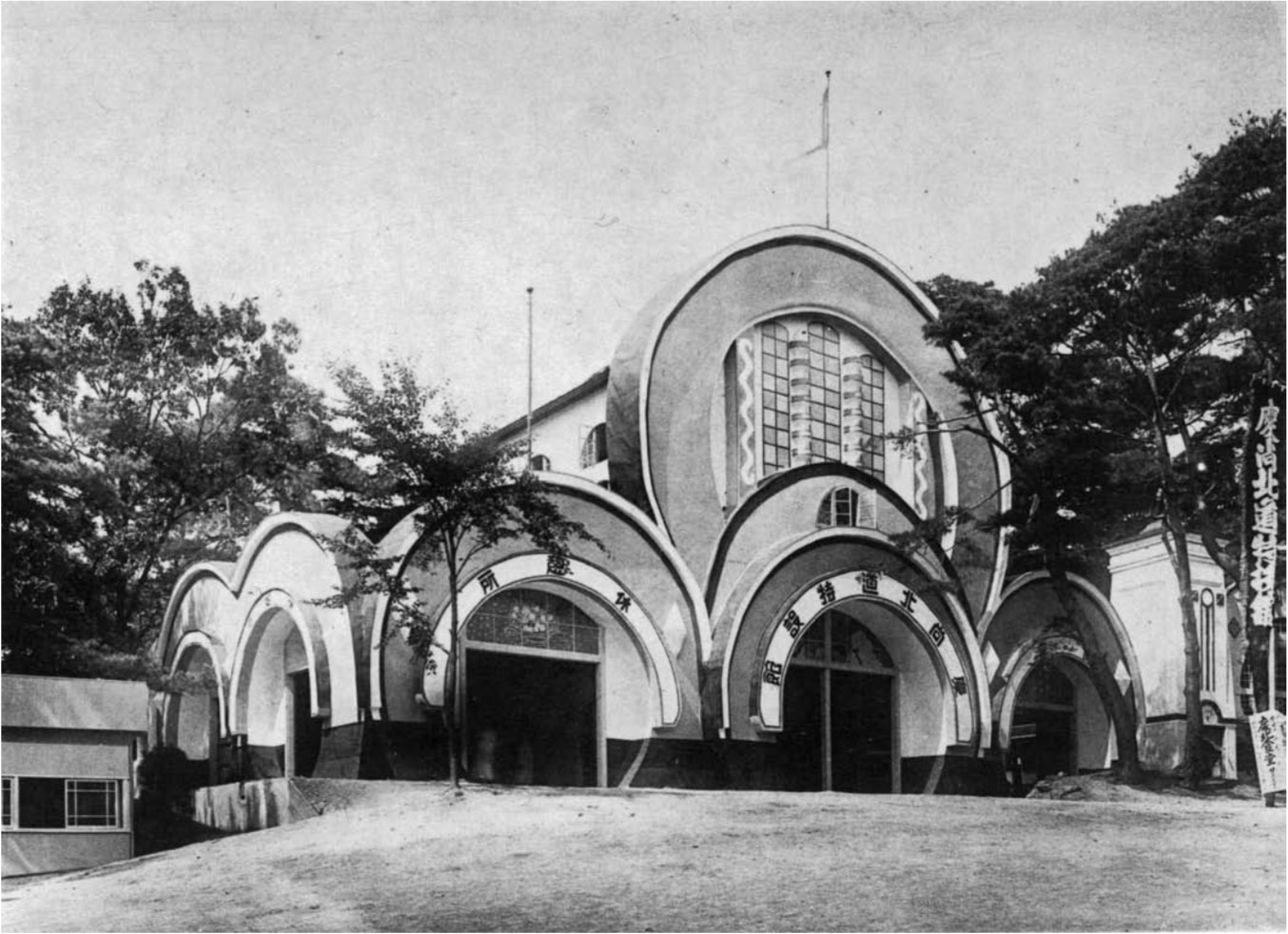
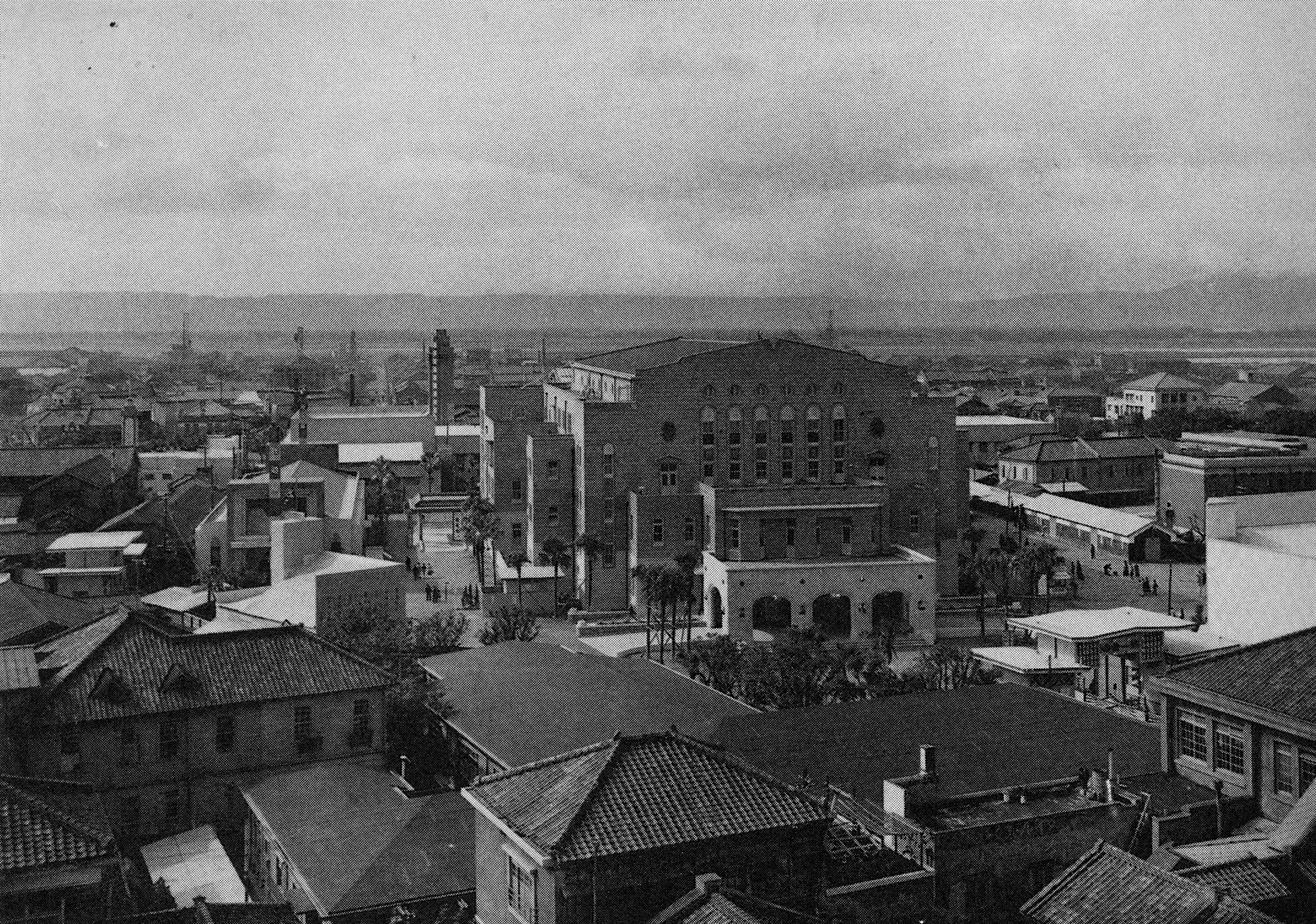
He also experimented with modernism by abstracting his early Romanesque Revival designs — marked by round arches and evocation of heavy masonry — to a streamlined aesthetic. These include the Taihoku (Taipei) Assembly Hall 台北公会堂 (1935), built in time for the inauguration of the 1935 exposition, merging design elements such as Romanesque arches, nautical portholes, and windows made with Chinese tiles.
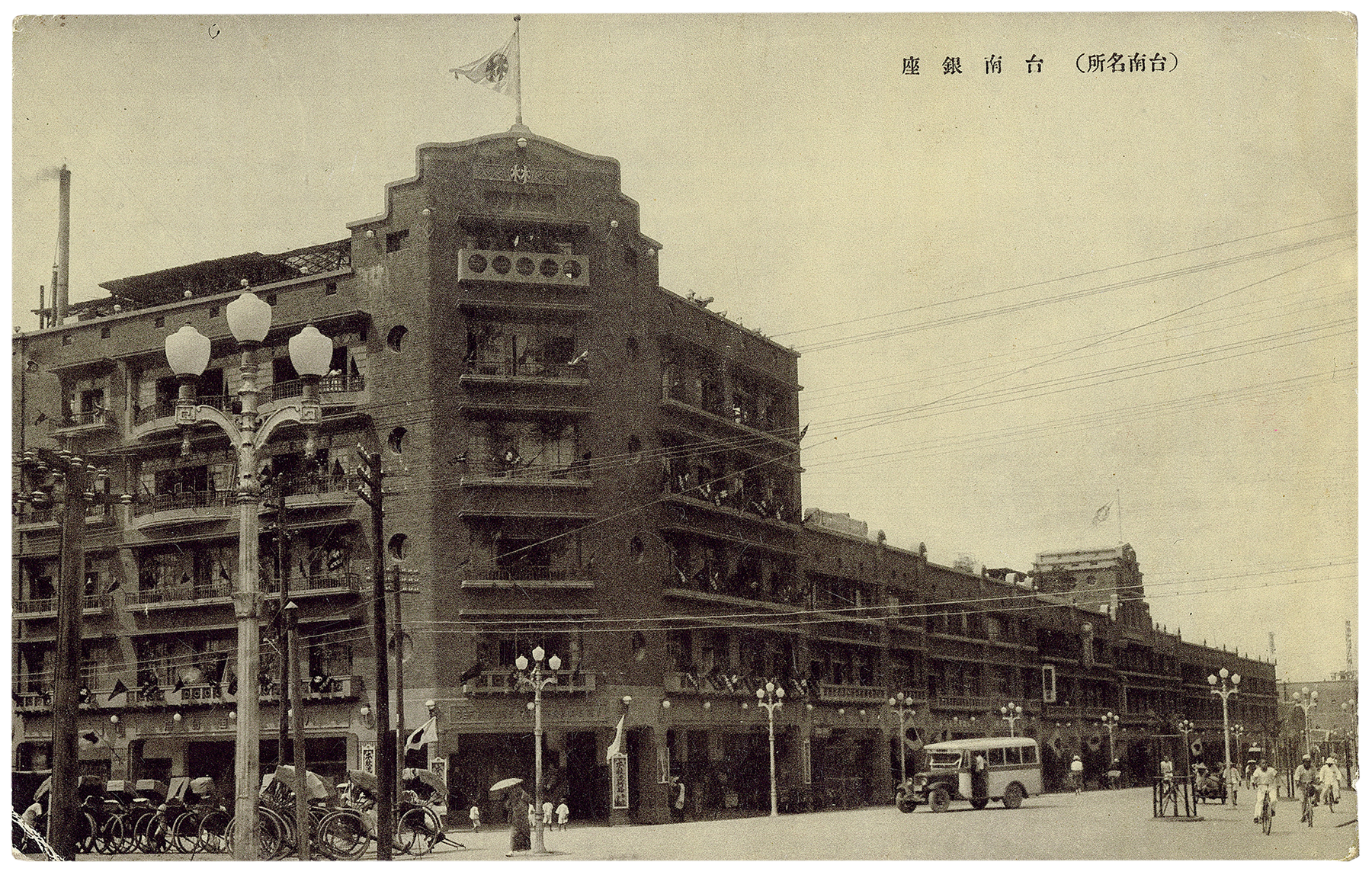
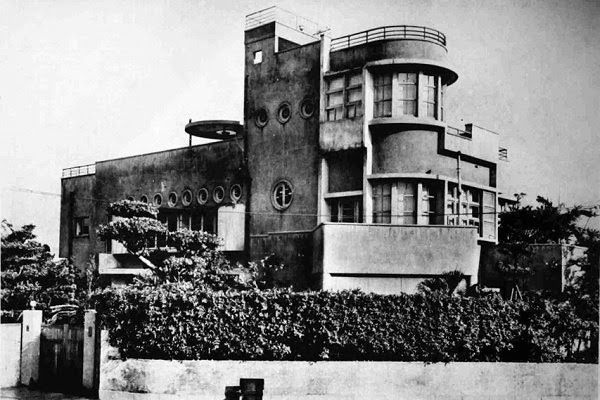
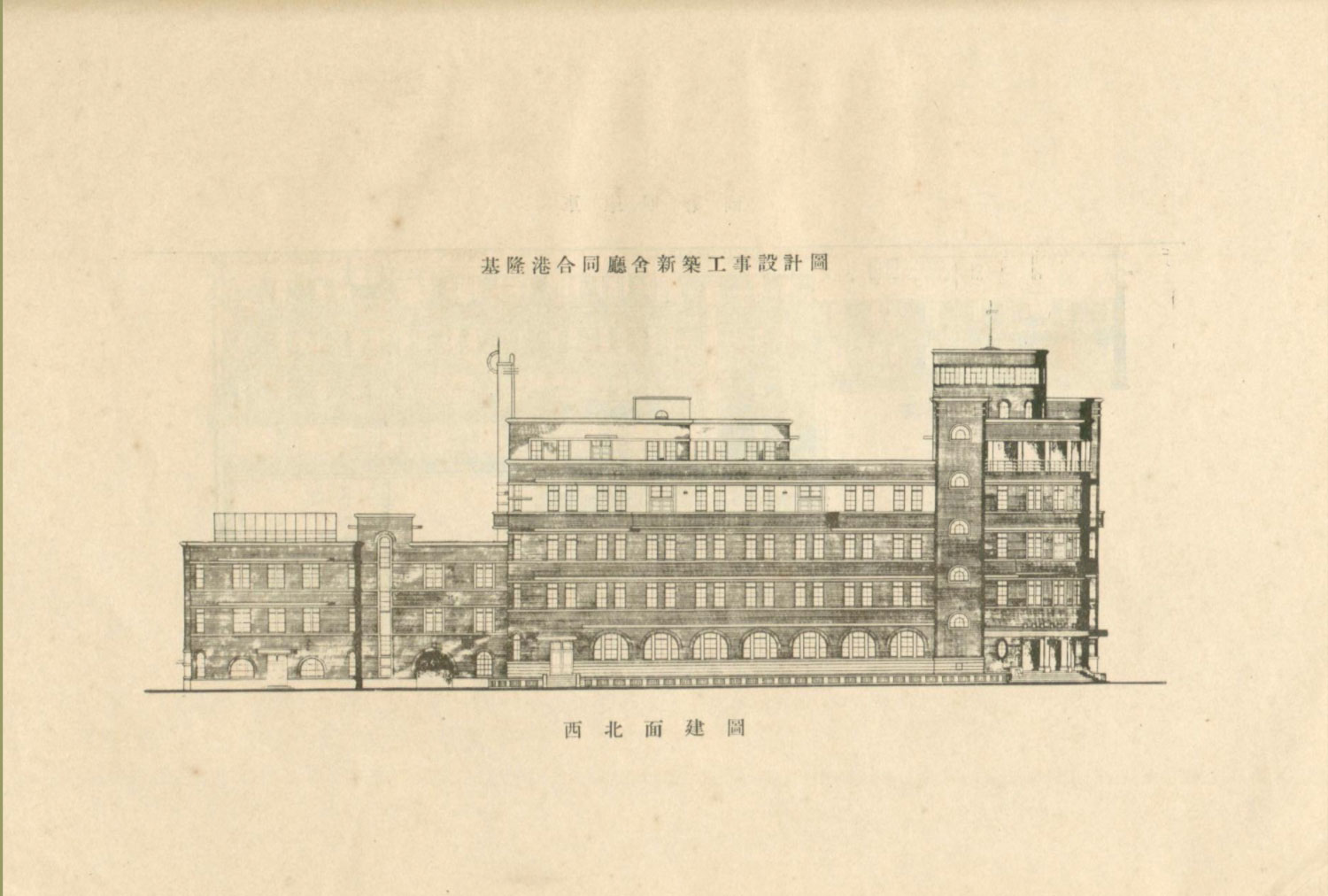
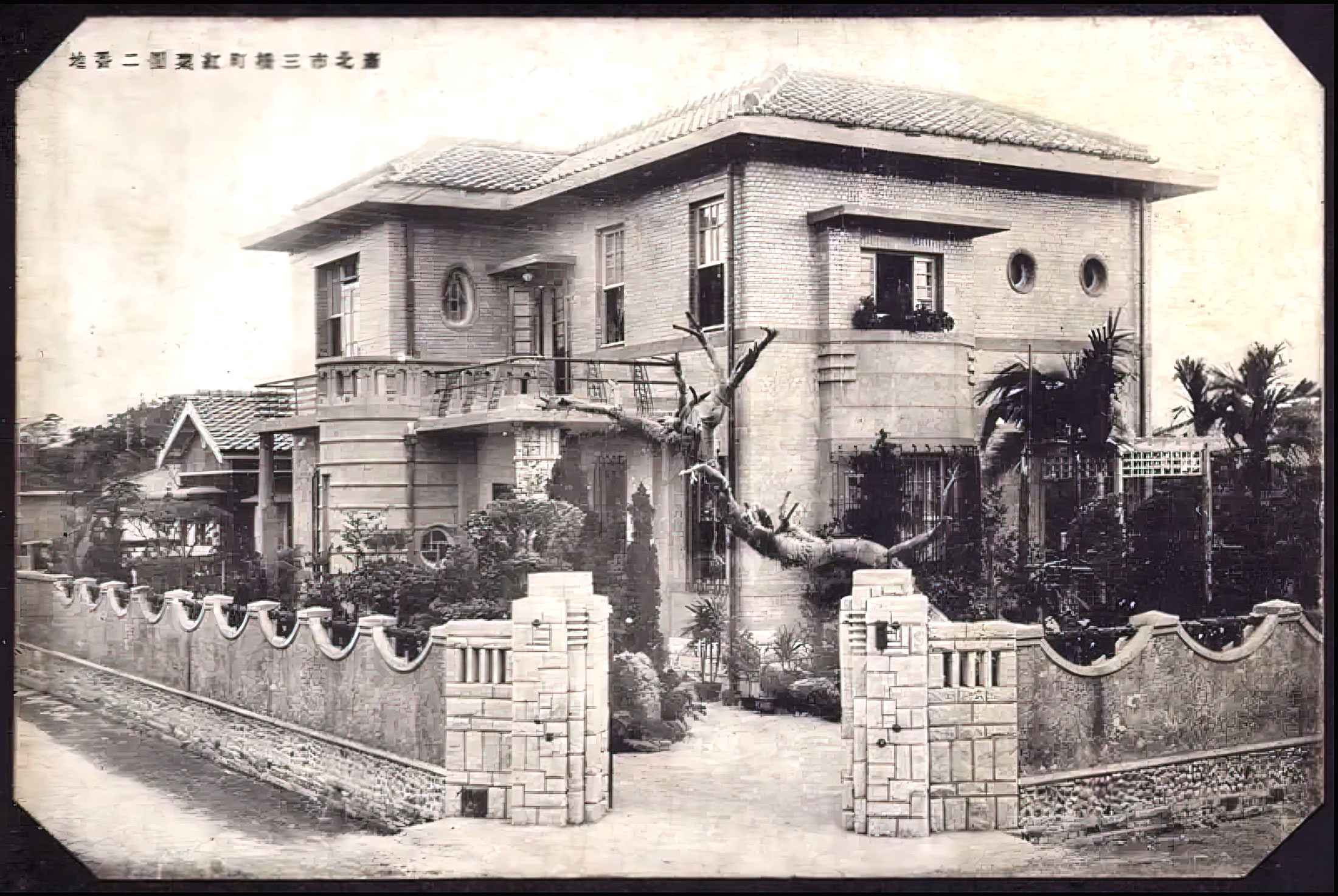
The interwar Japanese Secessionist movement (bunriha 分離派) also had a heavy influence on architectural production in Taiwan. Japanese Secessionism announced their “secession” from the past, turning instead to a focus on materials and constructional logic. Buildings taking cues from Japanese Secessionism include the Takahashi House 高橋宅 in Taipei (1934) and the Keelung Harbor Consolidated Office 基隆港合同廳舍 (1934).
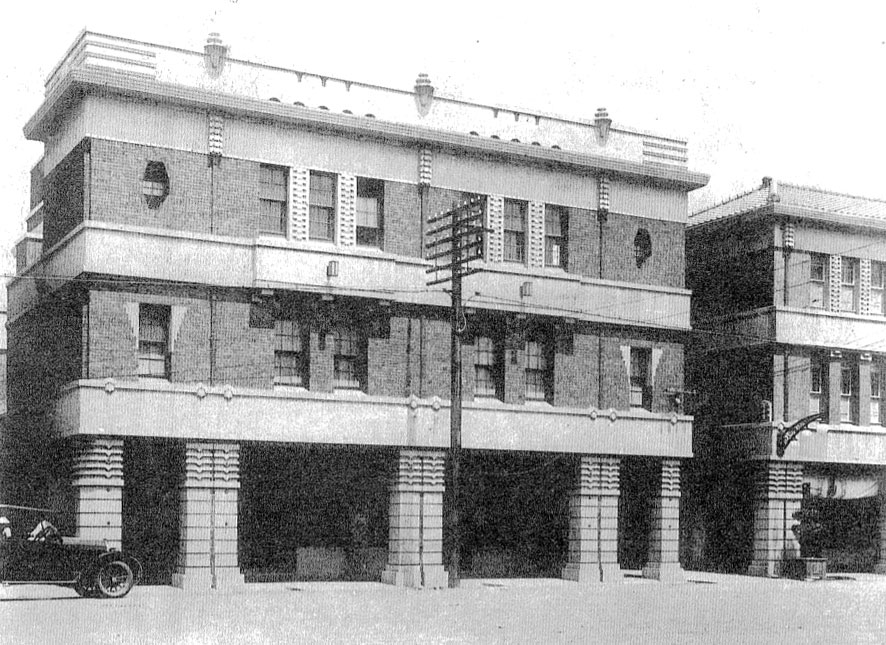
Closely associated with the Secessionists, the strain of modernist movement heralded by the American architect Frank Lloyd Wright also had some influence in the interwar architectural scene in Taiwan. Wright, who designed the Imperial Hotel in Tokyo in 1923, caused a whirlwind in 1920s Japan. Although his influence was less felt in Taiwan, there were still several notable examples, including Chen Maotung Residence 陳茂通宅 in Taipei (1933) and Taichung Sugar Refinery Building 台中製糖所 (1935).
Industrial Fairs In Modern Japan
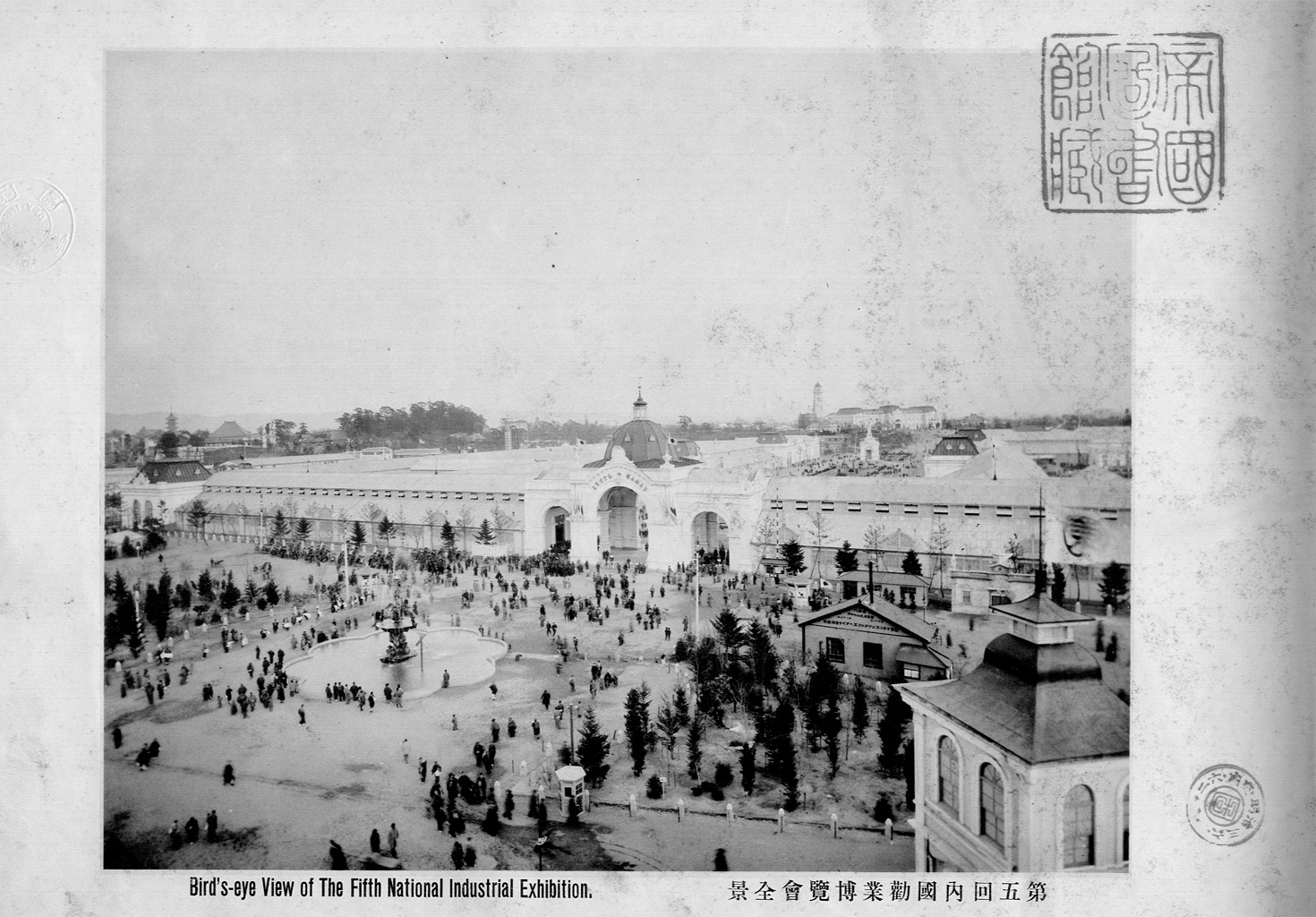
While the architectural styles employed in the 1935 fair took direct cues from the interwar modernist movements, the institution of the was rooted in the institution of the modern exposition beginning with the Meiji Restoration. Under the banners of “civilization and enlightenment” and “national wealth and military strength,” Meiji Japan held several domestic industrial fairs to promote industry and progress, modeled after the increasingly popular world’s fairs mounted in Western nations, in which Japan also actively participated. These industrial fairs in Japan, in turn, became a model for colonial fairs held in Taiwan.
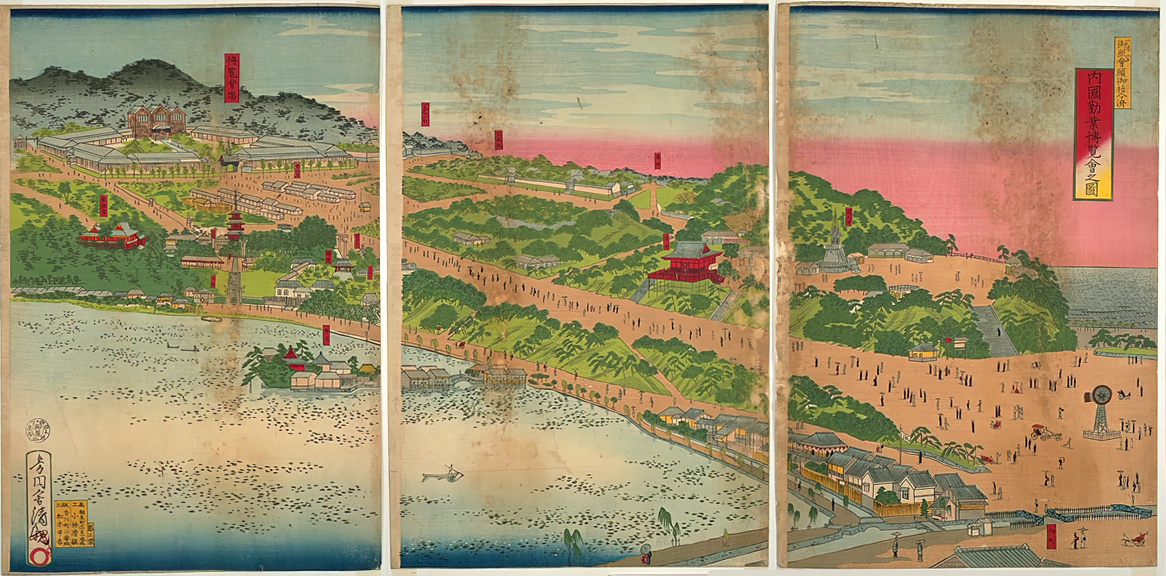 Triptych of a bird’s eye view of the First National Industrial Exhibition, Tokyo, 1877. (Source: National Diet Library)
A full-page spread from the 1907 Fūzoku gahō 風俗画報 magazine, Osaka Exposition special edition.
Exhibiting Taiwan to Japan and the West
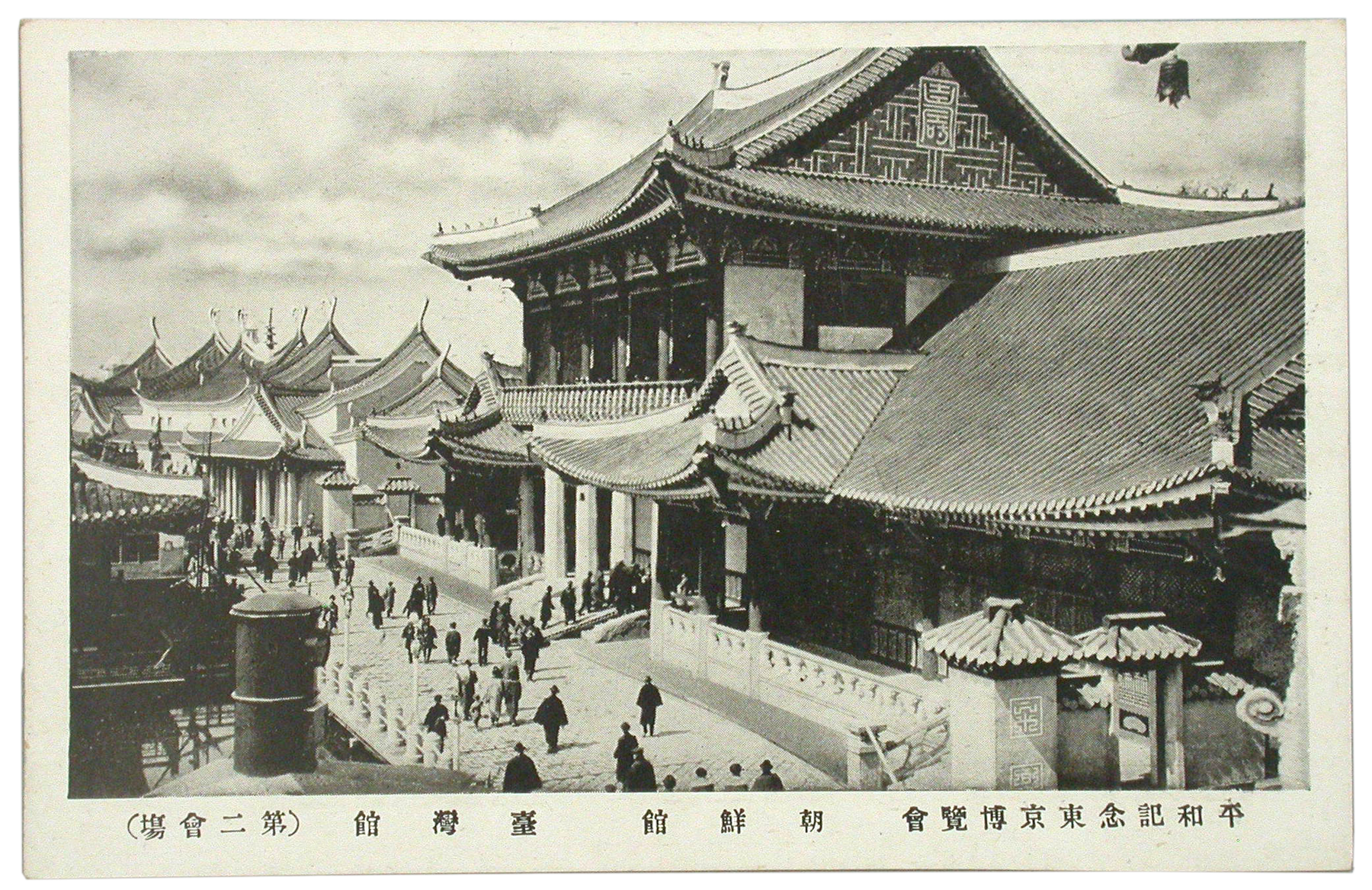
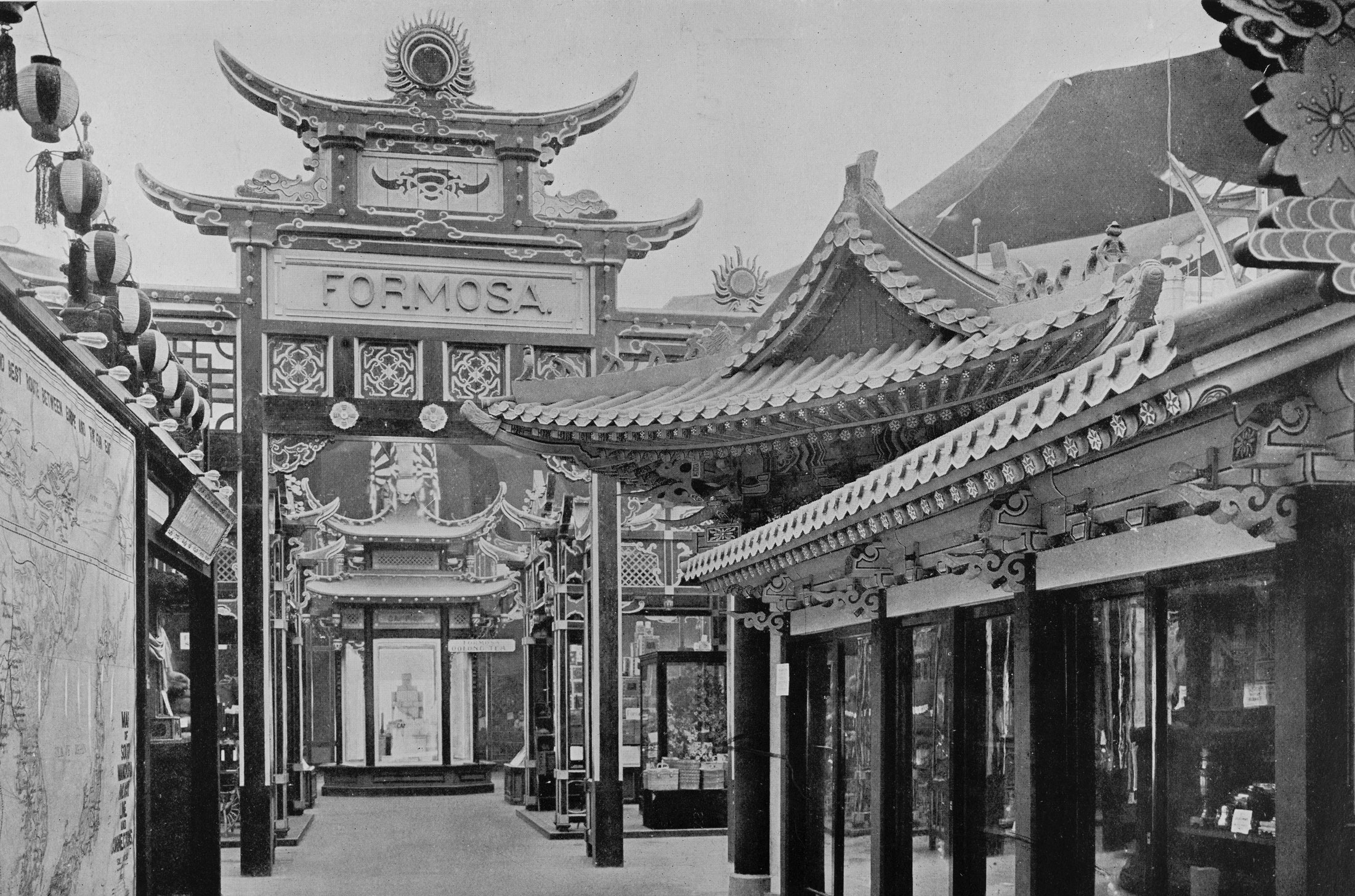
After becoming Japan’s colony, Taiwan was transformed into a powerhouse of industrialized agriculture, exporting such hallmark agricultural products as tea, sugar, and camphor. Japan was eager to promote these products, especially tea, not only to its domestic market but also to the West. One of the avenues for this effort was through expositions. Japan presented “Taiwan pavilions” in several domestic and world’s fairs, including the 1903 Osaka Industrial Exposition and the 1904 Louisiana Purchase Exposition in St. Louis. These Taiwan pavilions were designed to evoke a timeless “Taiwanese-ness,” using vernacular Minnan (southern Fujian) style architectural language. The pavilion in the Osaka fair was even constructed with original cypress timber shipped from Taiwan. The goal was to present an authentic aura of the island colony.
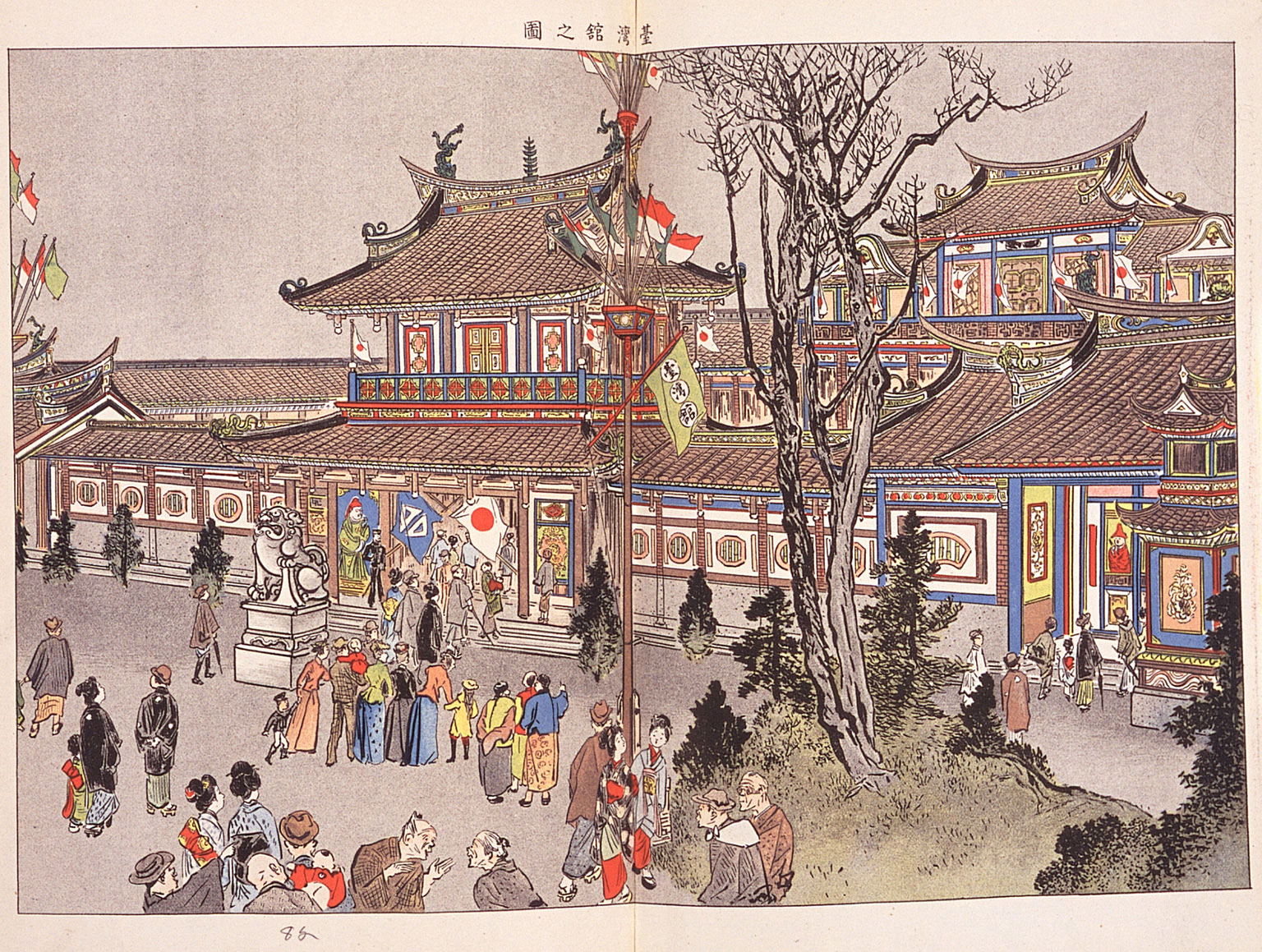 Full-page spread from the Fūzoku gahō 風俗画報 magazine special edition showing the Taiwan Pavilion at the 1907 Osaka Fifth National Industrial Exposition. (Source: National Diet Library)
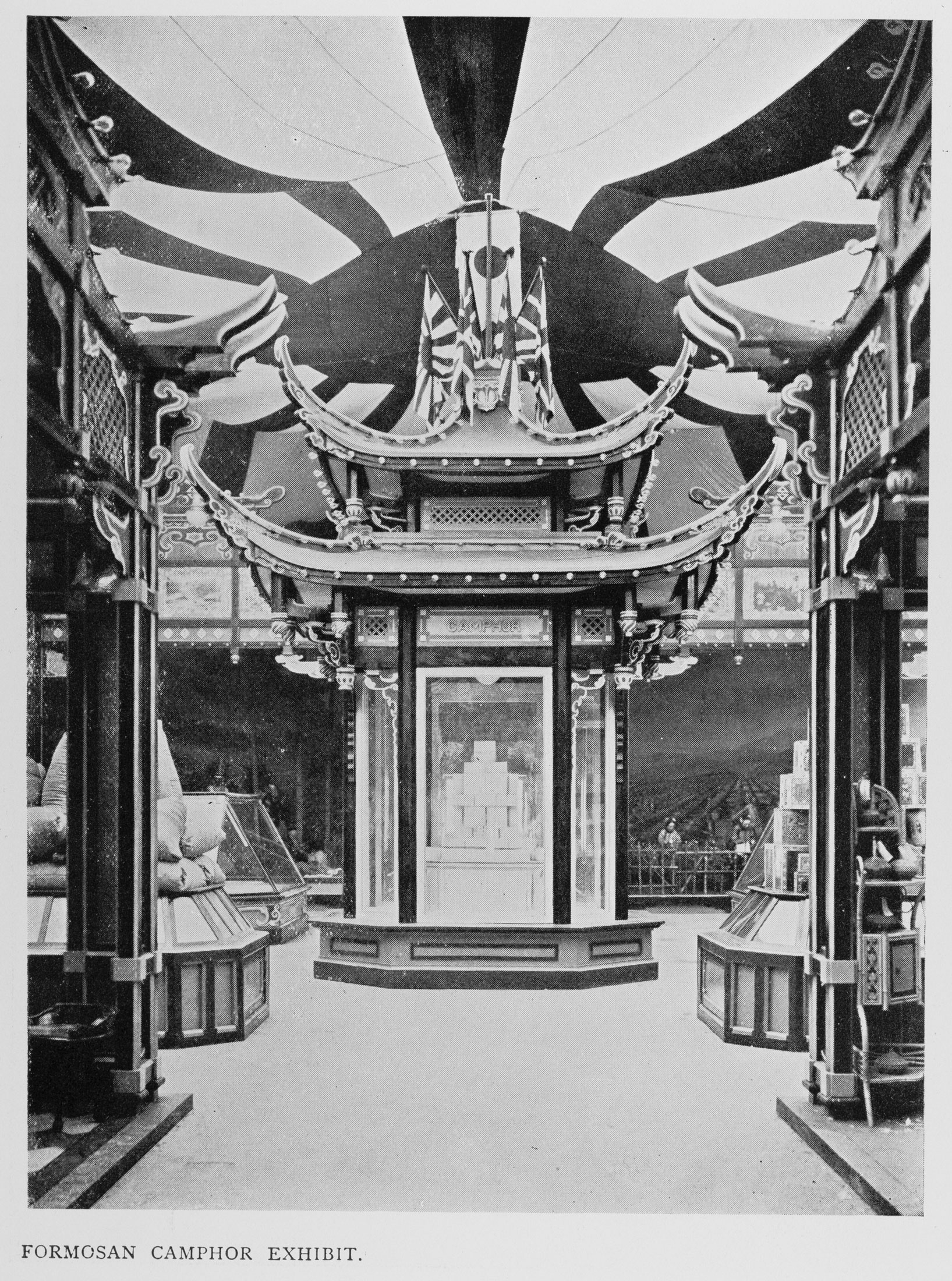
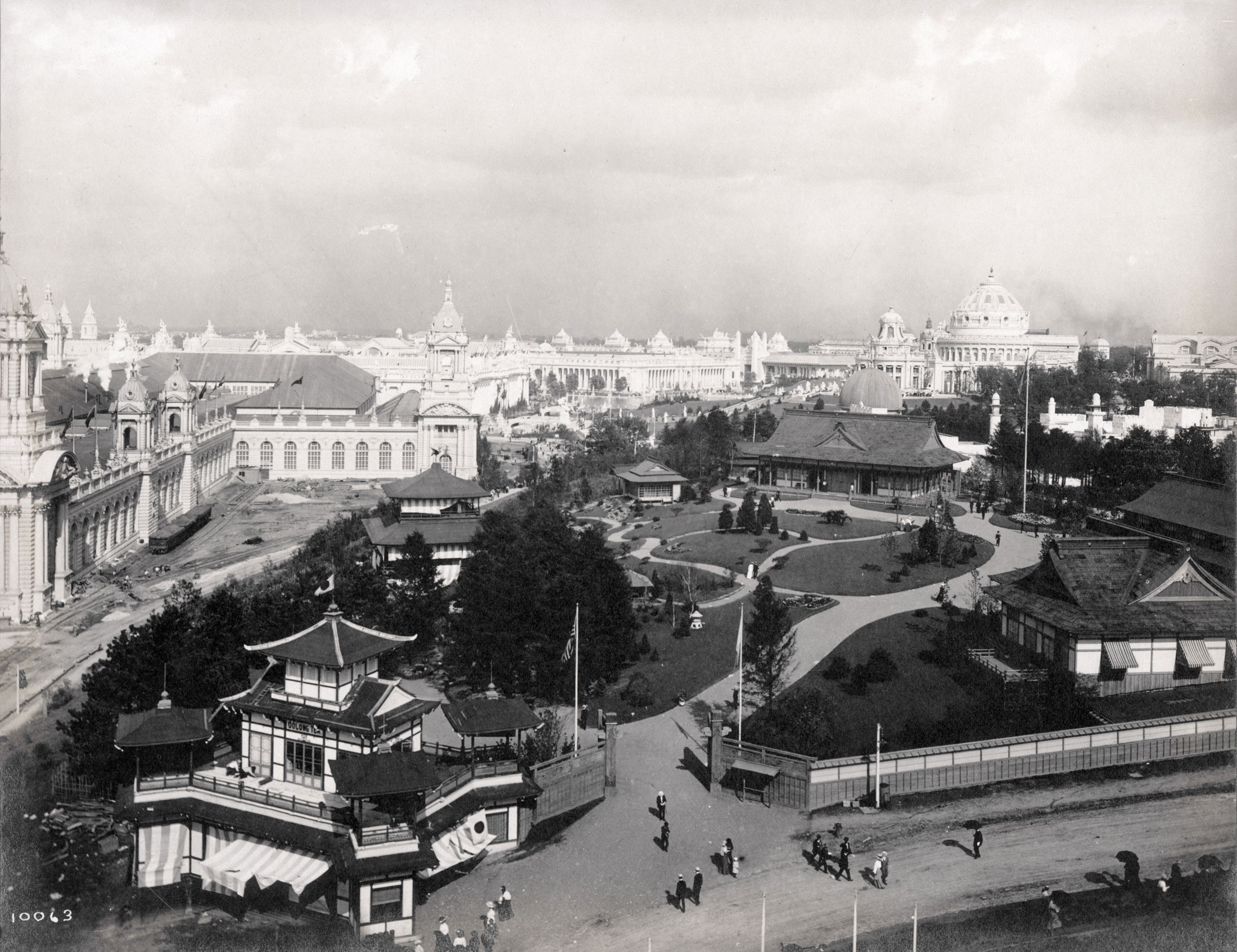
Design Inspirations From World’s Fairs
Whereas “Taiwan pavilions” at domestic fairs in Japan and world’s fairs in the West were presented as “authentic,” the Japanese colonial government opted for a different strategy for the 1935 colonial exposition. In the 1935 fair, authenticity was less of a concern than modernity, which the colonial administration was eager to promote. To achieve this goal, the design of the 1935 fair looked to the West for inspiration. The two main sources of inspiration were the 1925 Exposition internationale des arts décoratifs et industriels modernes in Paris, from which art deco aesthetics were adopted, and the 1933 Century of Progress World’s Fair in Chicago, a showcase of international modernism that would be imitated in Taipei two years later.
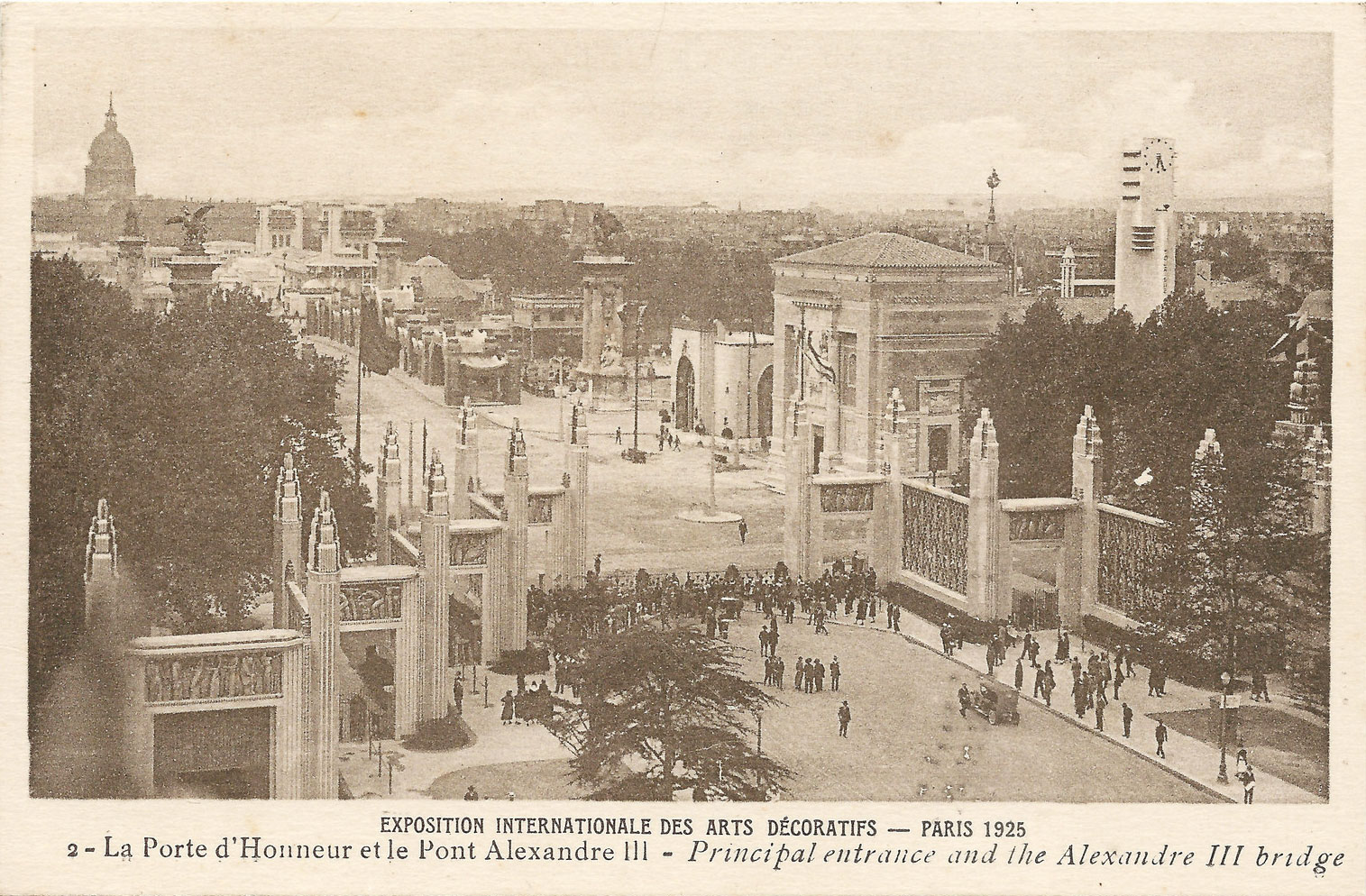
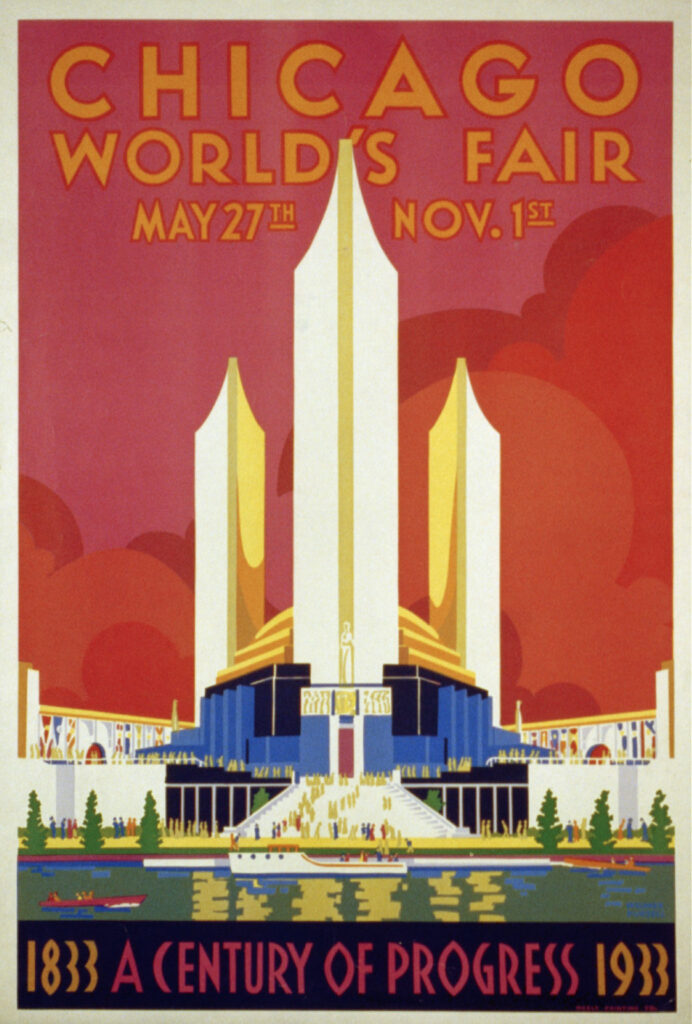
Previous Colonial Fairs
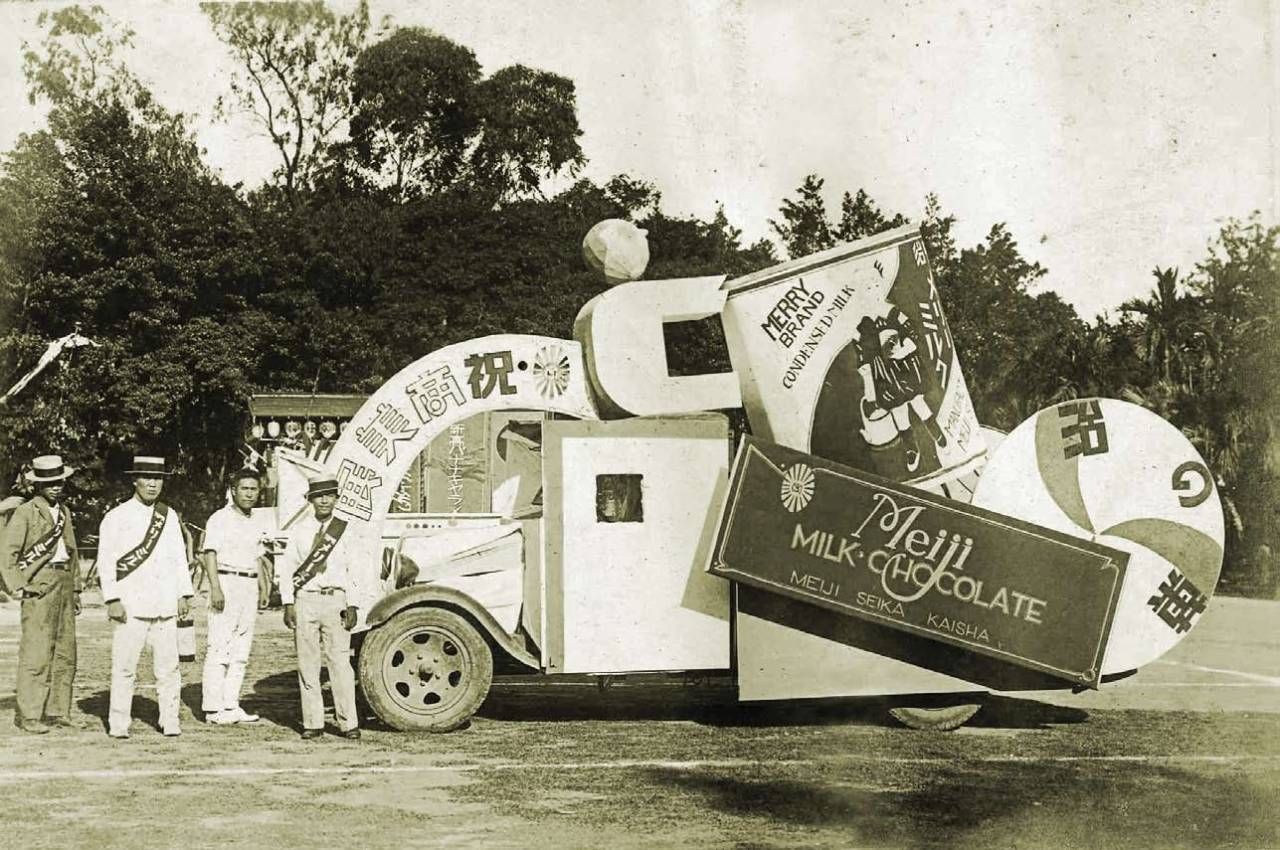
The 1935 exposition was built on a lineage of trade fairs and expositions. Not only was Taiwan exhibited to the West and to the Japanese home audience, there were a series of decadal expositions held in Taiwan prior to the 1935 fair to celebrate Japanese rule and colonial progress. There was also a commercial advertisement fair in 1932 to promote modernist commercial designs. During the same period, Japan had also acquired Korea as a formal colony and created a semi-colonial puppet state “Manchukuo” in Manchuria. Various expositions were held in both places to promote art and industry.
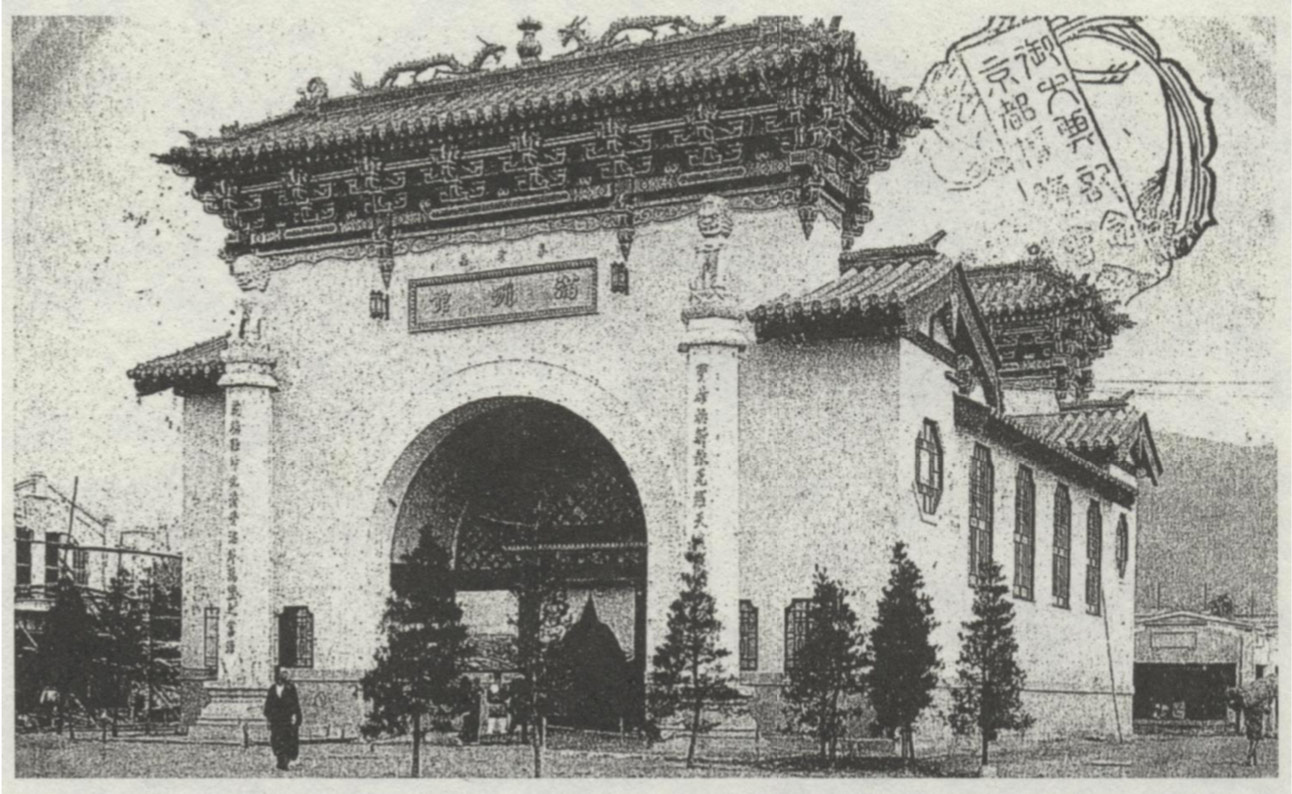
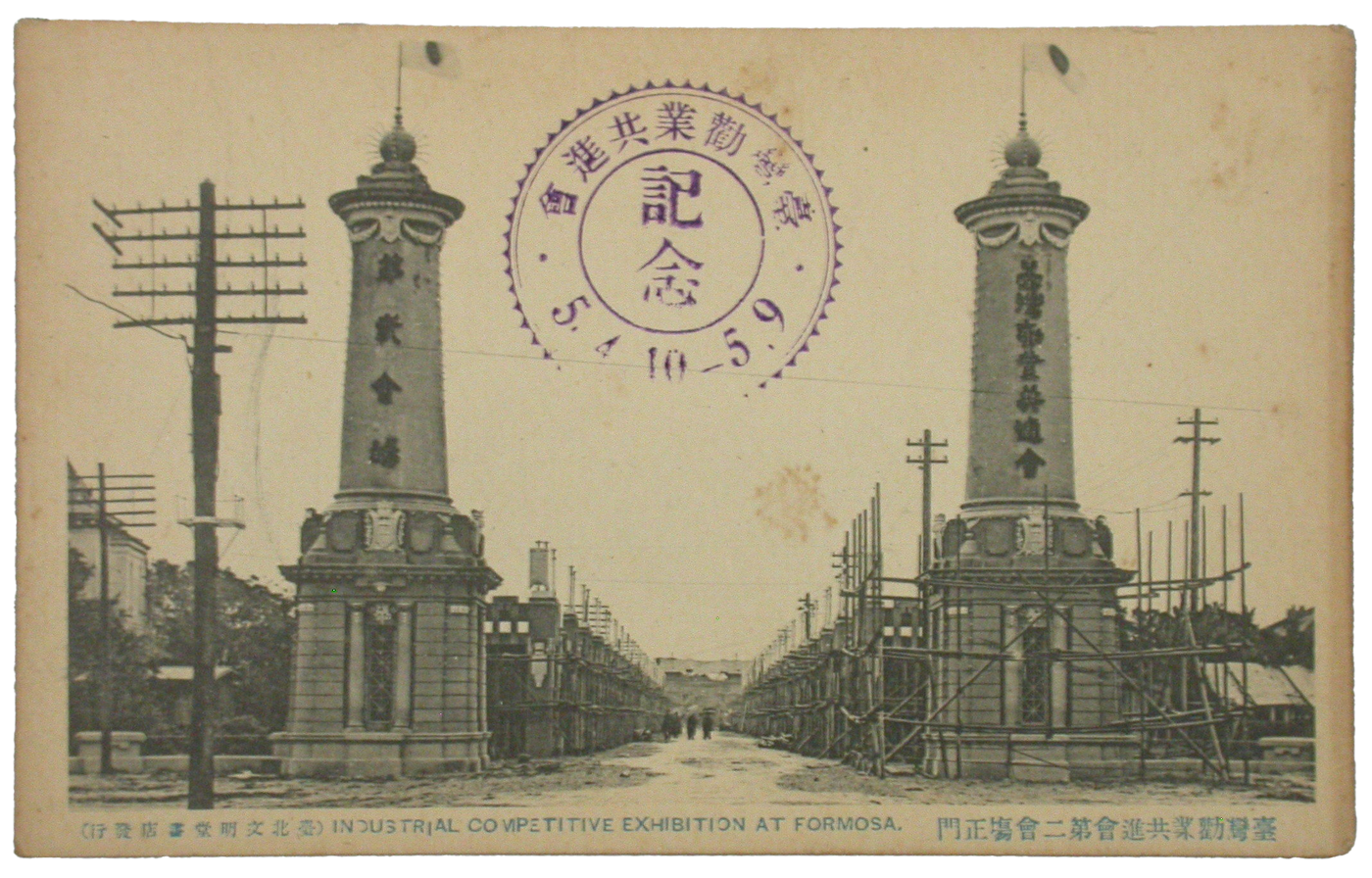 Postcard issued by the studio Bunmeido (文明堂) showing the entrance to the second fairground of the Taiwan Industrial Competitive Exposition 臺灣勸業共進會, 1916, the first large-scale exposition in Taiwan, with an exposition commemorative stamp. (Source: National Museum of Taiwan History)