Modernism and “Authentic Architecture” at the 1935 Taiwan Colonial Exposition
1935 Taiwan Exposition
The 1935 fair was the third decadal exposition to commemorate the 40th anniversary of colonial rule in Taiwan. Taking inspiration from both international and national expositions, the colonial authority sought to create its own “mini world’s fair” on the island. This was the largest and most extravagant exposition to be held in colonial Taiwan.
By 1935, Taiwan had been under around two decades of civil rule and assimilation policy. Industries such as sugar, camphor, tea production, and forestry had been well established. The colonial government was eager to show off this progress. It also wanted to project modernized Taiwan as a springboard for the empire’s southward expansion.
Read More
This grand exposition would prove to be the last of its kind to be held, since by the next decadal anniversary in 1945 Japan would have been defeated by Allied forces, bringing to an end its colonial rule in Taiwan. The planning committee was nominally headed by the Governor-General Nakagawa Kenzō 中川健藏 but consisted of more than two thousand men, mostly high-level bureaucrats and in Taiwan and from across the empire with experiences in large-scale expositions. Ide Kaoru 井手薰, then the chief of colonial public works, mastered the spatial and architectural planning of the fair. Before planning this fair, Ide embarked on a tour of Japan to learn from past domestic expositions.
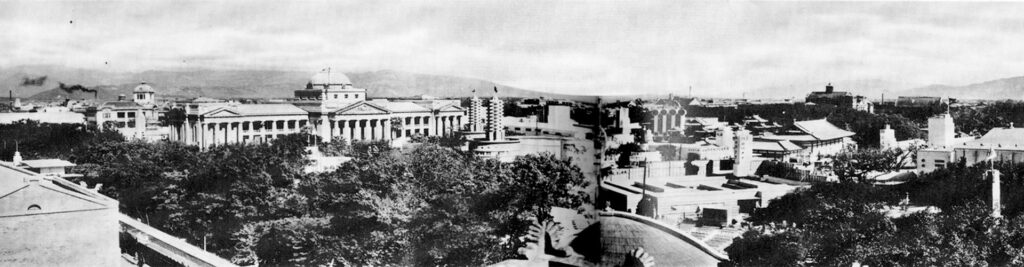
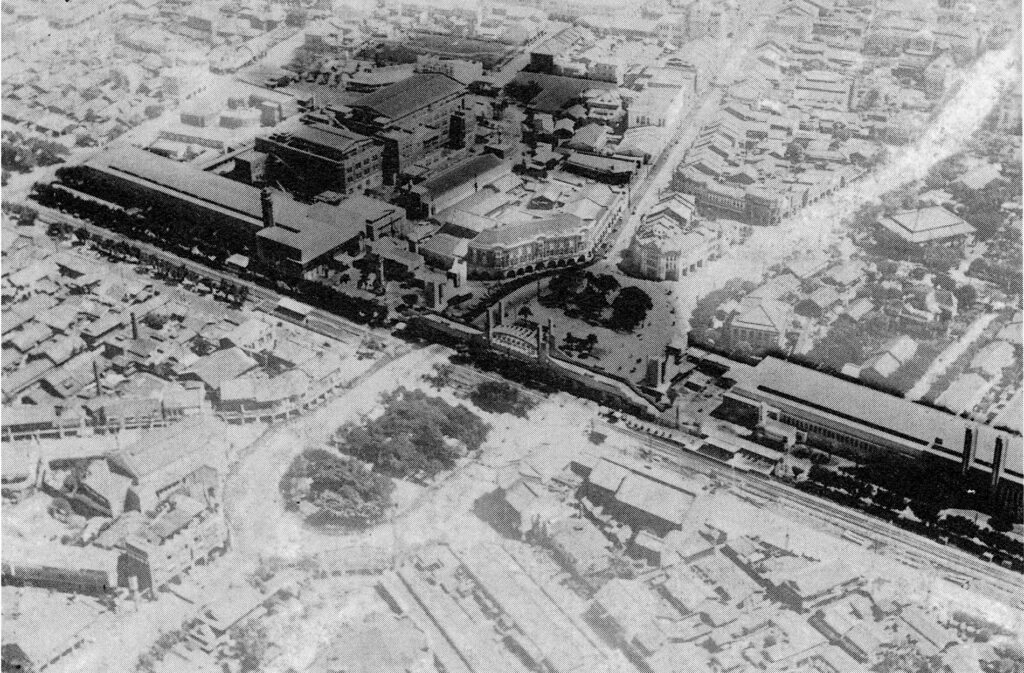
Panoramic view of the second fairground and the Governor-General Museum. (Source: Shisei Shijisshūnen Kinen Taiwan Hakurankai shashinchō 始政四十周年記念台湾博覧会写真帖 [1935] [Tokyo: Kokusho Kankōkai, 2012.])
Two Main Fairgrounds
The exposition was held across the island in all major cities and several tourist destinations; it was truly an unprecedented event in terms of scale and geographical spread. Nevertheless, the focus was on the colonial capital Taipei, where two largest exhibition grounds were planned, as well as a smaller one in the Han merchant neighborhood called Dadaocheng 大稻埕 located along the Tamshui River to the northwest of the main downtown area.
Read More
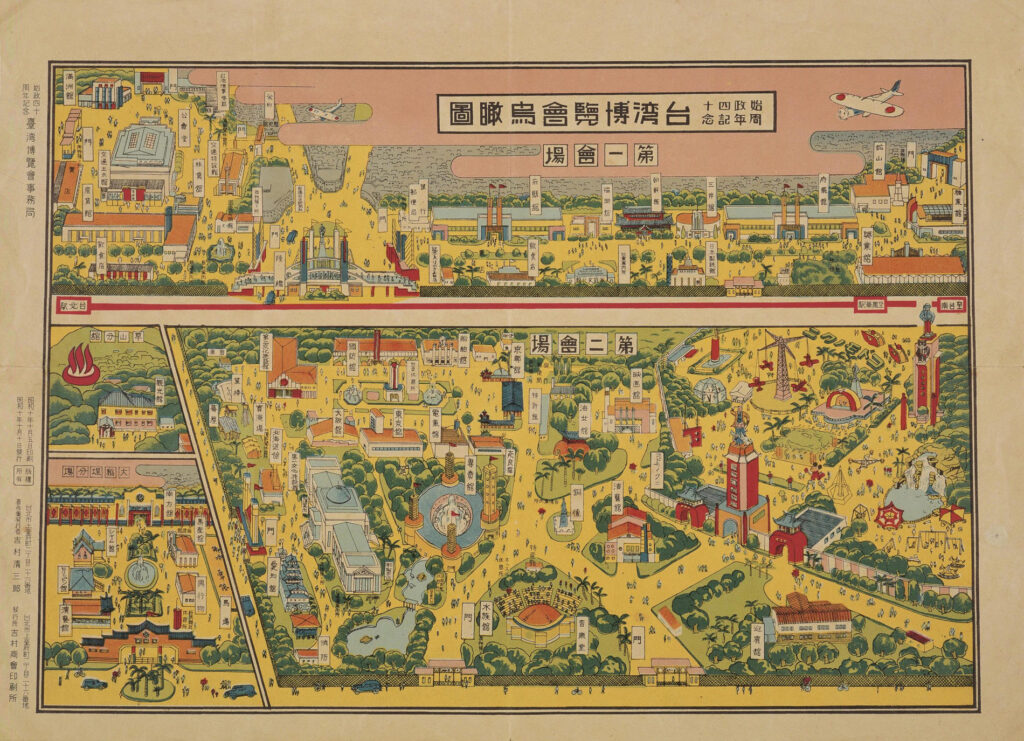
The two main fairgrounds seamlessly utilized modern urban spaces created by Goto Shimpei’s Improvement Plans. The first main fairground was planned around the demolished West Gate of the original Taipei city wall— by this time a modern traffic circle—and along the modern “three-laned boulevard” that replaced that section of the wall. The newly constructed Taihoku (Taipei) Assembly Hall 台北公会堂 (1932-1936) in this area was also inaugurated in time for the event. The first main fairground primarily exhibited industrial pavilions, alongside several colonial pavilions exhibiting Japan’s colonial possessions of Korea and Manchuria.
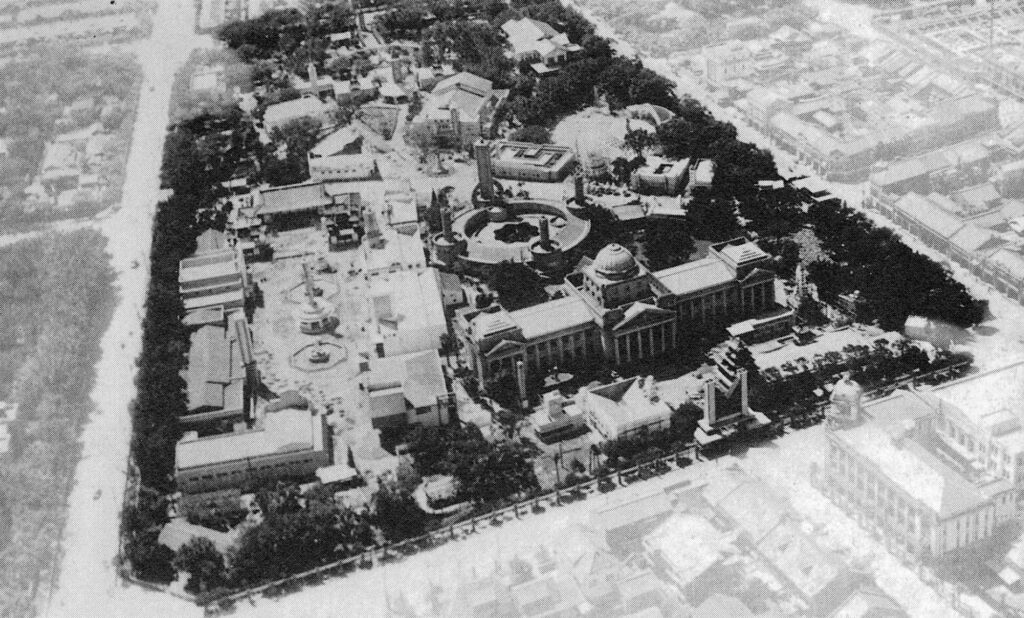
The second main fairground in downtown Taipei was focused on cultural exhibitions, alongside pavilions exhibiting cities and localities in the metropole, such as Tokyo, Kyoto, and Aichi Prefecture. This fairground was planned on the site of New Taipei Park, or simply New Park, the first Western-style modern park in the city. The Governor-General Museum, a neoclassical universal museum located in the park originally exhibiting mostly scientific specimens and anthropological artifacts, was turned into the First Cultural Exhibition Hall during the fair.
Promotional Materials
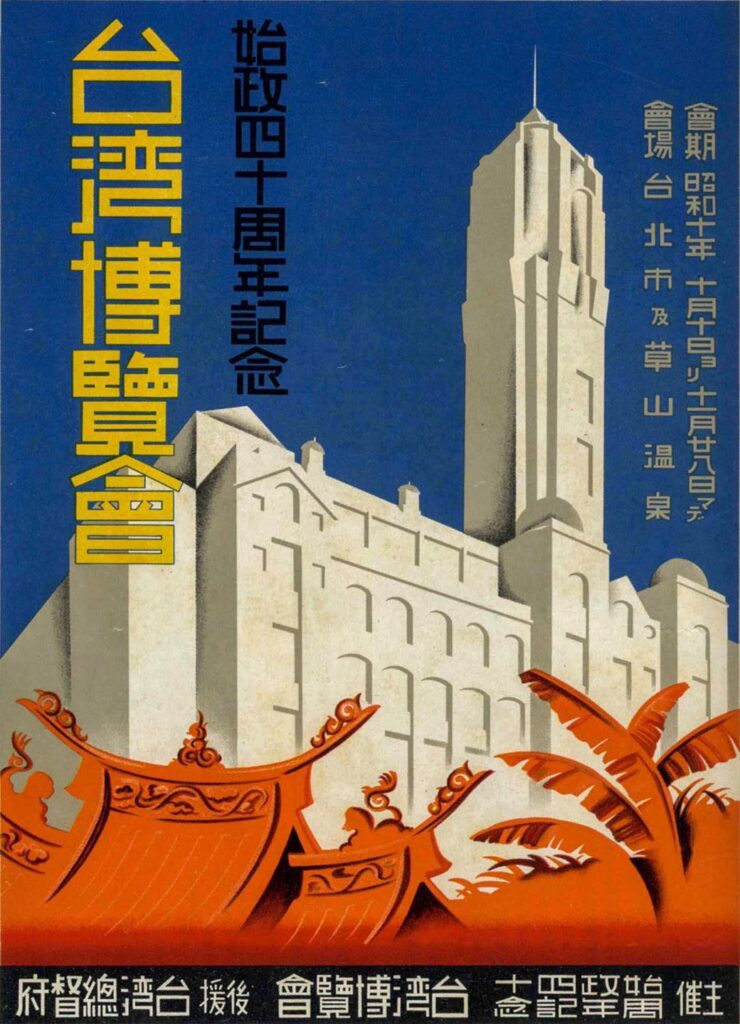
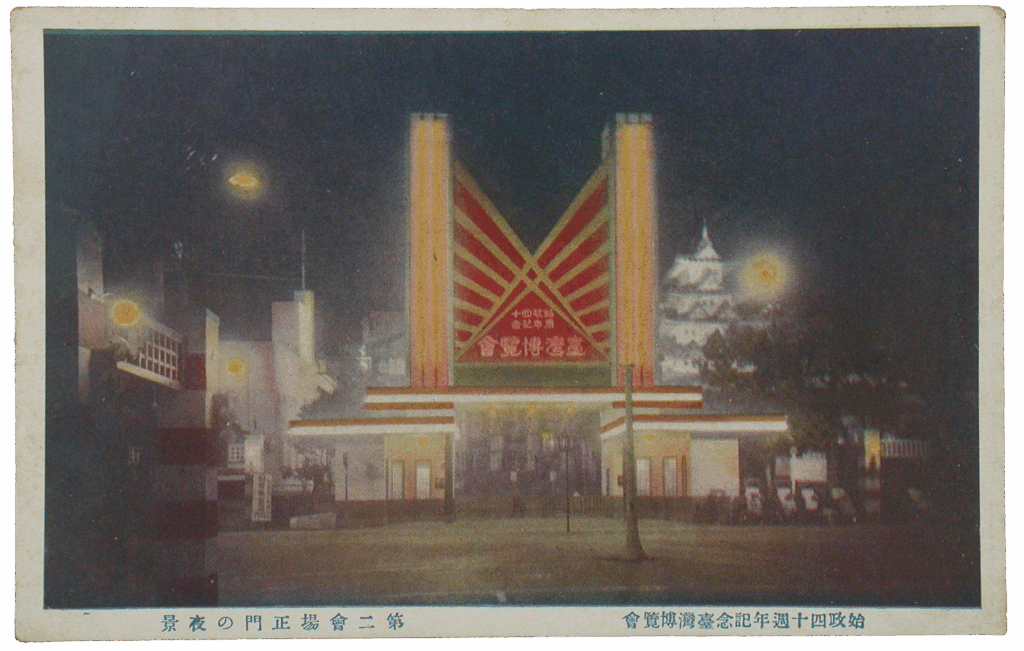
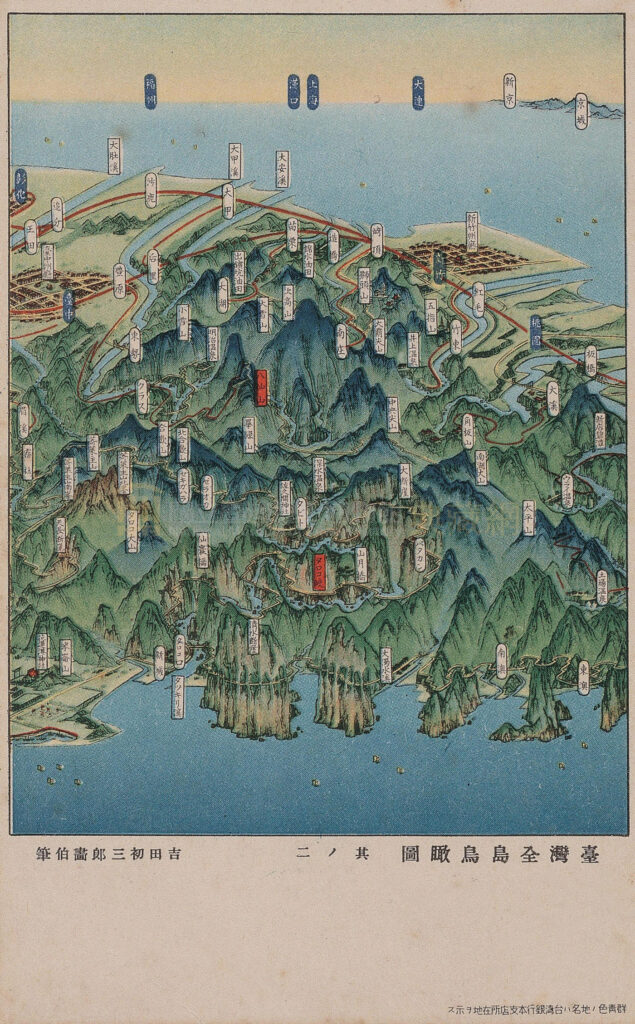
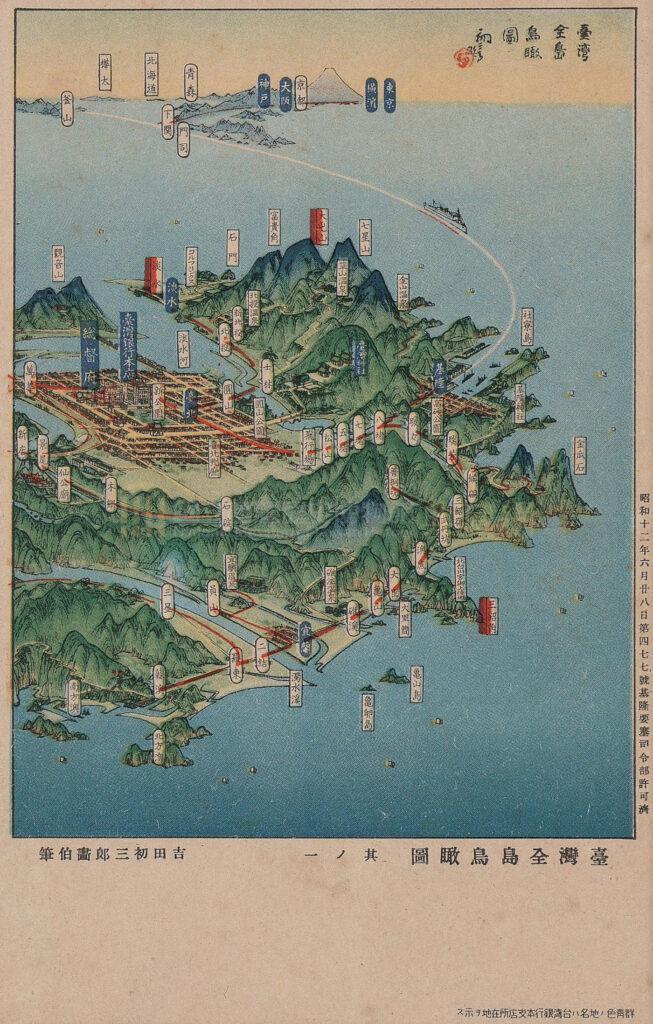
Using abstraction and the streamlined aesthetics of Art Deco and avant-garde graphic design, the promotional materials for the 1935 fair showcased not only the progress of modernization, but also featured the “local colors” of Taiwan, including Minnan-style architecture, banana trees, and coconut trees. Painter and cartographer Yoshida Hatsusaburo was hired to design a series of postcards that promoted island-wide tourism in concert with the exposition. Private companies were also authorized to sell their own postcards, resulting in eclectic designs.
![Promotional poster showing the peace dove and modern rooflines. (Source: Shisei Shijisshūnen Kinen Taiwan Hakurankai shi 始政四十周年記念台湾博覧会誌 [1935] [Tokyo: Kokusho Kankōkai, 2012.])](https://asiaworldsfairs.org/wp-content/uploads/2026/01/2.3.1-732x1024.jpg)
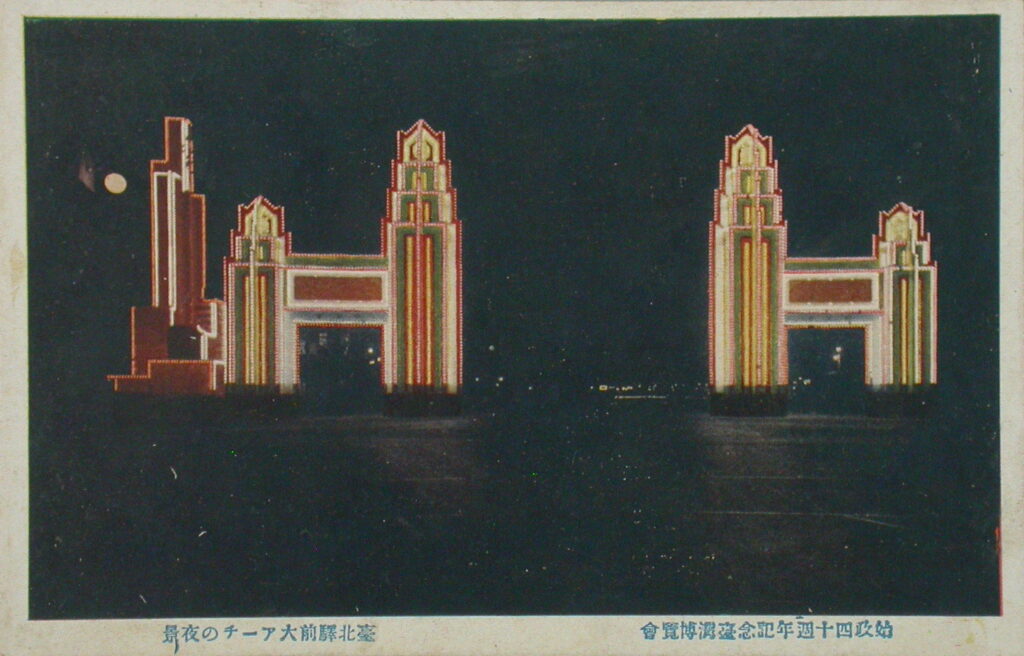
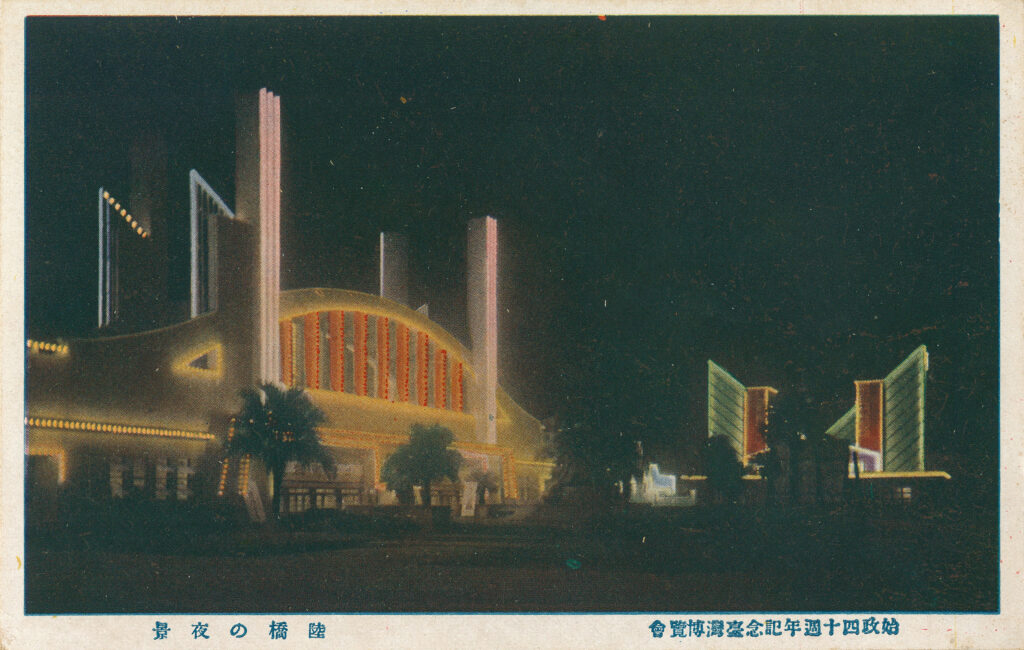
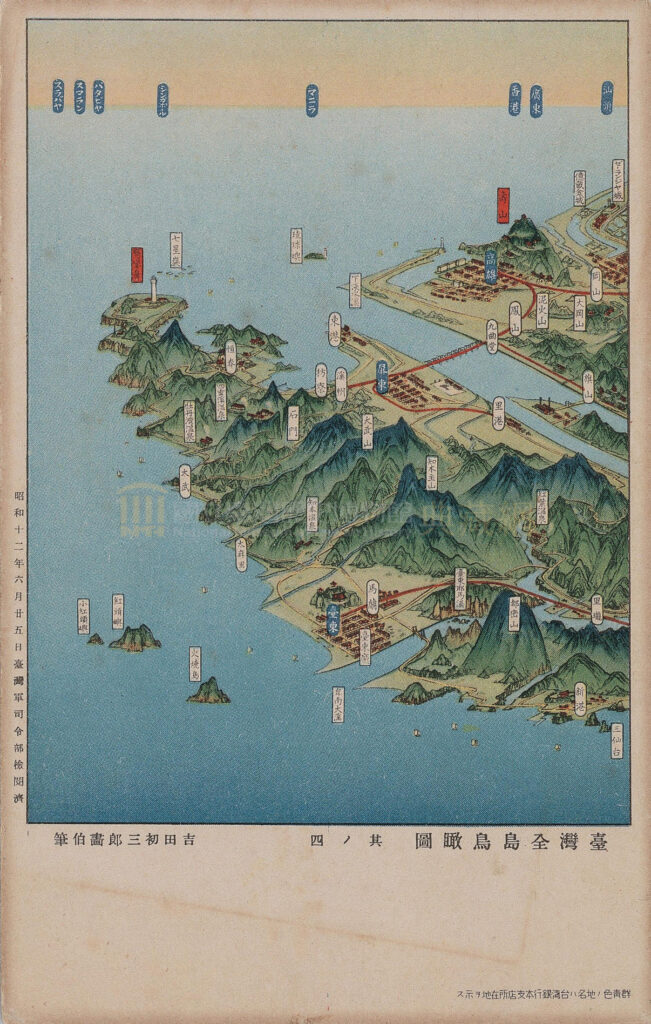
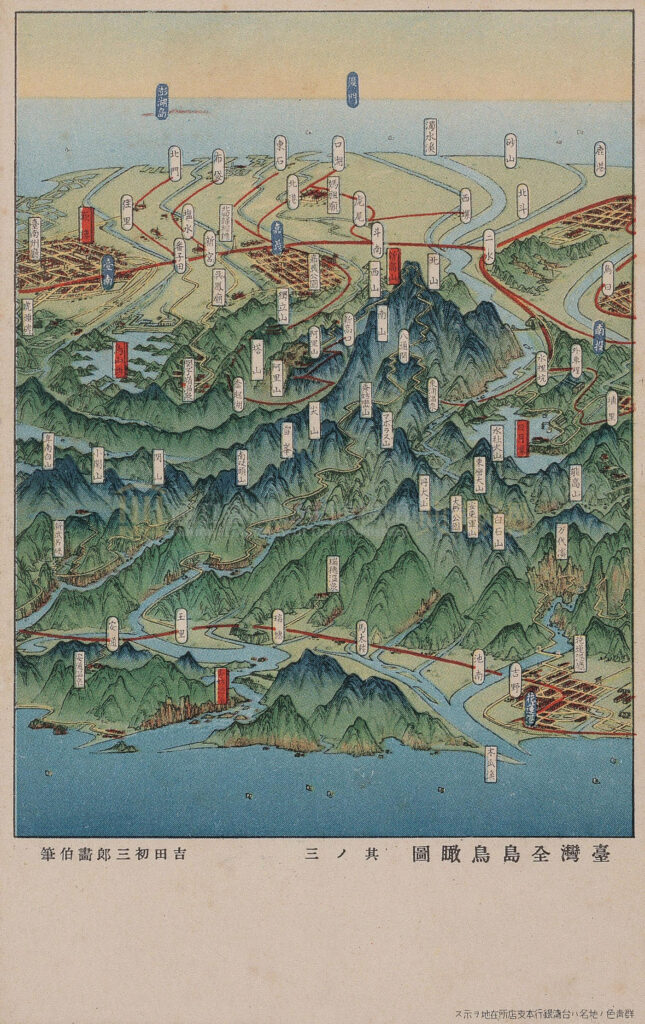
Modernism vs. “Authentic Architecture”
The architecture of the fair was overwhelmingly modernist in outlook, especially for buildings showcasing universal categories such as industry, defense, and culture. There is also a whimsical Forestry Pavilion that is shaped like a log, epitomizing the French Enlightenment idea of architecture parlante. Compared with those “authentic” Taiwan pavilions constructed for world’s fairs and domestic fairs in Japan, the 1935 fair opted instead for a universal architectural language in order to present the modernizing achievements of colonial rule. Interestingly, “authentic” vernacular architecture was still used, albeit in pavilions exhibiting Japanese cities and localities, in order to stoke in the hearts of the colonized Taiwanese increased interest in the cultures of the motherland.
Architecture Parlante
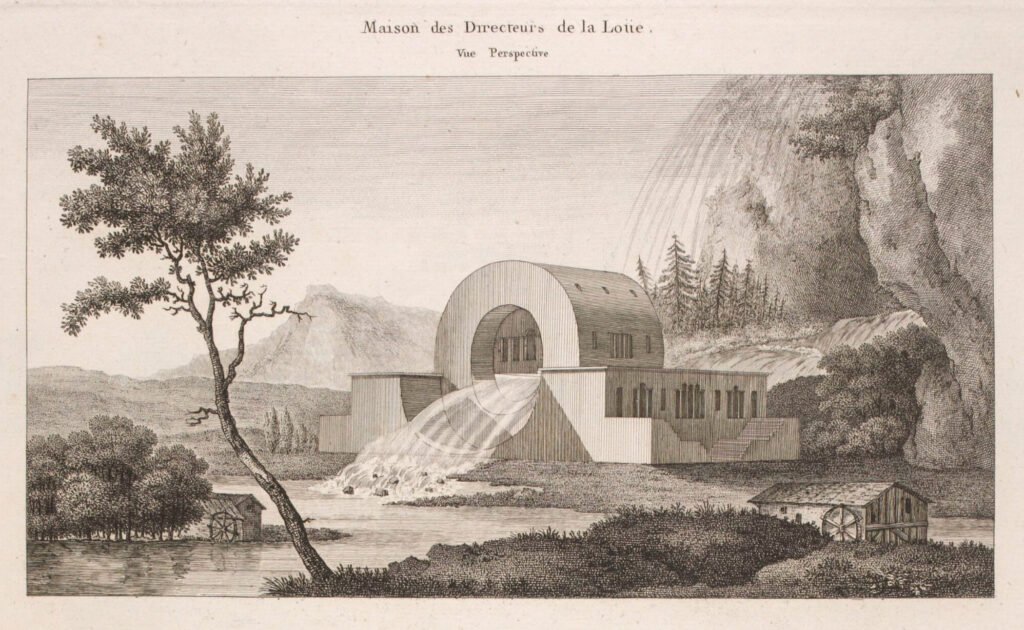
Architecture parlante is a French Enlightenment idea that an ideal architecture should ‘speak’ the functions within on the outside, epitomized by Claude-Nicholas Ledoux’s theoretical design for a river inspector’s house shaped literally like a pipe (1775–79).
![Photograph of the Sugar Pavilion, 1935 Taiwan Exposition. (Source: Shisei Shijisshūnen Kinen Taiwan Hakurankai shashinchō 始政四十周年記念台湾博覧会写真帖 [1935] (Tokyo: Kokusho Kankōkai, 2012.))](https://asiaworldsfairs.org/wp-content/uploads/2026/01/2.4.1-rev-1024x762.jpg)
![Photograph of a parade of soldiers in front of the National Defense Pavilion, 1935 Taiwan Exposition. (Source: Shisei Shijisshūnen Kinen Taiwan Hakurankai shashinchō 始政四十周年記念台湾博覧会写真帖 [1935] (Tokyo: Kokusho Kankōkai, 2012.))](https://asiaworldsfairs.org/wp-content/uploads/2026/01/2.4.2-rev-1024x644.jpg)
![Photograph of the Second Culture Exhibition Hall, 1935 Taiwan Exposition. (Source: Shisei Shijisshūnen Kinen Taiwan Hakurankai shashinchō 始政四十周年記念台湾博覧会写真帖 [1935] (Tokyo: Kokusho Kankōkai, 2012.))](https://asiaworldsfairs.org/wp-content/uploads/2026/01/2.4.3-rev-1024x739.jpg)
![Photograph of the Forestry Pavilion, 1935 Taiwan Exposition. (Source: Shisei Shijisshūnen Kinen Taiwan Hakurankai shashinchō 始政四十周年記念台湾博覧会写真帖 [1935] (Tokyo: Kokusho Kankōkai, 2012.))](https://asiaworldsfairs.org/wp-content/uploads/2026/01/2.4.4-rev-1024x735.jpg)
Representing The Empire
To represent different regions in the empire, modernism or traditional architecture were strategically chosen. Within the metropole, there was the “Kyoto look”, represented by Heian-period architecture to portray the ancient capital as timeless , and then there was the “Tokyo look,” represented by architectural modernism with its white walls and Bauhaus-looking glazed fenestration. Whereas for the colonies, Korea was represented as an ancient kingdom , whereas Manchuria was portrayed as a hyper-modern industrial powerhouse.
![Photograph of the Tokyo Pavilion at the 1935 Taiwan Exposition. (Source: Shisei Shijisshūnen Kinen Taiwan Hakurankai shashinchō 始政四十周年記念台湾博覧会写真帖 [1935] (Tokyo: Kokusho Kankōkai, 2012.))](https://asiaworldsfairs.org/wp-content/uploads/2026/01/2.5.1-rev-1024x728.jpg)
![Photograph of the Kyoto Pavilion at the 1935 Taiwan Exposition. (Source: Shisei Shijisshūnen Kinen Taiwan Hakurankai shashinchō 始政四十周年記念台湾博覧会写真帖 [1935] (Tokyo: Kokusho Kankōkai, 2012.))](https://asiaworldsfairs.org/wp-content/uploads/2026/01/2.5.2-rev-1024x730.jpg)
![Photograph of the Manchukuo (Manchuria) Pavilion at the 1935 Taiwan Exposition. (Source: Shisei Shijisshūnen Kinen Taiwan Hakurankai shashinchō 始政四十周年記念台湾博覧会写真帖 [1935] (Tokyo: Kokusho Kankōkai, 2012.))](https://asiaworldsfairs.org/wp-content/uploads/2026/01/2.5.3-rev-1024x729.jpg)
Showcasing Traditional Architecture
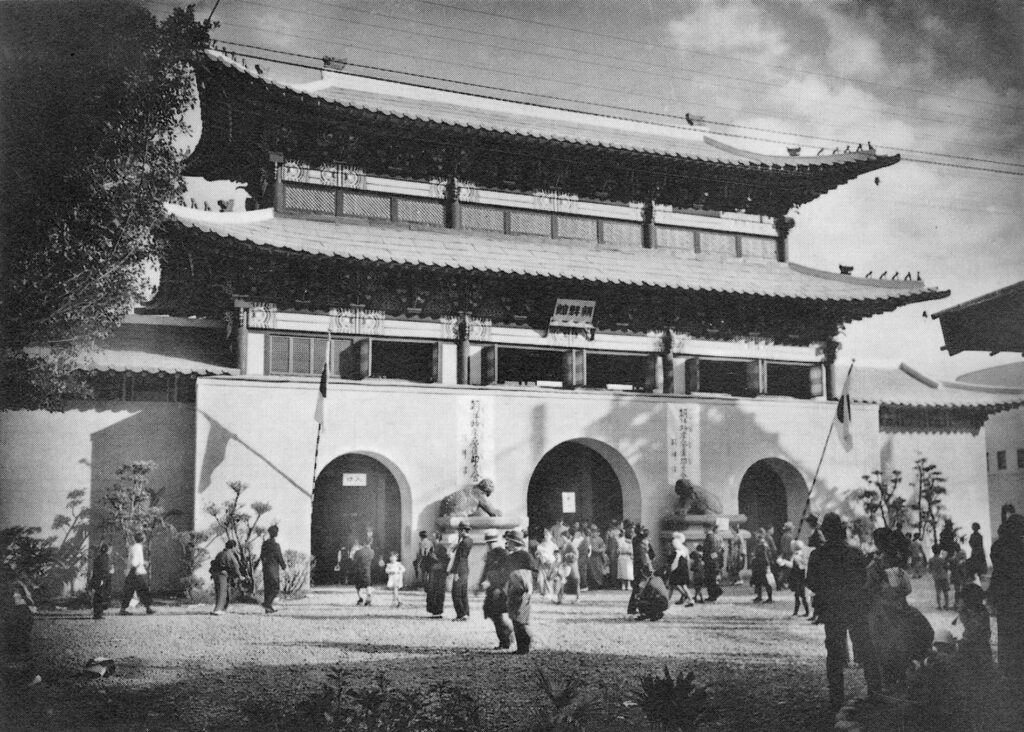
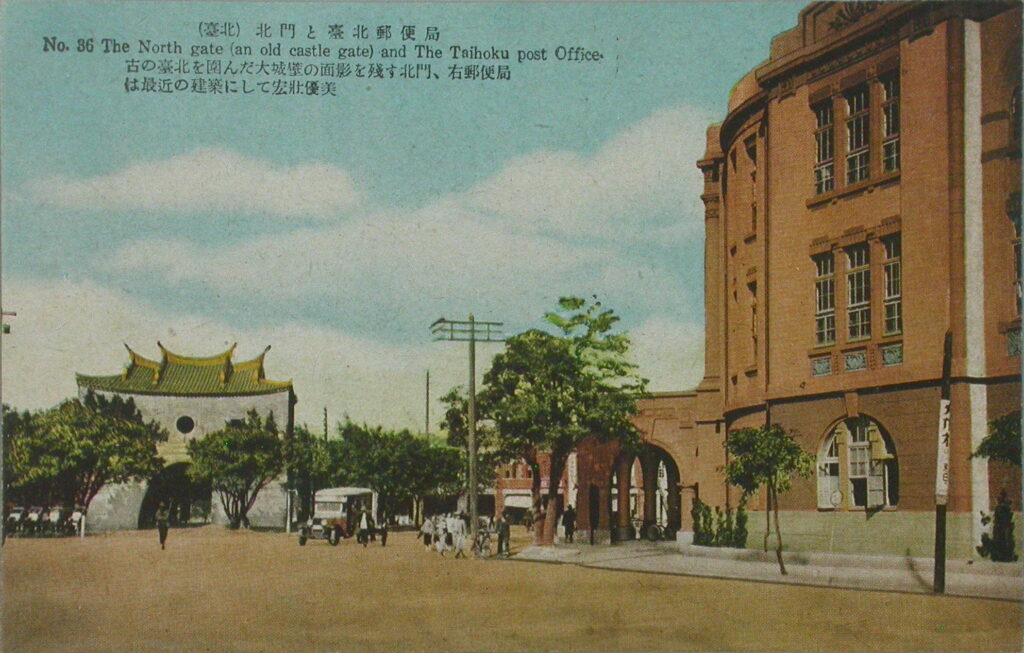
The Japanese authorities had a more complicated relationship with the Han/Minnan vernacular architecture. Even after the Meiji modernization project, classical Chinese culture was still held in high regard in elite Japanese society. Although much of the Qing-era built environment in Taiwan was razed to construct modern cities, some important monuments were preserved, albeit removed from their original contexts, sometimes physically, and transformed into open-air museum objects. Four of the five city gates in Taipei were preserved after the demolition of the city wall. They were preserved and showcased as monuments in traffic circles, Arc de Triomphe-style. During the fair, an architectural model of the Zhishanyan Academy 芝山巖學堂, an example of authentic Minnan vernacular architecture, was also proudly showcased in miniature form under the dominating classical columns in the neoclassical Governor-General Museum.
The architecture was actually that of Hui Chi Temple 惠濟宮, a historic Taoist temple on a hill outside Taipei which housed the Zhishanyan Academy, the first modern education institute to be established in Taiwan by the Japanese in 1895. By exhibiting the model of this building, the colonial government simultaneously displayed an appreciation of vernacular architecture and propagated progress of modernization.
![Architectural model of the Zhishanyan Academy 芝山巖學堂 exhibited in the Government-General Museum during the 1935 Taiwan Exposition. (Source: Shisei Shijisshūnen Kinen Taiwan Hakurankai shashinchō 始政四十周年記念台湾博覧会写真帖 [1935] (Tokyo: Kokusho Kankōkai, 2012.))](https://asiaworldsfairs.org/wp-content/uploads/2026/01/2.6.1-rev-1024x674.jpg)
‘Southern Pavilions’ in Dadaocheng
Apart from the two main fairgrounds in the center of the city, there is also a notable auxiliary exhibition venue in the north of city center — Dadaocheng 大稻埕. This venue included the so-called ‘southern pavilions,’ including one specifically named Southern Pavilion, exhibiting commodities from southern China, Southeast Asia and British India.
Dadaocheng had been a vibrant Chinese merchant town since the late Qing period when China was forced to open up trading with the West. Into the Japanese colonial period, wealthy Han merchants in Dadaocheng continued to profit from the new imperial trading network, selling products like tea, rice, and textiles to other parts of the empire and beyond.
In preparation for the 1935 exposition, the Dadaocheng merchants petitioned to have the Japanese colonial authority establish a venue in their neighborhood in order to promote commerce. The planning committee agreed to the request, but designated very specific types of facilities to the Dadaocheng fairground — the Southern Pavilions.
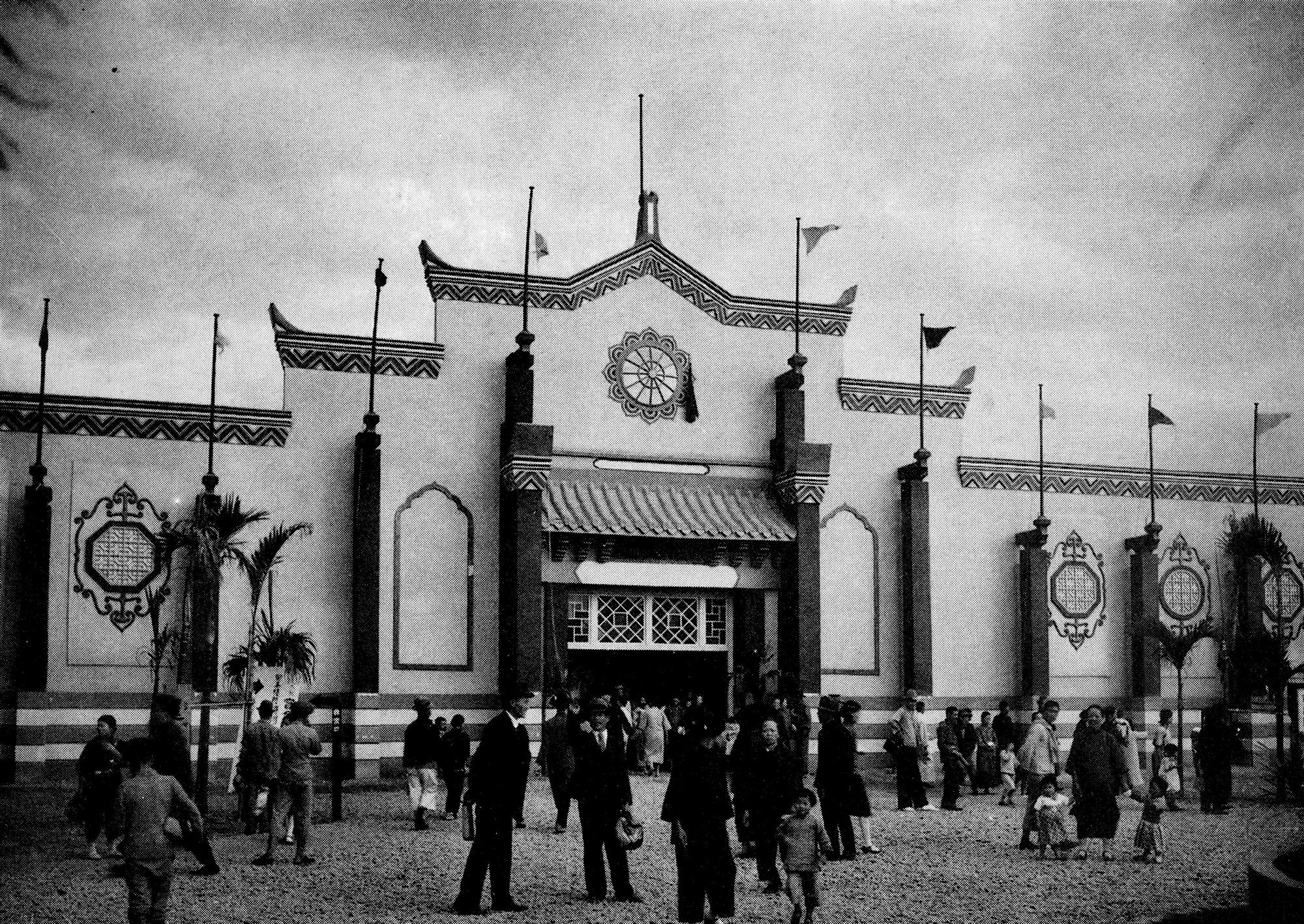 “Southern Pavilion.” (Source: Shisei Shijisshūnen Kinen Taiwan Hakurankai shashinchō 始政四十周年記念台湾博覧会写真帖 [1935] [Tokyo: Kokusho Kankōkai, 2012.])
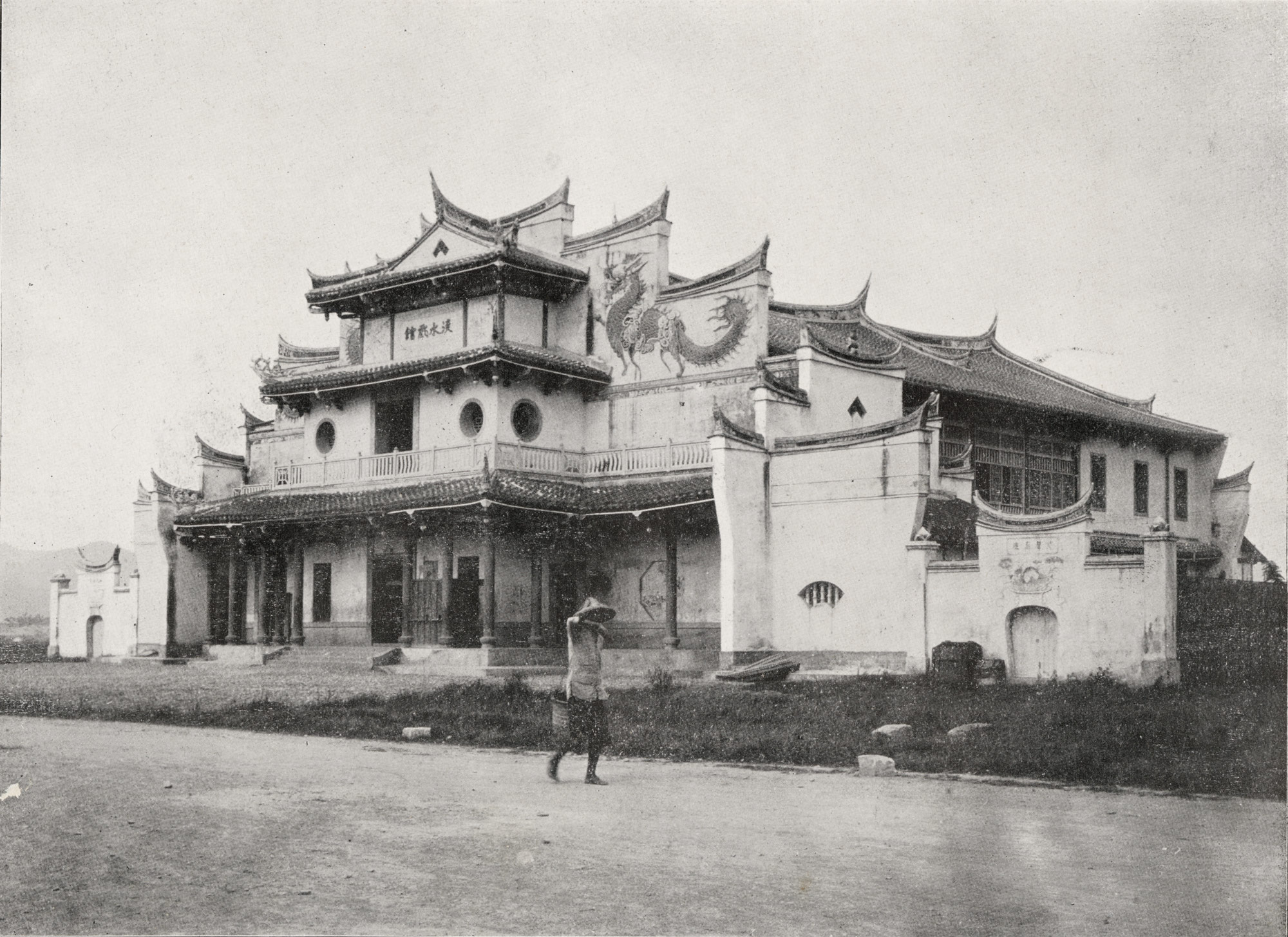
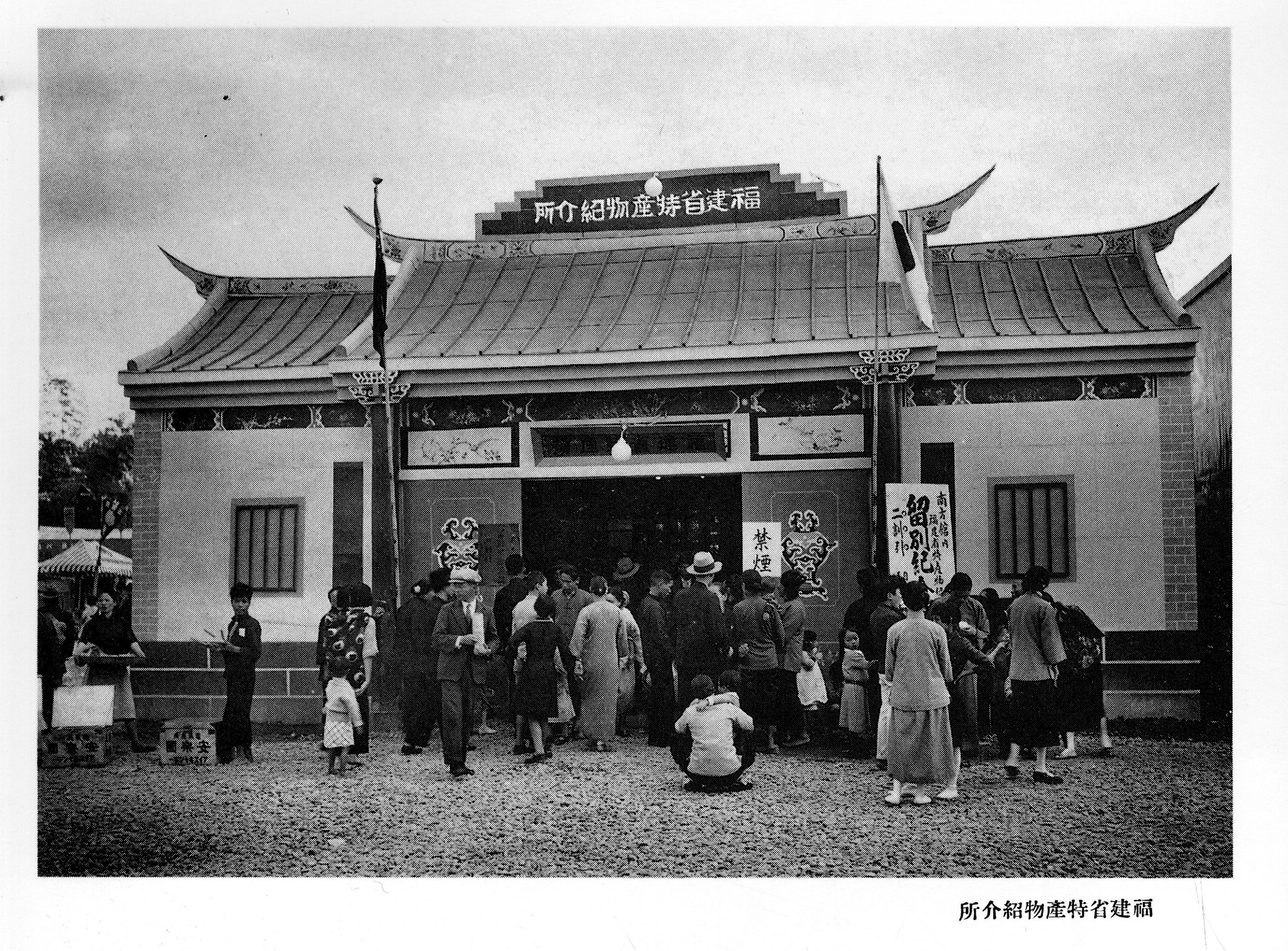
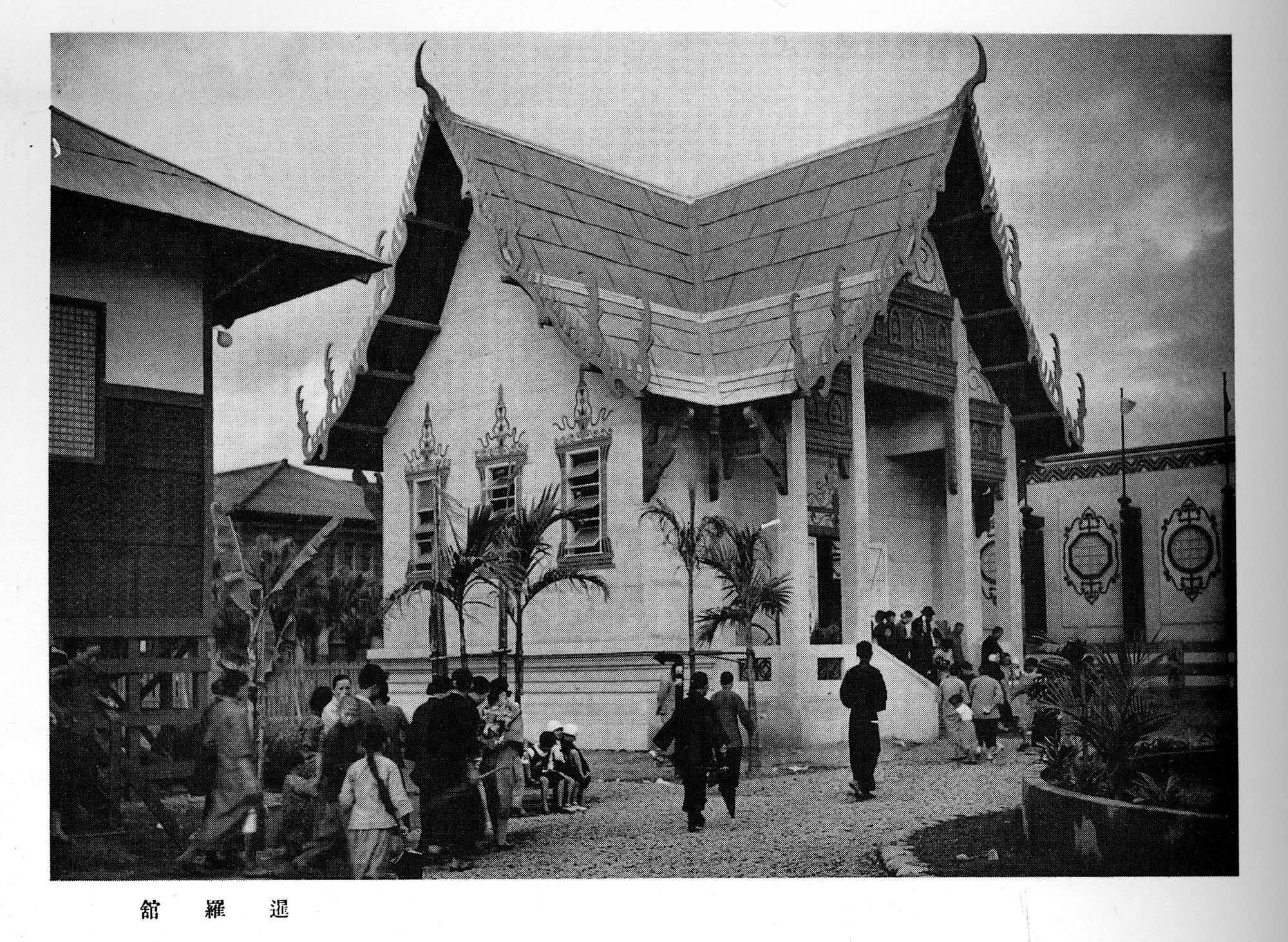
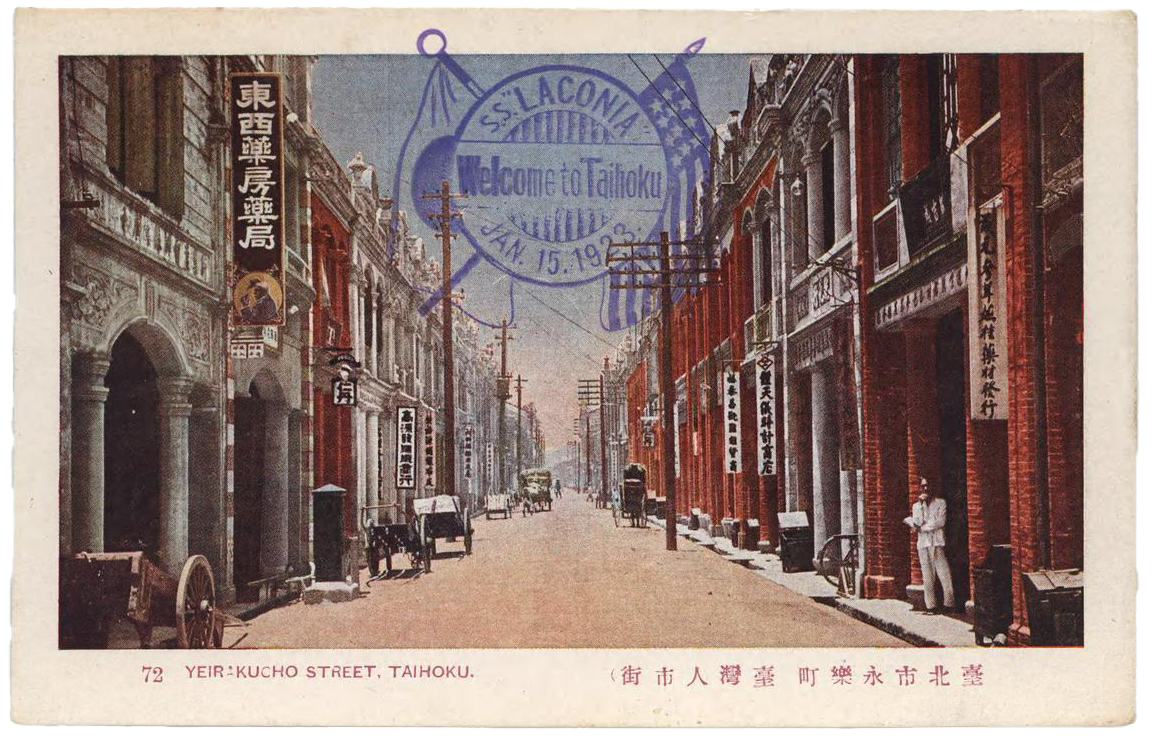
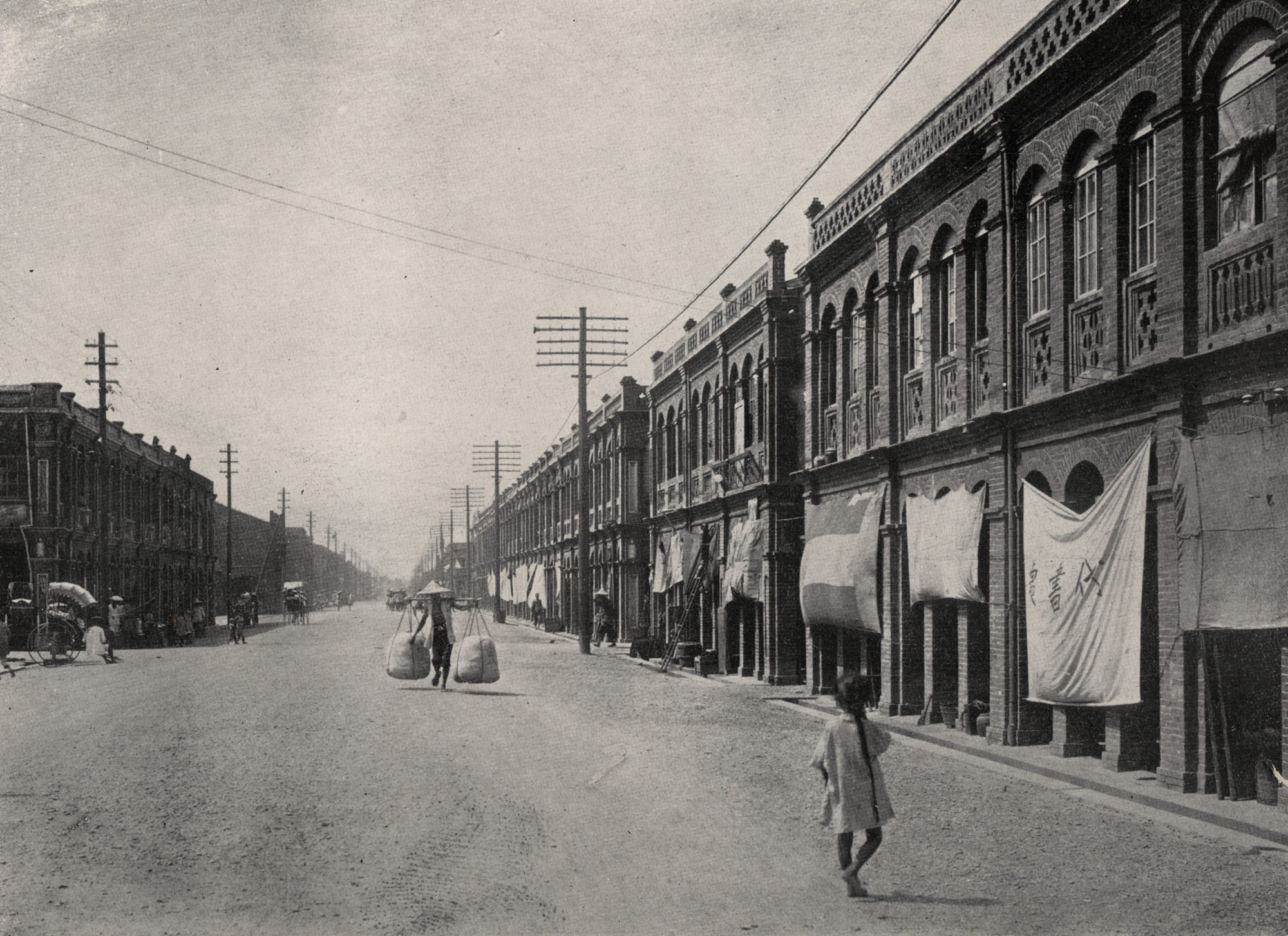
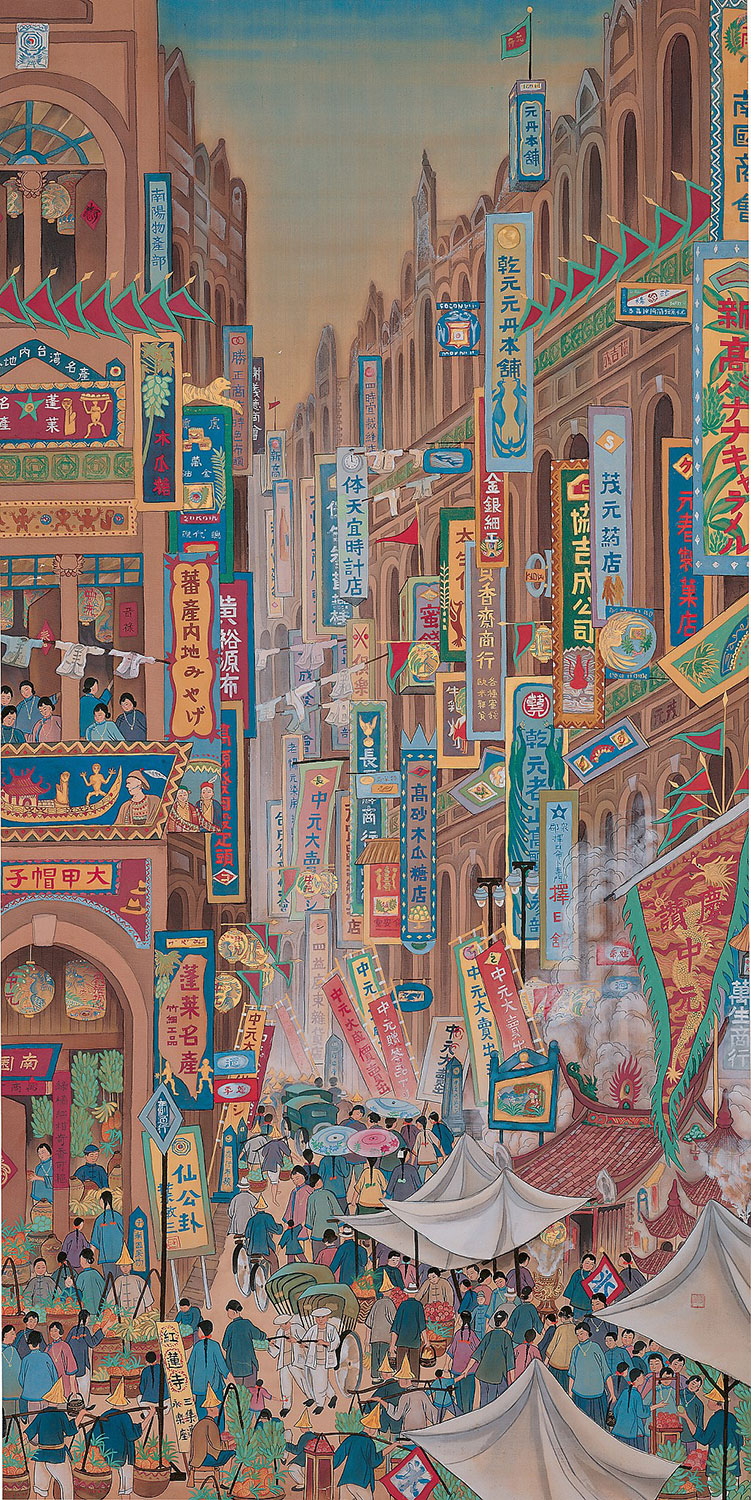
All of these buildings featured traditional architectural forms to evoke the ‘exotic’ characters, with the main Southern Pavilion employing a facade with highly stylized suggestions of Minnan architecture as a stand-in for “the south seas.” For the planning committee composed of Japanese bureaucrats, Dadaocheng as a Han district seemed to be able to organically incorporate ‘authentic’ southern architectural styles into its vernacular urban landscape. However, by this time the streetscape of Dadaocheng had already ceded its ‘authentically’ Minnan appearance to a modernized outlook, with eclectic, Western-inspired facades. The modernized Dadaocheng neighborhood stood in tension with what the planning committee wanted Dadaocheng to be.