Japanese Hō-ō-den, 1893 World’s Columbian Exposition.
Introduction
Chicago in 1893 was an exciting place where millions of visitors flocked to attend the World’s Columbian Exposition. Through displays of manufactured goods, machinery, fine arts, architecture, and even human performers, nations of the world competed to showcase their achievements. This event introduced to the American public a wondrous array of new inventions and products, including the Ferris wheel, the automatic dishwasher, and little pillow-shaped biscuits called shredded wheat. Japanese architecture was one of the many marvels that visitors encountered here for the first time. The Japanese Pavilion—known as the Phoenix Hall (Hō-ō-den)—presented itself as the polar opposite of the imposing, whitewashed main exposition buildings: its lyrical bird-like form and natural wood material conveyed the fine artistry and sophistication of the culture that produced it.
This exhibit explores the use of architecture as a cultural mediator between Japan and an overseas audience eager for novelty and the exotic. Divided into three parts, it will explore American impressions of Japan before the 1893 Chicago fair; the creation, presentation, and reception of the Japanese Pavilion during the fair; and legacies of the pavilion architecture after the fair.
Jackson Park: Japanese Tea House, 1893 World’s Columbian Exposition. (Source: The University of Chicago)
Exhibition Rooms
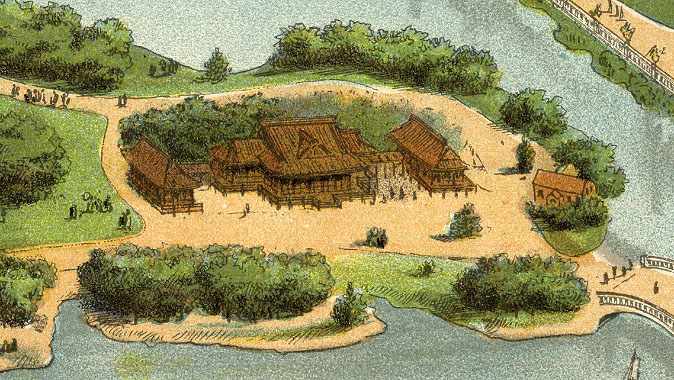
Exhibit Curator
Alice Y. Tseng
Professor of Japanese Art and Architecture, Boston University
Designed with