The Stages of Asia’s Exposure to the West
Private Museums
Early Private Museums Bring Asia to the West
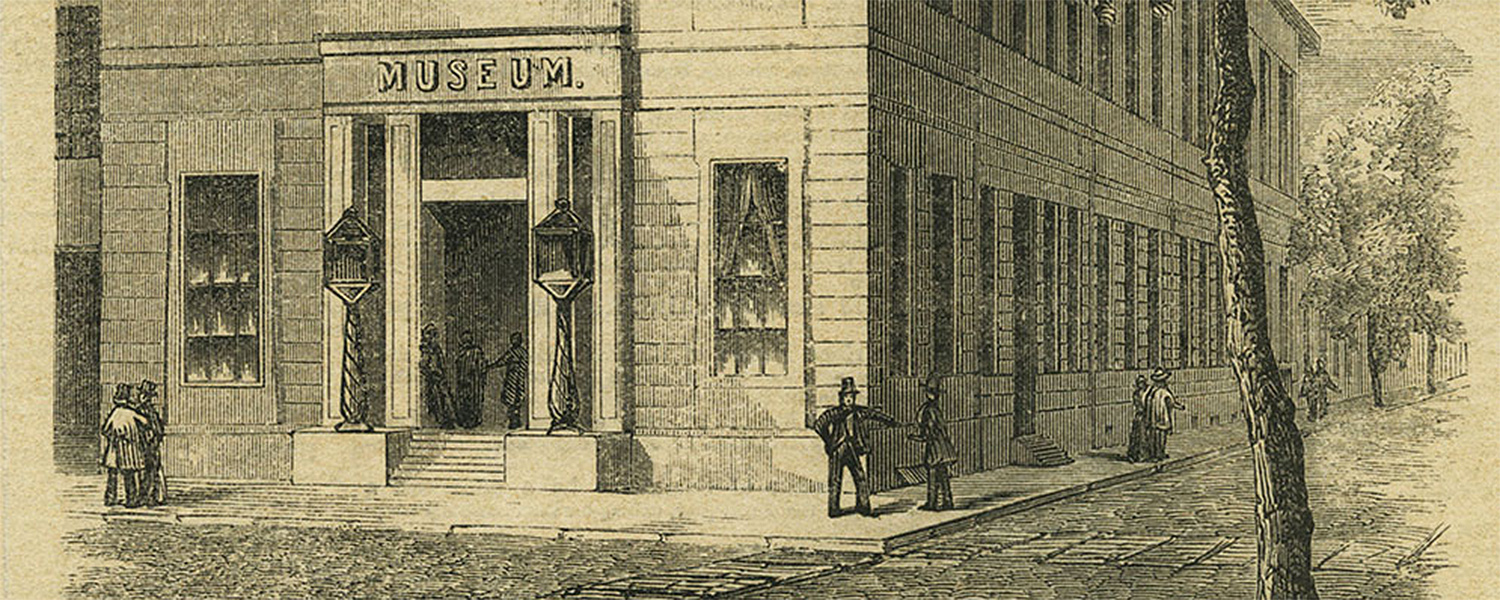
Chinese Museum, Philadelphia. Source: Free Library of Philadelphia
Changing Perceptions
Events during the mid-19th century increasingly focused British and American public attention on China and began to change Western perceptions of China and of the Chinese. The First Opium War between Britain and China from 1839-1842 resulted primarily from efforts by the Chinese government to crack down on social and economic problems created by the use of opium, a commodity increasingly used by British traders to address its massive trade imbalance with China.
Early Exhibitions and Entrepreneurs
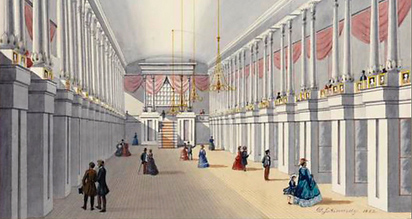
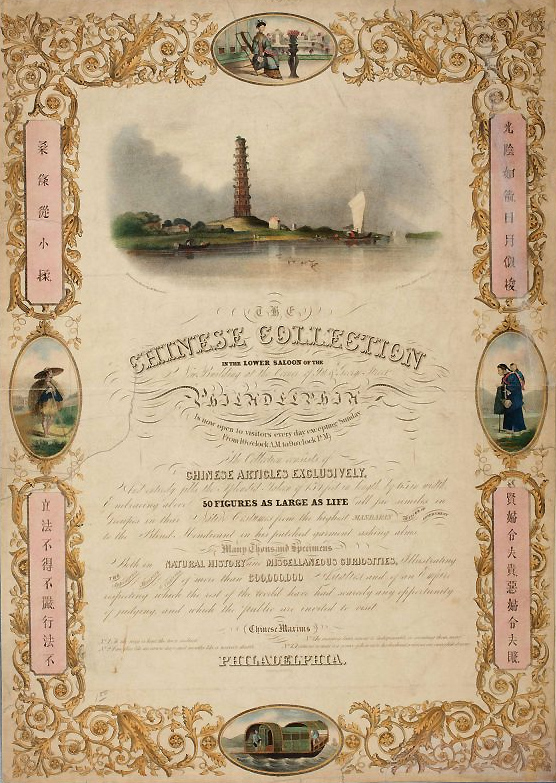
The late phases of the war itself were heavily reported in the newly-established Illustrated London News, depicting the enemy (as war reporting often does) as particularly savage and cruel, reinforcing negative views of China as a land of opium addicts, moral squalor, violence, and anarchy. The post-war years brought new trading treaties and opportunities for the US and England. Among a public increasingly conscious of and interested in details of Chinese society and economy after years of intensive coverage of China in the popular press, Chinese art and material culture began to be collected and appreciated on a scale not previously seen. This surging interest in Chinese art and material culture, both in Britain and in the US, resulted at least in part from a series of commercially successful public exhibitions opened by entrepreneurs to feed this growing appetite.
The Impact of Early Exhibits
From the 1830s through 1850s, they presented a relatively honest and admiring image of China, illustrated with a comprehensive assortment of material objects and displayed before a huge and influential Western audience still unfamiliar with this distant land and culture.
They “created a sensation,” as historian John Haddad would note, “because it produced an effect that no book or magazine could match: it actually seemed to transport visitors to China and return them home that same afternoon, in time for tea.”
They fed the British interest in China following the First Opium War, presenting a more favorable view of that country than was provided by the press.
However, they also conveyed to Westerners a sense of China as an unchanging culture, frozen in time, that could be understood through collections of objects that visually reminded the viewer of how different China was from Britain and the West. This approach would continue in the representation of Asian cultures in the early international exhibitions.