The Events of the Parliament

Room No. 2
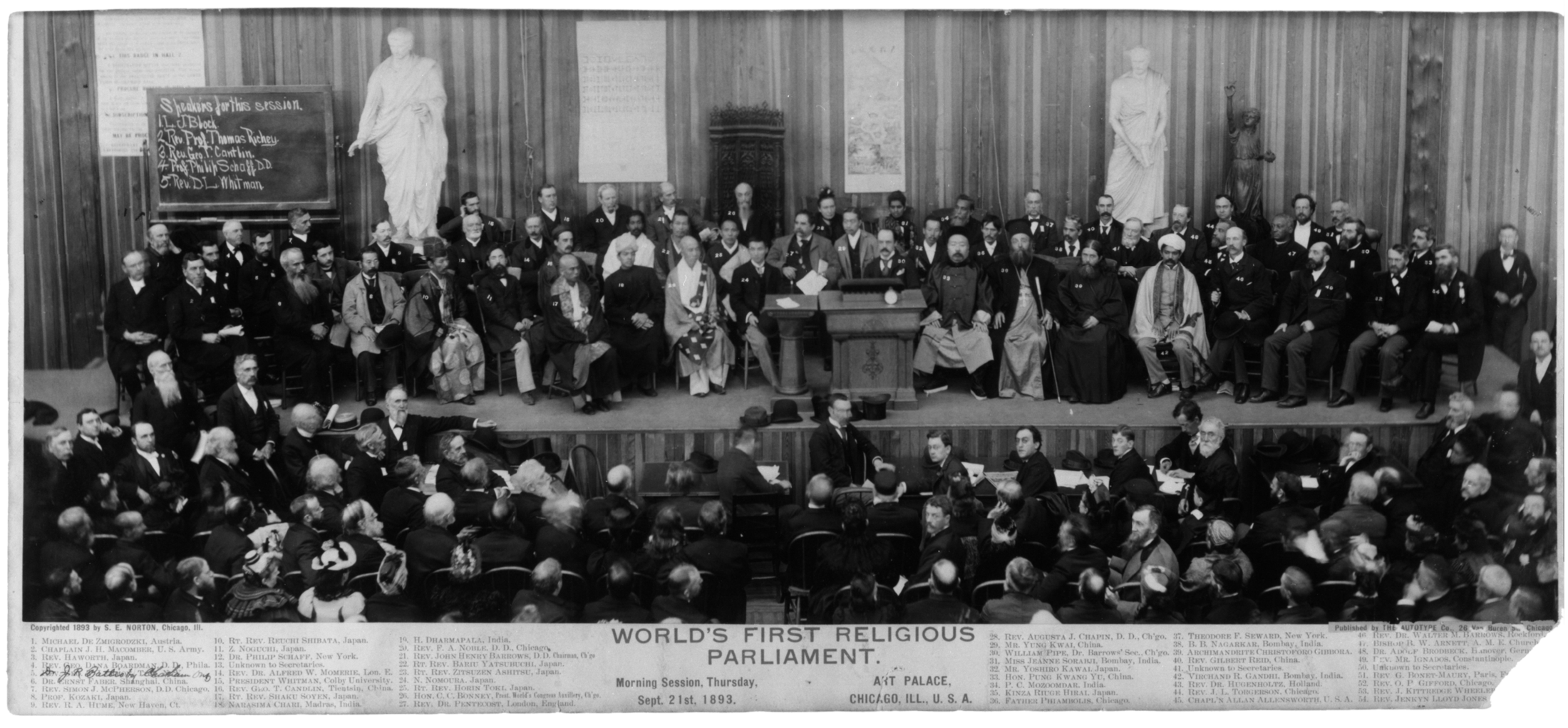
Delegates on the stage of the Hall of Columbus at the World’s Parliament of Religion, Morning Session on Thursday, Sept. 21, 1893.
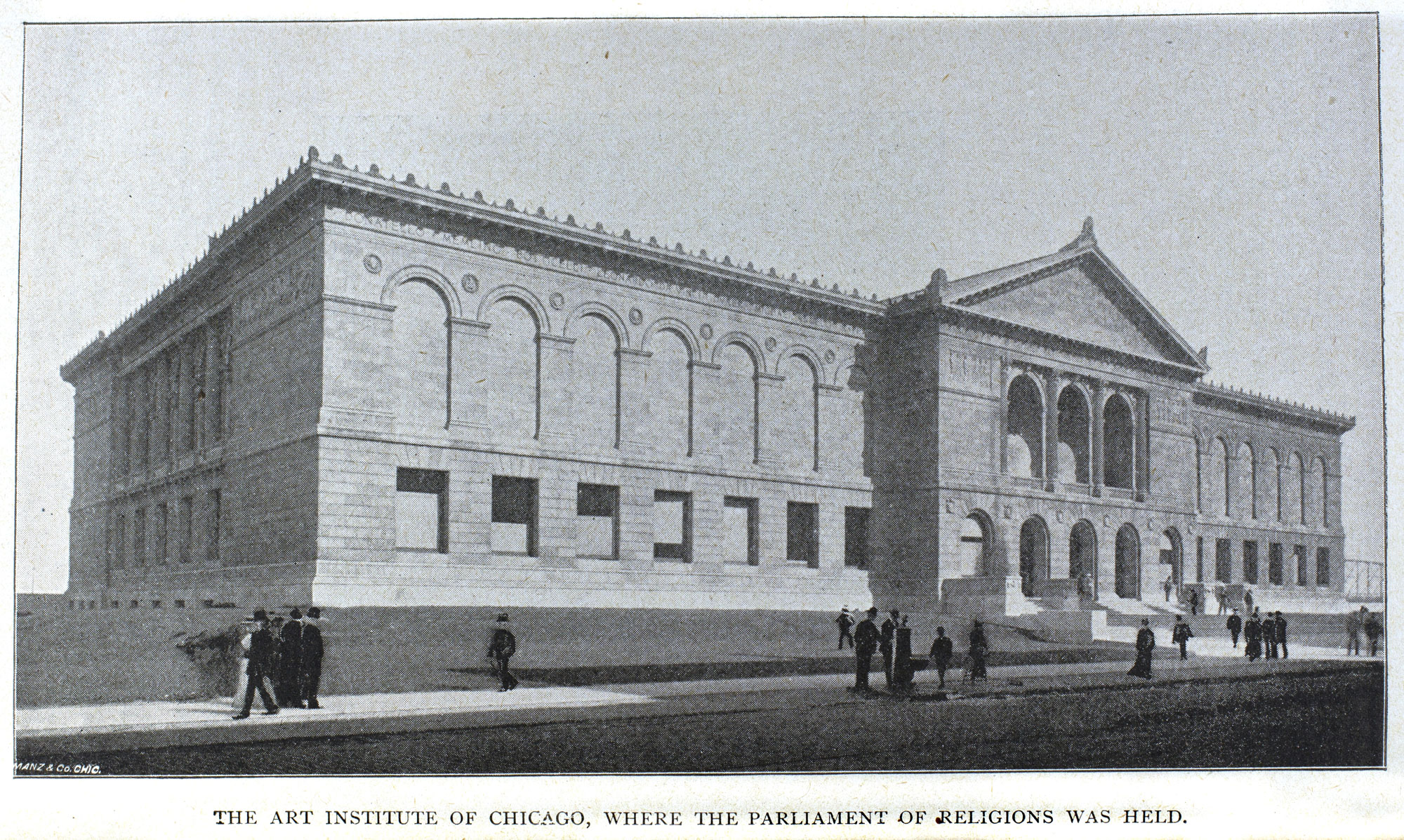
“The Art Institute where the Parliament of Religions was Held.” From John Henry Barrows, Meeting of the World’s Parliament of Religions (Chicago: The Parliament Publishing Company, 1893), frontispiece and p.35.
The Parliament drew significant media attention even before the delegates assembled in Chicago. International and domestic newspapers, journals and magazines printed articles about the forthcoming meeting of the world’s most prominent religious figures. Most media accounts before the Parliament framed it as an expression of universal brotherhood.
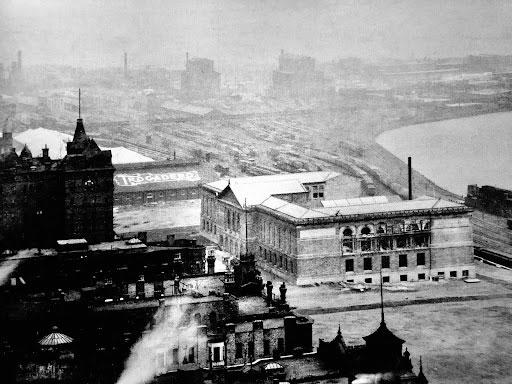
View of the World’s Congresses Hall (later called the Memorial Art Palace and then the Art Institute of Chicago) under construction in 1892 for the upcoming World’s Columbian Exposition. This building replaced the previous Inter-State Exposition Building, an immense iron and glass domed structure designed by W. W. Boyington built in 1873 to host trade shows and public performances and other gatherings.
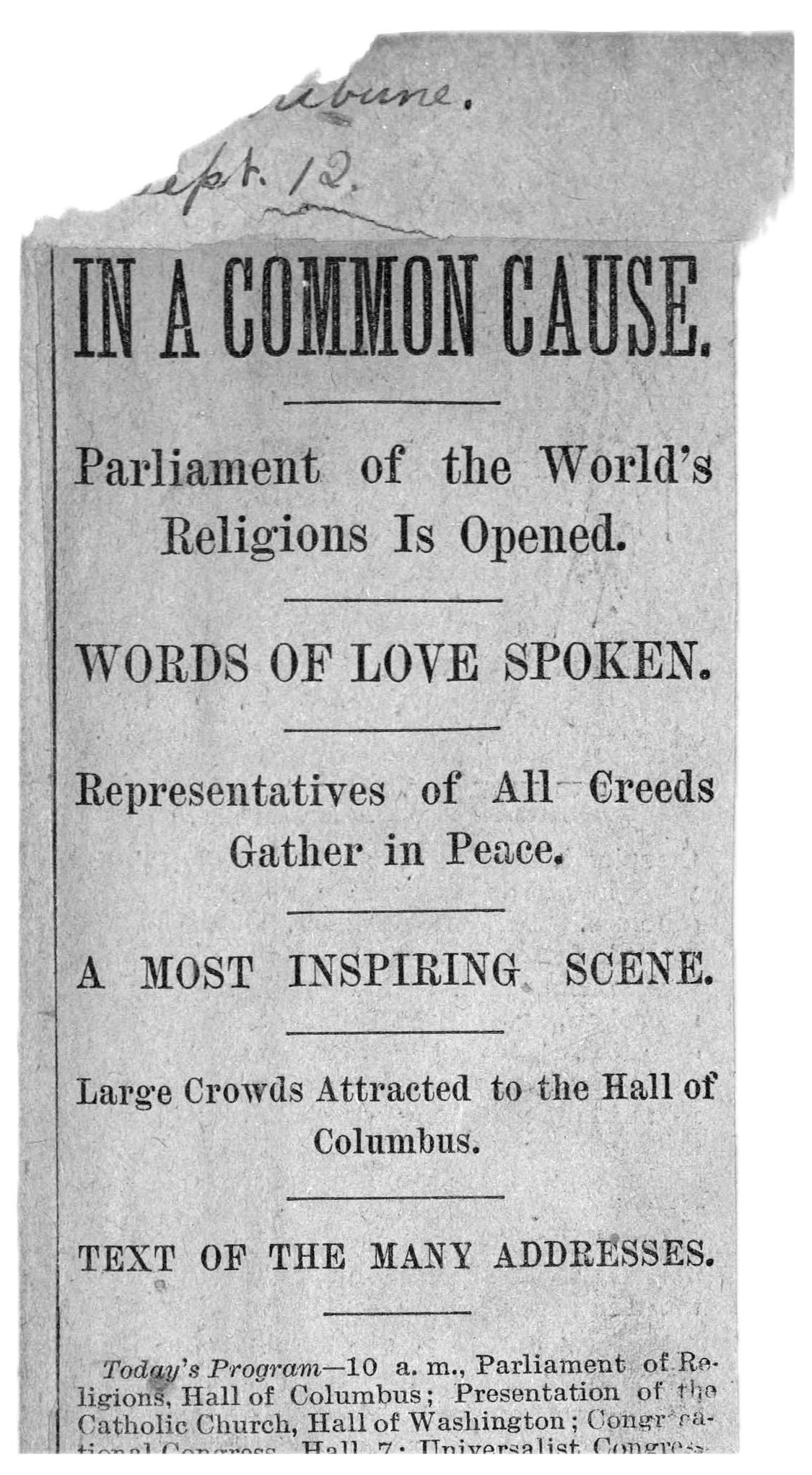
“A Most Inspiring Scene.” Newspaper headline announcing the opening of the Parliament of the World’s Religions, Chicago Daily Tribune, Sept. 12, 1893.
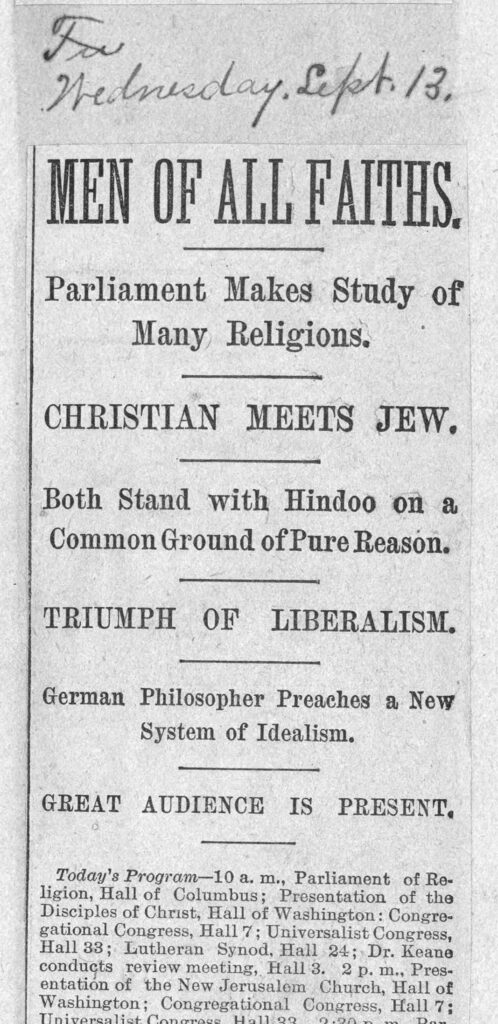
“Men of All Faiths” newspaper headline announcing the opening of the Parliament of the World’s Religions, Chicago Daily Tribune, Sept. 13, 1893.
An article in the Chicago newspaper The Daily Inter Ocean pictured the Parliament as a symbolic gathering of the world’s people “under one roof, each one grasping the other’s hand in the broader brotherhood of humanity, representatives of over 1,000,000,000 people who worship at the shrine of some deity.”1 This newspaper account of the Parliament also saw it as a search for universal truth. The same article says, “And let it here be said that the religions to be represented must have some claim other than that of mere existence.”
An article in the journal Science indicated that the gathering might even have a scientific purpose, noting that “Now there is no existing science in which more still remains to be done in the collection of materials than in comparative religion.”2 Indeed, many saw the Parliament as an opportunity to learn about the lesser known religions of Asia.
According to John Henry Barrows’ account of the gathering, The World’s Parliament of Religions, An Illustrated and Popular Story of the World’s First Parliament of Religions, Held in Chicago in Connection with the Columbian Exposition of 1893 (London: Review of Reviews Office, 1893), the opening ceremony saw the arrival of the following Asian delegates:

Siddhu Ram (Punjab, India) Affiliation: Muslim
Virchand A. Gandhi (Bombay, India) Affiliation: Jain Association of India
P.C. Mazumdar (Calcutta, India) Affiliation: Brahmo-Samaj
H. Dharmapala (Colombo, Ceylon) Affiliation: Maha-Bodhi Society & Southern Buddhist Church of Ceylon
Prof. C.N. Chakravarti (Allahabad, India) Affiliation: Theosophy
Hon. Pung Kwang Yu (China) Affiliation: Confucianism
Rt. Rev. Horin Toki (Japan) Affiliation: Buddhist Church of Japan
Rt. Rev. Reuchi Shibata (Japan) Affiliation: Shinto (Zhikko sect)
Rt. Rev. Zitsuzen Ashitsu (Japan) Affiliation: Buddhist Church of Japan
Kinza Riuge Hirai (Japan) Affiliation: Buddhism
Swami Vivekananda (India) Affiliation: Hinduism
B.B. Nagarkar (Bombay, India) Affiliation: Brahmo-Samaj
Jinda Ram (India) Affiliation: Muslim
Rt. Rev. Banriu Yatsubuchi (Japan) Affiliation: Buddhist Church of Japan
Shaku Sōen (Japan) Affiliation: Buddhist Church of Japan
Noguchi Zenshirō (Japan) Affiliation: Buddhism
Prince Chandradat Chudhadarn (Siam) Affiliation: Buddhism
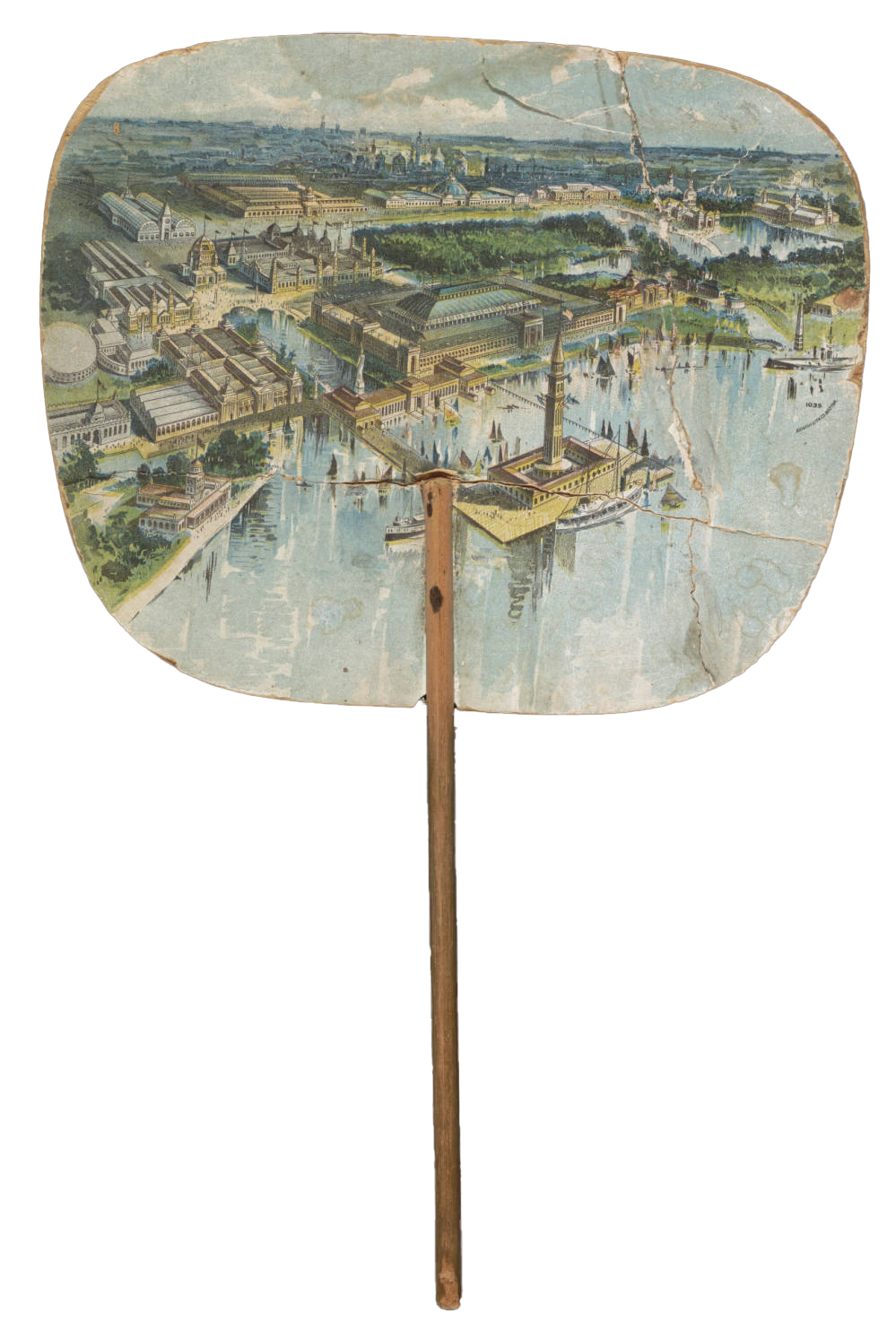
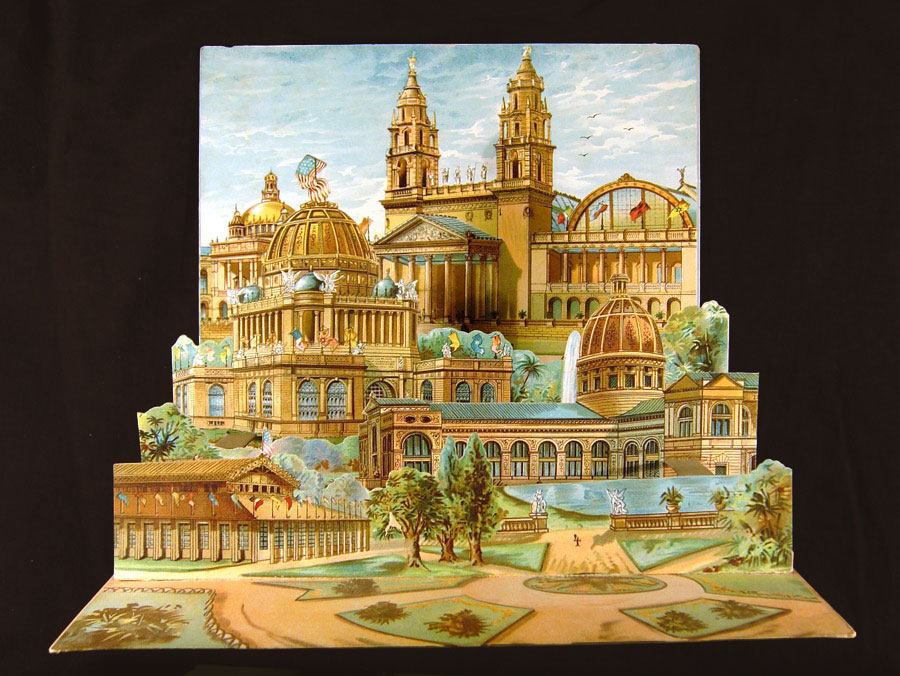
Paper/cardboard fan provided as a souvenir of the 1893 Columbian Exposition. The image includes a color illustration of fair grounds on one side, and an advertisement for Blue Label Cigars on the other. (Source: New York Heritage Digital Collections, Theodore Roosevelt Inaugural Site Foundation)

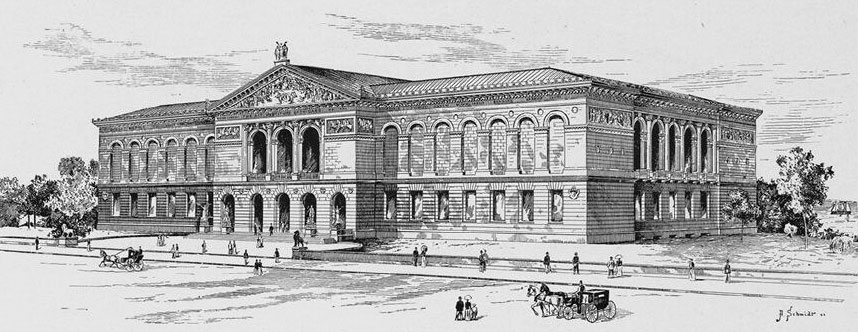
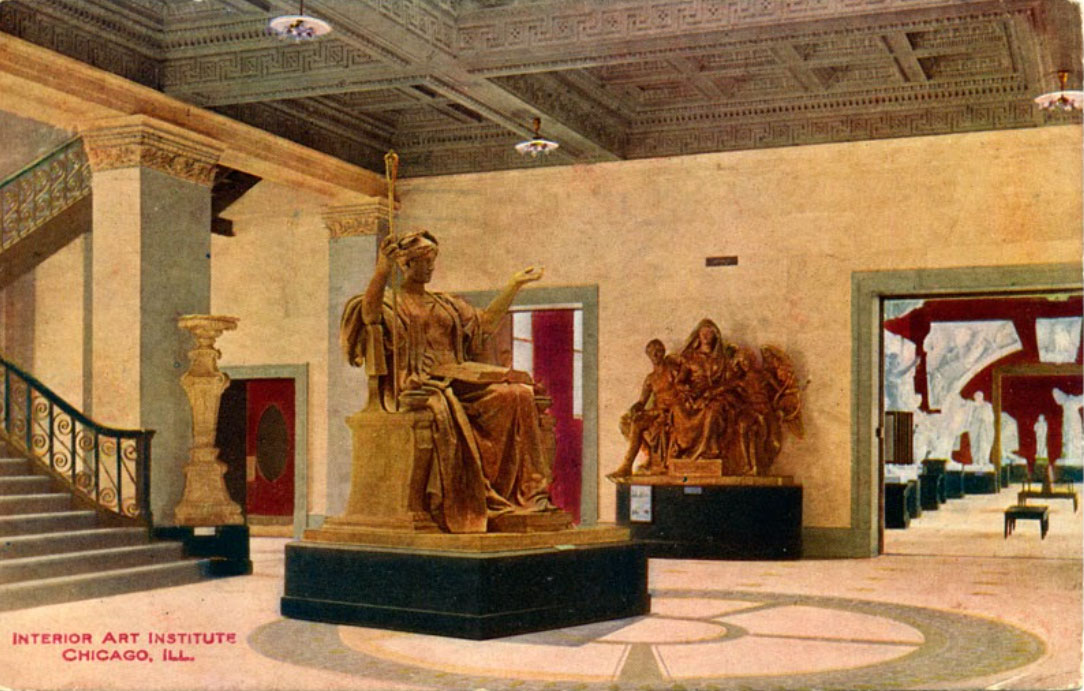
Memorial Art Palace, Chicago, 1893. Designed by Shepley, Rutan and Coolidge, Boston. From Hubert Howe Bancroft, The Book of the Fair, Volume 1 (Chicago, The Bancroft Company, 1893).
The World’s Parliament of Religions began with an elaborate opening ceremony on the morning of September 11th, 1893. Nearly 4,000 spectators arrived to witness the proceedings of this historic first day of the seventeen-day Parliament in the cavernous Hall of Columbus and Hall of Washington in the newly-constructed World’s Congresses Hall (also known as the Memorial Art Palace, which after the Columbian Exposition became the home of the Art Institute of Chicago). Before the ceremony began, the newly-cast 13,000 pound bronze “Columbian Liberty Bell”—created to honor the Columbian Exposition “as a permanent missionary of liberty and peace,”3 and bearing the scriptural phrase, “A new commandment I give unto you, that ye love one another”—sounded ten times to represent the ten major religions of the world: Buddhism, Christianity, Confucianism, Hinduism, Islam, Jainism, Judaism, Shintoism, Taoism, and Zoroastrianism.
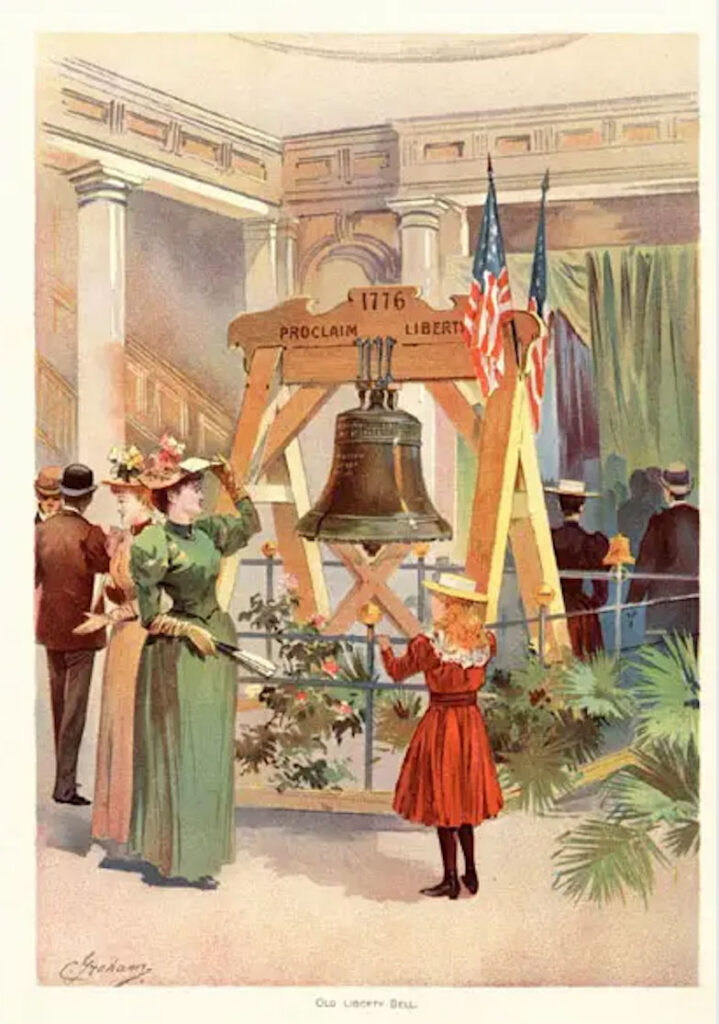
“Old Liberty Bell.” Color plate by Charles S. Graham from Along the Plaisance: The World’s Fair in Water Colors. Springfield, OH: Mast, Crowell & Kirkpatrick, 1893.
As the audience silently anticipated the arrival of the delegates, reports say, there was a palpable sense of excitement pervading the room. At the appointed time, the delegates marched down the center aisle of the hall, headed by the Parliament President Charles C. Bonney and Cardinal James Gibbons, the Archbishop of Baltimore. Following them were delegates from many different ethnicities, nationalities, religions and spiritual orientations.4 The procession symbolized the Parliament’s aspiration for brotherhood, unity, and the reconciliation of religious differences.
The audience was impressed by the colorful attire of the Asian delegates, each group in its own distinct manner and style. The Japanese delegation appeared in fine silk robes reminiscent of a rainbow. Swami Vivekananda, a Hindu representative, was clad in a red robe with a yellow turban. Anagarika Dharmapala, a Buddhist representative from Ceylon, was characteristically dressed in the white robes of a Buddhist layman. The Chinese delegation wore ornately embroidered mandarin robes. In contrast to the other Asian delegates, Pratap Chandra Mazumdar, a representative of India’s Brahmo-Samaj, surprised many observers by wearing a simple black European suit.5
Architecture at the Parliament
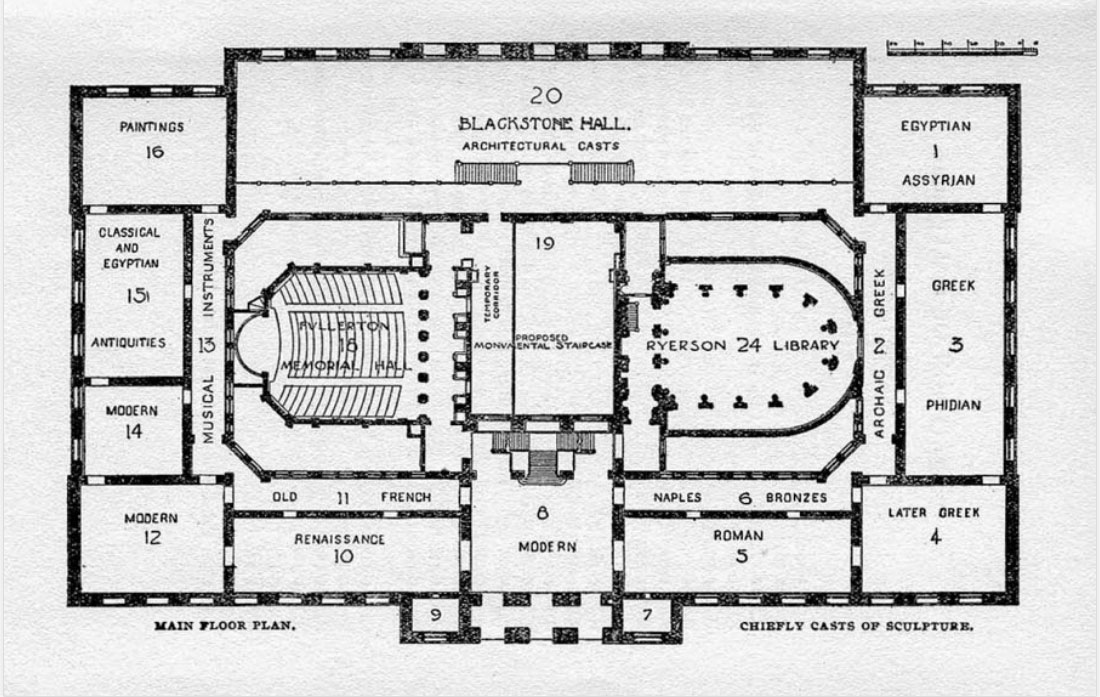
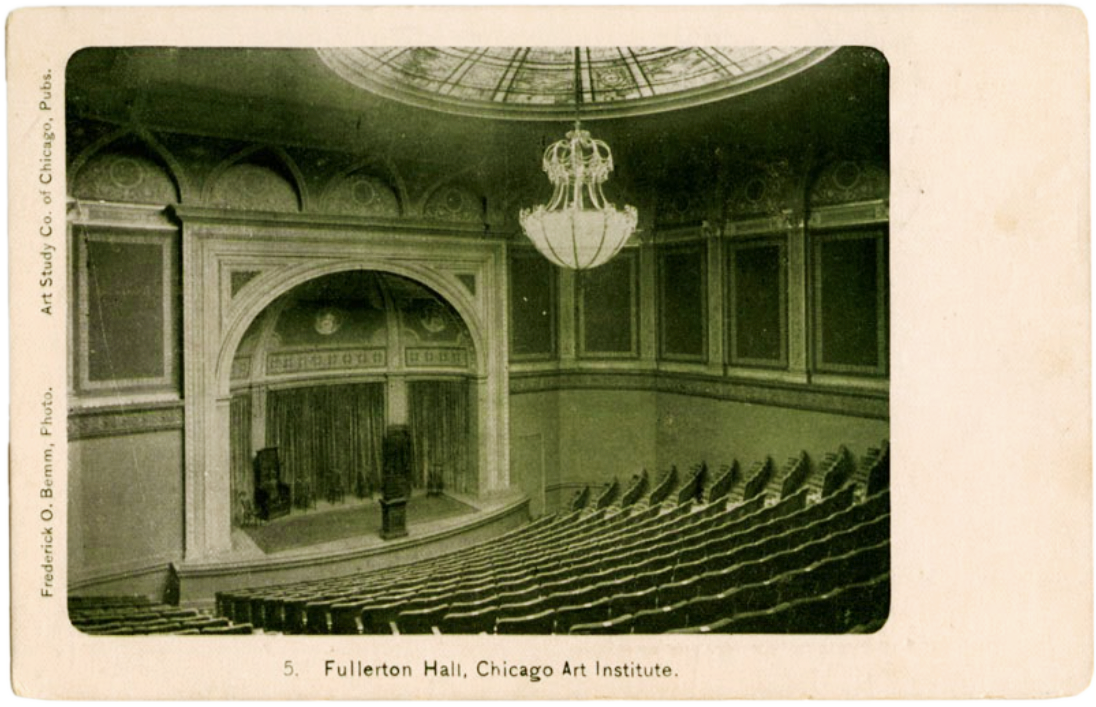
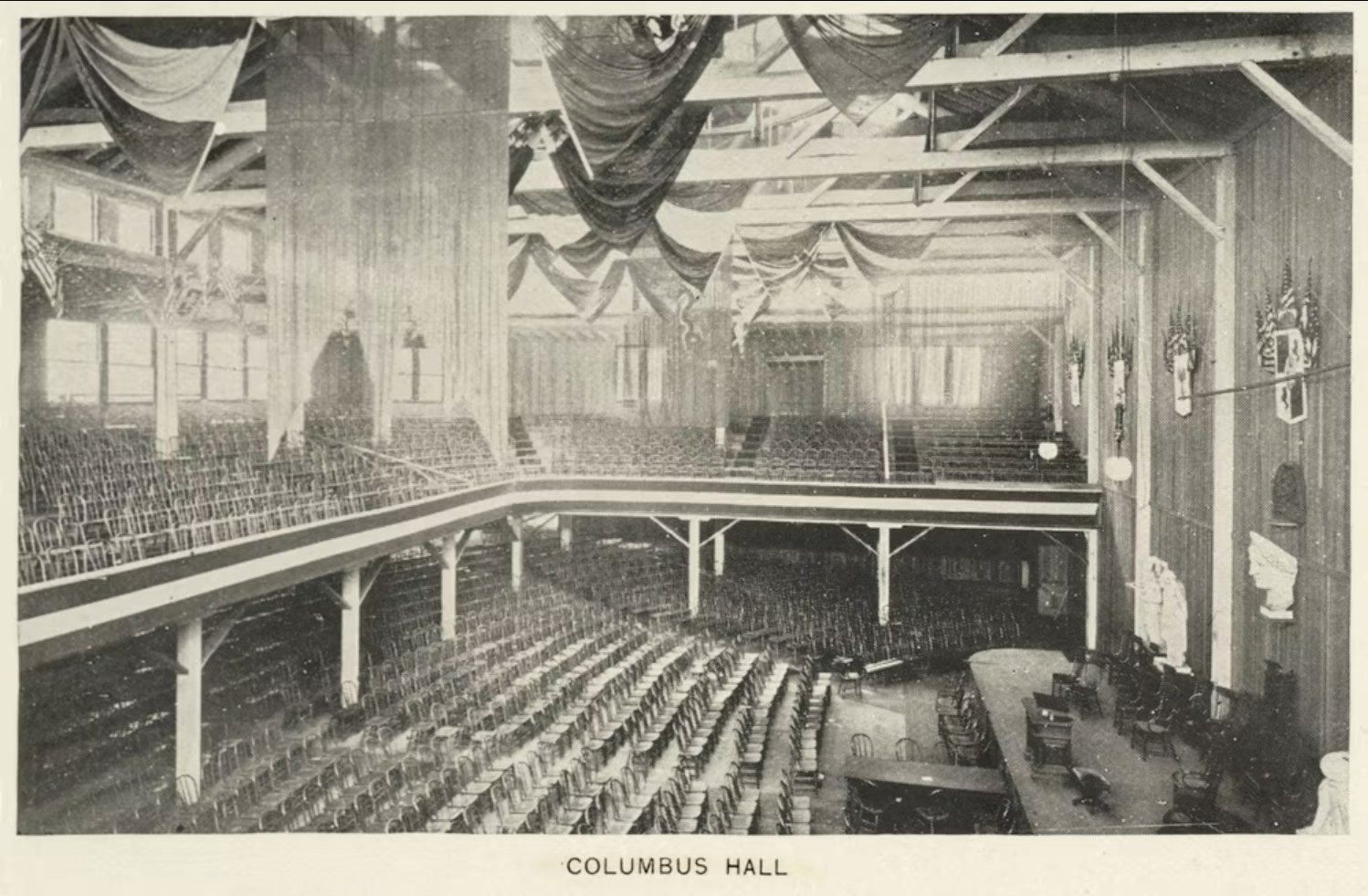 Columbus Hall, the main venue for the Parliament of World Religions in 1893. It was later reconfigured into the Art Institute of Chicago’s present Fullerton Hall. From a postcard ca. 1915.
The audience burst into applause when the delegates reached the central platform and were seated under their countries’ flags, all of which provided a dynamic background as they gently waved behind the delegates. After the delegates had settled into their chairs, everyone-—delegates and audience—joined in mass prayer with a rendition of the One Hundredth Psalm: “Worship the Lord with gladness; come before him with joyful songs. Know that the Lord is God…”
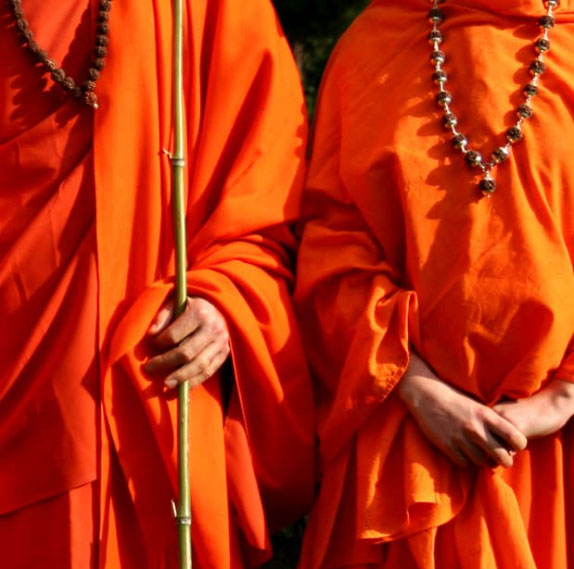
Ashram monks wearing traditional orange robes. (Source: ashramgita.com)
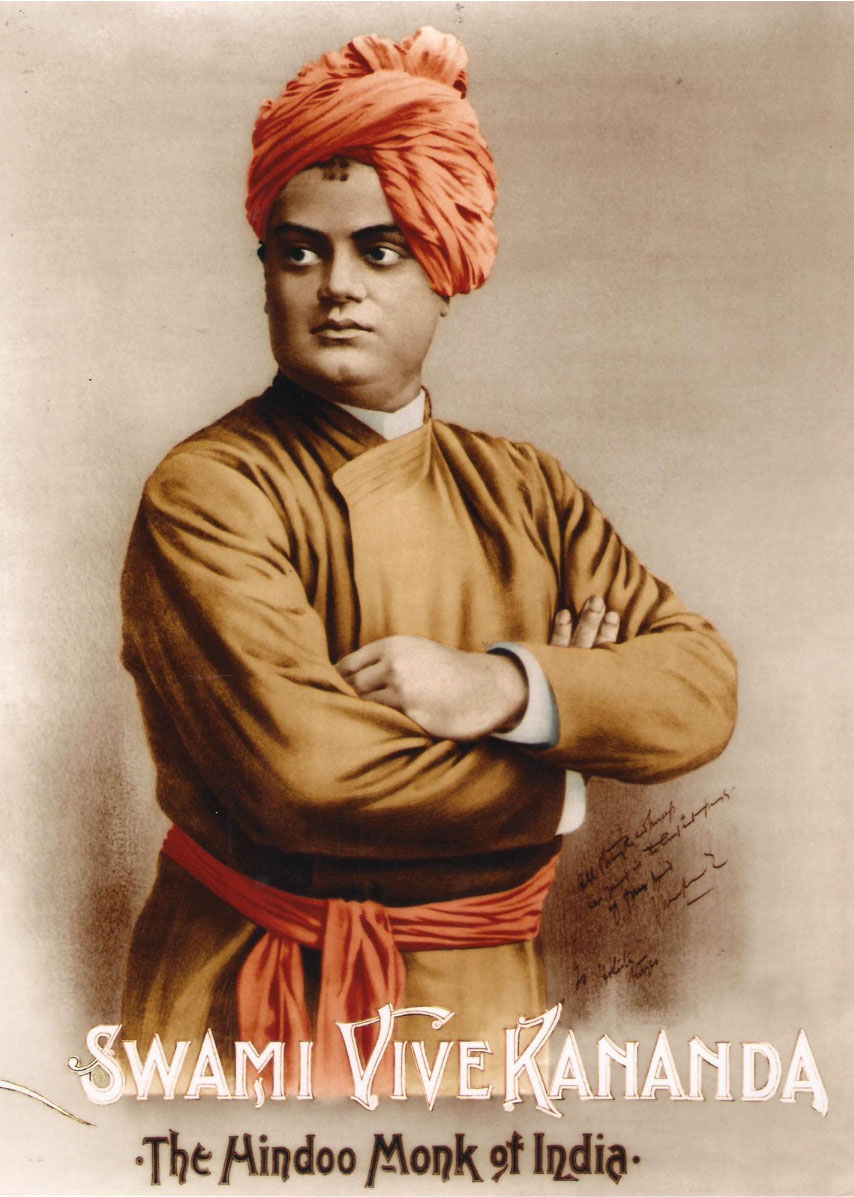
Swami Vivekananda depicted on a popular poster that was displayed around Chicago during the World Parliament of Religions. (Source: Goes Lithographic Co., Chicago, lithographic poster, 1893.)
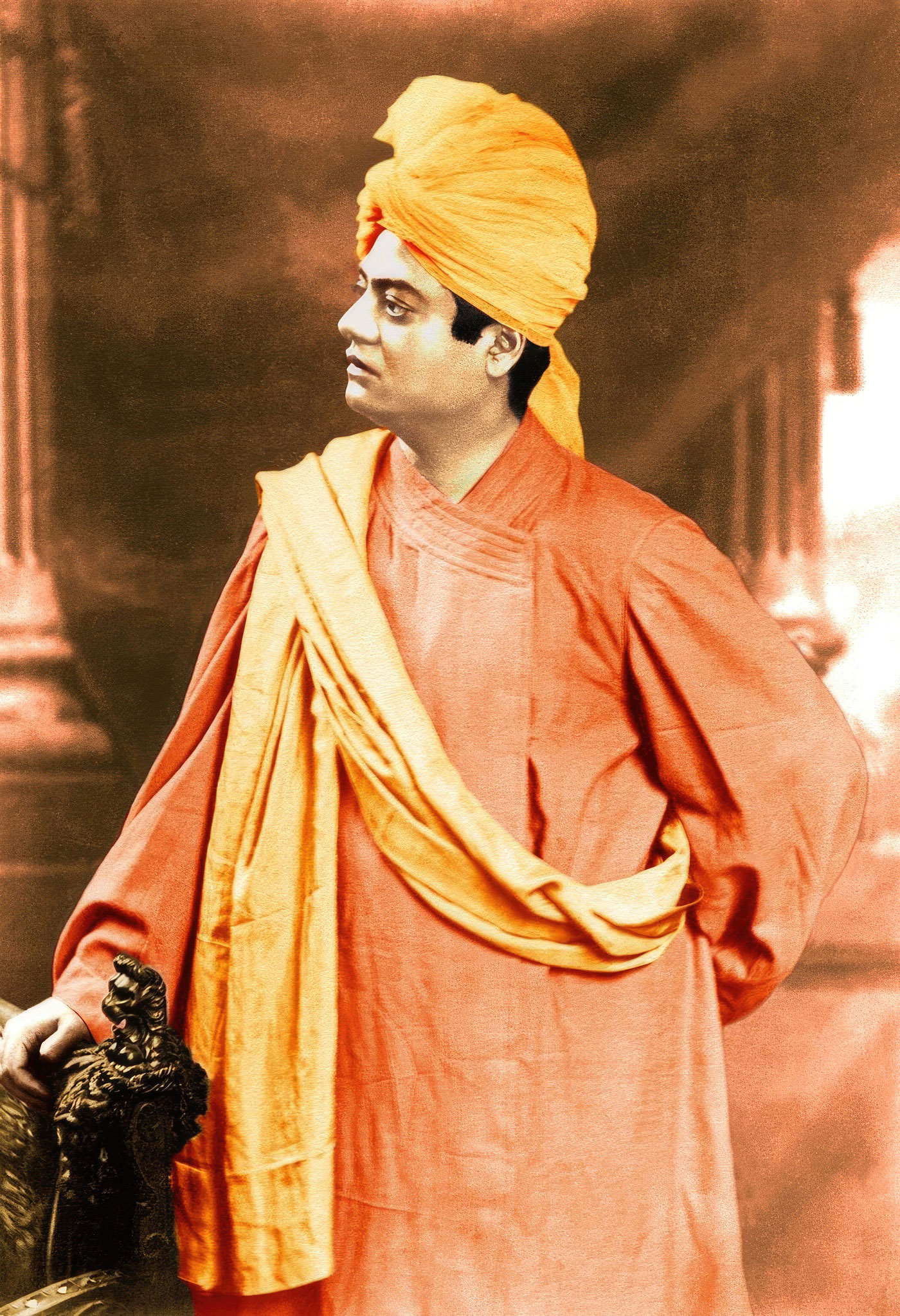
Swami Vivekananda as he appeared during his December 1896 speaking tour in London.
Charles C. Bonney, the president of the Parliament, opened the event by expressing his hope for a new era of tolerance and mutual understanding.
“Worshipers of God and Lovers of Man, — Let us rejoice that we have lived to see this glorious day; let us give thanks to the Eternal God, whose mercy endureth forever, that we are permitted to take part in the solemn and majestic event of the World’s Congress of Religions. The importance of this event, its influence on the future relations of the various races of men, cannot be too highly esteemed. . . .
Without controversy, or any attempt to pronounce judgment upon any matter of faith or worship or religious opinion, we seek a better knowledge of the religious condition of all mankind, with an earnest desire to be useful to each other and to all others who love truth and righteousness.
This day the sun of a new era of religious peace and progress rises over the world, dispelling the dark clouds of sectarian strife.
This day a new flower blooms in the garden of religious thought, filling the air with exquisite perfume.
This day a new fraternity is born into the world of human progress, to aid in the upbuilding of the kingdom of God in the hearts of men.
Era and flower and fraternity bear one name. It is the name which will gladden the hearts of those who worship God and love man in every clime, those who hear the music joyfully echo it back to sun and flower.
IT IS THE BROTHERHOOD OF RELIGIONS.
In this name I welcome the first Parliament of Religions of the World.

Rev. Augusta J. Chapin, D.D., Chicago. From Barrows, World’s Parliament of Religion, vol 1, p. 55.
He was followed by John Henry Barrows, the chair of the Organizing Committee, and by a series of other North American religious luminaries, including Archbishop Feehan of Chicago and the Rev. Augusta Jane Chapin (1836-1905), chair of the Woman’s Organizing Committee, who welcomed not only men but also women:
“I welcome you, brothers of every name and land, who have wrought so long and so well in accordance with the wisdom high heaven has given to you; and I welcome you, sisters, who have come with beating hearts and earnest purpose to this great feast, to participate not only in this Parliament, but in the great Congresses associated with it.”
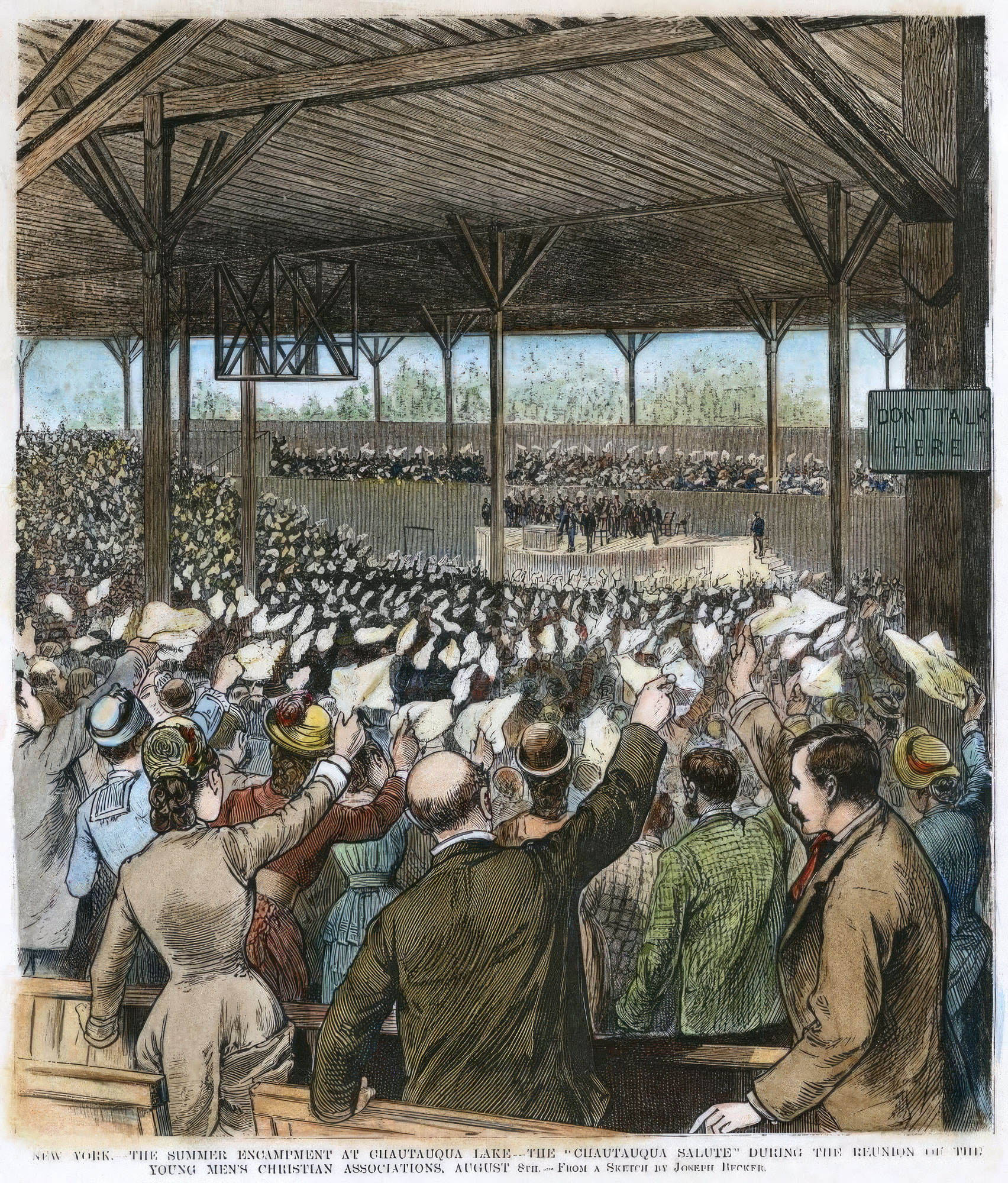
An enthusiastic crowd giving a “Chautauqua Salute” at a YMCA gathering in Chautauqua Lake, New York, in 1880.
Delegates from other parts of the world were invited to respond to these words of welcome. Of these, one of the most memorable was Swami Vivekananda, who addressed the audience with the resonant and memorable words:
“Brothers and Sisters of America!”
According to Barrows’s recollection of this event, the Swami’s words were greeted by a peal of applause that lasted for several minutes. This included the entire audience rising to their feet and waving their handkerchiefs at the speaker, an expression called the “Chautauqua Salute” after its first appearance at the Chautauqua Movement in 1880 at the YMCA summer encampment at Chautauqua Lake, New York.
Brothers and sisters of America! It fills my heart with joy unspeakable to rise in response to the warm and cordial welcome which you have given us. I thank you in the name of the most ancient order of monks in the world; I thank you in the name of the mother of religions; and I thank you in the name of the millions and millions of Hindu people of all classes and sects.
My thanks also to some of the speakers on this platform who have told you that these men from far-off nations may well claim the honor of bearing to the different lands the idea of toleration. I am proud to belong to a religion which has taught the world both tolerance and universal acceptance. We believe not only in universal toleration, but we accept all religions to be true. I am proud to tell you that I belong to a religion into whose sacred language, the Sanskrit, the word of exclusion is untranslatable. I am proud to belong to a nation which has sheltered the persecuted and the refugees of all religions and nations of the earth.
– Swami Vivekananda
Vivekananda’s stirring address was followed by his fellow delegate Anagarika Dharmapala, who reinforced both the scale and deep history of their beliefs. Anagarika Dharmapala responded to the Barrows’s opening remarks by comparing the Parliament to the Buddhist Council sponsored by India’s King Asoka in the third century BCE:
“Friends,– I bring to you the good wishes of four hundred and seventy-five millions of Buddhists, the blessings and peace of the religious founder of that system which has prevailed so many centuries in Asia, which has made Asia mild, and which is to-day, in its twenty-fourth century of existence, the prevailing religion of these countries. . . When I read the program of this Parliament of Religions I saw it was simply the re-echo of a great consummation which the Indian Buddhists accomplished twenty-four centuries ago.” 6
Srimath Anagarika Dharmapala, c. 1900. (Source: Mahabodhi Society)
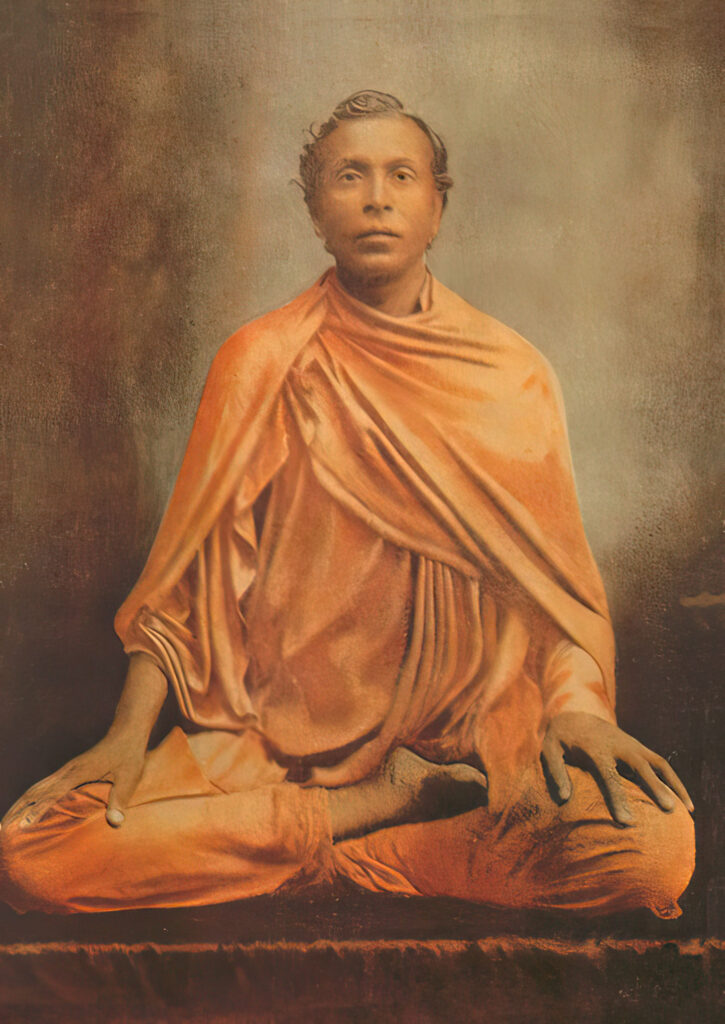
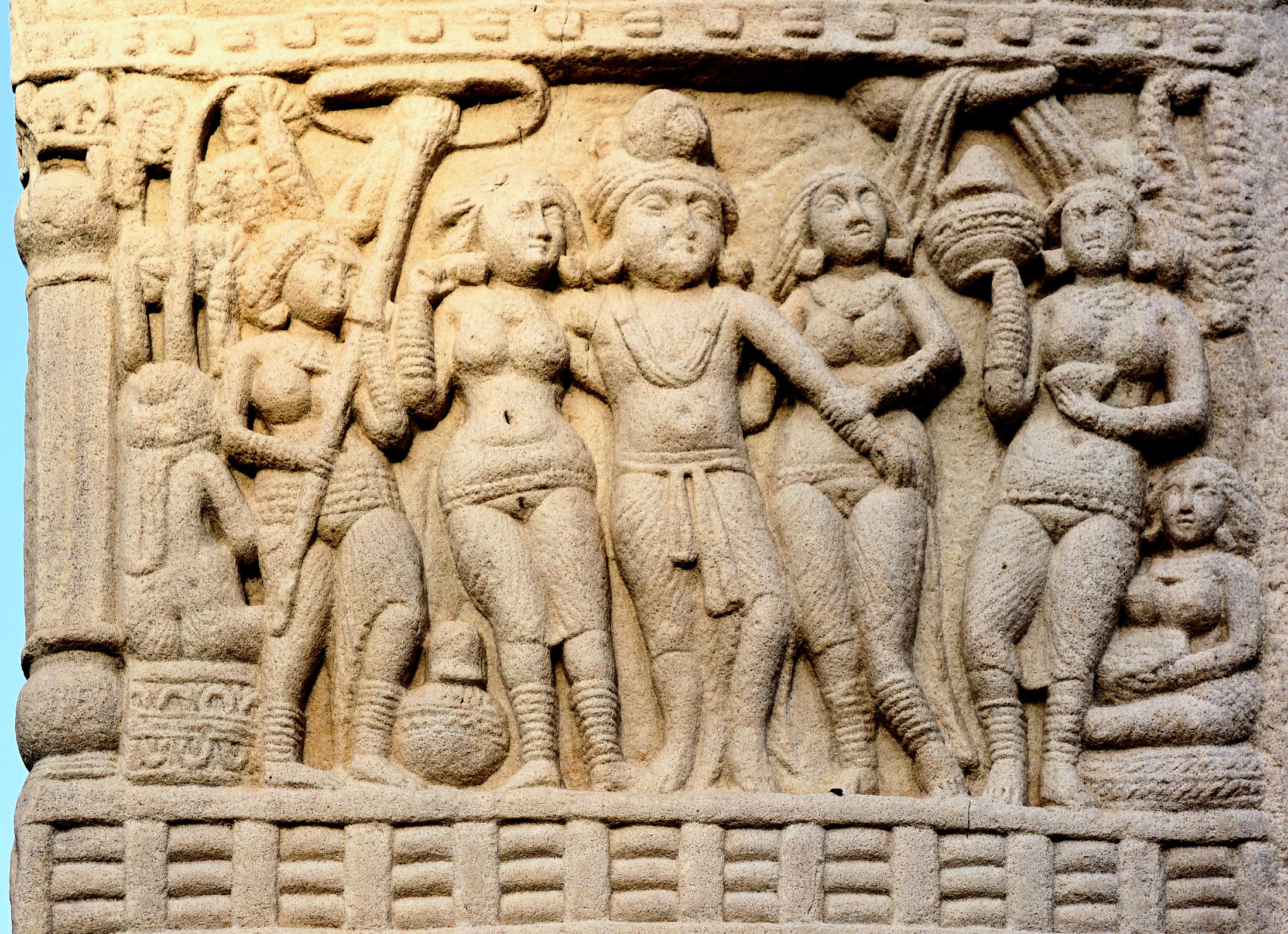
At that time Asoka, the great emperor, held a council, in the city of Patna, of a thousand scholars, which was in session for seven months. The proceedings were epitomized and carved on rock and scattered all over the Indian and the then known globe. After the consummation of that program the great emperor sent the gentle teachers, the mild disciples of Buddha, in the garb that you see on this platform, to instruct the world. In that plain garb they went across the deep rivers, across the Himalayas, to the plains of Mongolia and of China and to the far-off beautiful isles, the empire of the rising sun; and the influence of that congress, held twenty-one centuries ago, is to-day a living power, for you everywhere see mildness in Asia.
These rousing opening remarks set in motion an “epoch-making” event for “mutual understanding and appreciation between the world’s religions,” as one writer noted in the journal Science.7 Even before hearing more elaborate speeches from the delegates about their own religious beliefs, The Inter Ocean newspaper wrote that these opening festivities “suggested a unanimity of purpose and an earnestness of desire to sink creed and racial difference and to get back to those common ties of humanity that bind and link men in a world-wide brotherhood.”8 This sense of enthusiasm continued to grow as the Parliament unfolded.
The audiences’ unexpected and moving approval of the Asian delegates concerned the Parliament organizers. This opening ceremony marked the first time such a large group of Asian religious leaders were able to present their traditions to the American public. Some observers of the Parliament saw this approval as a threat to the dominant position of Christianity in American culture, contributing, as scholar Richard Seager has noted, “to a growing sense that the old truths of the nineteenth century evangelical worldview were threatening to crumble.”9
![Book Cover of Hanson, J.W. 1894. The World's Congress of Religions-The addresses and papers delivered before the Parliament...Aug 25 to Oct 15, 1893. Boston. Gately & O'Gorman [book].](https://asiaworldsfairs.org/wp-content/uploads/2026/01/Hanson-JW-1894-The-Worlds-Congress-of-Religions.jpg)
Cover of the book The World’s Congress of Religions at the World’s Columbian Exposition: The addresses and papers delivered before the Parliament…Aug 25 to Oct 15, 1893, by J.W. Hanson. Boston. Gately & O’Gorman, 1894. Newberry Library copy_B808_98.

Members of the Asian delegation to the Parliament. From Walter R. Houghton, Neely’s History of the Parliament of Religions and Religious Congresses at the Columbian Exposition (Chicago: F. T. Neely, 1893)
For liberal Christians, the Parliament was seen as a hopeful sign of a more inclusive religious fellowship without the limitations of doctrine or creed. In addition to religious diversity, the Parliament also proved to be an exploration of ethnic and racial diversity. For the most part, this diversity was greatly celebrated, despite there being intermittent instances to the contrary. The fact that the Asian delegates, who were often seen as “heathens,” walked side by side and hand in hand with their Christian counterparts was arguably a triumph in and of itself.
The driving force behind the triumph of the Asian delegation can be illustrated in this exhibition through four particular figures who were significant not just for their individual impact, but also for their influence on the later development of Asian religions in America. The four figures representing Buddhism, Hinduism, and Confucianism are Shaku Sōen from Japan, Swami Vivekananda from India, Anagarika Dharmapala from Ceylon, and Pung Kwang Yu from China.
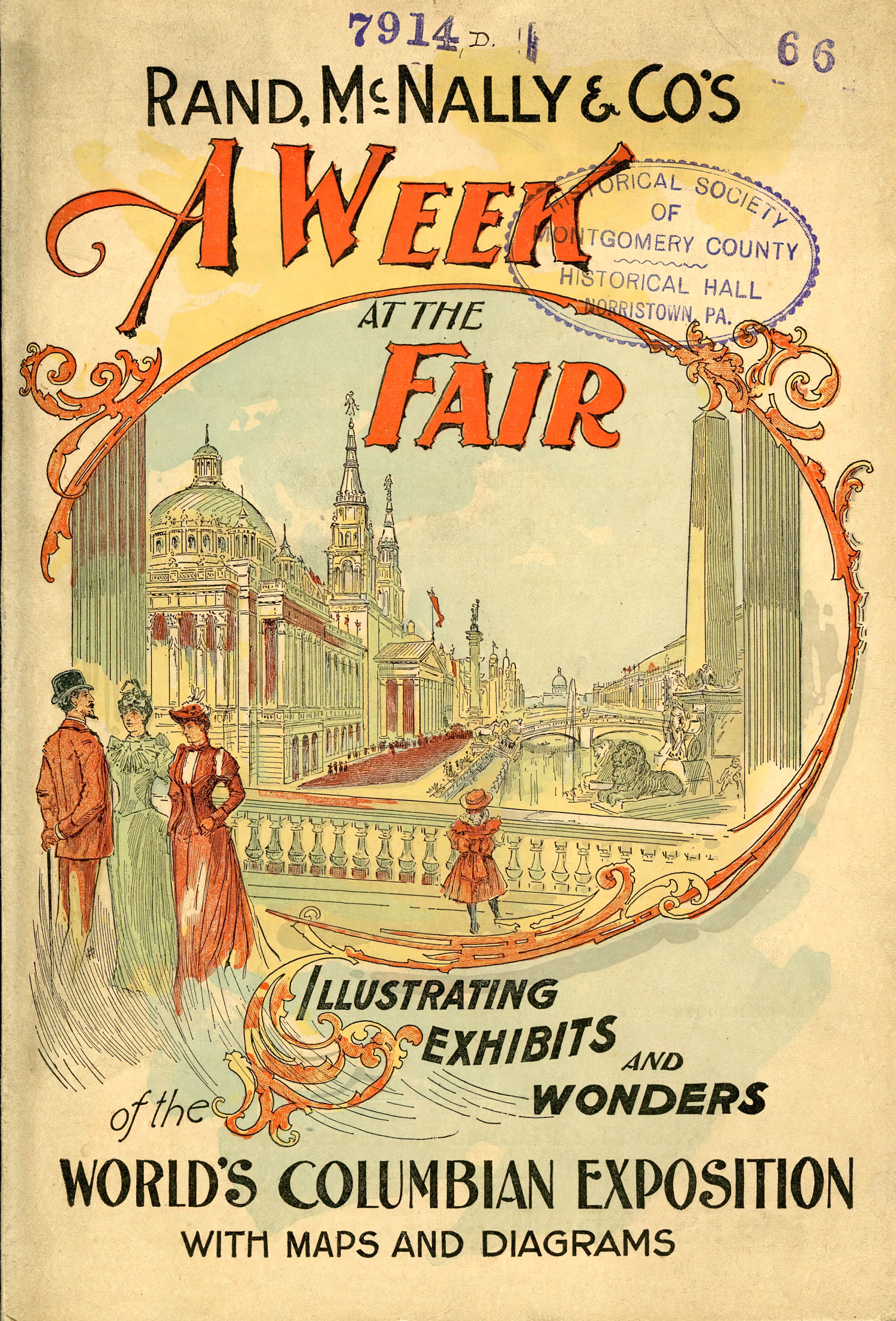
Cover of Rand McNally & Co’s A Week at the Fair (Chicago, 1893)
Footnotes
- “All under One Roof Representatives of Every Sect in the World. Parliament of Religions.” The Daily Inter Ocean (Chicago), Iss. 230, vol. XXI. November 11, 1892. ↩︎
- Merwin-Marie Snell, “An Exhibit of Religions,” Science 22, No. 551 (Aug. 25, 1893), pp. 99-100. ↩︎
- William O. McDowell, Proposed Liberty Bell for the Columbus Exhibition and as a Permanent Missionary of Liberty and Peace. 16-page pamphlet, Advertiser Printing House, 1892. ↩︎
- Herbert Stead, in his review article “The Story of the World’s Parliament of Religions” (The Review of Reviews, IX (1894), p. 299), describes the majesty of the opening of the Parliament: “There were not wanting elements of pageantry to touch the popular imagination. The opening ceremony was a brilliant spectacle of moving color. [James] Cardinal Gibbons, robed in scarlet, occupied the centre; on either side of him were Orientals in garments of “gorgeous red” and yellow, of orange and white, or of pure white. The silken and many hued magnificence of the Chinese and Japanese delegates excited special admiration. Not less noteworthy in their way were the sombre costume of the Hindu monk and the imposing vestments of the Greek Archbishop, while around and before them stood thousands of men and women in varied garb from almost every nation under heaven.” ↩︎
- W.R. Houghton, Neely’s History of the Parliament of Religions and Religious Congresses at the World’s Columbian Exposition. 3rd ed. (Chicago: Neely, 1893), 35. ↩︎
- John Henry Barrows, The World’s Parliament of Religions – an illustrated and popular story of the World’s First Parliament of Religions, held in Chicago in connection with the Columbian exposition of 1893, Vol. 1, p. 95. ↩︎
- Merwin-Marie Snell, “An Exhibition of Religions,” Science, August 1893, p. 22. ↩︎
- “Creeds in Council: Formal Opening of the Parliament of Religions,” The Inter Ocean (Chicago), September 12, 1893. ↩︎
- Richard Hughes Seager, The World’s Parliament of Religions, Chicago, Illinois, 1893: America’s Religious Coming of Age, (PhD dissertation, Harvard University, 1986). ↩︎