Asian Voices at the World Parliament of Religions
Room No. 3: After the Parliament
SWAMI VIVEKANANDA
(1863-1902)
Swami Vivekananda remained in Chicago for more than a month after the Parliament ended, living in the homes of some of Chicago’s most prominent leaders. The Swami made several lecture appearances in and around Chicago, drawing enthusiastic crowds. He spoke at the Fortnightly Club, one of the most influential women’s clubs in the city, and other venues. After his successes as a lecturer in the Chicago area, the Swami signed a three-year contract with the Slayton Lyceum Bureau which arranged for a broader tour in midwestern and southern states.
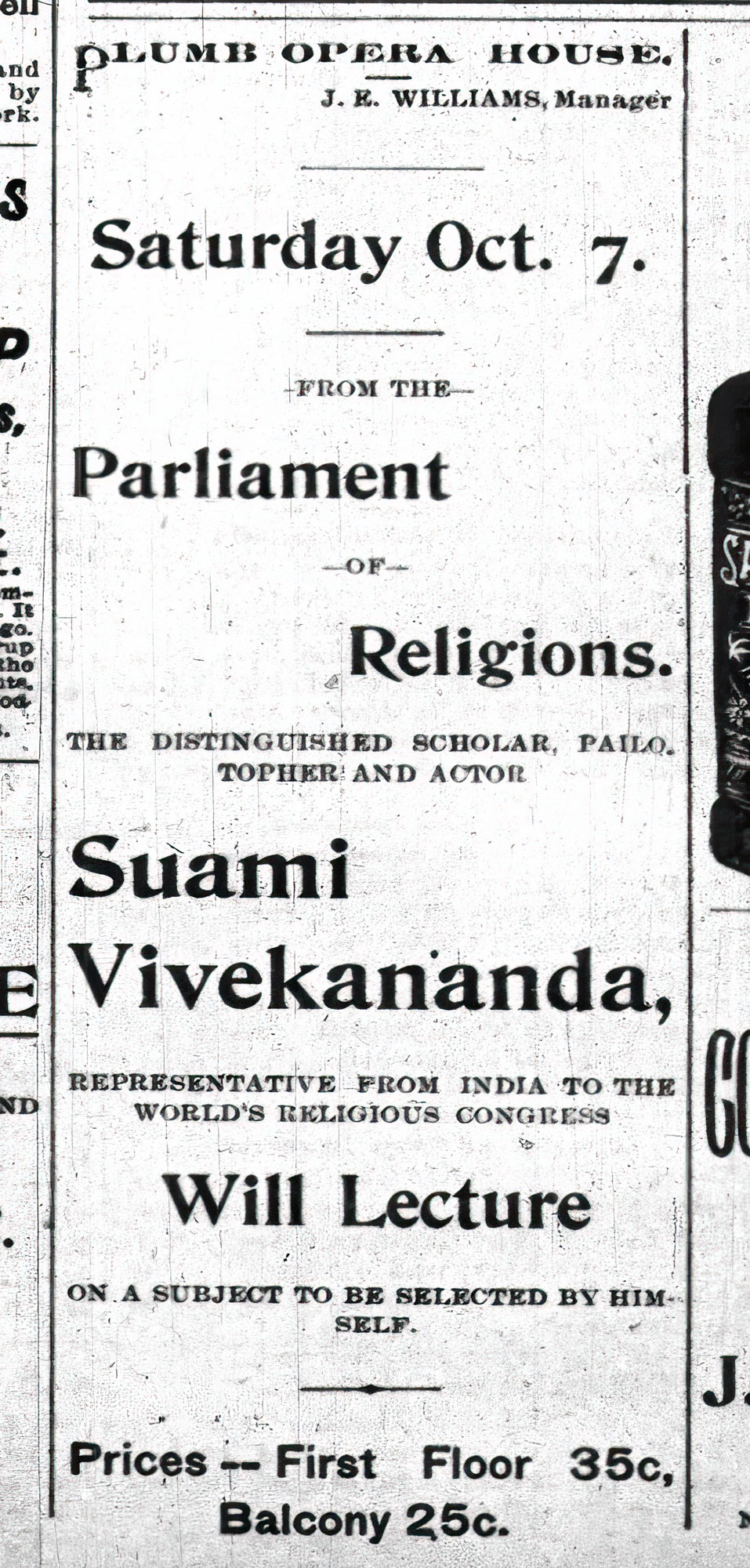
Advertisement of an upcoming lecture by Swami Vivekananda at the Plumb Opera House in Streator, Illinois, on Oct. 7, 1893. Published in The Times (Streator, Illinois) October 4, 1893, p. 2.
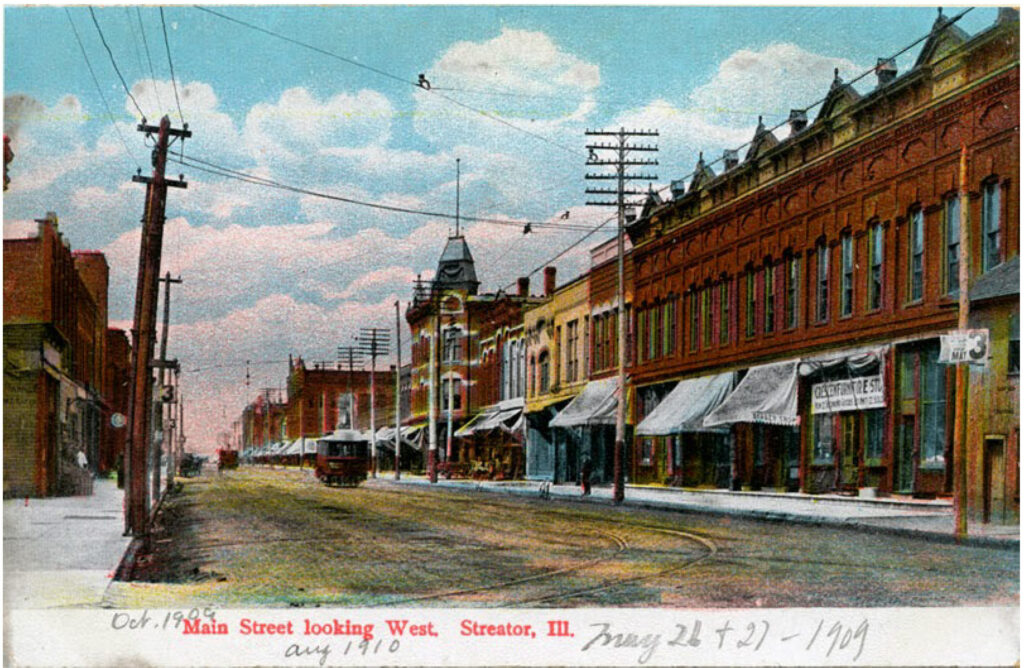
Post card showing Main Street in Steator, Illinois, ca. 1909.
Vivekananda’s Midwest tour began with a trip to Madison, WI on November 20, 1893. In addition to Madison, the Swami visited other major cities, such as Minneapolis and Des Moines, where he seemed to have a particularly warm reception. Reports of lectures he gave in Des Moines attest to the enthusiasm the city had for him. In fact, before leaving Des Moines in December to return to Minneapolis for another lecture, a report from the Iowa State Register from December 1 said, “The visit of Vivekananda, stirring as it did the intellectual centers of the city to their depths and starting a lively religious discussion prepared the way for the present visitor [B.B. Nagarkar, a former Parliament delegate of the Brahmo-Samaj] from the Orient and heightened public interest in whatever he might have to say.” Clearly, the start of Vivekananda’s tour had drawn the attention, and perhaps respect, of audiences that were willing to engage with Hindu traditions.. Reports or newspaper articles about his lecture series suddenly stopped for six weeks, until news of him in Memphis in January 1894 emerged. He would go on to make a return trip back to Chicago as well as a climactic trip to Detroit in mid-February 1894. He returned to Detroit in 1896 for three lectures and classes on the four yogas, and visited again in 1900 to see two converts to Hinduism.
Swami Vivekananda’s travels were not uniformly successful. He often faced criticism, especially from Christian clergy who resented Vivekananda’s teaching that no single religion reigned supreme. They took this as a challenge to their authority and reacted accordingly. They also took issue with the Swami’s critique of hypocrisy within Christianity both at home and abroad. In their attempts to resist the Swami, clergy in cities that he visited would hurl insults at him and his country, claiming that India was a degenerate nation. They would also insist that missionaries doing God’s work abroad were heroes to whom Hindus should be grateful and whom Americans should continue to support. Despite all this, Vivekananda’s passion and enthusiasm never wavered. In fact, he is quoted in a letter as saying, “The more I have been opposed, the more my energy has come out always.”1
Detroit Scenes
He went on to have a particularly impressive visit in Detroit, receiving the admiration of O. P. Deldoc, a columnist and critic for the Detroit Critic. In his article, dated March 18, 1894, he writes, “I claim that the vast majority of so-called Christians are not true […] They are continually belching forth flames of fire (hell fire) upon all who differ from their favorite dogmas.” He goes on to say, “A religious Hindoo comes to us and talks of love, asking for bread and they give him a stone […] They claim Christianity has caused all advancement, all civilization […] It is as falsely ridiculous to claim such chimerical Christianity has been the cause of civilization as it would be to say that it was due to plug hats and suspenders.”
Deldoc’s article represents just one of many admiring accounts of the Swami’s impact on his audiences. He awakened America to new religious possibilities and opened the eyes of his audiences to the hypocrisy in Christian approaches to other religions.
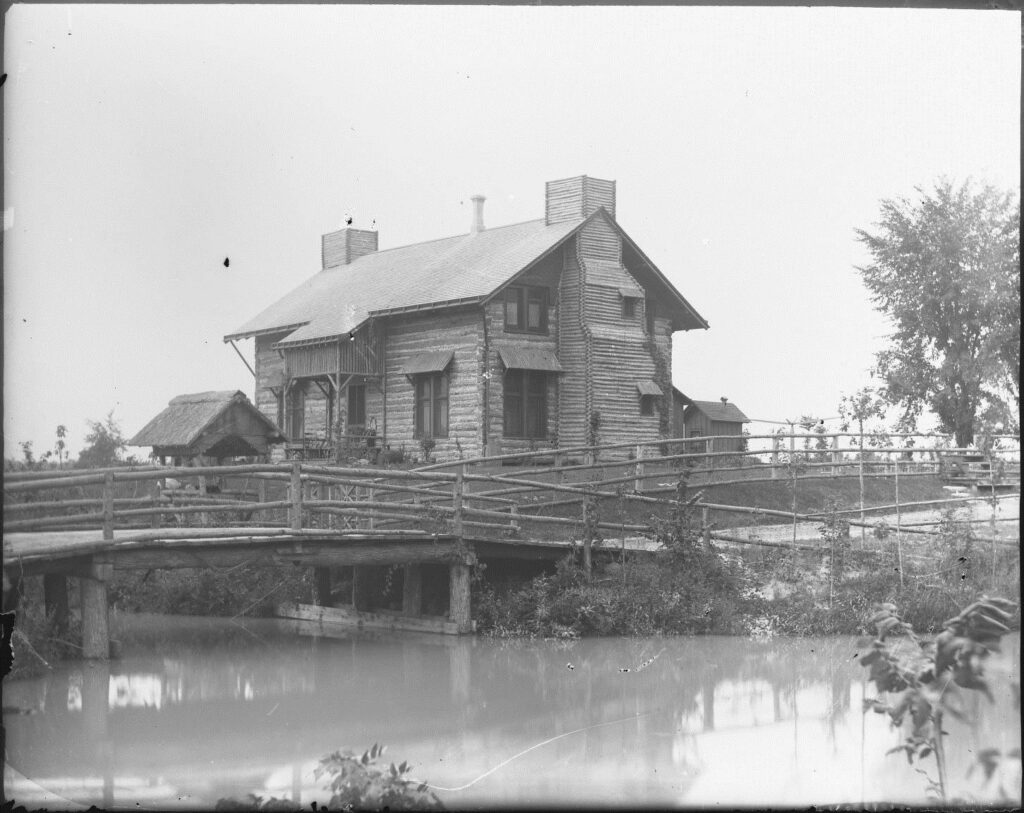
Thomas Palmer’s home, Palmer Park, Detroit, MI, where Vivekananda gave several lectures in 1894 and 1895 (Source: Detroit Vedanta Society)
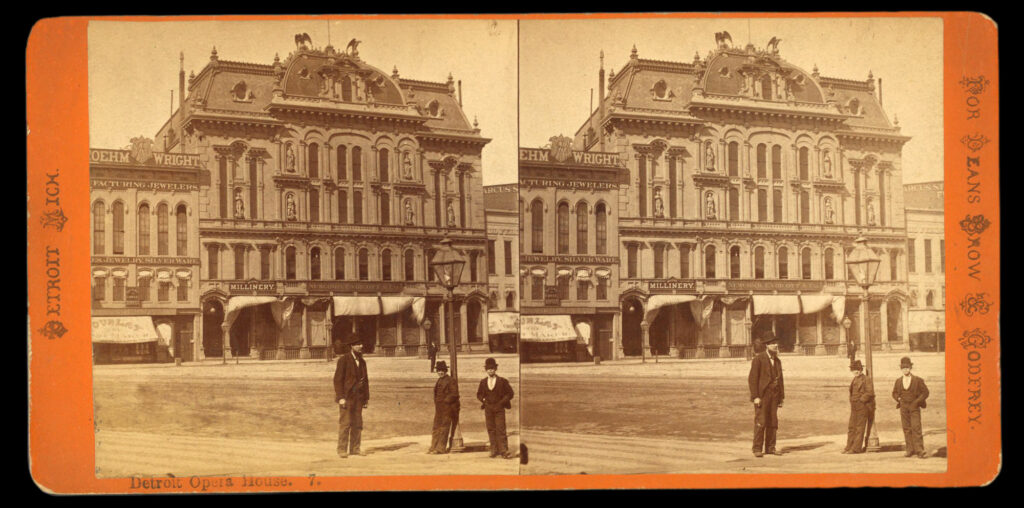
Swami Vivekananda gave several lectures in 1894 and 1895 at the Detroit Opera House, pictured here in a photograph from the 1880s. (Source: Robert N. Dennis collection of stereoscopic views, New York Public Library Digital Collections)
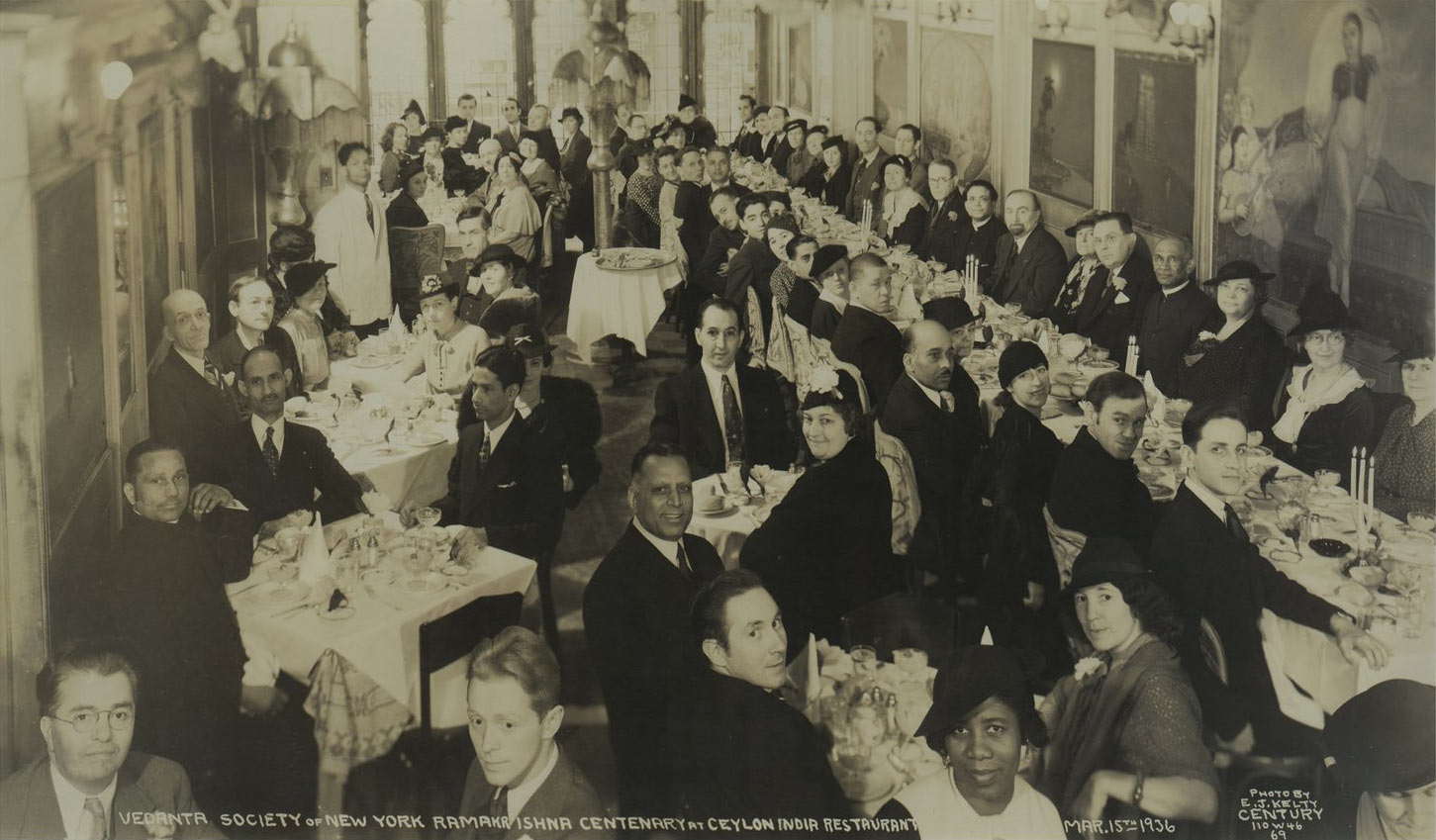
Swami Vivekananda’s continuing influence on the religious landscape of America can be clearly seen in the numerous Vedanta societies that he helped to inaugurate around the country. In the United States alone, there are 23 formal Vedanta centers of the Ramakrishna order, in addition to 13 private centers.2
![News Clipping - Hindu preaches unity of all religions [Vivekananda, Ramakrishna Vedanta Society of Seattle] The Times (Streator, Illinois) 18 Nov 1960, Fri Page 3](https://asiaworldsfairs.org/wp-content/uploads/2026/02/Hindu-preaches-unity-of-all-religions-18-Nov-1960.jpg)
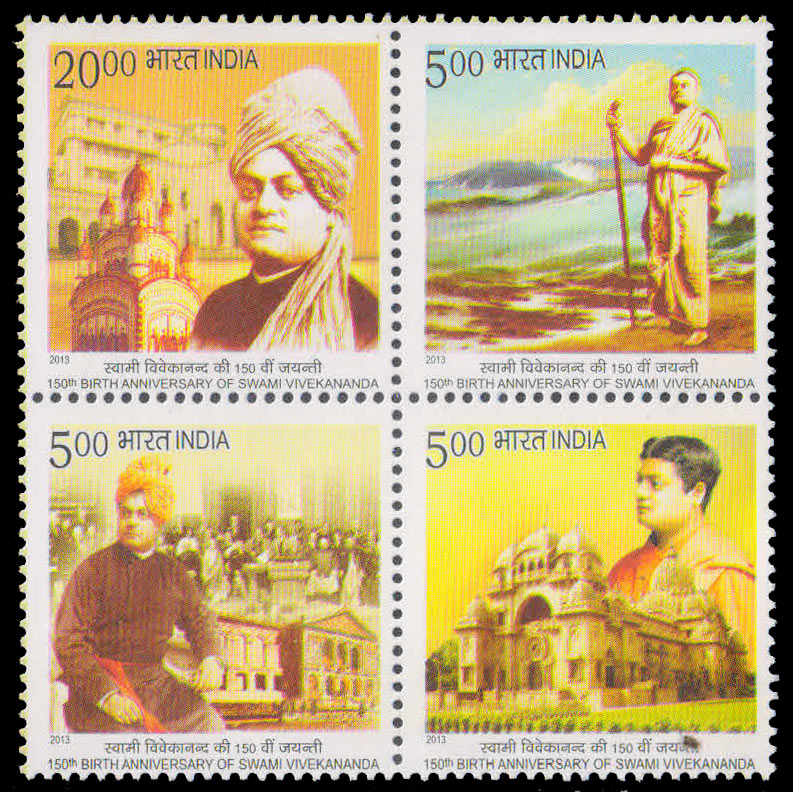
Vivekananda was largely responsible for coordinating the establishment of these centers which were created in the hopes of propagating Hindu principles as a source of inspiration for the emergence of a universal religion.
Footnotes
- Complete Works of Swami Vivekananda 8, centenary edition (1963): 349. ↩︎
- More detailed information can be found at https://vedanta.org/north-america-centers/ . See also Gwilym Beckerlegge, “The Early Spread of Vedanta Societies: An Example of “Imported Localism,” Numen 51, no. 3 (2004): 300. ↩︎