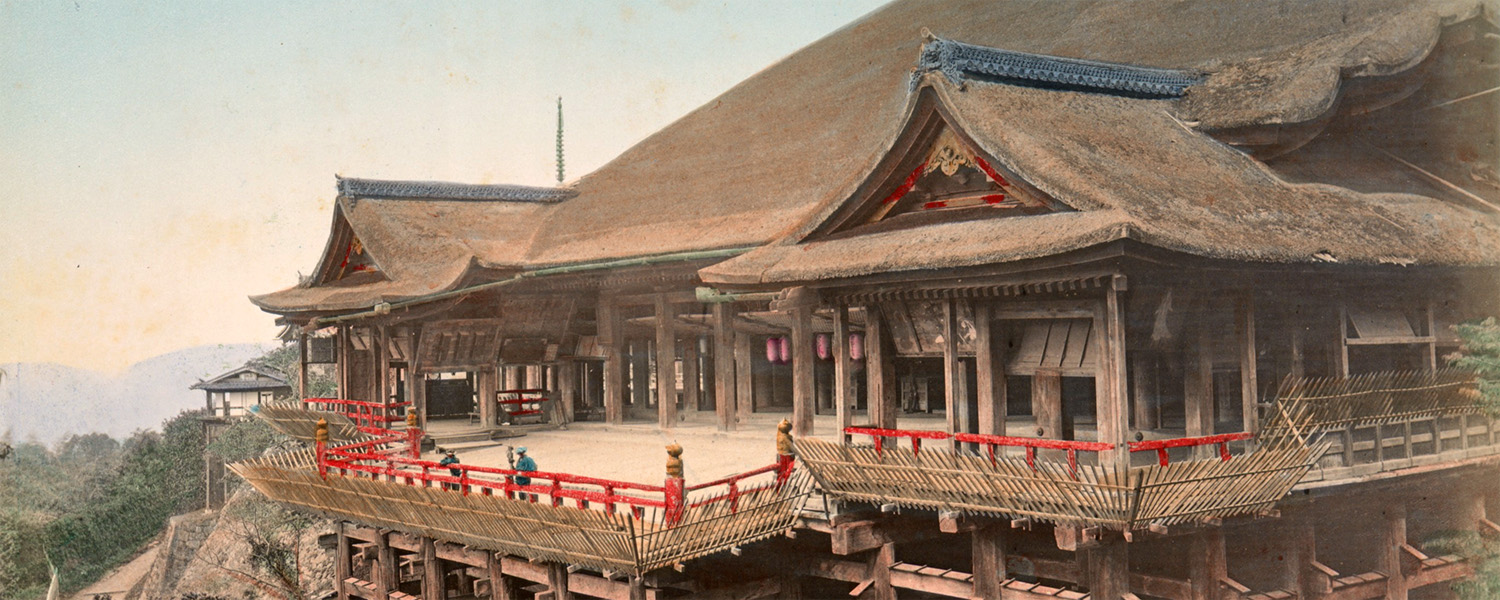
Exotic Japan in Tourist Albums
Explore by Theme
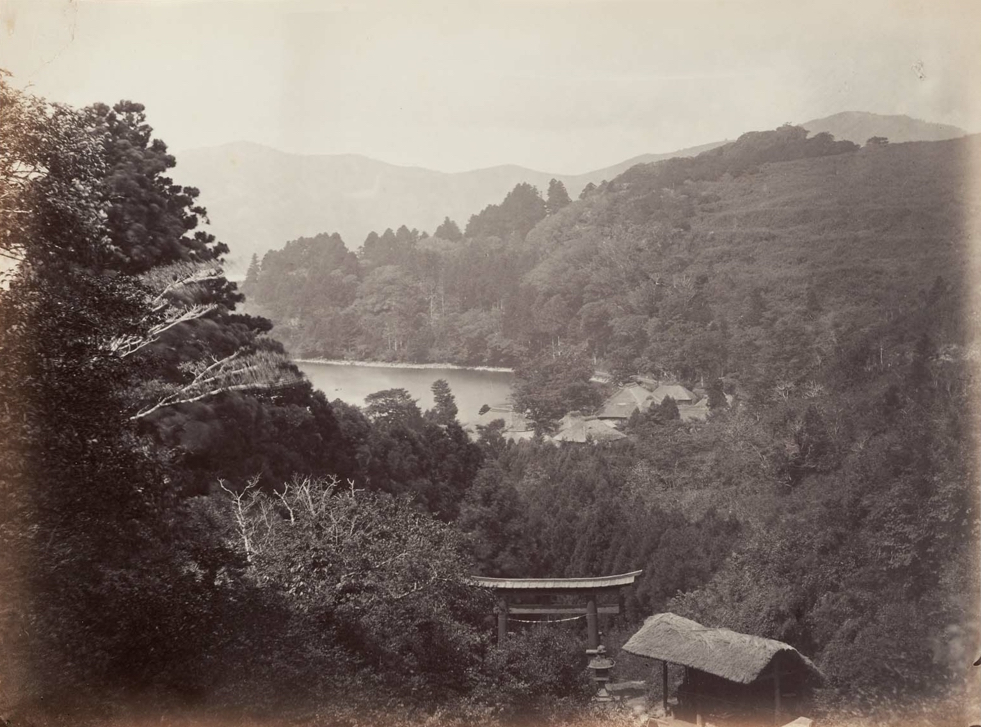
The Lake of Hakoni, from Beato’s album, c. 1860s. (Source: The Museum of Fine Arts Boston)
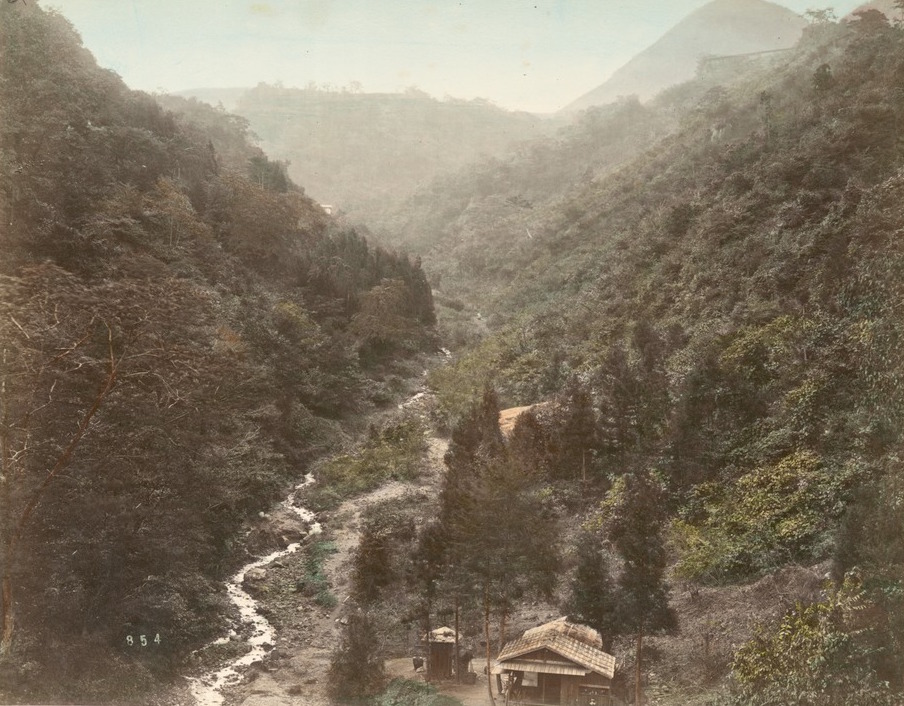
Hot Water River, Yusawa, at Ikao, from Kimbei’s album, c. 1880s. (Source: The New York Public Library Digital Collections)
Mysterious Land – Natural elements, especially trees and water, appear frequently in souvenir albums. These photographs of nature reveal an enchanted and tranquil quality, suggesting a spiritual connection between Japanese people and nature. Besides being a picturesque retreat, Japan comes across as a ‘primitive’ place with little indication of civilization.
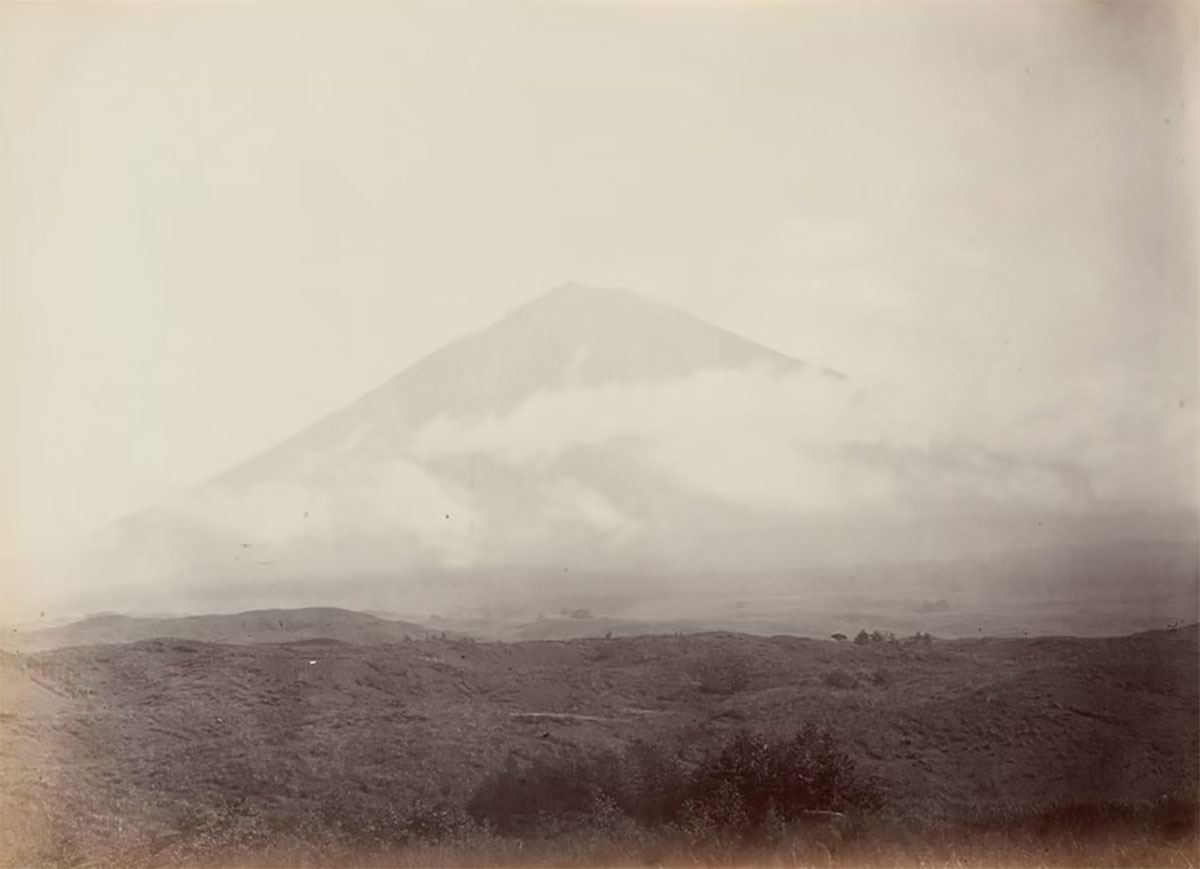
Fusiyama from Moriyama, from Beato’s album, c. 1860s.
(Source: Museum of Fine Arts Boston)
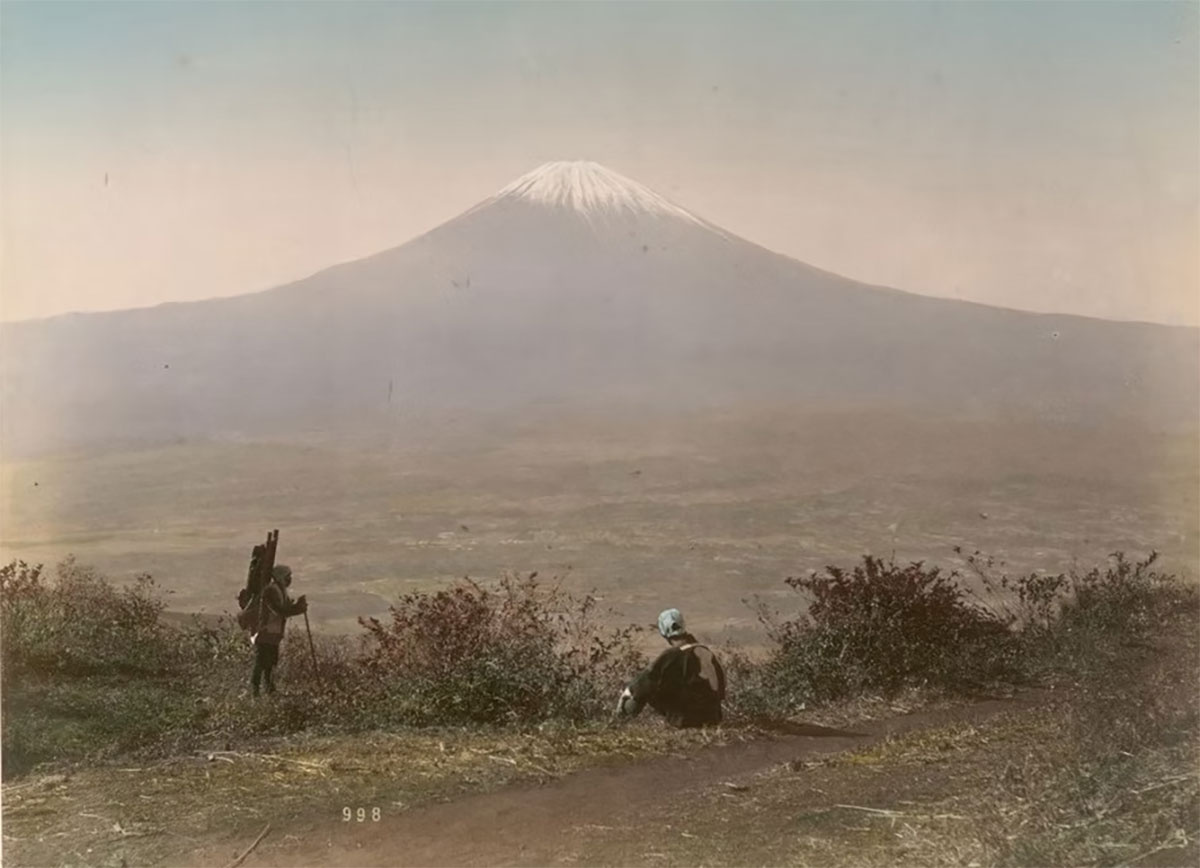
Fujiyama, from Otometoge, from Kimbei’s album, c. 1880s.
(Source: The New York Public Library Digital Collections)
Mount Fuji – Mount Fuji was a popular subject in not only photography but also other art forms such as painting and woodblock print. It is the highest mountain in Japan and often the first sight Western travelers encountered as they entered Japan by water. Beato described Fuji as a “noble mountain” and one with “graceful pyramidal peak towers above the surrounding country.” The photograph on the left shows Mount Fuji enveloped by clouds, while the photograph on the right displays a clearer view of Fuji topped with snow, which covered the mountain most of the year except in July and August.
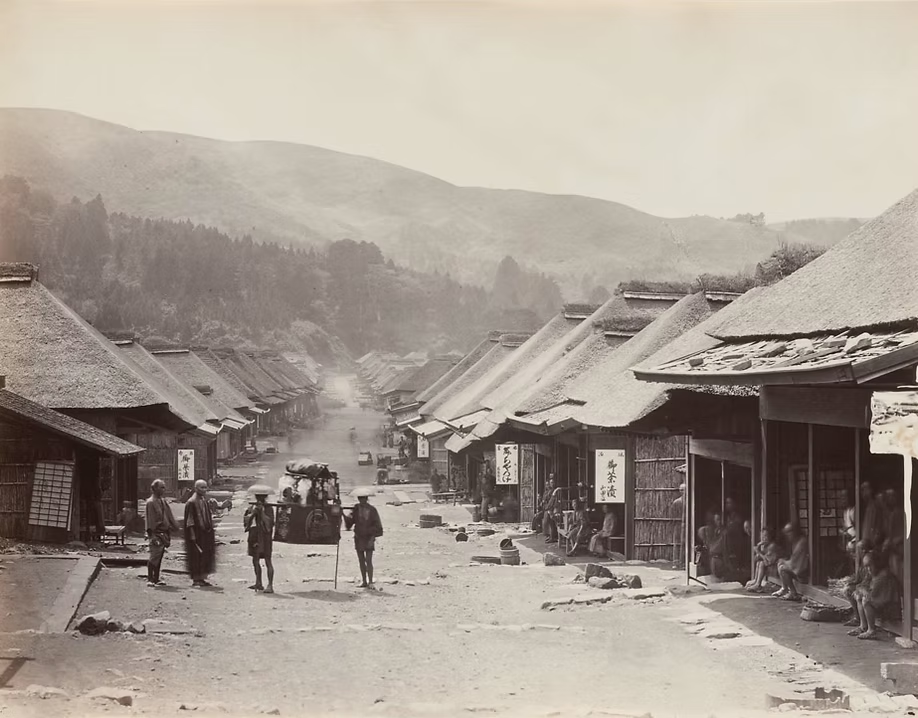
The Town of Hakoni, from Beato’s album, c. 1860s. (Source: Museum of Fine Arts Boston)
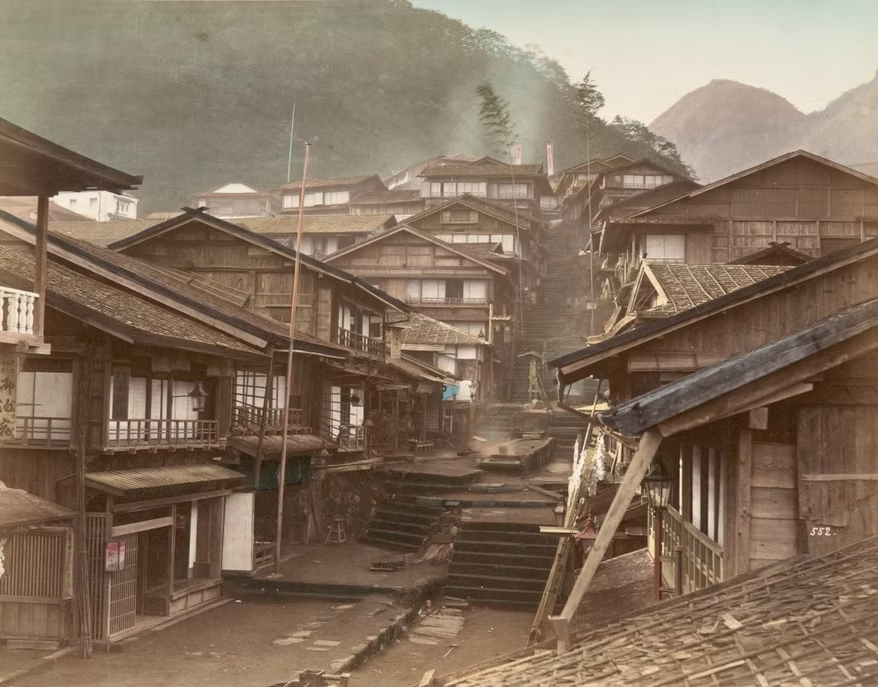
View of Ikao Street, from Kimbei’s album, c. 1880s. (Source: The New York Public Library Digital Collection)
Rural Life – Street scenes in villages show where and how Japanese people lived their lives. In the images depicting rural life, mountains lined the background, with villagers’ houses placed in the front. The houses were typically wooden and roofed with straw or tile—appearing simple and crude to Westerners eyes.

Gizosama of Hakoni, from Beato’s album, c. 1860s. (Source: Museum of Fine Arts Boston)
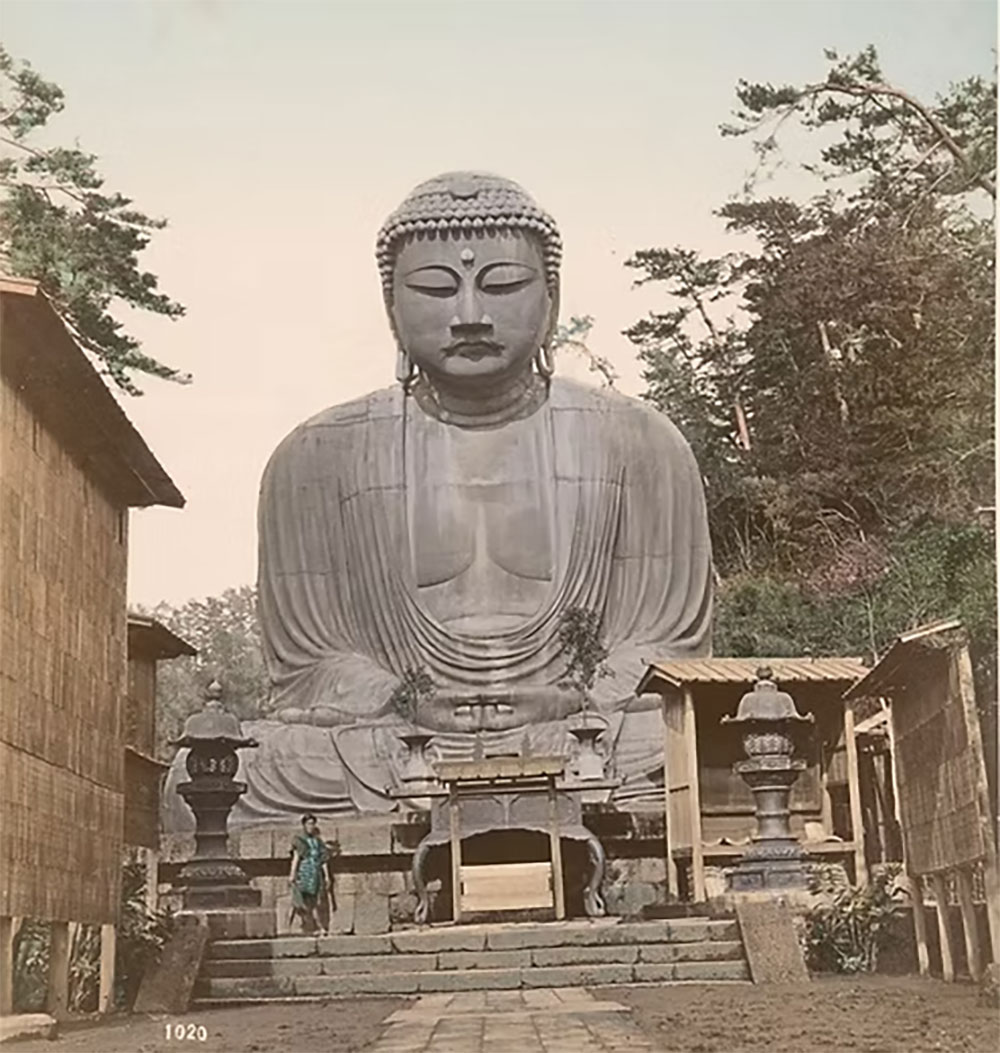
Image at Kamakura, from Kimbei’s album, Daibutsu, Bronzu, c. 1880s. (Source: The New York Public Library Digital Collections)
Religious Icons – Sculptures of Buddhist deities could be found in temples and also along the roads of the countryside in Japan. The bigger and more elaborate icons were especially popular in souvenir albums. The photographers often deliberately inserted human figures into their image composition to indicate the relative size of the worshiped statues.
However, frequent images of Buddhist icons in tourist albums actually delivered a misleading message of Buddhism’s prosperity. After the 1868 Meiji Restoration, the new Japanese government brought Shinto, another belief system, to ascendancy and officially promoted Shinto as the national religion in 1871. Buddhism was, in fact, in great turmoil and lost official support in Japan in the late 19th century.
“Jeso Sama, a god whose attributes are compassion and mercy, is believed by his worshippers, who are many, to be a guardian of the road to either Heaven or Hell—he is supposed to have the power of leading to the one, a place of happiness—and to arrest the course of those wandering to the other, a place of misery; hence the frequency with which his image is found by the wayside.”
— Felice Beato
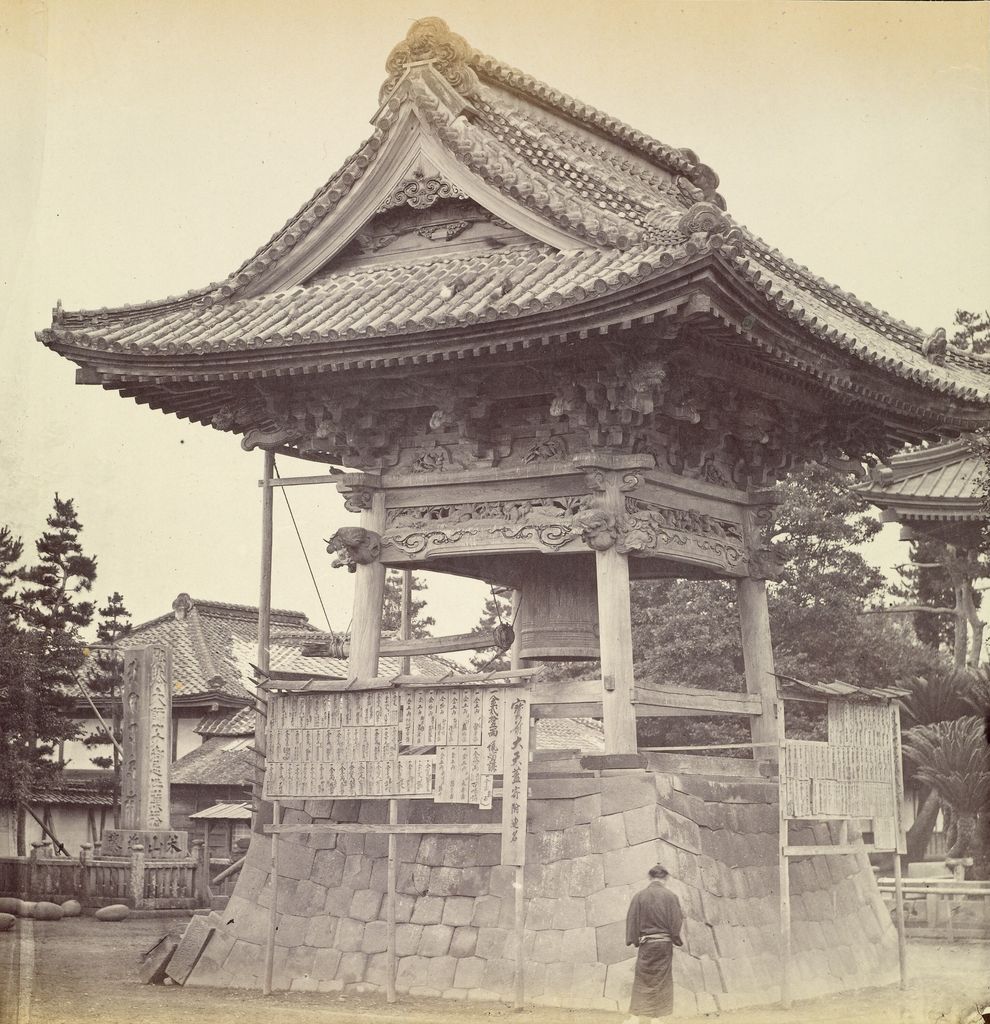
Large Bell at Temple near Kawasaki, from Beato’s album, c. 1860s. (Source: Museum of Fine Arts Boston)
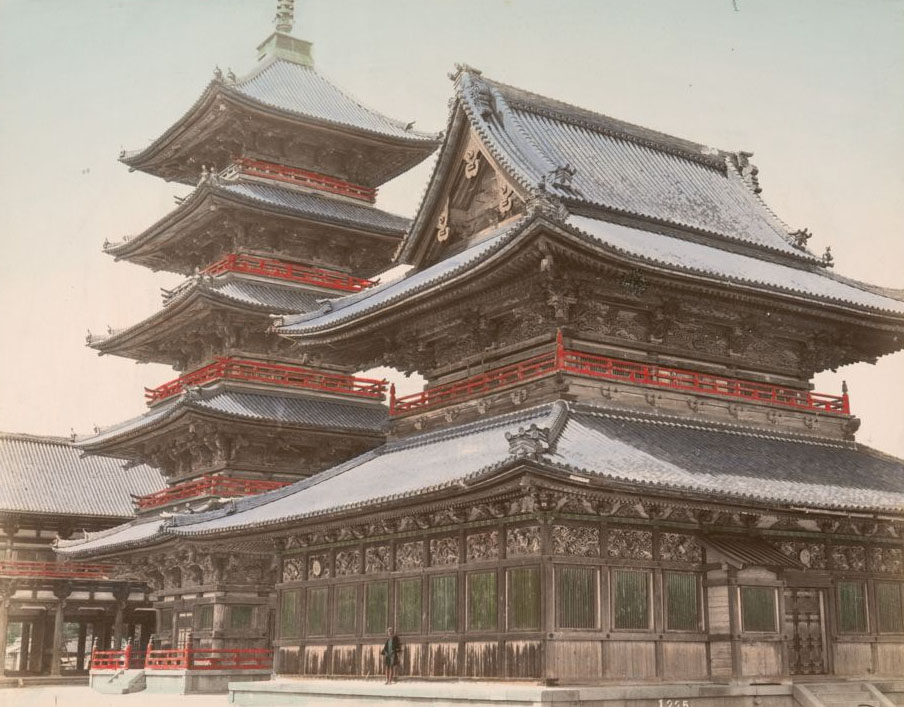
Ten-noji Temple at Osaka, from Kimbei’s album, c.1880s. (Source: The New York Public Library Digital Collections)
Religious Architecture – Besides the icons, religious architecture was also a major theme in the tourist albums. The left photograph shows the great bell in a Buddhist monastery. To summon the monks, large bronze bells were rung by swinging a clapper from the outside. The photograph on the right exhibits the main hall and a five-story pagoda. Religious architecture displays intricate design and ornamentation. Although these structures were also made of wood and tiles, they contrast sharply with the plain residential houses of the village.
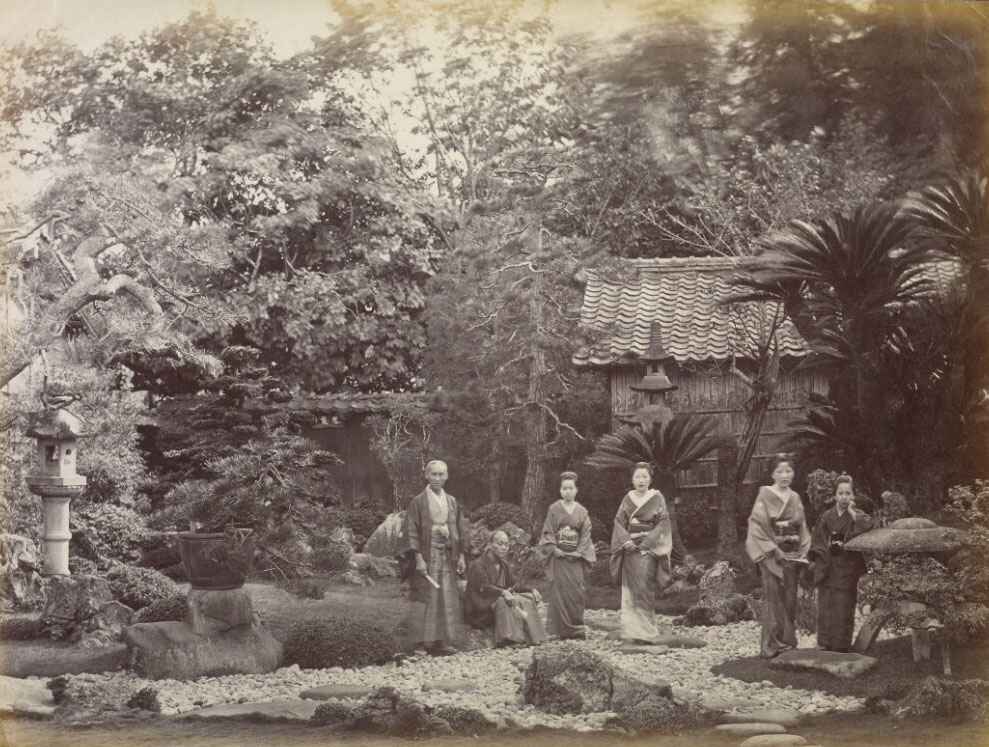
A Japanese Garden at Hara, from Beato’s album, c. 1860s. (Source: Museum of Fine Arts Boston)
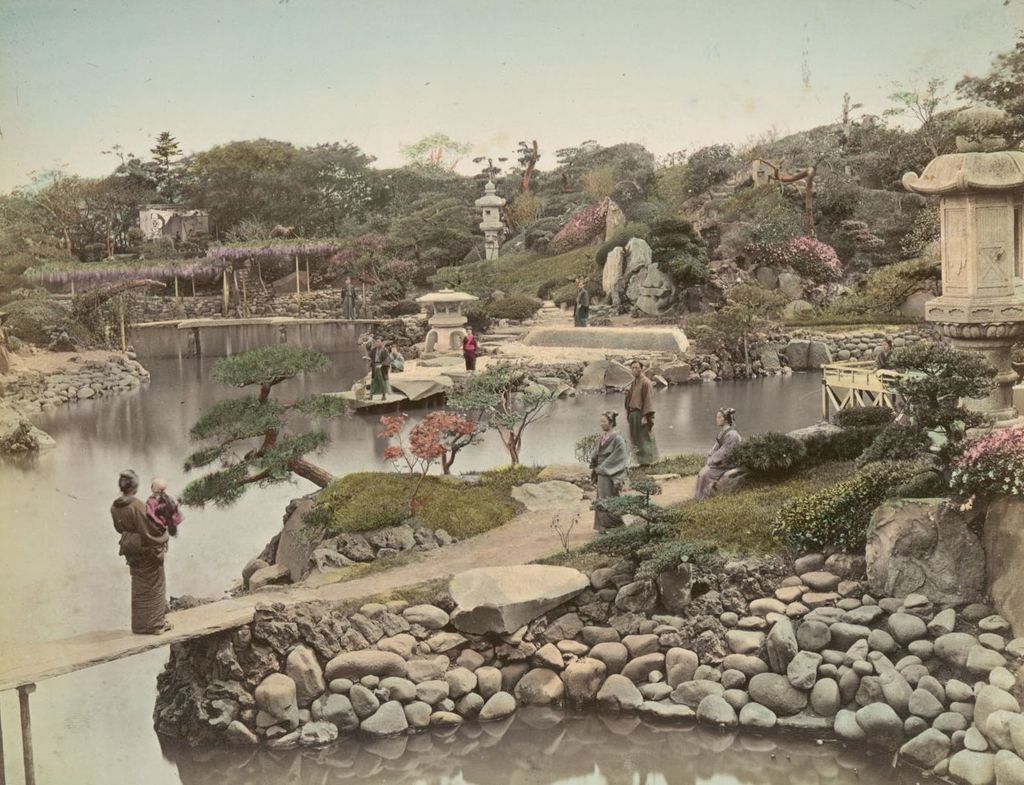
Prince Hotta’s Garden at Tokio, from Kimbei’s album, c. 1880s. (Source: The New York Public Library Digital Collections)
Elegant Gardens – Photographers selected gardens to portray delicate man-made sceneries accented with Japanese people in traditional clothing. The owner of the garden and a portion of his family are shown in Beato’s photograph, whereas Kimbei asked costumed models to pose for his photograph.
Although gardens seem to represent an exquisite national taste, public gardens and parks did not exist until after 1868. Before then, spending leisure time in gardens was a luxurious pastime reserved for the elite.
“The Japanese display a universal taste for gardens and love for flowers.”
— Felice Beato
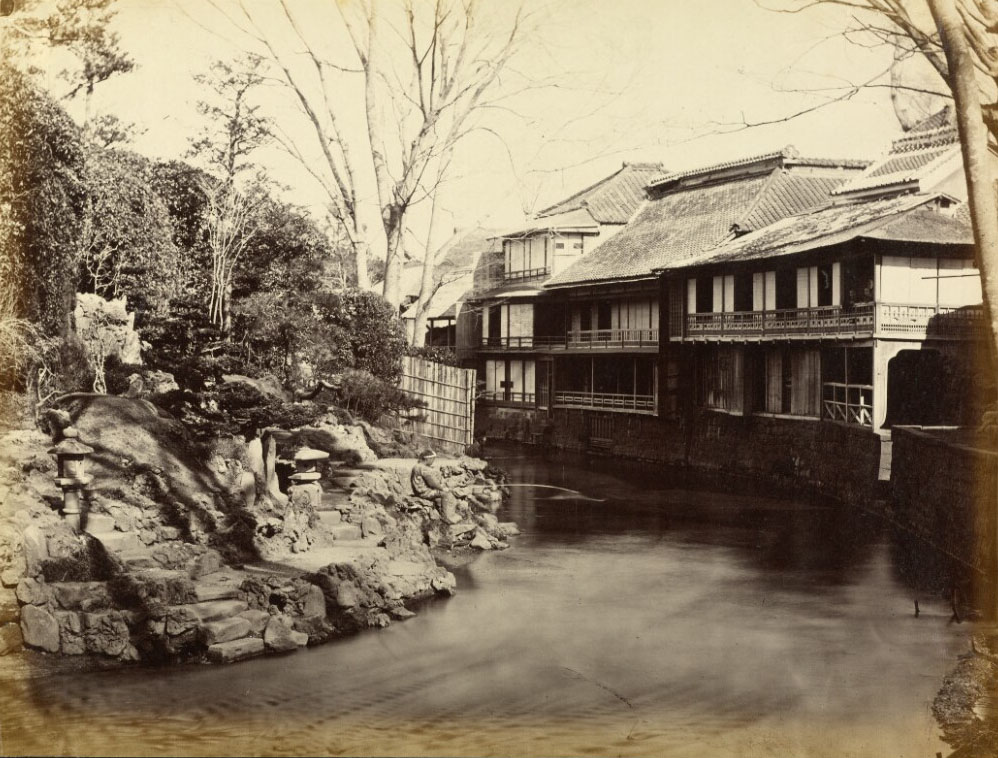
Tea Houses at Ogee Yedo, from Beato’s album, c. 1860s.
(Source: Museum of Fine Arts Boston)
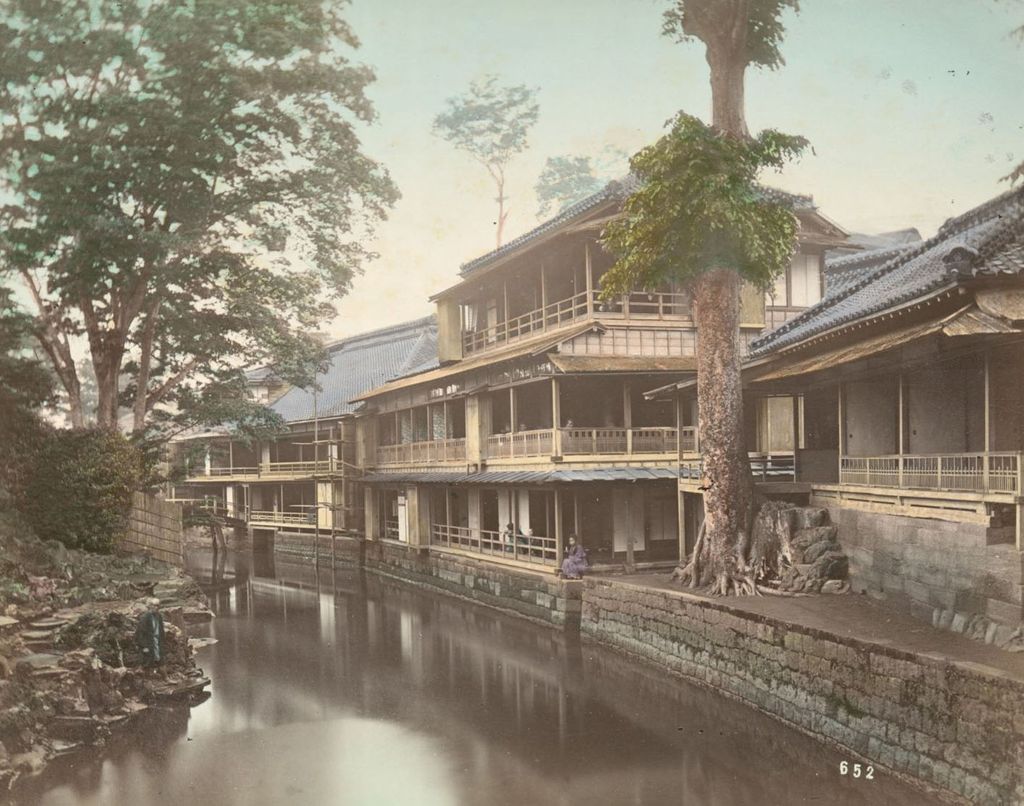
Oji Tea House at Tokio, from Kimbei’s album, c. 1880s.
(Source: The New York Public Library Digital Collections)
Tea House – Not to be confused with spaces for performing the exclusive art of the tea ceremony (chanoyu), tea houses (chaya) were places for casual entertainment and relaxation. Customers, typically male, enjoyed being served by young, attractive female waitresses. The two photographs show the same spot. Customers of this quaint tea house could appreciate the running stream and views of the garden on the opposite shore.
“To use the words of Fortune, ‘Ogee is the Richmond of Japan, and its celebrated tea-house is a sort of ‘Star and Garter Hotel,’ here the good citizens of Yedo come out for a days pleasure and recreation, and certainly it would be difficult to find a spot more lovely or more enjoyable.’”
— Felice Beato