Room No. 3
After the Fair
The Remains and Legacy of the Hō-ō-den
The Hō-ō-den Lives on After the Fair
World’s fair architecture was built to last for just the duration of the event, using construction materials that were experimental and innovative but not necessarily long-lasting. Although the majority of the structures were demolished after the close of each fair, one to two structures typically survived the purge to serve as permanent civic institutions. For example, the Palace of Fine Arts at the World’s Columbian Exposition remained on site in Chicago and has housed the Museum of Science and Industry since the 1930s to the present. Occasionally, interested buyers paid for and transported an entire exhibition building to another location. To name just two examples:
- The British company Alexander Park purchased the Japanese pavilion and garden exhibited at the 1873 Vienna exposition and moved them to London;
- The American tycoon Cornelius Kinsland Billings purchased the Norway Building at the World’s Columbian Exposition and moved it to Lake Geneva, Wisconsin (it has since changed owners and locations multiple times, and as of 2017, repatriated to Norway).
Japan’s pavilion in Chicago, known as the Hō-ō-den, was one of the few fair structures designed to remain on site. Its introduction to a wide audience in 1893 made a great impression on American understanding of Japan as a major cultural force. Both the structure and surrounding garden served as permanent physical reminders of the excellence of Japanese design, artistry, and craft. It is possible to think of the Hō-ō-den making a lasting impact in two major ways:
- Its location on the Wooded Island has served as a continuous symbol of friendly US-Japan relations, maintained even after the Hō-ō-den structure itself burnt down in 1946;
- It pioneered an architectural vocabulary based on historical-religious styles that subsequent Japanese pavilions erected at 20th-century American fairs followed.
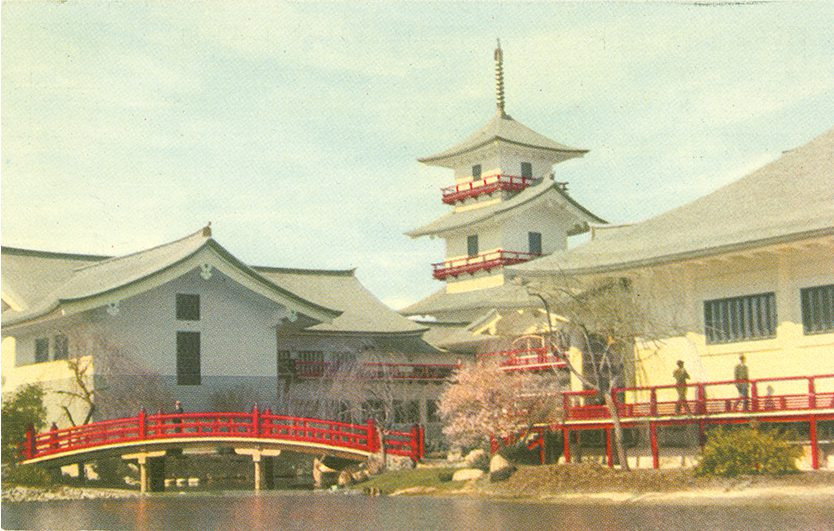
The stylistic influence spread widely, beyond the fairgrounds, to entertainment, restaurant, and even private home designs that invoked Japan. A tourist favorite has been the Japan Pavilion of the World Showcase at Walt Disney World’s Epcot Center, where a Shinto gateway, feudal castle, Buddhist pagoda, and imperial palace come together to represent Japan.
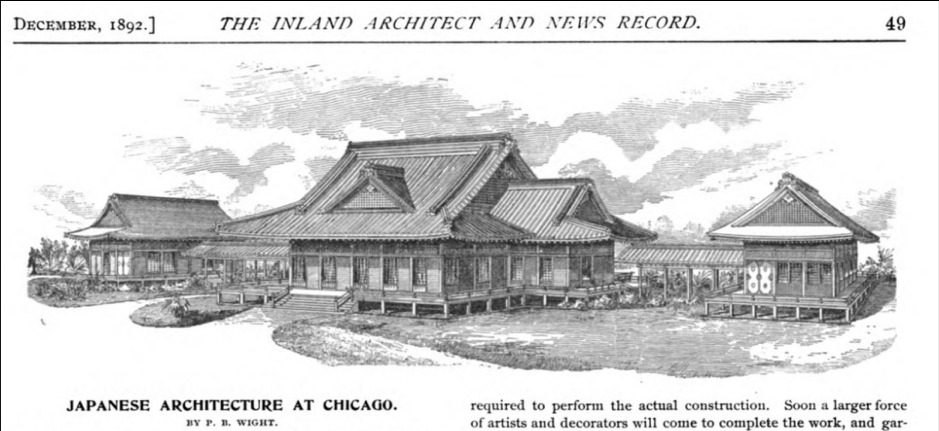
“One of the great benefits to be derived by the city of Chicago from the World’s Columbian Exposition will be a permanent building (or rather group of buildings) now being erected at Jackson Park by the Japanese Imperial Commission, illustrating not only the old architecture of Japan, but the exact method of construction employed in that country during the best periods of its arts, ranging from four hundred to eight hundred years ago…”
— The Inland Architect and News Record (December 1892)
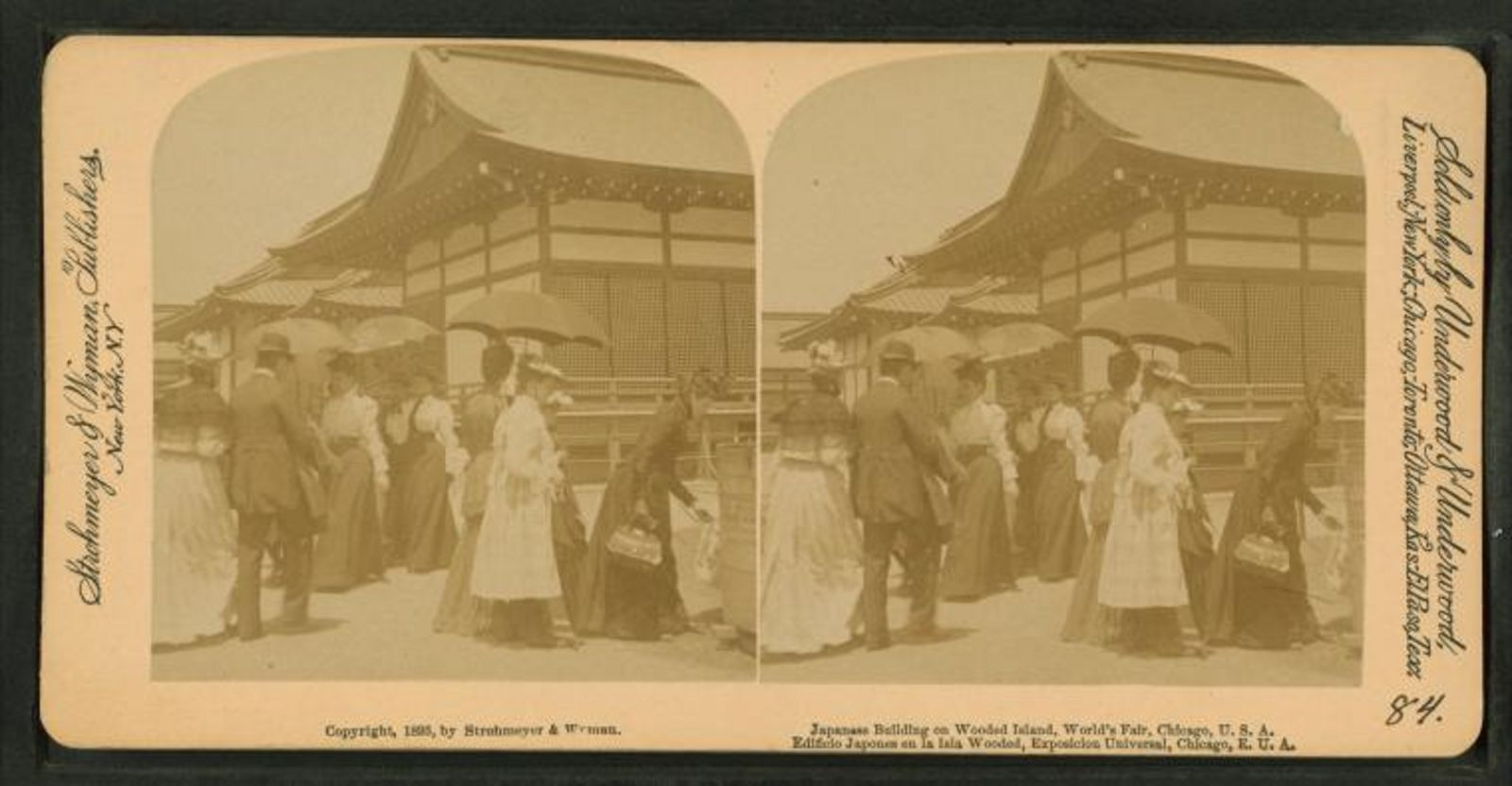
“The buildings on Wooded Island are unique in design and construction. They are intended to illustrate three different epochs of Japanese architecture…[and] will consist of three separate buildings, connected by wide corridors, and so arranged as to possess an air of general architectural unity…The Ho-oden has been presented to the city of Chicago, and will pass under its control at the close of the Exposition.”
— The North American Review (January 1893)
A Japanese Gift to the United States
After the close of the World’s Columbian Exposition, the Chicago fair site reverted to parkland as Jackson Park. This required the removal of the monumental assembly of exhibition buildings, although an exception was made for the Hō-ō-den, which stood on the scenic Wooded Island. Intended from the time of its initial construction, the pavilion was a permanent gift that the Japanese government left to the city.
The gifting represented a significant diplomatic gesture for both the giver and recipient. Gozo Tateno, the Japanese Minister in Washington DC, used his nation’s displays as evidence of Japan’s progress and prosperity. He urged the United States to recognize Japan’s worthiness as a political, cultural, and economic equal as the latter lobbied for a revision of the unequal treaties originally signed in the 1850s between the two nations.
American architect and critic P. B. Wight voiced his appreciation of the Hō-ō-den for its historical authenticity and traditional craftsmanship, noting that his fellow designers had much to learn from its artistry. The diminutive size of the Japanese pavilion and its unpainted woodwork allowed it to blend seamlessly with the naturalistic greenery and water features of the Wooded Island, originally envisioned by the landscape designer Frederick Law Olmsted as a respite zone free of buildings (he conceded to the Japanese imposition as the best possible compromise).
The Hō-ō-den Destroyed by Fires
Despite serving as a symbol of good will between Japan and the United States, the Hō-ō-den did not fare well in Jackson Park. By 1933, “vandals and souvenir hunters” had ravaged the structure to the extent that few of the original panels within the interior remained intact. After Chicago held another world’s fair in 1933, bringing another opportunity for attention to Japanese culture through national display, restoration of the Hō-ō-den at long last took place. Completed in 1935, the reactivated pavilion and surrounding garden flourished as a concession and scenic retreat.
The structure fell into disrepair once again after the Japanese attack on Pearl Harbor in 1941. Numerous other Japanese pavilions and gardens in the United States were similarly neglected during wartime due to resource shortages as well as anti-Japanese sentiments (for example, the Japanese House at the Huntington and the Japanese Tea Garden in San Antonio).
After the war, two separate fires broke out in 1946, on June 21 and October 12, that ultimately destroyed the Hō-ō-den. The cause of the first fire was unknown, whereas the cause of the second was arson.
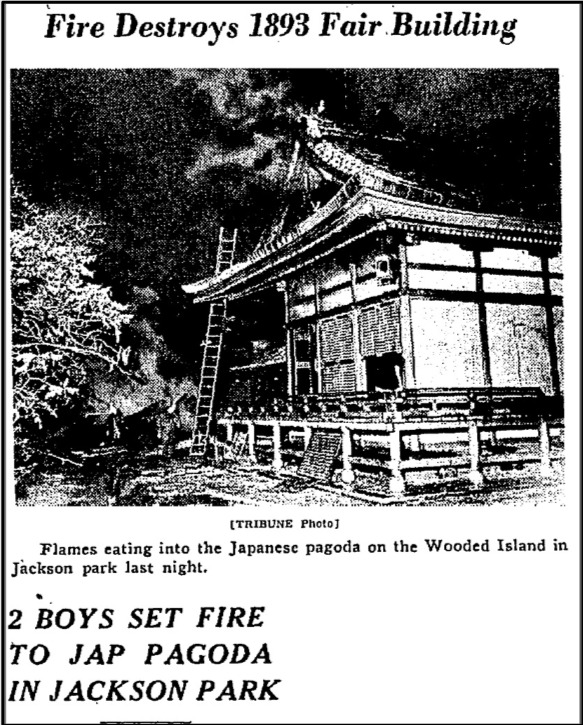
Chicago Tribune, 13 October 1946. Adolescent arsons started a fire next to the Hō-ō-den “just to see it burn”; the park police arrested them at the scene. The building was irreparably damaged. (Source: Chicago Tribune)
Remains of the Hō-ō-den
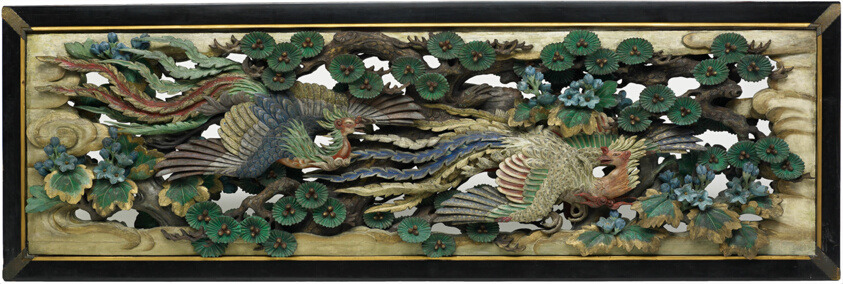
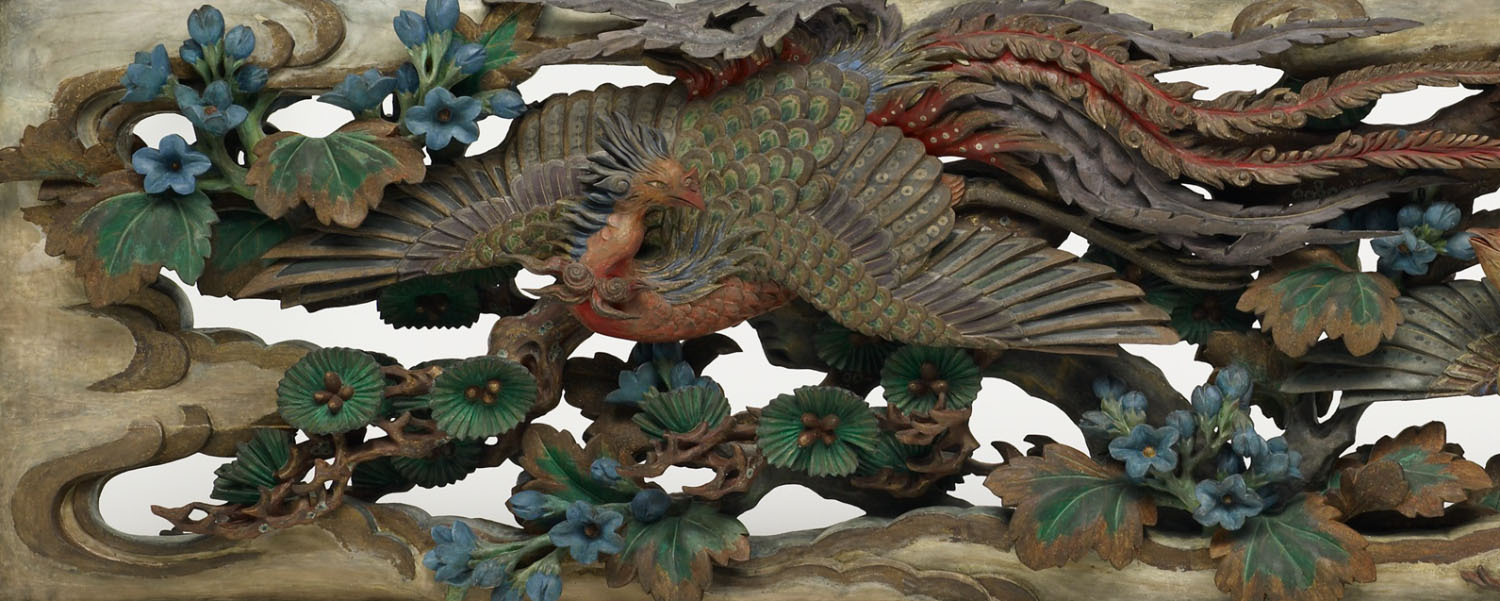
One of a Pair of Ramma (Transom) Panels from the Hooden, 1893. Takamura Koun. (Source: Art Institute of Chicago)
Remains of the
Hō-ō-den Discovered
Part 1
Decades after fires destroyed the structure, fragments of the Hō-ō-den resurfaced in unlikely places.
In 1973, four transom panels, known as ranma in Japanese, were discovered in storage under the bleachers of Soldier Field Stadium. The panels have been conserved and partially restored and are now on permanent display at the Art Institute of Chicago. See the narration of the discovery, separation, and reunion of the four ranma.
The ranma are described in the 1893 illustrated catalog of the Japanese Pavilion as “elaborate carvings of phoenixes” by Professor Takamura Kōun of the Tokyo Fine Art School.
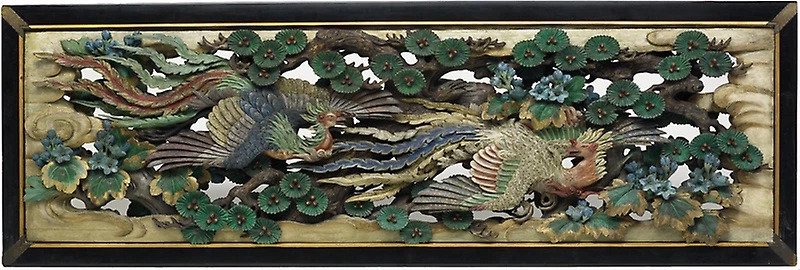
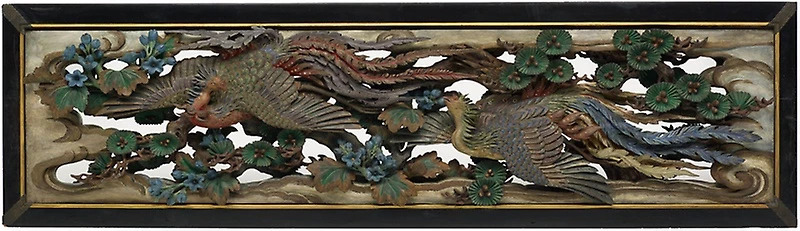
Two of the four transom panels (ranma) from the Ho-o-den, currently housed in the Art Institute of Chicago.
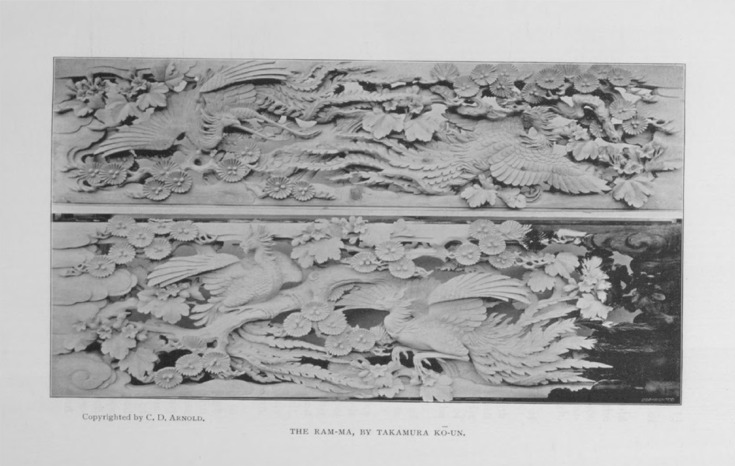
Transom panels (ranma) originally photographed for the 1893 catalog Illustrated Description of the Hō-ō-den (Phoenix Hall) at the World’s Columbian Exposition. (Source: Archive.org)
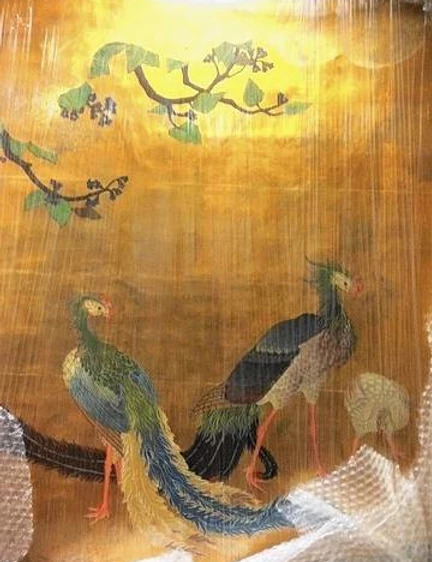
One of the three discovered painted sliding doors (fusuma) from the Ho-o-den, currently housed in the Art Institute of Chicago. (Source: Chicago Tribune)
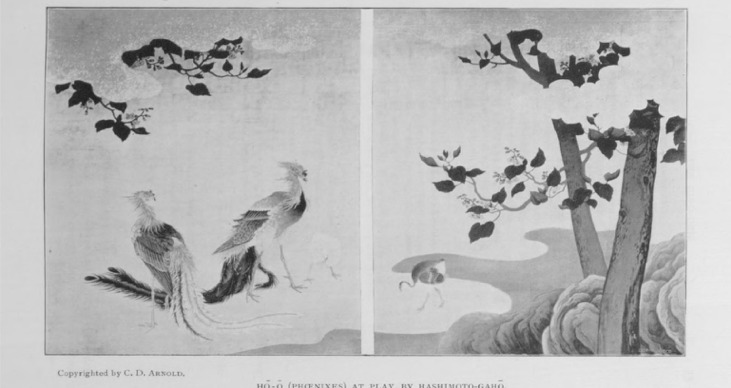
Sliding door panels (fusuma) originally photographed for the 1893 catalog Illustrated Description of the Hō-ō-den (Phoenix Hall) at the World’s Columbian Exposition. (Source: Archive.org)
Remains of the
Hō-ō-den Discovered
Part 2
In 2015, three of the original painted sliding doors, known as fusuma in Japanese, were discovered in a Chicago Park District storage facility. Just like the transom panels, they feature auspicious bird imagery, described in the 1893 illustrated catalog of the Japanese Pavilion as “male and female phoenixes at play with their young” painted by Professor Hashimoto Gahō of the Tokyo Fine Art School.
The fusuma panels, along with the ranma panels, are now part of the permanent collection of the Art Institute of Chicago.
See the curator Janice Katz’s narration of the discovery and identification of the panels.
Legacy of the Hō-ō-den
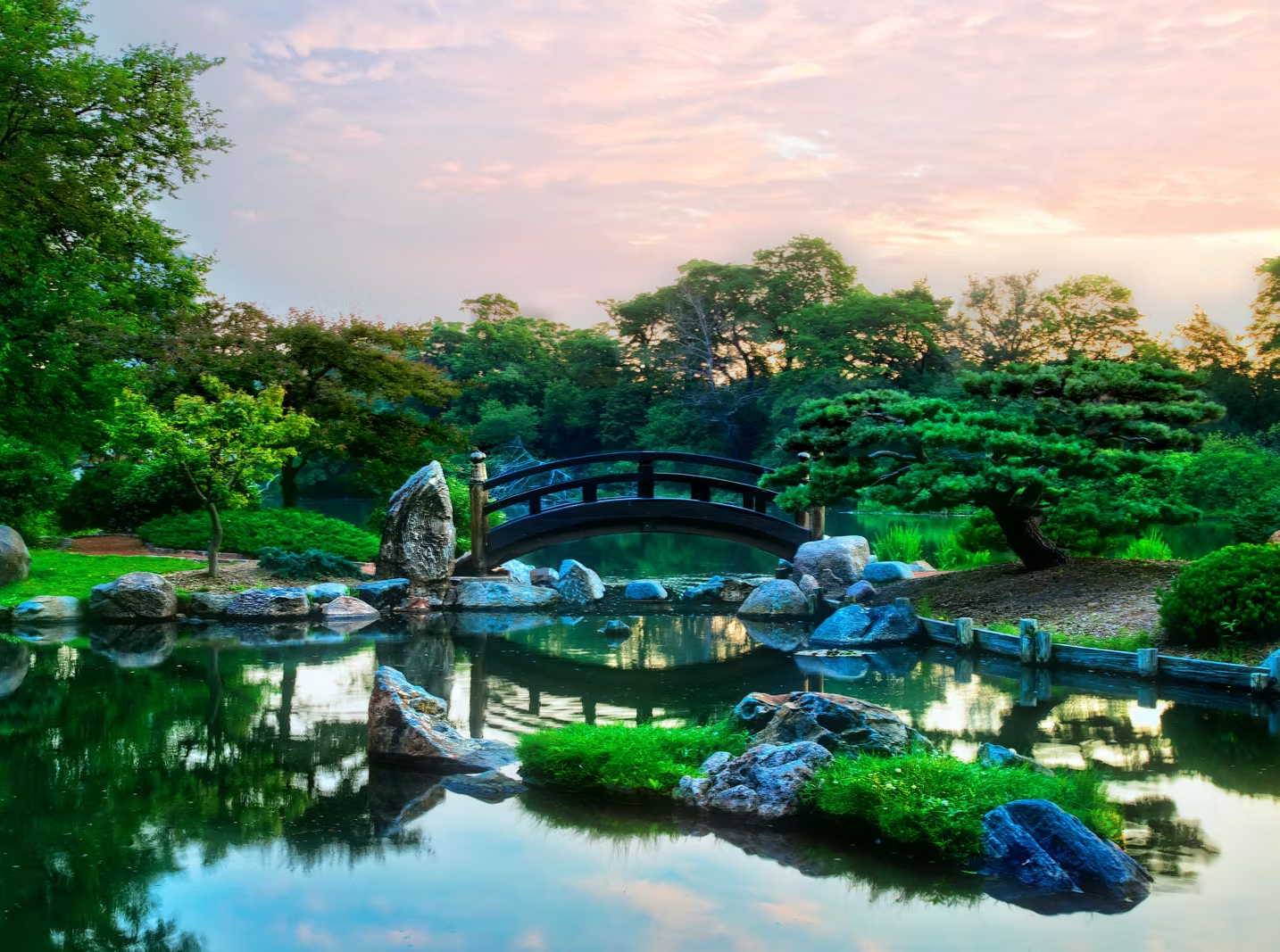
The Garden of the Phoenix in Jackson Park, Chicago. (Source: Flickr)
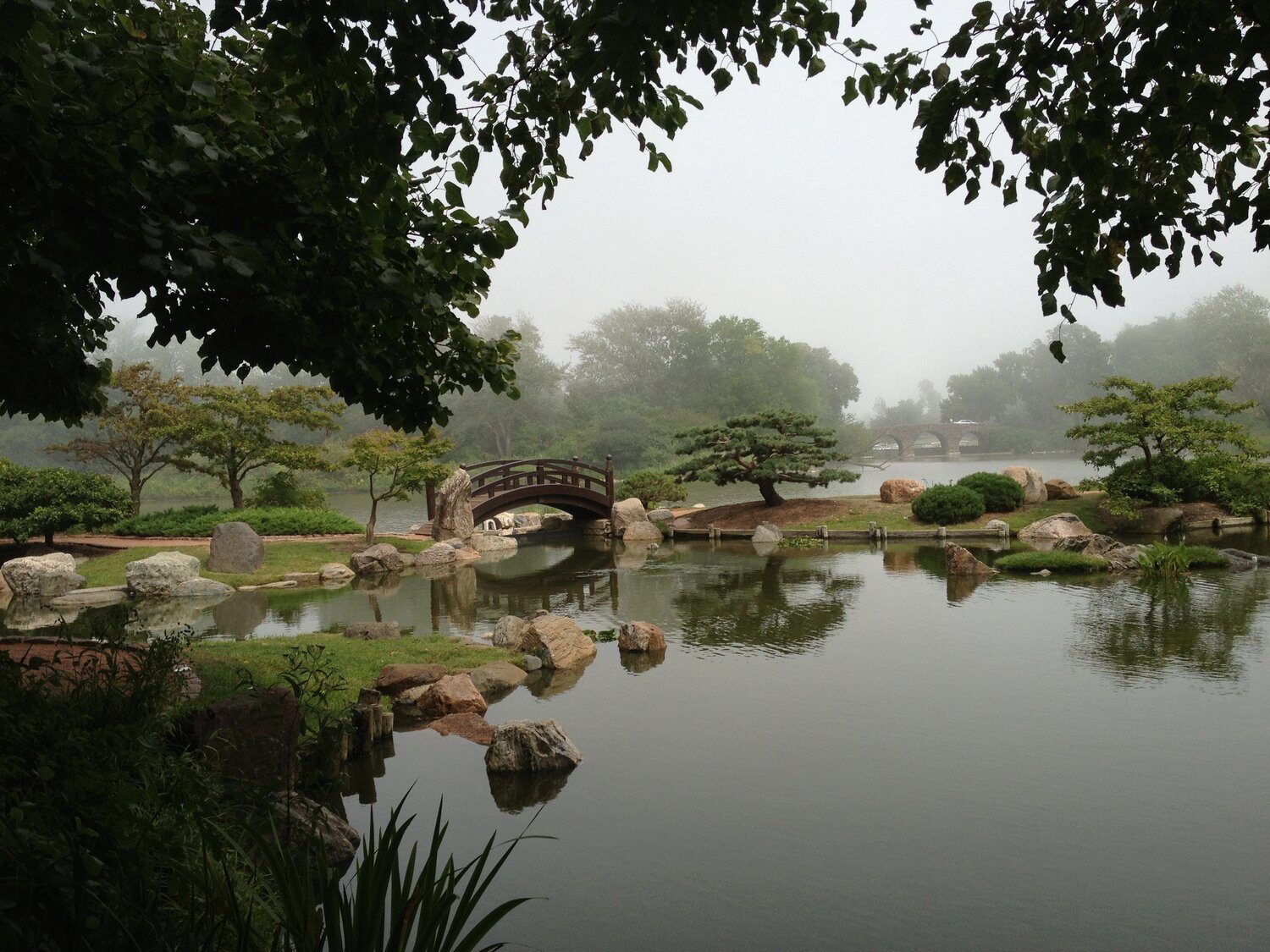
The Garden of the Phoenix today, 2018. (Source: Garden of the Phoenix)
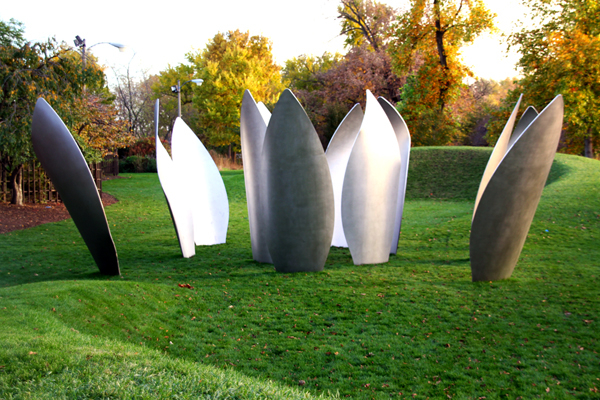
Sky Landing by Yoko Ono, installed in 2016, in the shape of lotus petals as a symbol of peace. (Source: Public Art in Chicago)
The Wooded Island as Lasting Celebration of Japanese Art
By 1960, no trace of the original Hō-ō-den and surrounding garden remained on the Wooded Island, except for a single stone lantern. Efforts to restore the garden were initiated in 1960, and again throughout the 1970s. On 21 June 1981, Chicago mayor Jane Byrne, Japanese Consul General Yoshinao Odaka, and Park District Superintendent Edmund Kelly presided over the dedication ceremony for the renovated garden.
In recognition of the 20th anniversary of the sister city relationship between Chicago and Osaka, the garden was renamed Osaka Garden in 1993. Most recently, in 2013, the name changed once again, to the Garden of the Phoenix to mark the 120th anniversary of the gifting of the Hō-ō-den to the American city.
In addition to restoring the garden, the non-profit Garden of the Phoenix Foundation planted 120 cherry trees in Jackson Park in 2013 to mark the anniversary of the original erection of the Hō-ō-den. On the site of the now-lost pavilion, the organization commissioned a sculpture titled Sky Landing, installed by Japanese-American artist and musician Yoko Ono in 2016.
While the 1893 Hō-ō-den offered a didactic history lesson on Japan (it showcased a millennium of historical progress through changing cultural-political regimes and attendant transitions in architectural features and artistic styles), the gardens and artwork that have replaced it on the Wooded Island after 1946 do not make reference to specific times, politics, or regions of Japan. They present instead a neutralized, timeless Japan that is visually distinct from mainstream Euro-American aesthetics.
A Phoenix Hall Replica in Hawaii
Another replica of Japan’s Hōōdō (Phoenix Hall) of the Byōdōin temple complex was created in the United States, this time in 1968 in Hawaii to celebrate the centenary of the arrival of the first Japanese immigrants to this state.
Named the Byodo-in Temple, it is a reduced-scale, reinforced-concrete replica of the Phoenix Hall located in the Valley of the Temples Memorial Park on the island of Oahu. In imitation of the 11th-century Japanese original, the building houses an Amida Buddha sculpture as its main icon. However, the Hawaiian Phoenix Hall is non-denominational, welcomes worship and meditation, and hosts weddings and events. It frequently appears in television shows and movies as Hawaiian scenery, and at times acts as a stand-in for Japan or Asia at large (in the 2004–2010 television drama Lost, it was the setting of a wealthy Korean businessman’s estate).
The Byodo-in Temple, like the Hō-ō-den, functions as a general signifier of Japanese architecture and culture in the United States and celebrates an ongoing cultural connection between the two countries. It is one of several replica Japanese monuments in Hawaii. Others include the Izumo Taishakyo Mission (1923) inspired by the form of the Izumo Grand Shrine, the pavilion at Kyoto Gardens Kinkaku-ji (1966) inspired by the Kinkakuji (Golden Pavilion), and the Makiki Christian Church (1931) inspired by the Himeji Castle.
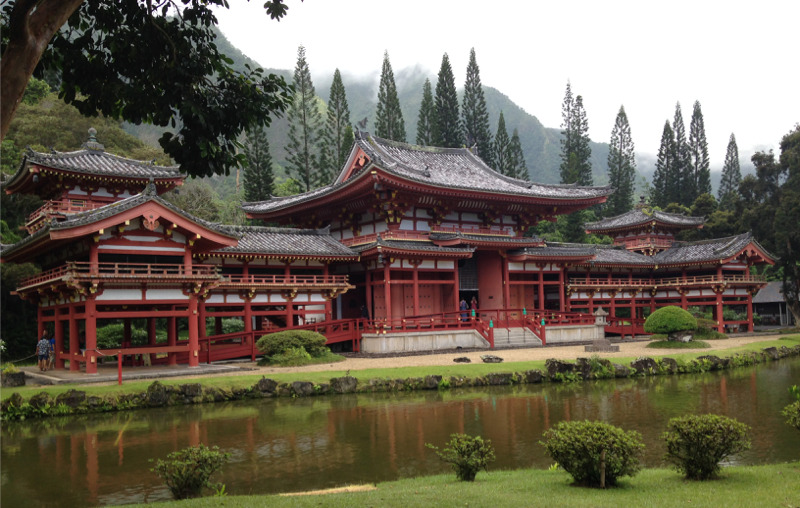
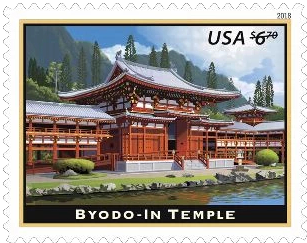
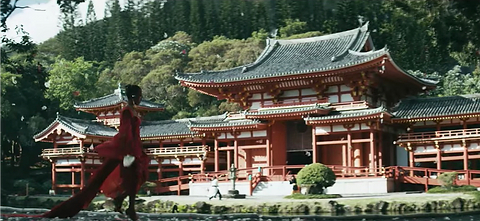
From top to bottom:
1. Phoenix Hall Replica in Hawaii. (Photo by Alice Y. Tseng)
2. The United States Postal Service issued a priority mail stamp in January 2018 with an image of the Byodo-in Temple, calling it a “popular tourist attraction in Hawaii.” 2018 marked the 50th anniversary of Byodo-in’s construction. The original art by graphic designer Dan Cosgrove captures the verdant Koolau Mountains in the backdrop and the koi-filled reflecting pool in the front.
3. The Byodo-in Temple served as a backdrop to the music video for Chris Brown’s 2014 song Autumn Leaves. The setting supports the singer’s “Japanese warrior” costume; the video features the building’s exterior and interior as well as dramatic overhead shots of the lush green valley. The relevance of the temple architecture and the Buddha statue to the song is not obvious.
Japanese Pavilions
at 20th-century American Fairs
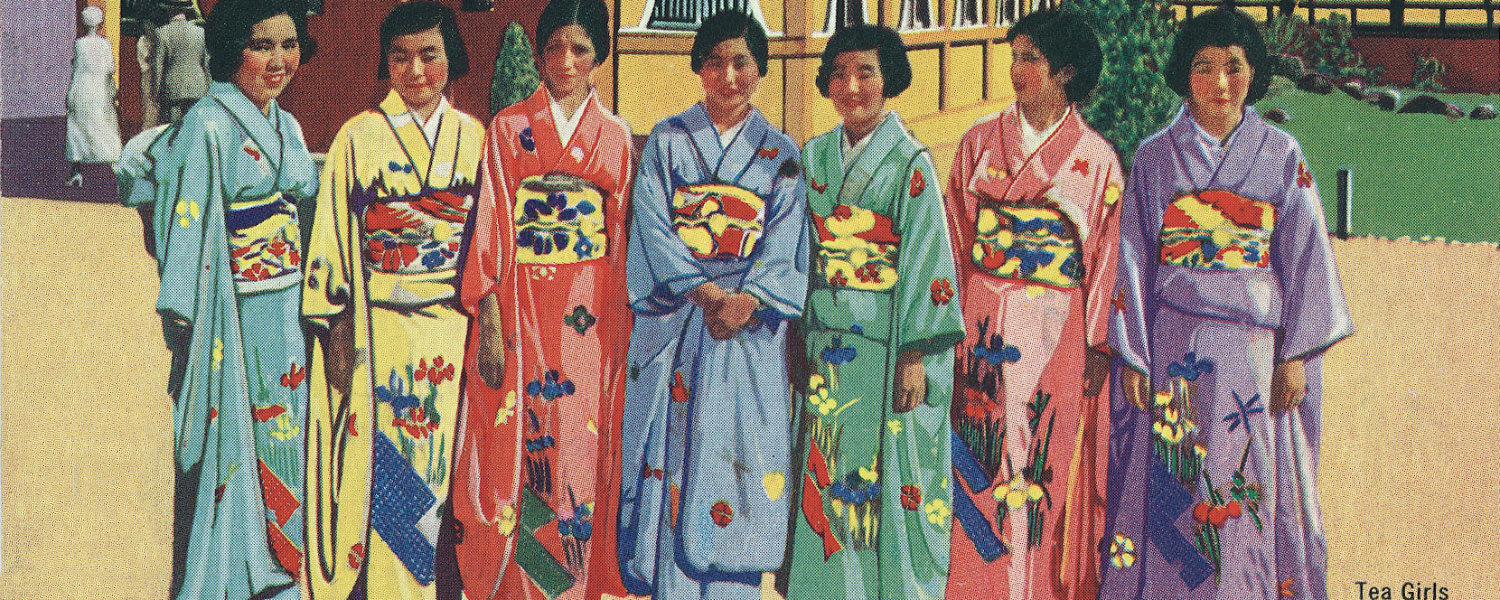
Japan Tea Hall at the Century of Progress International Exposition, Chicago, 1933.
(Source: Fresno State. Henry Madden Library)
Japan actively participated in international expositions held in the United States, starting with the 1876 Centennial Exposition in Philadelphia and continuously up to the twin exhibitions of 1939/40 held on the two coasts (one in San Francisco and the other in New York).
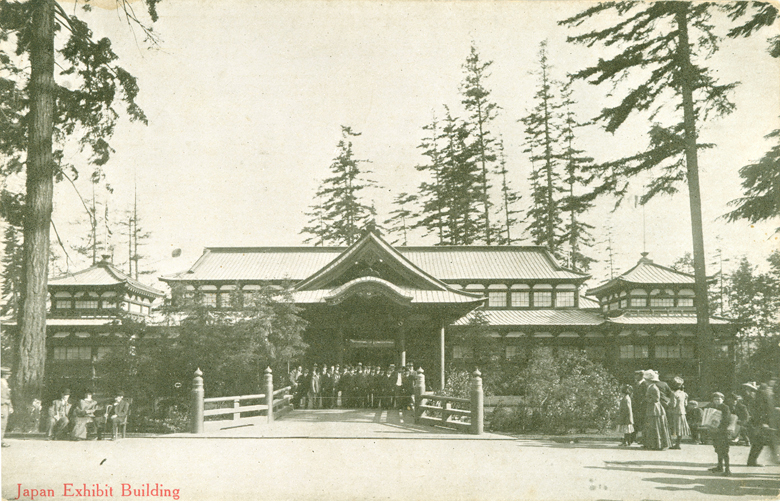
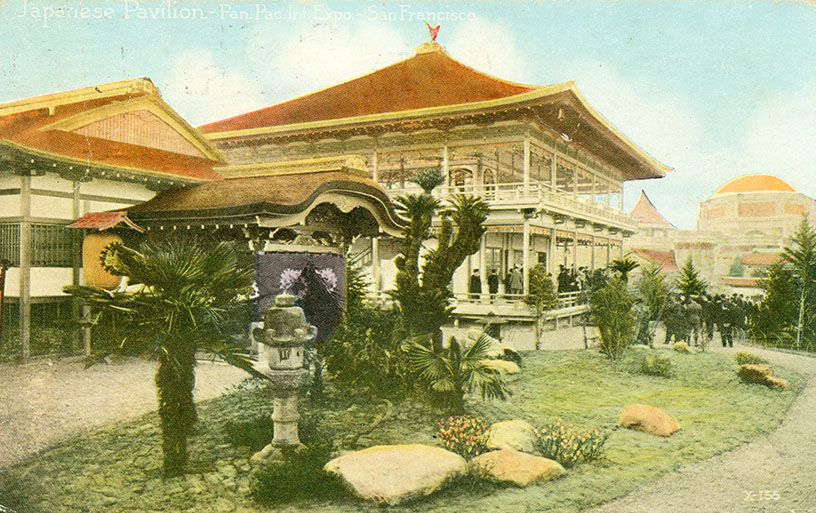
The Japanese pavilions constructed at each fair consistently engaged architectural styles that appeared distinctly “Japanese.” Historical styles and traditional building types served as models for the pavilion designs (castles, pagodas, and shrines were most typical), although close replication of a specific building in the same vein as the Hō-ō-den would not be common.
The constancy of the Japanese pavilions clothed in historical styles stood out against the progressively changing architecture of the expositions’ main buildings. Fairs in the 20th century typically trumpeted future vision, and they featured modern designs that carried little to no direct references to the past.
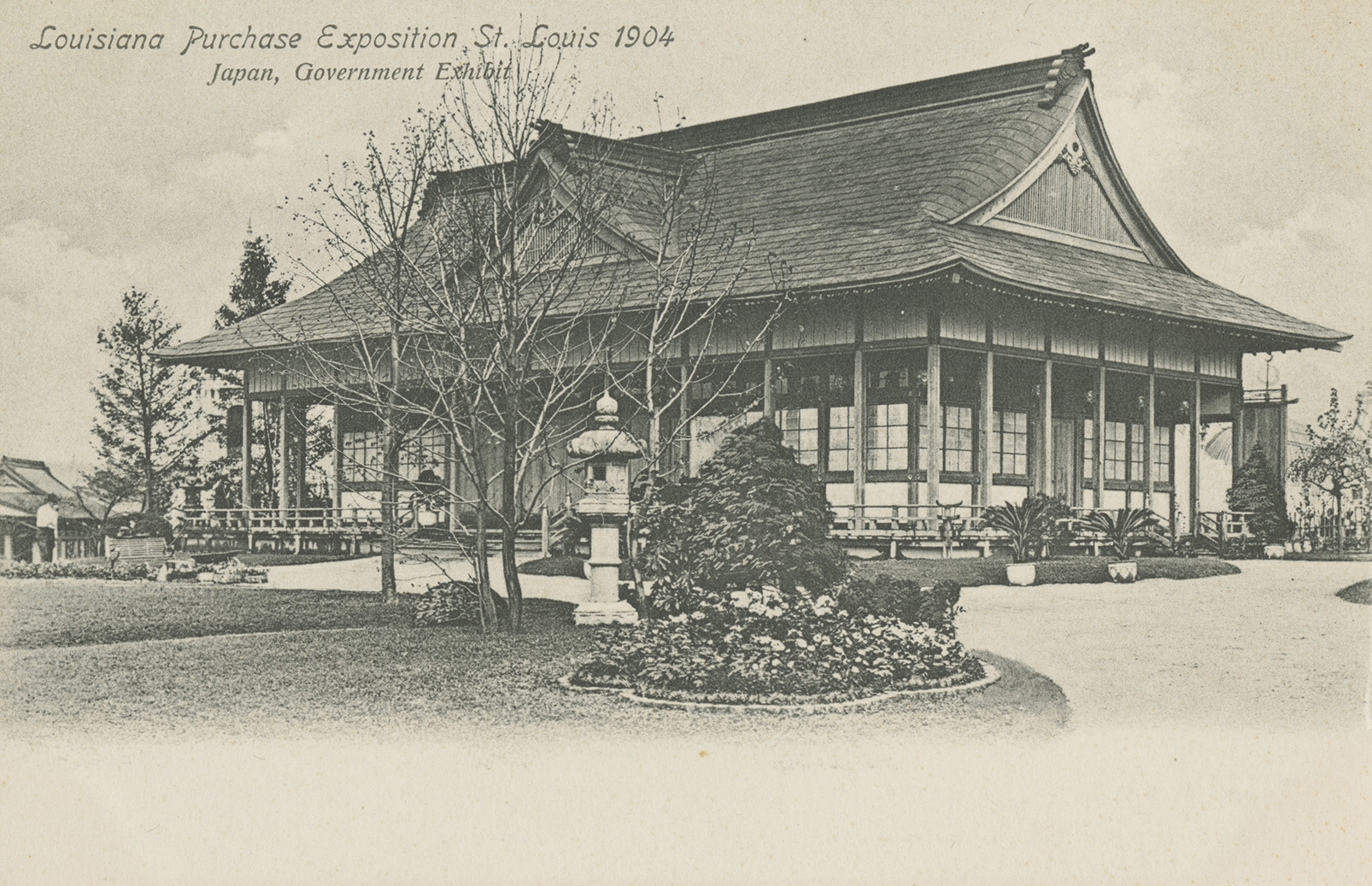
1904
Louisiana Purchase Exposition
St. Louis, Missouri
1904, Louisiana Purchase Exposition (St. Louis)
Japanese Pavilion
Japanese pavilion, in the residential (shinden) style of the Fujiwara period. The architect was Kuru Masamichi, who also designed the Hō-ō-den at the World’s Columbian Exposition in Chicago. (Source: University of Rochester)
Exposition’s Main Building
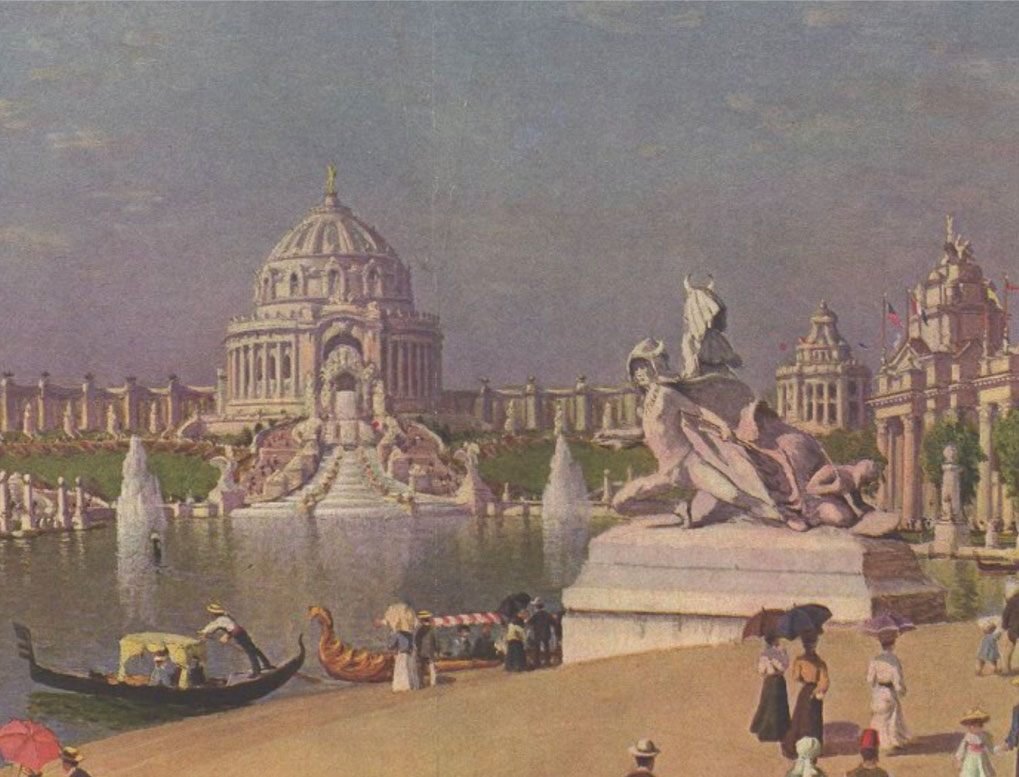
View across the Grand Basin toward the opulent Festival Hall. This structure was the focal point of the event and designed by Cass Gilbert. (Source: Digital Library, University of Missouri)
1909
Alaska-Yukon-Pacific Exposition
Seattle, Washington
1909, Alaska-Yukon-Pacific Exposition (Seattle)
Japanese Pavilion
Japanese pavilion, in the form of “old temples and shrines” (koshaji). The architect was Ikeda Minoru. (Source: University of Rochester)
Exposition’s Main Building
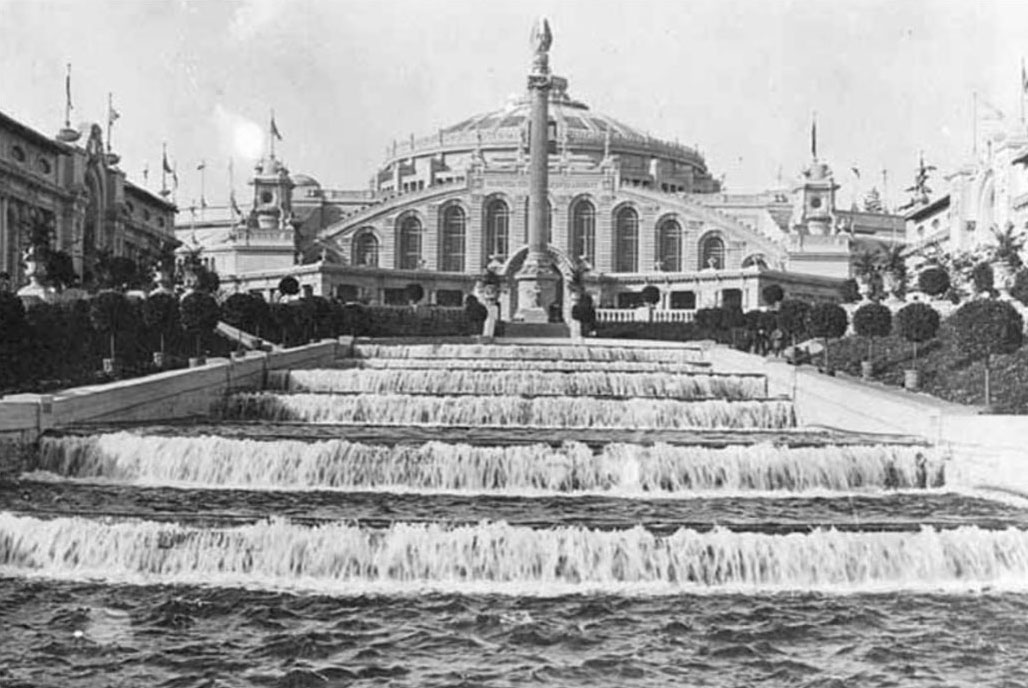
View of the cascades with the US Government Building in the background. (Source: (Digital Collections, University of Washington)
1915
Panama-Pacific International Exposition
San Francisco, California
1915, Panama-Pacific International Exposition (San Francisco)
Japanese Pavilion
Japanese pavilion, in the form of the Kinkakuji (Golden Pavilion), the three-story retirement retreat built by the shogun Ashikaga Yoshimitsu at the end of the 14th century. The architect was Takeda Goichi. (Source: University of Rochester)
Exposition’s Main Building
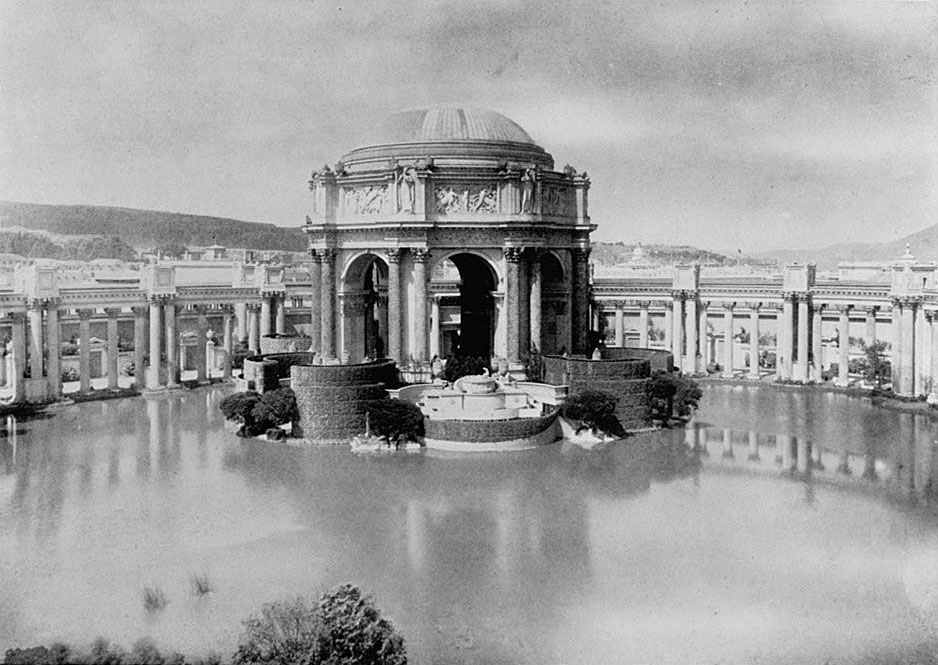
View of the Fine Arts Palace, one of the key structures of the 1915 event, designed by Bernard Maybeck. It remained on site after the close of the fair and was rebuilt in concrete in nearly identical form in 1965. (Source: Library of Congress)
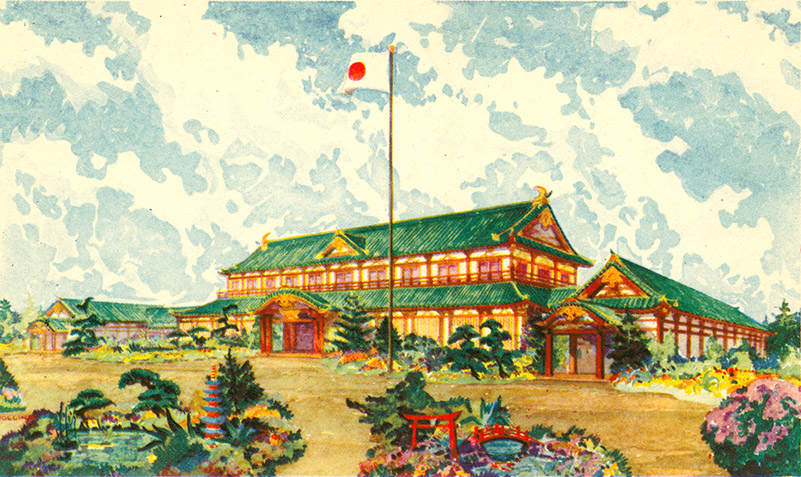
1933/34
Century of Progress International Exposition
Chicago, Illinois
1933/34, Century of Progress International Exposition (Chicago)
Japanese Pavilion
Japanese pavilion, in the “Kamakura revival style.” The architect was Miyamoto Iwakichi. (Source: University of Rochester)
Exposition’s Main Building
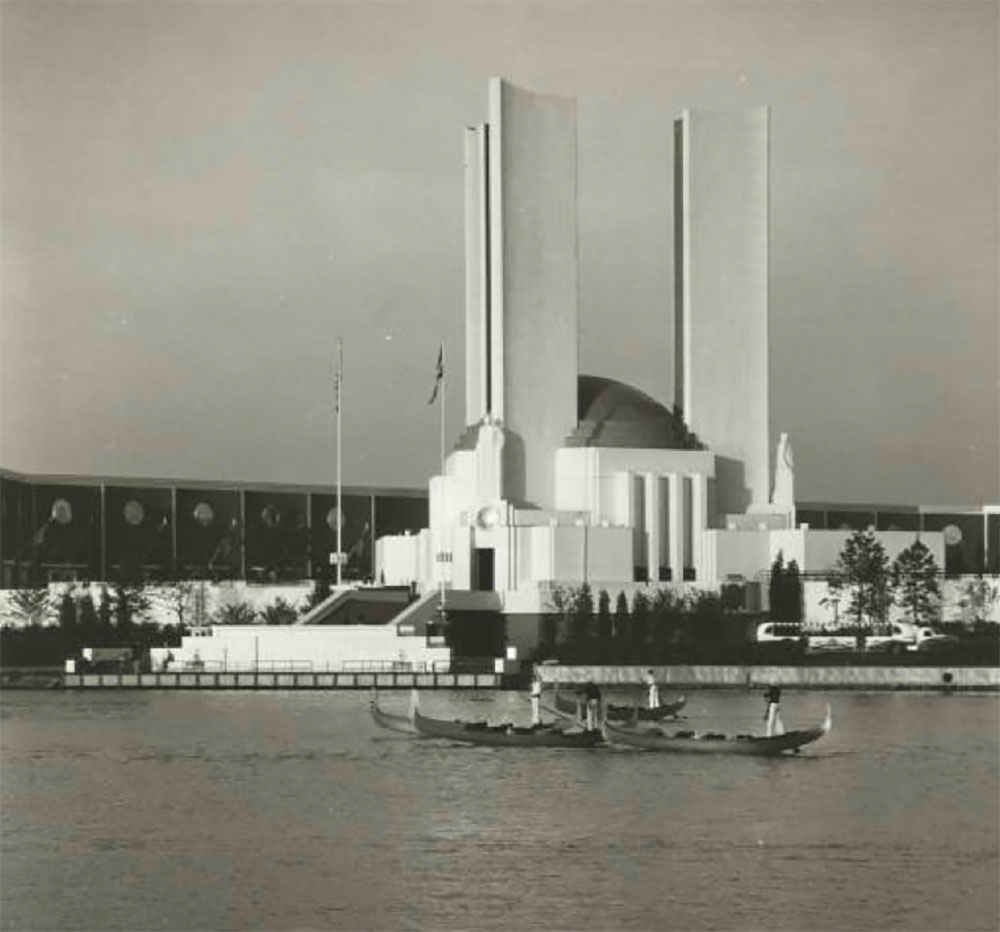
View of the Federal Building, designed by Edward H. Bennett and Arthur Brown, Jr. The round dome and tall pylons suggest Neo-Classical forms stripped of ornamental detailing. (Source: Consortium of Academic and Research Libraries in Illinois)
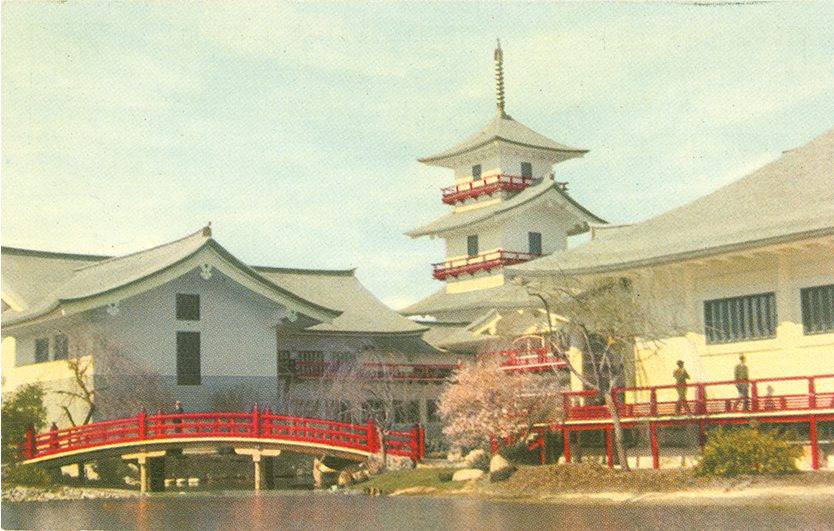
1939/40
Golden Gate International Exposition
San Francisco, California
1939/40, Golden Gate International Exposition (San Francisco)
Japanese Pavilion
Japanese pavilion, based on castle architecture. The architects were Matsushita Kiyoo and Uchida Yoshikazu. (Source: University of Rochester)
Exposition’s Main Building
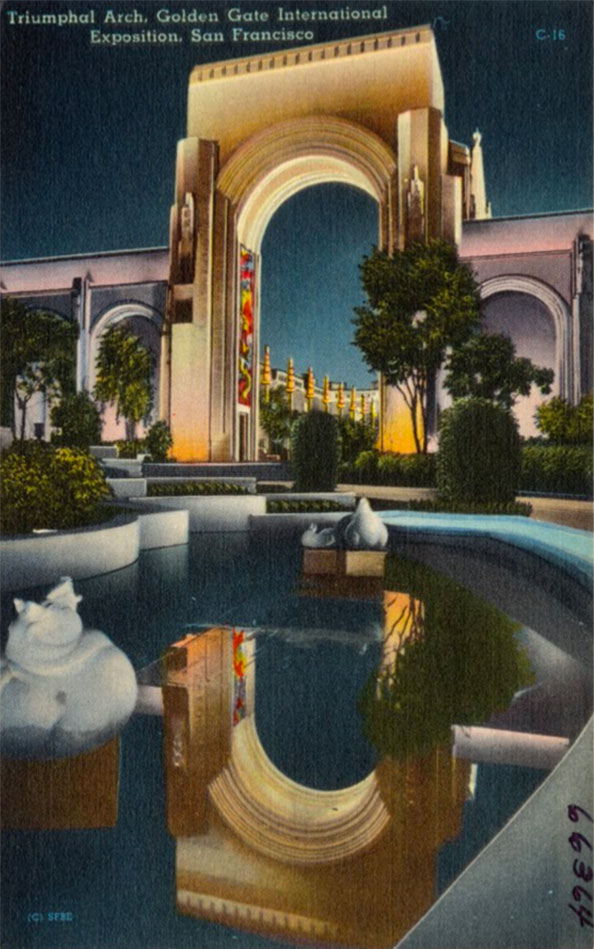
View of the Triumphal Arch. The architecture of the fair took on a newly-invented style that is a combination of Art Deco, Mayan, Asian, and the Pacific Islands. (Source: Digital Commonwealth, Massachusetts Collections Online)
1939/40
New York World’s Fair
New York, New York
1939/40, New York World’s Fair (New York)
Japanese Pavilion
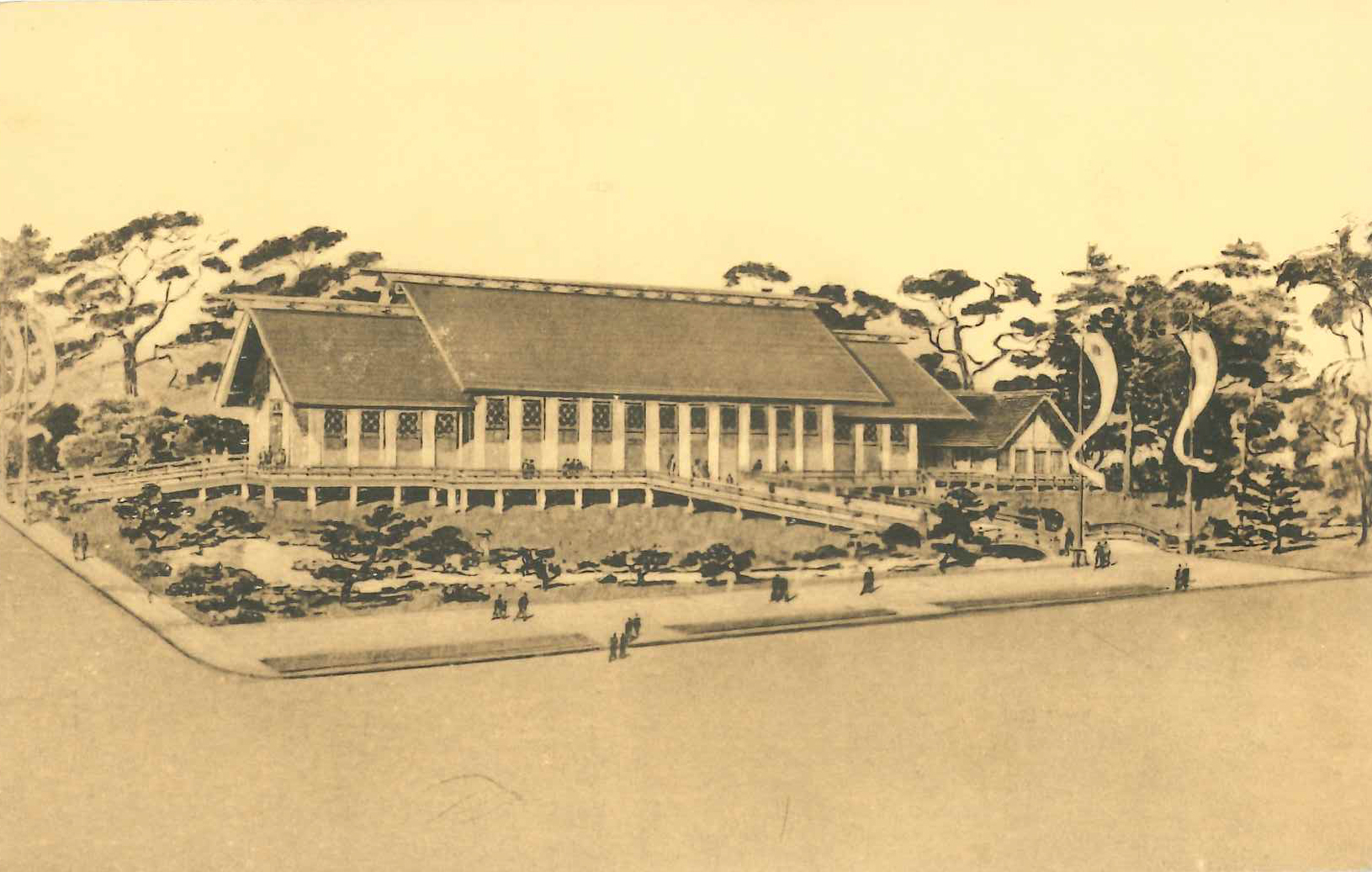
Japanese pavilion, based on shinmei-style shrine architecture. The architects were Kishida Hideto and Uchida Yoshikazu. (Source: Private Collection of Alice Y. Tseng)
Exposition’s Main Building
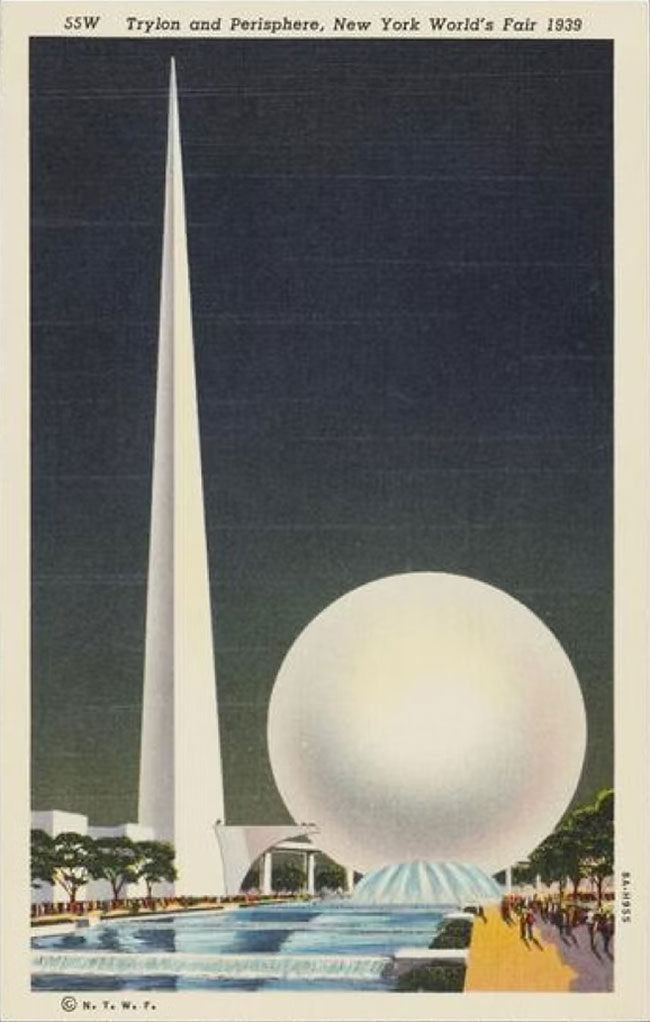
The Trylon and Perisphere were the twin centerpieces of the 1939 fair. Monumental in size and painted in pure white, these futuristic sculptural forms were connected by a long escalator. The designers were Wallace Harrison and J. André Fouilhoux. (Source: Museum of the City of New York)