Asian Voices at the World Parliament of Religions
Room No. 1: Before the Parliament – Western Encounters with East Asian Religions
Japanese Buddhism in the Meiji Era
The invitation to participate in the World’s Parliament of Religions arrived in Japan at a time of rapid political and religious change. The Meiji Restoration in 1868 had restored the emperor to power and ushered in a process of wide-spread modernization. Japan was eager to adopt the technological and scientific advances of the West. At the same time, there was a movement to identify and recover the cultural resources that could establish Japan’s own national identity, in order to resist the cultural domination of the West. People were asking: What made Japan distinctively “Japanese”? And how could each religious tradition and community contribute to the strength of Japan as a nation?
Buddhists found themselves in a strangely ambiguous position. In the early years of the Meiji era there was a movement to treat Buddhism as a “foreign” import and favor Shinto as the proper expression of the Japanese nation. But it did not take long for Buddhists to respond to this challenge and assert not only that Buddhism was an expression of the Japanese spirit, but that it had all the features of a “modern” religion–one that could resist and even triumph over the aggressive claims made by Christian missionaries and by all those who saw Christianity as the dominant religion in the modern world.
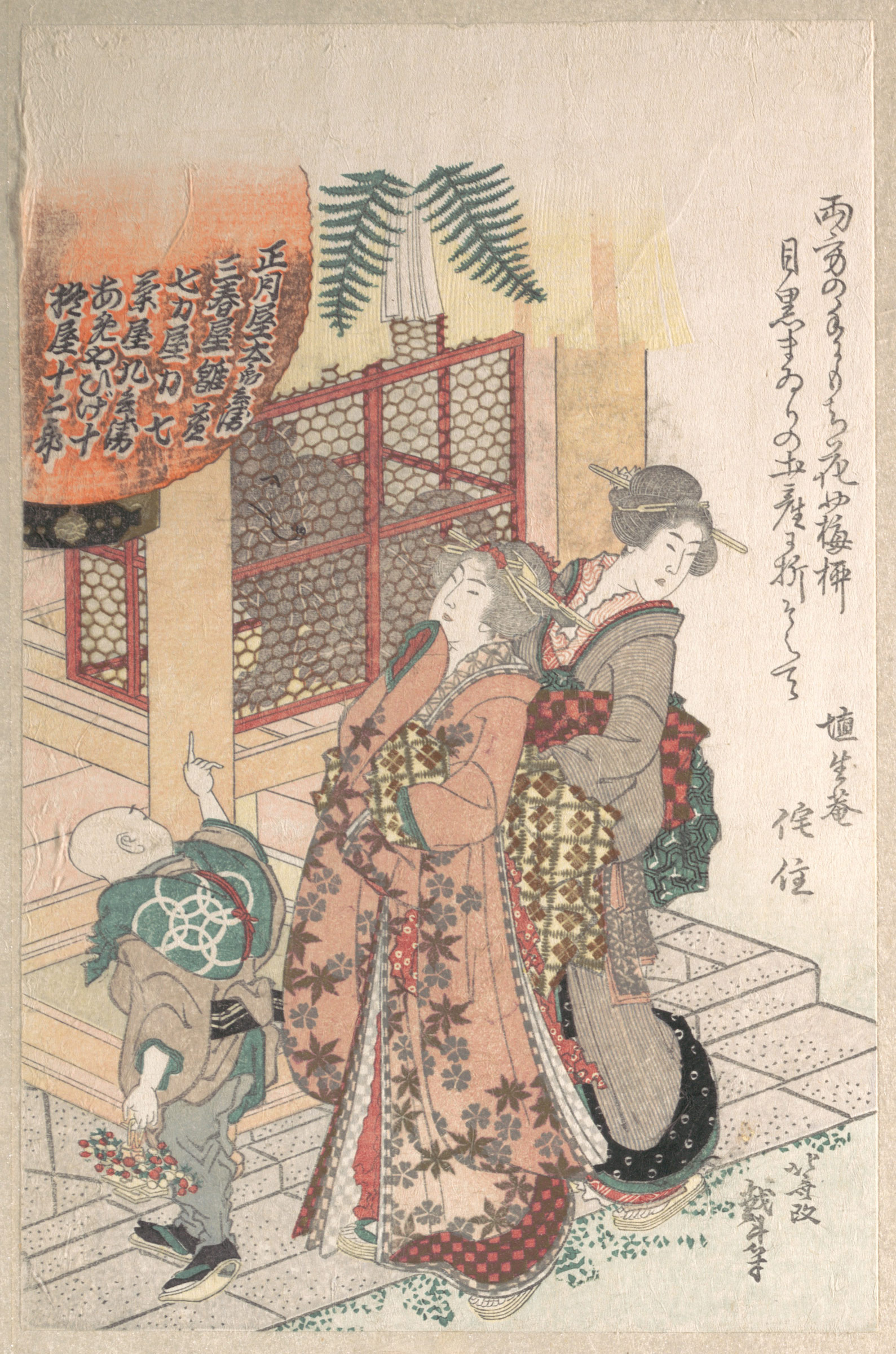
”Young Women Visiting a Shinto Shrine,” woodblock print dated 1814 by Katsushika Hokusai (1760–1849). (Source: Metropolitan Museum of Art, Acc. No. JP2019H. O. Havemeyer Collection, Bequest of Mrs. H. O. Havemeyer, 1929)
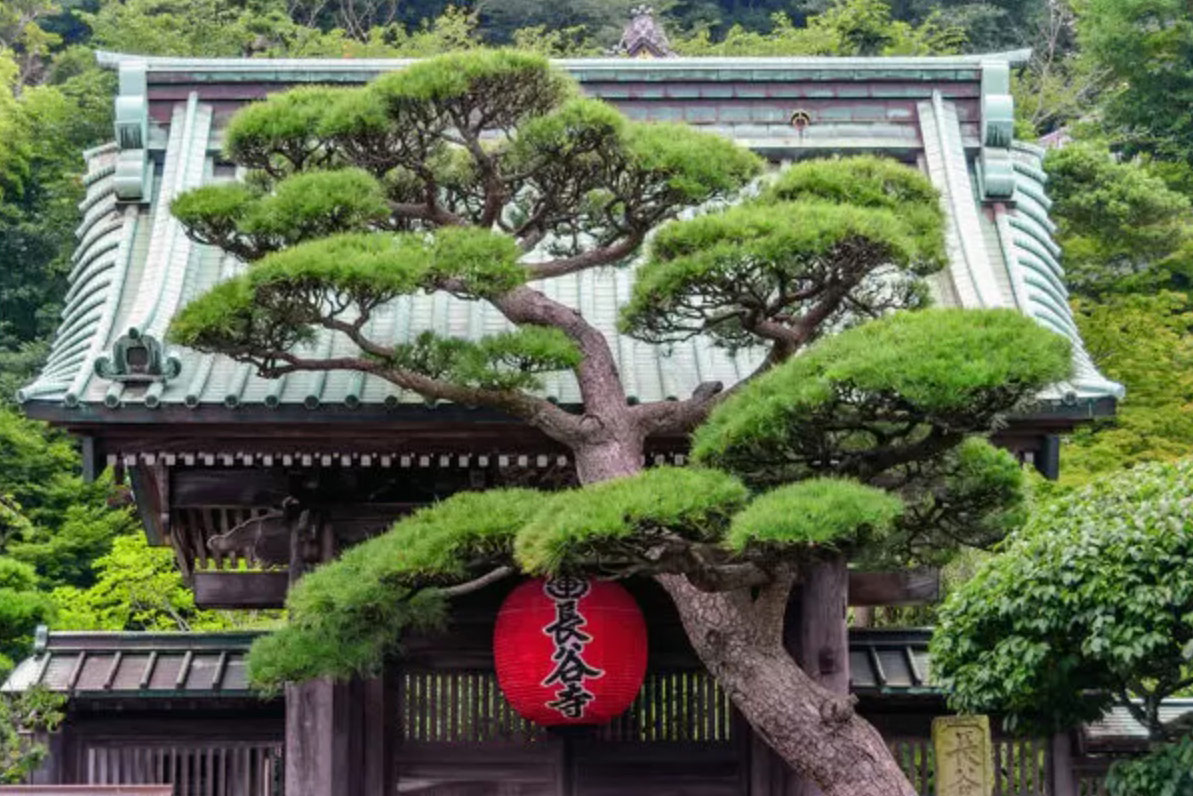
Buddhist temple at Kamakura, Japan
Japanese Buddhists had many resources to draw on for their response. Not the least of these was Colonel Henry Steel Olcott’s attempt to forge a distinctively modern and scientific Buddhism based on the Theravāda teachings (often called “Southern Buddhism”) that he had studied in Ceylon. The Theravāda tradition already had gained wide recognition in Europe and America through the efforts of two influential scholars: Max Müller, the editor of the “Sacred Books of the East” series and the founder of what was known as the discipline of “comparative religion,” and T. W. Rhys Davids (1843-1922), the founder of the Pali Text Society and a leading European scholar of early Buddhist texts.
Japanese Buddhists invited Col. Olcott, whom they called “our American Brother,” to visit Japan in 1889. Olcott was received enthusiastically in Japan, but it did not take long for his Japanese hosts to recognize that his preference for the Southern Buddhism of Ceylon did not coincide with their view of the superiority of the Mahāyāna, as it had evolved at the other end of the Buddhist world. Japanese scholars developed a distinctive vision of an “Eastern Buddhism” that was consistent with the insights of modern Western philosophy and represented, in their view, the highest achievement of Buddhist thought. Not coincidentally, it was consistent with the patriotic desire to see in Buddhism an expression of the Japanese national spirit.
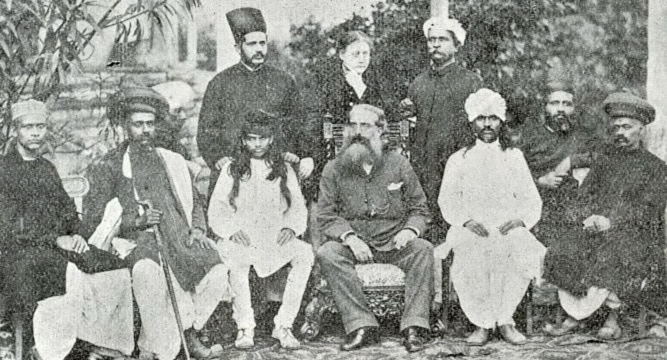
In his diaries, Olcott provides the text of the invitation, delivered through a translator by the Buddhist delegate Mr. Noguchi:
“…We, Japanese Buddhists, now ask you to lend us this worker of social miracles, this defender of religion, this teacher of tolerance, for a little time, so that he may do for the religion of my country what he and his colleagues have done for the religion of India. We are praying Colonel Olcott to come and help us; to come and revive the hope of our old men, to put courage in the hearts of our young men, to prove to the graduates of our colleges and universities, and to those who have been sent to America and Europe for education, that Western science is not infallible, and not a substitute, but the natural sister of Religion…”
(Henry Steel Olcott, Old Diary Leaves, Vol. 4, p. 83 (London: Theosophical Publishing Society)
Olcott was received enthusiastically in Japan, but it did not take long for his Japanese hosts to recognize that his preference for the Southern Buddhism of Ceylon did not coincide with their view of the superiority of the Mahāyāna, as it had evolved at the other end of the Buddhist world. Japanese scholars developed a distinctive vision of an “Eastern Buddhism” that was consistent with the insights of modern Western philosophy and represented, in their view, the highest achievement of Buddhist thought. Not coincidentally, it was consistent with the patriotic desire to see in Buddhism an expression of the Japanese national spirit.
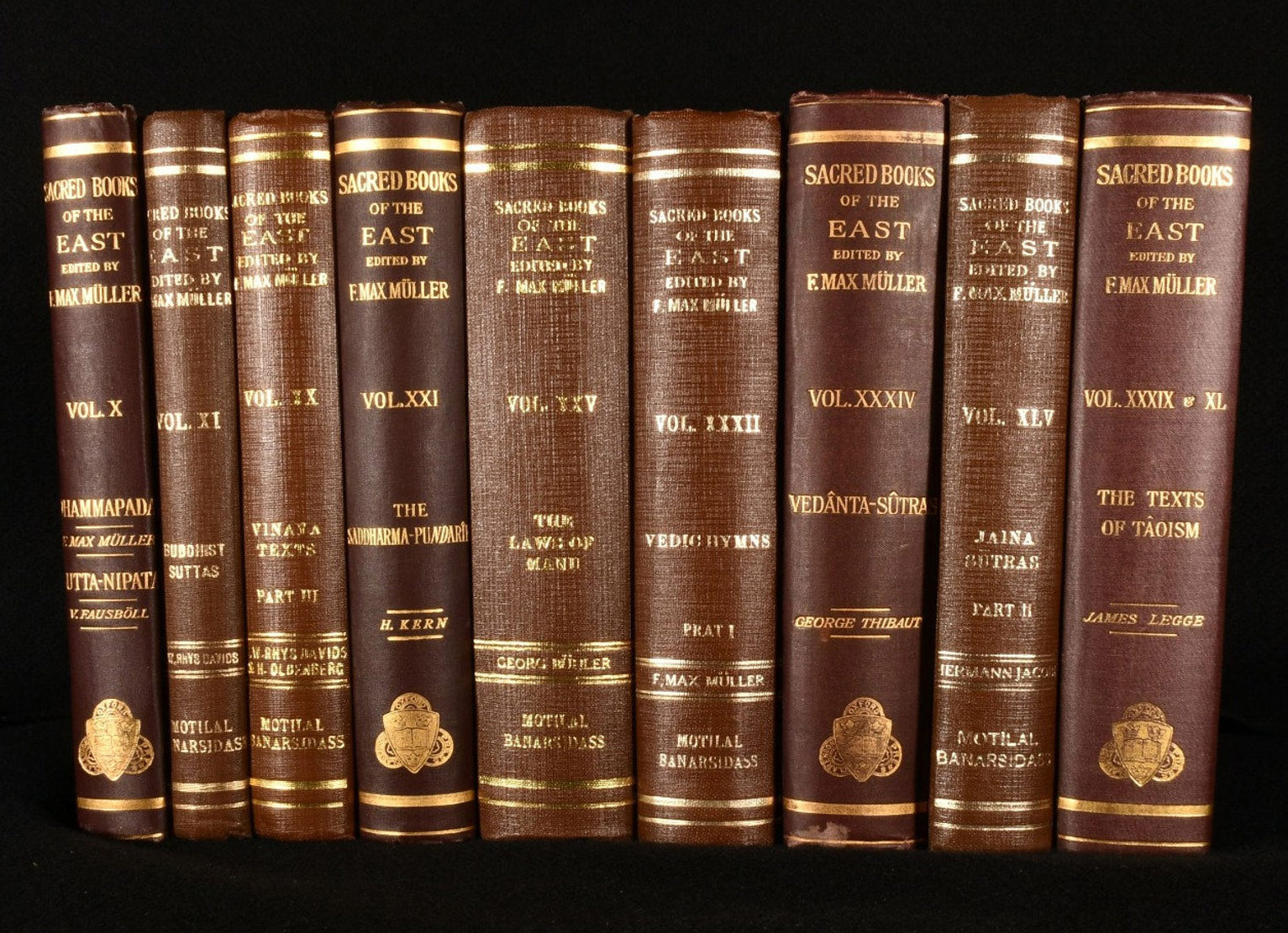
The Sacred Books of the East, a 50-volume set of English translations of key Asian religious texts edited by Max Mueller. Originally published by Oxford University Press between 1879 and 1910.

Inoue Enryō 井上 円了 (1858 – 1919)
Inoue Enryo (1858-1919)]
One of the best-known expressions of this new vision of Buddhism was the Bukkyō katsuron joron (“Introduction to the Revitalization of Buddhism”) by Inoue Enryō (1858-1919). Inoue was raised in a temple family in Echigo, a rugged mountainous region of north-central Honshu near the Japan Sea. As a young man, he became impatient with the traditional forms of Japanese Buddhism and undertook an intellectual quest to find the truth in other religious and intellectual traditions. His journey led him to study the Confucian classics and the Christian Bible. Eventually he became a student of Western philosophy under the influence of the American Orientalist and educator Ernest Fenollosa at Tokyo Imperial University. Through his study of the West, Inoue came to believe that Buddhism was the religion that came closest to the truth. It was the most consistent with the modern scientific understanding of causality, and it provided a sense of unity and confidence in competition with the West. Inoue expressed his new understanding like this:
“Buddhism is now our so-called strong point… Material commodities are an advantage of the West; scholarship is also one of their strong points. The only advantage we have is religion. This fine product of our excels those of other countries; the fact that its good strain died out in India and China must be considered an unexpected blessing for our country. If we continue to nurture it in Japan and disseminate it some day in foreign countries, we will not only add to the honor of our nation but also infuse the spirit of our land into the hearts and minds of foreigners. I am convinced that the consequences will be considerable.” 1
These words were published in 1887 and anticipated the sense of cultural confidence that led the Japanese delegation to Chicago just six years later.
When Buddhist leaders in Japan received the invitation to the Parliament, they greeted it initially with skepticism. The language of the invitation, with its references to “the truths of theism,” made it seem that the Parliament was just an attempt to confirm the superiority of Christianity. But one group of Buddhist leaders saw the Parliament as an opportunity to advocate Buddhism into the heart of the Christian West. It would give them a chance to show their confidence in the truth of Buddhism, make the case for Japanese cultural integrity, and demonstrate to their compatriots in Japan that Buddhism could hold its own against its most articulate critics. In effect, they could establish the significance of Buddhism at home, while they also established the importance of Buddhism in the eyes of the West. As the American historian James Ketelaar has aptly noted, it was an act of “strategic Occidentalism,” to use the categories of the Western religion to establish its legitimacy at home in Japan.
These plans were laid out in a “Manifesto” from “Concerned Buddhists” to the “All Sects Council” asking its members to endorse a delegation to Chicago. The “Manifesto” was signed by several prominent Buddhist leaders, including three who became delegates to the Parliament, Shaku Sōen, Toki Hōryū, and Ashitsu Jitsuzen. Inoue Enryō was listed elsewhere as a supporter.2 The “Manifesto” argued that, by sending official delegates, the Buddhists of Japan could “in one action. . . convey the teachings of the Buddha and the truth that is special to Buddhism to the scholars and religious specialists of the world.” This would give them an opportunity to resist the invasion of foreign religion in Japan and challenge the assumption of Western (and white) supremacy. As the “Manifesto” said, “The sound of a large bell reaches far and wide, but the bell must be rung; the doctrines of a great sage are by no means restricted to a small district, but opportunities for their propagation must be utilized.3
The authors of the “Manifesto” did not persuade the “All Sects Council” to give their official support, but this did not deter them. In the late summer of 1893, a six-member delegation, consisting of four priests and two laymen, set sail from Japan for the Parliament in Chicago. Each had found financial support from his own denomination or temple, and each was prepared to add his own voice into the affairs of the Parliament.
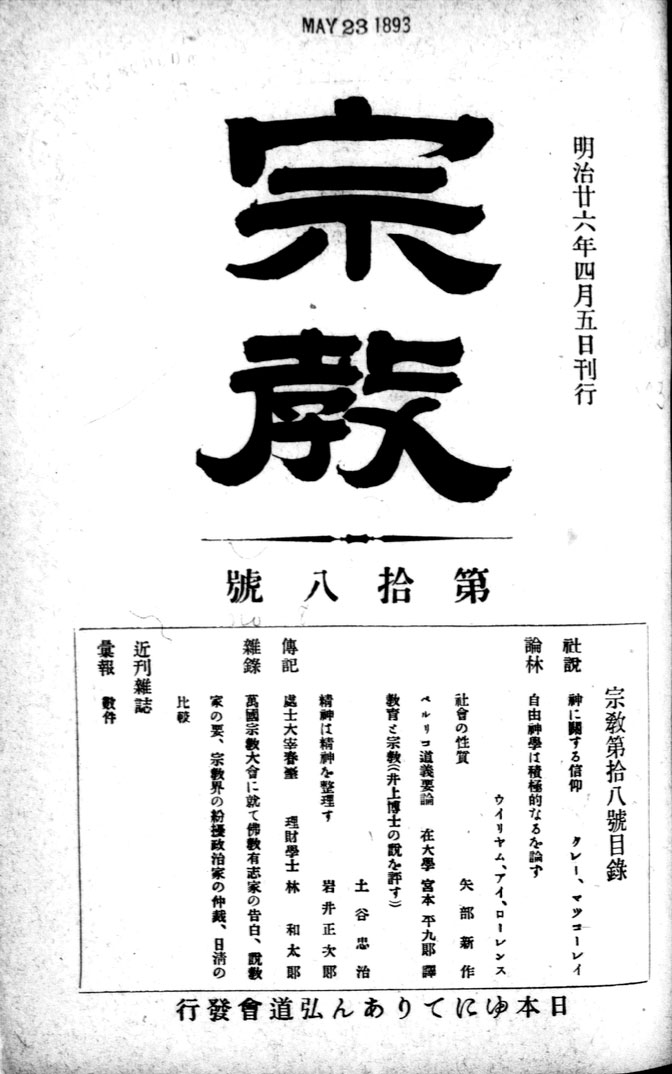
Opening page from the Buddhist Manifesto published in the Japanese journal Religion 宗教, vol. 18 (1893).
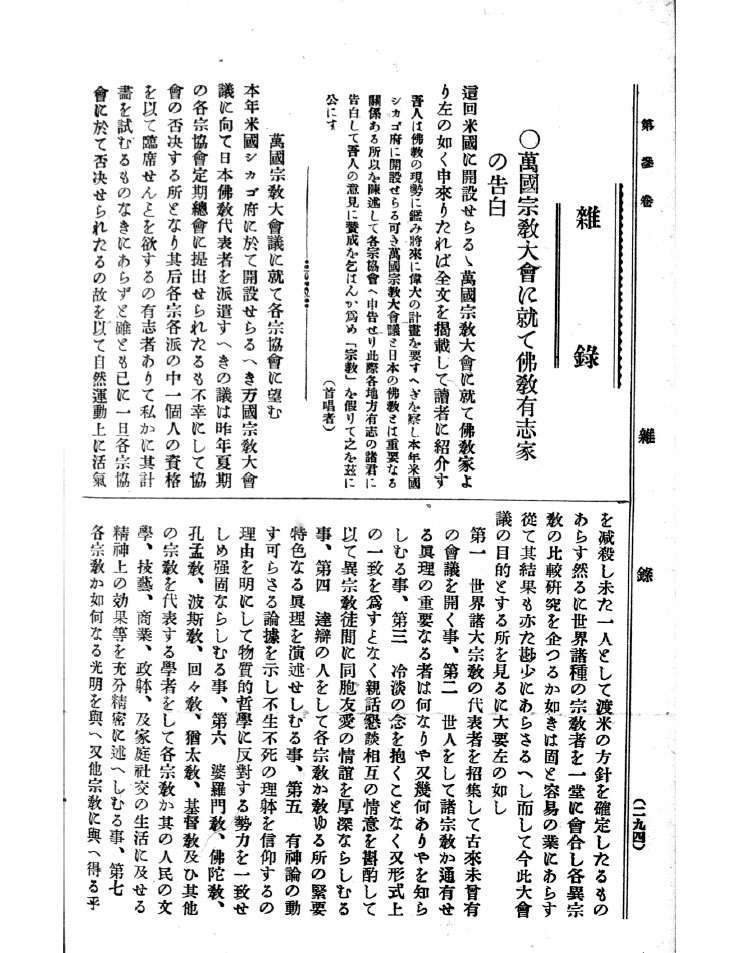
Sample page from the Buddhist Manifesto published in the Japanese journal Religion 宗教, vol. 18 (1893).
The most prominent member of the delegation was Shaku Sōen (1860-1919), the abbot and Zen master of Engaku-ji temple in Kamakura. He was educated at Keio University and was recognized as an unusually talented Zen monk. He was part of the conversation about the modernization of Japanese Buddhism and spent three years (1887-1890) in Ceylon studying the Pali language and Theravāda Buddhism.Through the contacts he made in America during the Parliament and through the work of his disciple, D. T. Suzuki, Zen became a vital part of the religious tapestry of modern America.
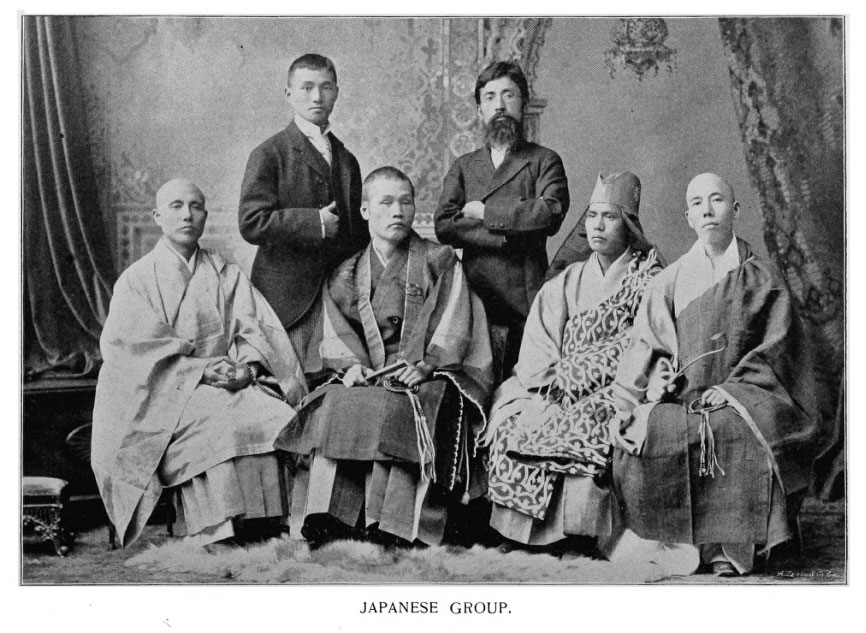
Photograph of the “Japanese Group.” From Walter R. Hougton (ed.), Neely’s History of The Parliament of Religions and Religious Congresses at the World’s Columbian Exposition, Compiled from Original Manuscripts and Stenographic Reports, (Chicago, F.T. Neely, 1893), p. 37.
China
By the 1890s, China, of course, had long been a focus of Christian missionary and Western commercial activities. American audiences had become familiar with Chinese arts and crafts since the earliest “Chinese Museums” in Philadelphia in the 1830s, in Boston in the 1840s, and in New York in the 1850s. The Chinese exhibits at the Centennial International Exposition in Philadelphia in 1876, to be explored in more detail elsewhere in this project, had presented a spectacular array of furniture, ceramics, bronzes, and paintings that would spark decades of collecting in the US, with major collections starting to take shape by the 1890s. With the publication of Sacred Books of the East and other works, both scholarly and popular, Westerners were both informed about and intrigued by Asian religions.
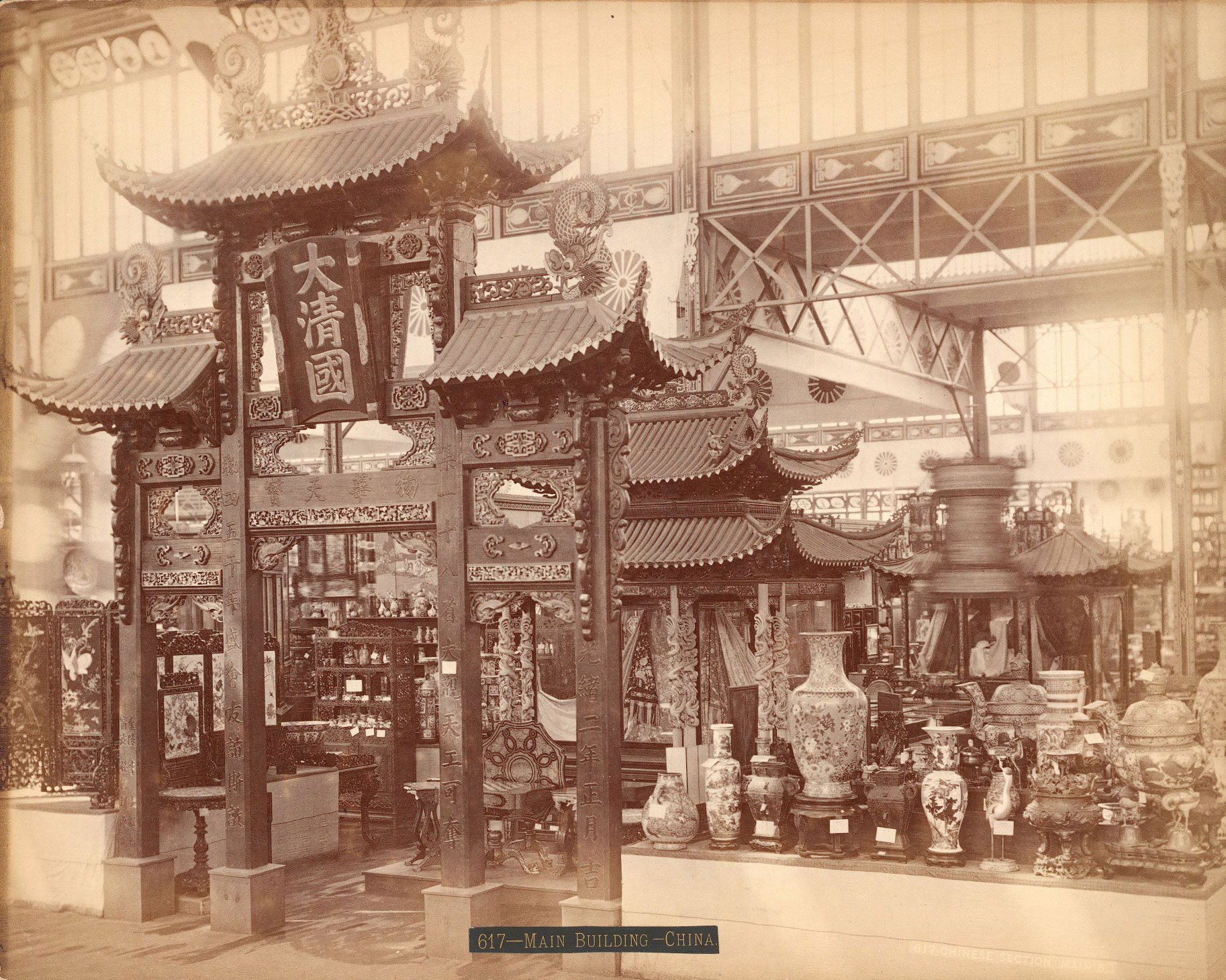
Display of enameled vases, bronzes, and other crafts in the Chinese exhibit at the Centennial Exhibition, Philadelphia, 1876. Centennial Photographic Co.
Barrows wanted to be sure that Confucianism was properly represented among the “Ten Great Religions” of the Parliament, although Confucianism is widely regarded to be more of a system of philosophical and ethical teachings rather than a religion. Filling this role at the Parliament would be Pung Kwang-yu 彭光譽 , First Secretary of the Chinese Legation in Washington DC, who, as Barrows would describe, was “deputed by the Emperor of China to present the doctrine of Confucius.”4
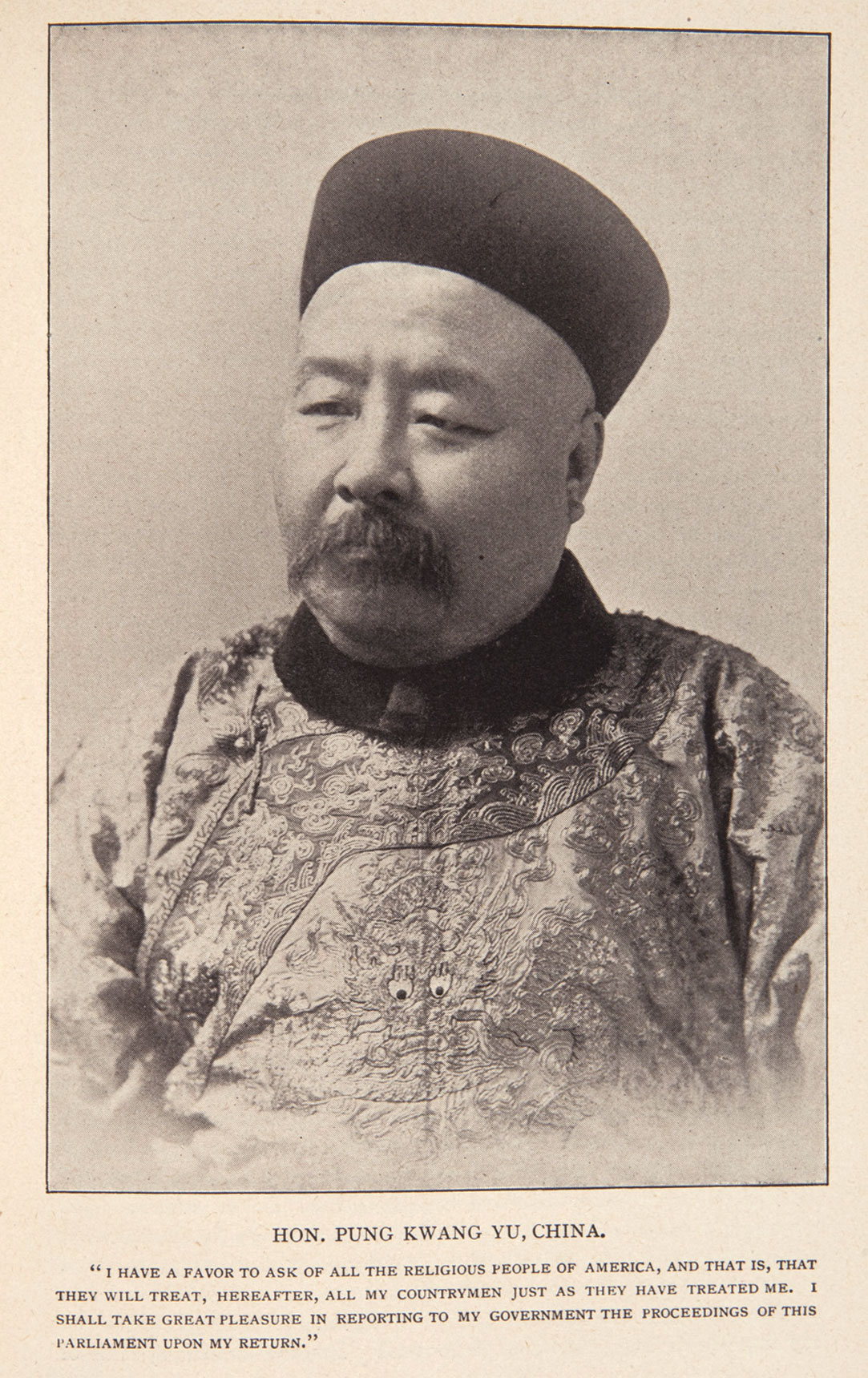
Hon. Pung Kwang Yu. From John Henry Barrows, The World’s Parliament of Religions; An Illustrated and Popular Story of the World’s First Parliament of Religions, held in Chicago in Connection with the Columbian Exposition of 1893,Vol. 1, p.376.
The Hon. Mr. Pung would be an interesting and important choice to represent Confucianism, as he was neither a traditional scholar nor a particularly religious man, his career focusing instead on diplomatic service. In his forties, he was already a rising diplomat in the Qing government, participating in Qing governmental negotiations in Korea over British occupation of the Korean port of Geomundo 巨文島, or Port Hamilton. Rising in the diplomatic ranks, in 1886, at age 51, Pung traveled to San Francisco and then to Washington DC, where he rose from tertiary counselor to secondary counselor under the Qing government’s Minister to the United States, Tsui Kwok Yin (Cui Guoyin 崔國因).
In this new position, Pung primarily dealt with diplomatic affairs, continuing his work on the Port Hamilton dispute and now including the increasingly dire situation for Chinese workers in the United States who were being victimized by newly restrictive residential regulations in San Francisco and other cities, draconian legislation to limit or end Chinese immigration, and increasingly violent attacks by mobs at gold and silver mining sites in Montana and other western states.5 Chinese Minister Tsui Kwok Yin closely monitored these “overseas orphans” with great sympathy, and this was a priority concern for the Chinese Legation. It is not surprising, then, that Pung Kwang-yu was directly involved in trying to resolve these dangerous (and sometimes deadly) events, frequently sending the US State Department formal letters and requests for intervention and protection of the Chinese immigrants.
Pung’s appointment as China’s representative of Confucianism at the Parliament, then, provided the opportunity for Pung to not only expound upon his ideas of how the concept of religion was viewed differently in China than in other cultures (ideas that he would expand in a major published work Shuo Jiao 說教 two years after the Parliament), but participation in the Parliament would also provide Pung with an important public stage upon which to press for better treatment of Chinese workers in the US, as well as for better US-Chinese relations. As will be seen, Pung was a huge hit among both the Parliament’s attendees as well as the general public, in spite of the fact that Barrows seems to have presented Pung’s translated remarks in a way that fit his preconceived aims for the Parliament.
WHAT DID AMERICANS KNOW OF ASIAN RELIGIONS BEFORE THE PARLIAMENT?
The success of the Parliament depended not only on an articulate and informed group of delegates from Asia; it also required a willing audience. As Americans packed into the halls of the Parliament, how much did they know about Asian religions? Where were they getting their information? And what did they expect to hear?
American attitudes towards Asian religions before the Parliament in 1893 were woven of many strands. Between 1784 and 1893, public knowledge and opinions about Asian religions in the United States were influenced by a combination of international trade, travelers’ accounts, missionary reports, immigration, scholarly studies, and intellectual movements like Transcendentalism. It is often said that American commercial relations with Asia began when the ship The Empress of China, captained by former naval officer John Green, set sail from New York in February 1784 on a trading mission to Canton (Guangzhou), China.
It returned in May 1785 with a large cargo of tea, silk and porcelain to feed the incipient American market for Asian goods. Travelers’ accounts, like Amaso Delano’s travelog of India (1817) and Robert Morrison’s Letter from China (1809) presented Americans with engaging accounts of the religious and cultural practices in Asian countries.
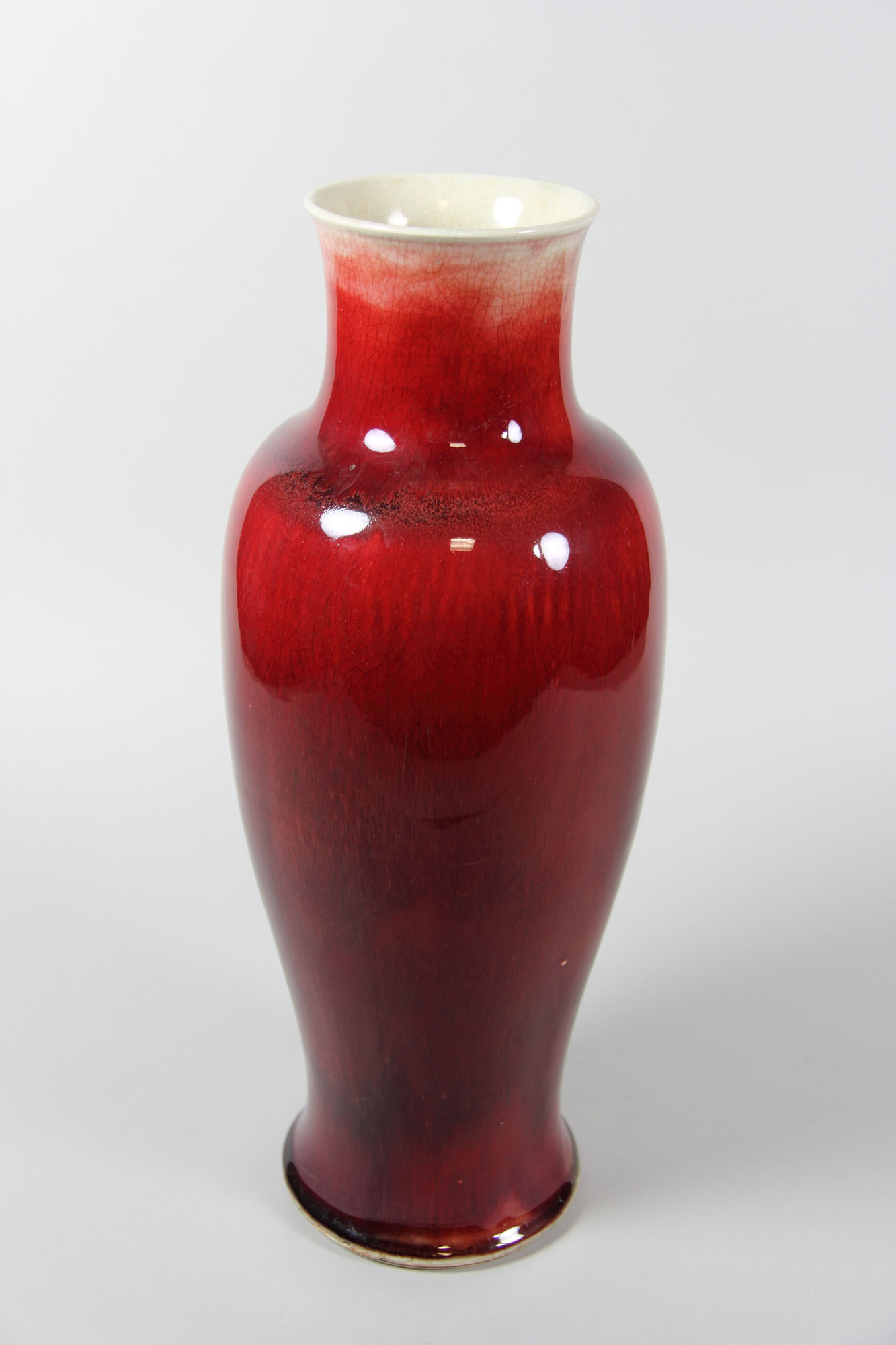
Jingdezhen ware porcelain vase with ox-blood red glaze, from the Kangxi period (1662–1722) of the Qing dynasty
Metropolitan Museum of Art, Bequest of Benjamin Altman, 1913. Accession Number 14.40.412.
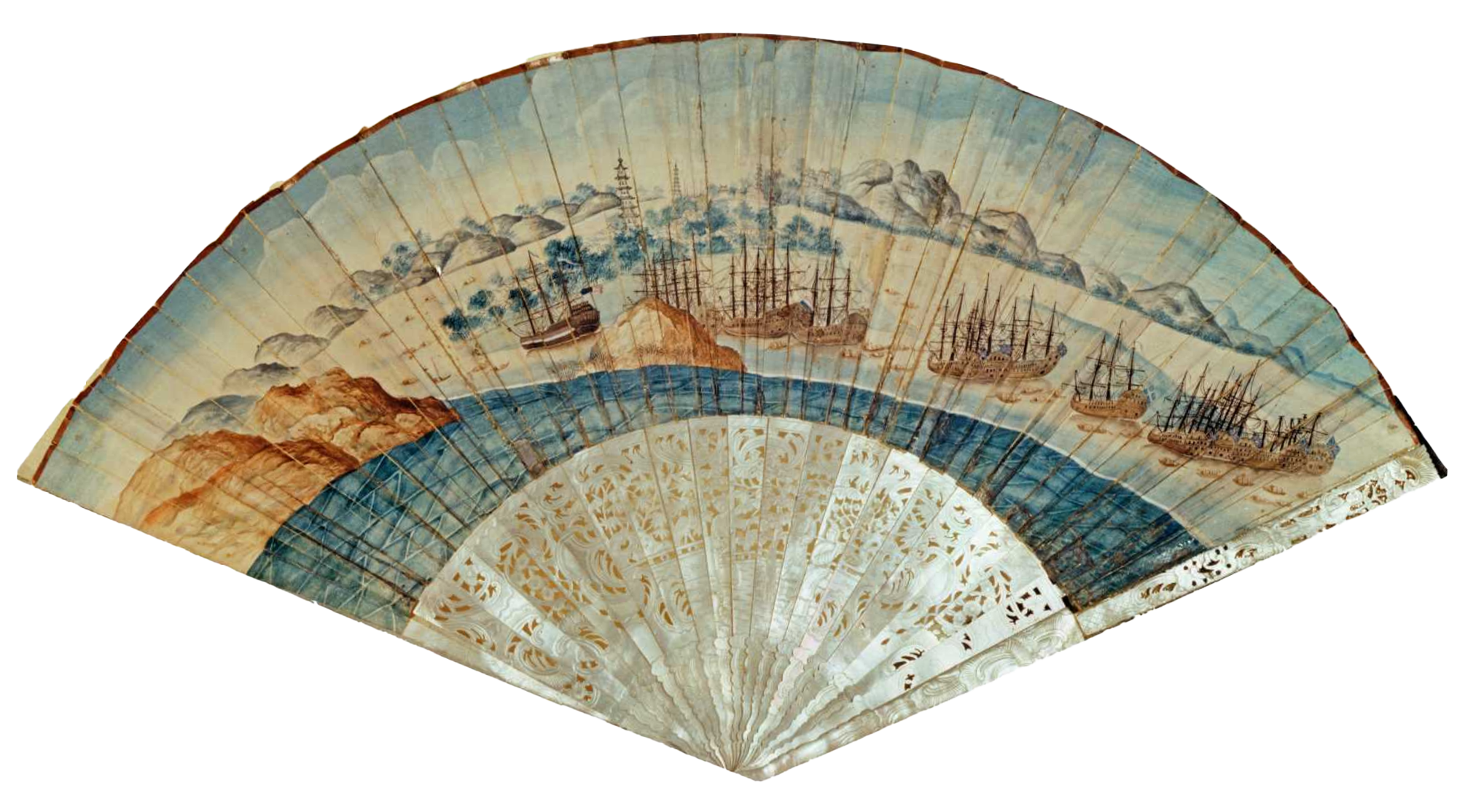
The Empress of China was a converted privateer that set sail from New York in 1784 bound for Guangzhou, China on a trading mission. Financed in tandem by Robert Morris, one time member of the Pennsylvania legislature and one of the richest men in the United States at the time, and the firm Daniel Parker & Co., the mission returned a 25 percent profit to its investors and was the first American merchant vessel to enter the China trade.6 Additionally, the mission led to the eventual establishment of the American Consul in Canton, led by Samuel Shaw, former officer of the Continental Army. Shaw’s active role in leading the Consul encouraged others to invest in trading with China along the Pacific route.7
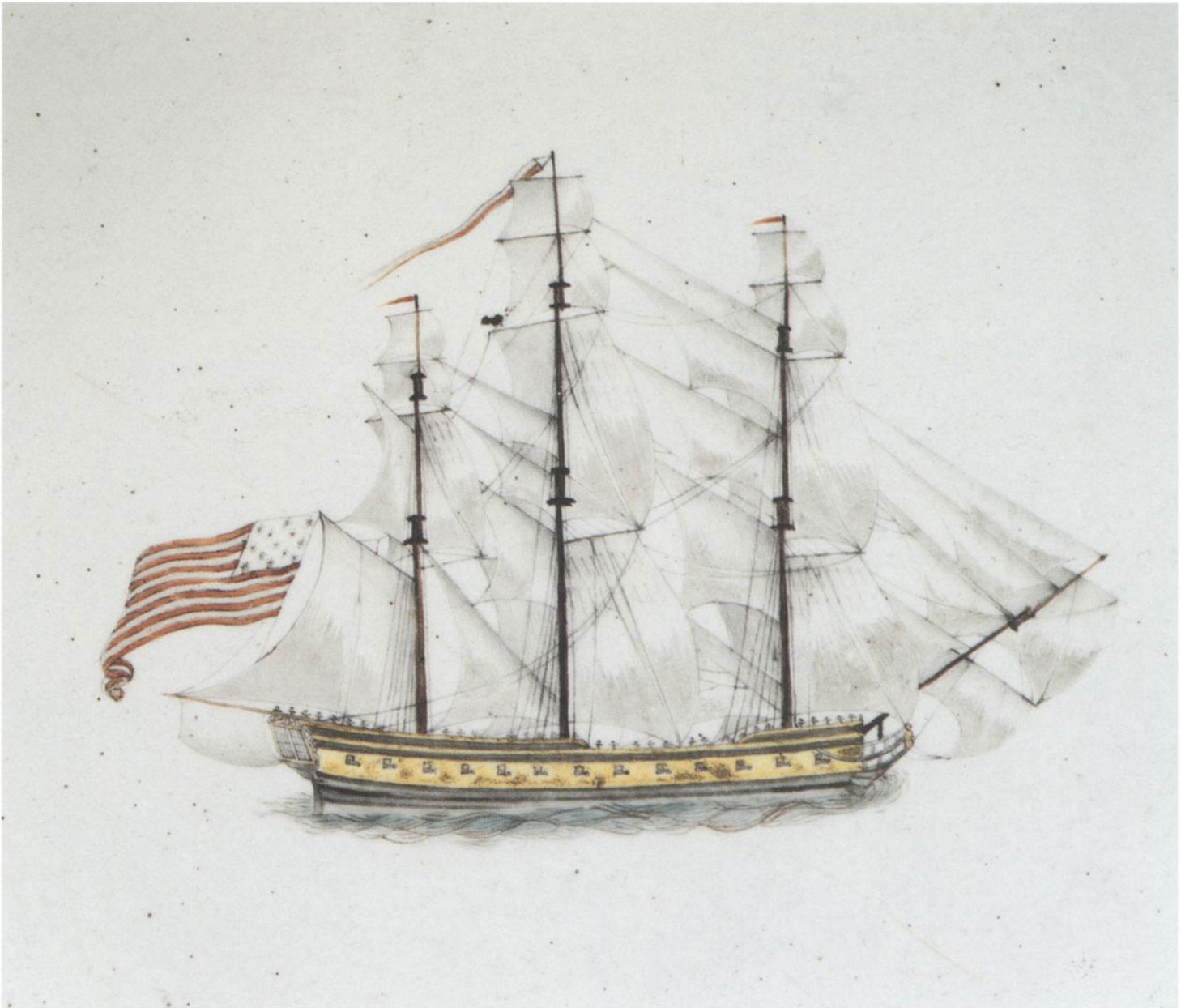
American ship engaged in the China Tea Trade. Detail from a porcelain punch bowl, Chinese export ware for the American market, ca. 1784-1790. Hgt 6.25 in. Metropolitan Museum of Art, Bequest of Edith Pryor, 1935. Accession No. 35.112
Chinese fan given to Capt. John Green of the Empress of China. Philadelphia History Museum at the Atwater Kent, Bridgeman Art Library.
The Massachusetts ship captain Amasa Delano wrote an extensive account of his travels around the world from 1790 to 1810, published in 1817 as A Narrative of Voyages and Travels in the Northern and Southern Hemispheres. In it, he recounts his trip to India in 1794 and persistently criticizes the Indian caste system and seemingly bizarre religious practices. He describes scenes of dying men being tossed into the Ganges, their mouths, nose, eyes, and ears plastered shut and “their cries being disregarded, and they were considered losing their cast for having refused the blessing of dying in the Ganges according to the custom and faith of their religion.”8 He also describes what to him seemed to be a particularly cruel treatment of outcasts, where a victim has two hooks inserted into his back. Then “a rope is attached to the other end of the pole; drawing this rope raises the victim, who has a basket of flowers in his hands; these he is obliged to scatter upon the heads of the people below. They [the observers] perform some prescribed service by a chant during the punishment… Such is the power of this religion over the faith and feelings of the people.”9
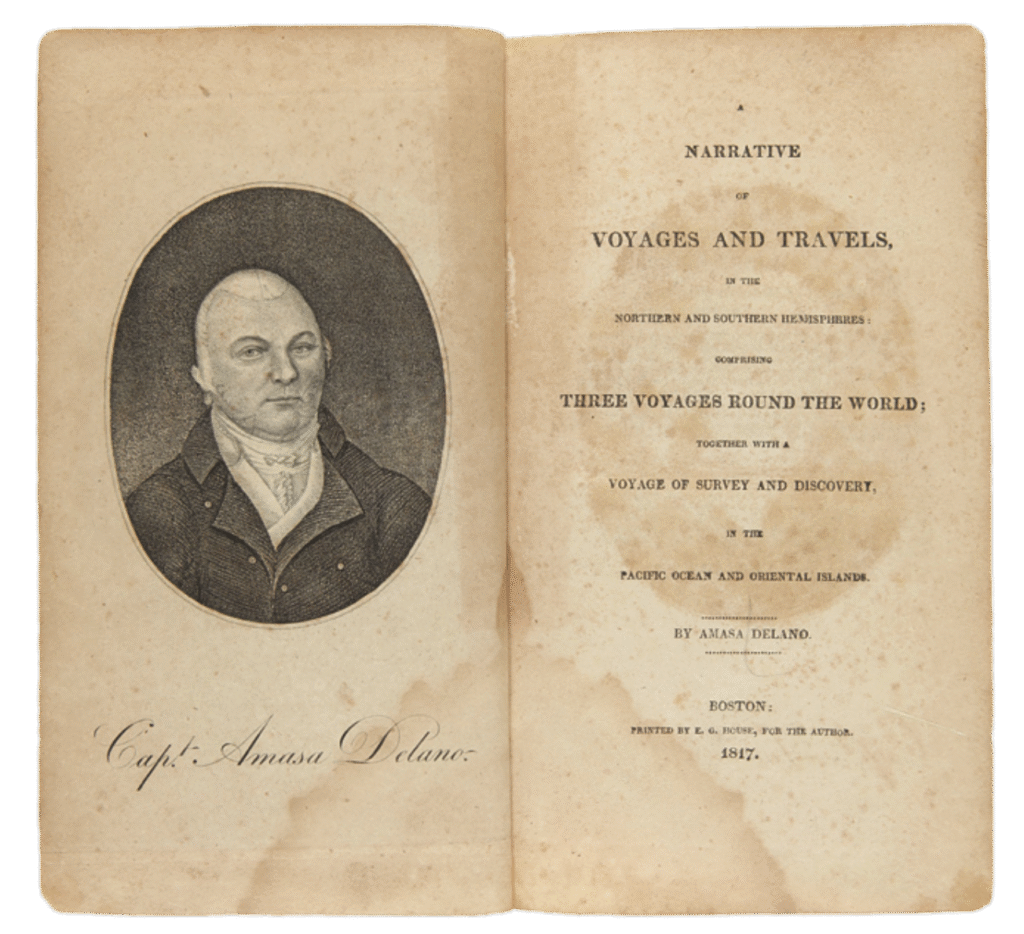
Amaso Delano, A Narrative of Voyages and Travels, in the Northern and Southern Hemispheres, Comprising Three Voyages Round the World; Together with a Voyage of Survey and Discovery in the Pacific Ocean and Oriental Islands. Boston, 1817.
Robert Morrison (1782-1834) was a British Presbyterian missionary whose numerous reports about religion in China were widely circulated in both British and American magazines. One of his letters written in 1809 from the Portuguese trading post of Macao, an island just off the coast from Canton, for example, was later published in The Panoplist, a magazine that collected reports and letters from missionaries across the world for the edification of the general American public from 1805 to 1820.10 Republication of his letters such as this one greatly shaped American impressions of Chinese religions and even inspired a generation of Americans to pursue missionary work abroad.11 In his Letter from China, he introduces the three major religions in China: Buddhism, Confucianism, and Taoism. After describing the intricacies of these traditions and the worshiping practices of their followers, he ultimately concludes that “the opinions of the heathen” are capable of being “overturned”. Finally, he calls for “O blessed Jesus to […] cause the light of Divine truth to shine among the millions of China.”12
![William Holl [after Chinnery]. Robert Morrison 1782-1834 1](https://asiaworldsfairs.org/wp-content/uploads/2026/01/William-Holl-Robert-Morrison-1782-1834-1024x816.jpg)
William Holl [after George Chinnery], engraving on paper of Robert Morrison (1782-1834), missionary in China. National Galleries of Scotland, Accession number EP V 181.2.
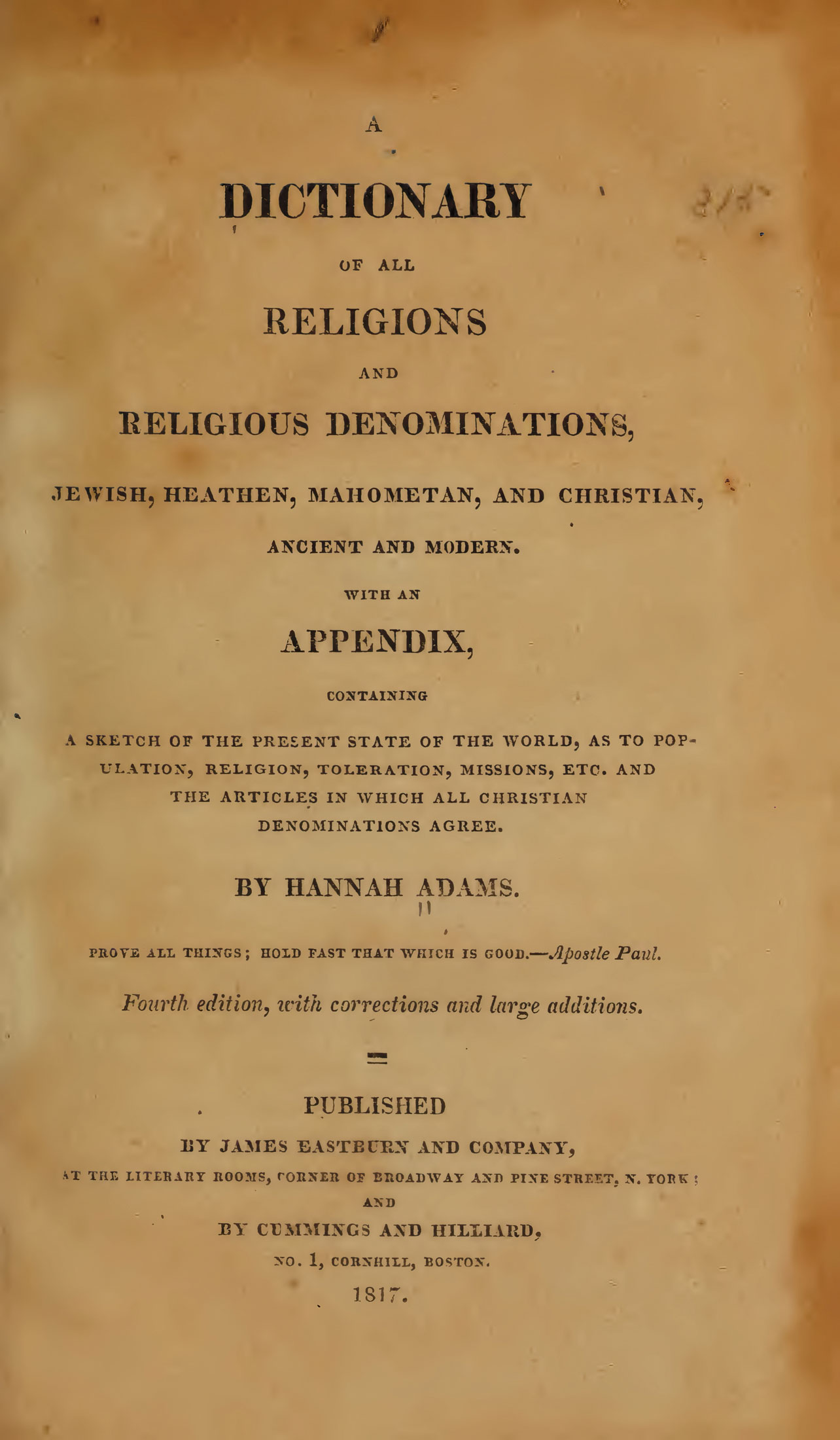
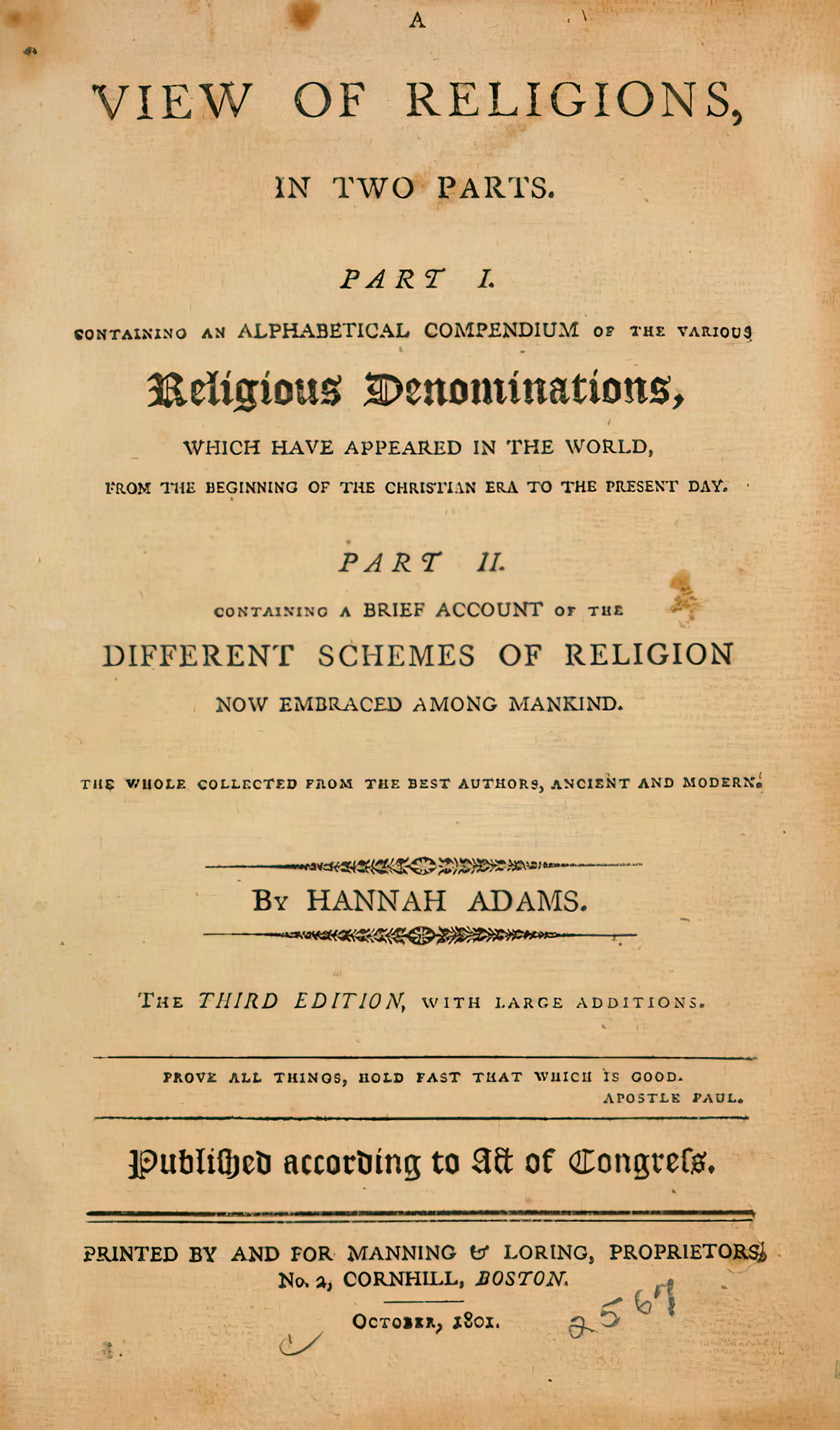
Scholarly studies of Indian religion reached America through publications like those from the Asiatic Society of Bengal, established by Sir William Jones in 1784. These were summarized and reprinted in popular magazines and were widely disseminated to an American audience. (In this group could be mentioned Henry David Thoreau’s translation of a chapter of the Lotus Sutra, published in 1844 in Emerson’s literary journal The Dial. It was based on a publication by the pioneering French scholar of Indian Buddhism, Eugène Burnouf). Prominent literary figures like Hannah Adams (1817) and Edwin Arnold (1879) provided more sympathetic accounts of Asian religions.
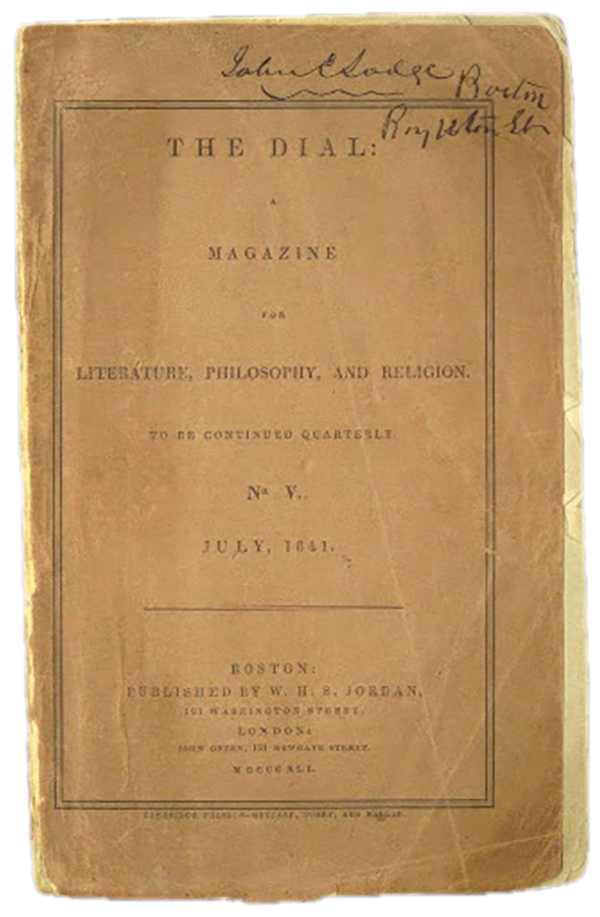
ASIATIC SOCIETY OF BENGAL
Thirteen British men, headed by Sir William Jones, an English philologist and student of ancient India, often referred to as the Father of Indology, established the Asiatic Society of Bengal. Their journal, Asiatic Researches (published from 1788 to 1839), produced some of the first Western scholarship about India. American intellectuals would engage with their publications, but beyond that, the general American public as well could encounter some of these journal articles when they were republished in American magazines. The Asiatic Society’s work sparked such great interest in Asia that only three decades after its formation, a French university established its first chairs in Sanskrit and Chinese. Although American scholarship about Asia was not prominent until two decades after the founding of the Society, American readers were influenced by significant emerging European scholarship.
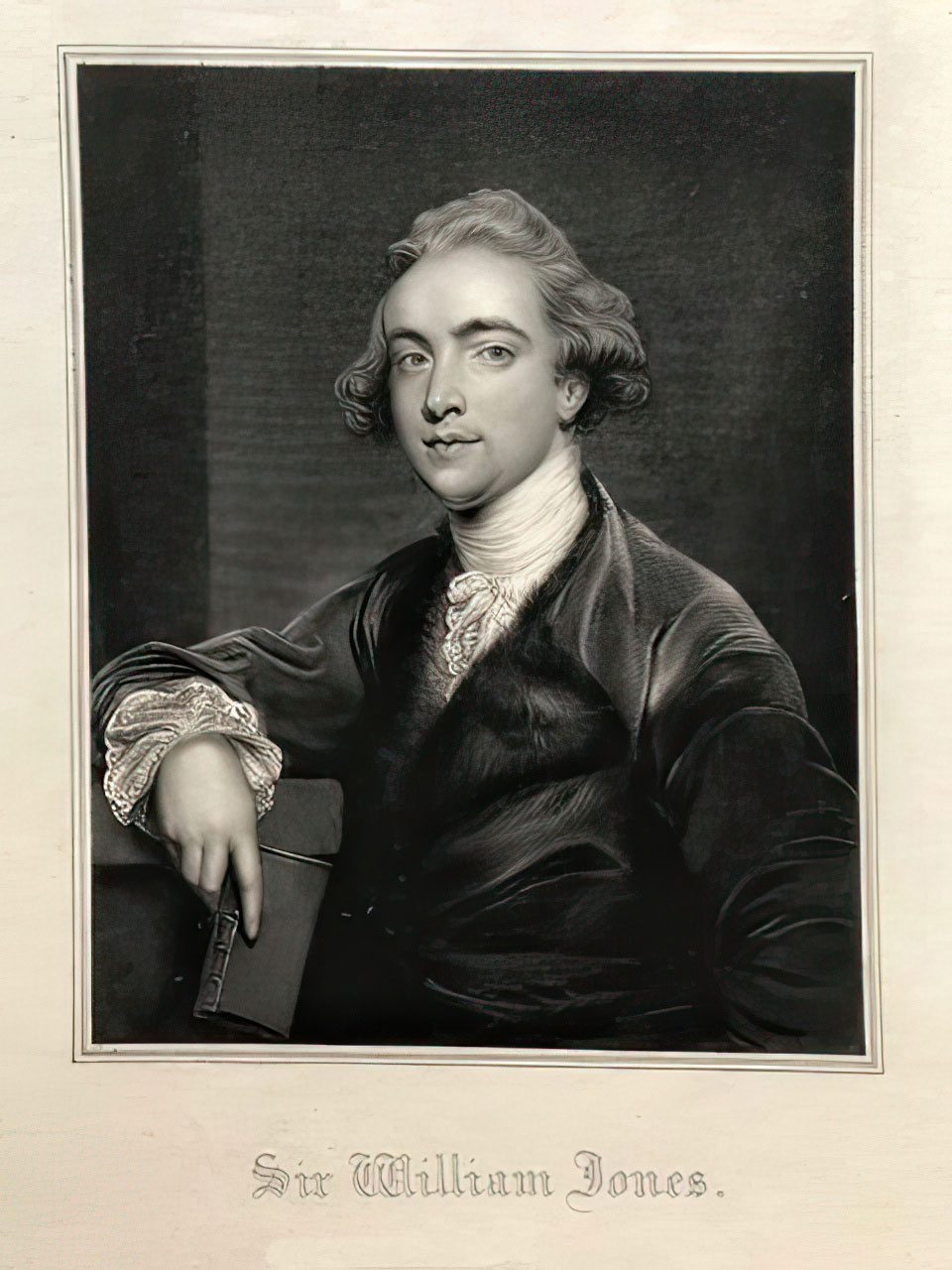
Sir William Jones, orientalist and founder of the Asiatic Society of Bengal, by John Cochran, published by Harding & Lepard, after William Derby, after Sir Joshua Reynolds. Stipple engraving, published 1 January 1832. National Portrait Gallery, London, NPG D36734. Purchased with help from the Friends of the National Libraries and the Pilgrim Trust, 1966
Hannah Adams
The first professional American woman writer, Hannah Adams (1755-1831) was a pioneer in religious studies. It is suggested by early American historian and researcher William Gilmore that she was the most widely read author throughout New England between 1787 and 1830.13 One of her most well-known works, A Dictionary of All Religions, published in 1817, purported to present Asian religious practices aiming to “avoid giving the least preference of one denomination above another.”14 Adams was dissatisfied with her contemporaries’ portrayal of Asian religions, and although she was not always impartial in her own descriptions, her work influenced 19th century attempts to survey the entirety of the religious landscape of the world. She has been considered by some 20th century scholars of comparative religion to be one of its “prophets and pioneers.”15
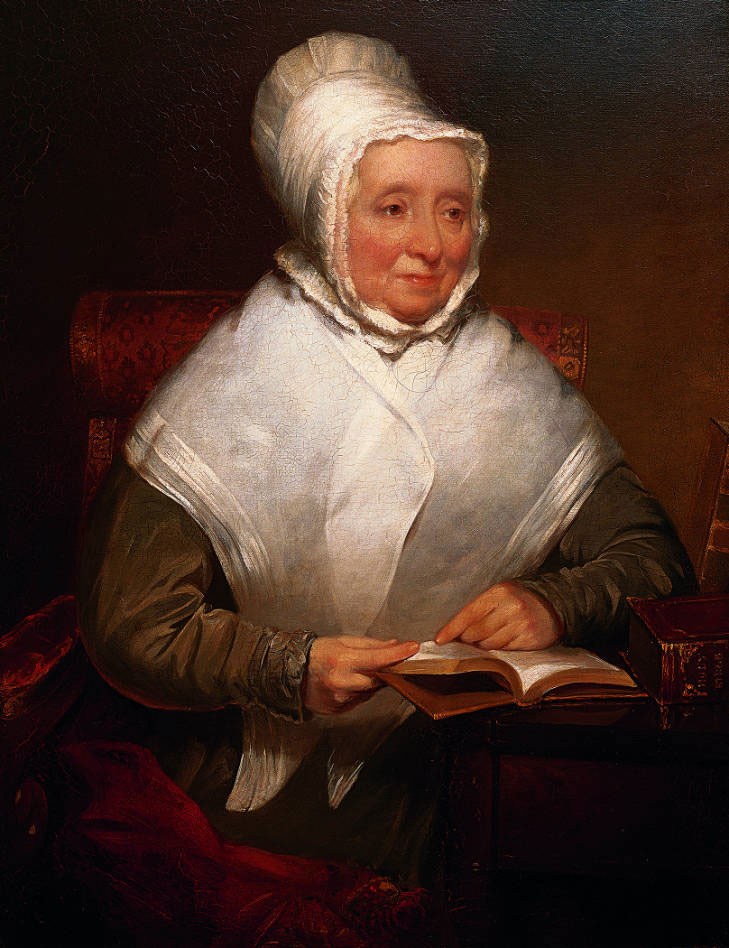
Portrait of Hannah Adams (1755-1831), by Chester Harding (1792–1886). Oil on canvas. Boston Athenaeum, Gift of Several Ladies, 1833, Object No. UR153.
EDWIN ARNOLD
British poet and author Edwin Arnold’s epic poem depicting the life of the Buddha, The Light of Asia (1879), arose out of a profound interest in Indian history and culture. At the age of 24, he assumed the role of principal at Deccan College in Poona, India. Not long after arriving in India, he began learning Pali and Sanskrit and sought the help of local Pandits (savants) to help teach him the intricacies of the languages.16 The Light of Asia became a bestseller in the United States and perhaps gave Americans a more profound understanding of the origins of the Buddha and Buddhism than any work that came before it, be it literary or academic. Since its publication, the book has been translated into over thirty languages and has “inspired movements for social equality” and “impacted so many personalities in different countries” according to Jairam Ramesh, an Indian politician and economist, who will soon be publishing a book that will tell the origin story of Arnold’s tale.17
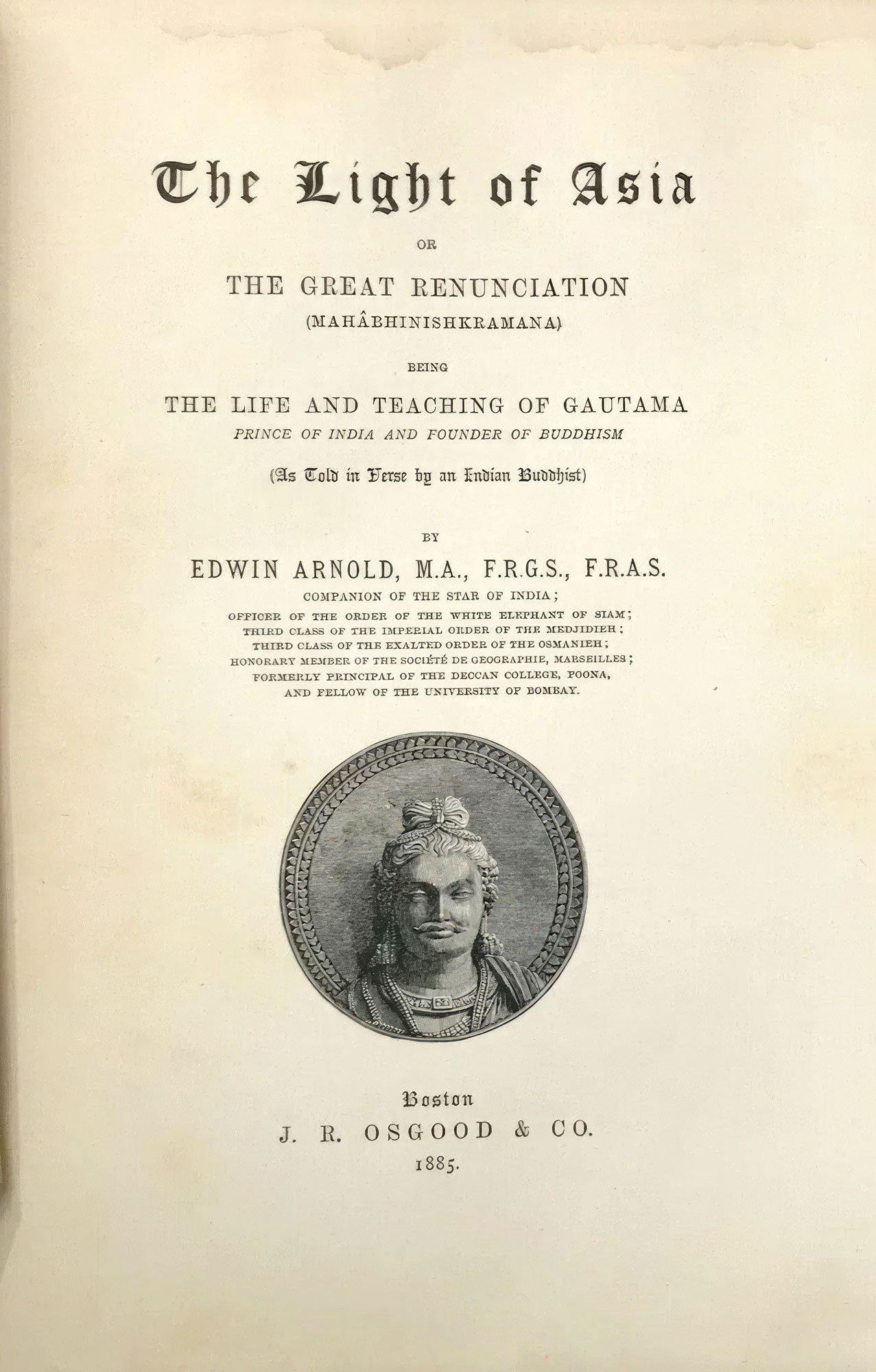
Edwin Arnold, The Light of Asia (Boston: J.R. Osgood & Co., 1885)
Authors who were associated with New England Transcendentalism, like Ralph Waldo Emerson, James Freeman Clarke, Samuel Johnson, and Lydia Maria Child, also shaped opinions about Asian religions and their relation to Christianity throughout the mid 19th century.
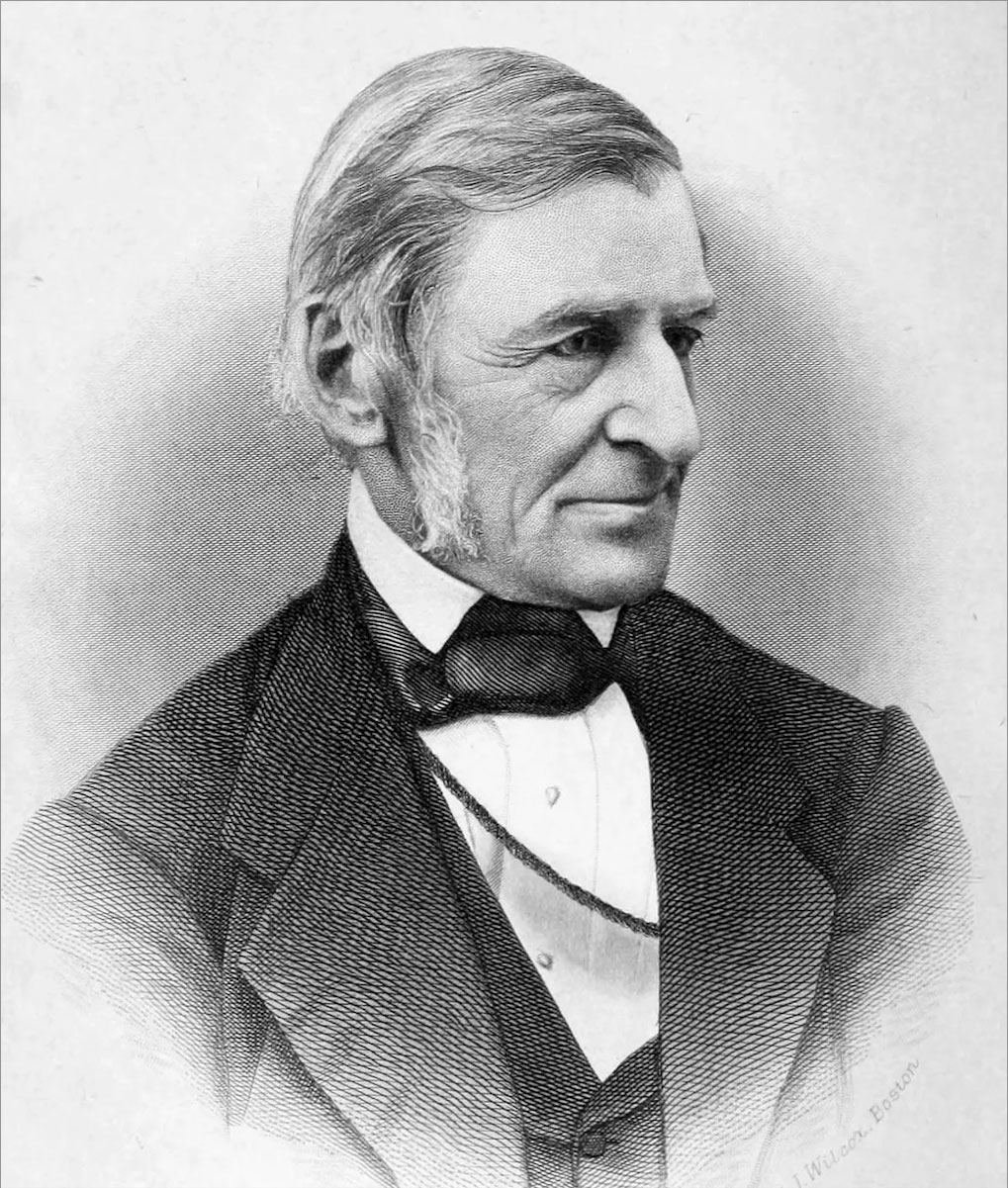
Ralph Waldo Emerson (1803–1882), engraving after a photograph taken on March 15, 1886.
Some authors, such as Benjamin Franklin and Edgar Allan Poe, even looked to Asian cultures as a model for what the new American republic might ideally become. Prominent American writers and literary figures often featured Asian elements in their work throughout the late 18th to mid 19th centuries. Benjamin Franklin (1706-1790), the Pennsylvania statesman and inventor, was enamored with Confucianism and often included pithy Confucian sayings in his newspaper The Pennsylvania Gazette.18 He even tried his hand at writing Oriental tales. The Oriental tale was the first genre of religious fiction in America and ranged from short stories to full-length novels set in Asia (often the Middle East but sometimes East Asia). Franklin wrote three such tales in his lifetime, and in all of them, he uses images, ideas, and conceptions associated with Asia to define a true humanity that he believed should be the foundation of the new American republic.19 Sharing a similar sentiment, Edgar Allan Poe, American literary critic and poet, also displayed sincere admiration for Eastern literature. His “Thousand and-Second Tale of Scheherazade” plays on stories from The Arabian Nights and epitomizes his critique of his literary contemporaries’ claims of the need for a national literature. Not only did Poe think the concept of a national literature to be quite absurd, but he also admired the civilized aesthetics detailed in stories from The Arabian Nights and wanted to convey them to a wider American audience.20
JAMES FREEMAN CLARKE
James Freeman Clarke (1810-1888), lecturer of non-Christian religions at Harvard University, was a Transcendentalist writer who popularized Asian ideas in America throughout the mid 19th century. One of his most famous works, Ten Great Religions: An Essay in Comparative Theology, originally published in 1871, was one of the most popular distillations of Asian thought in America at the time.21 Compared to other presentations of Asian religions of the time, Clarke remained relatively objective. He was upset by the fact that earlier treatments of the subject, “insisted that, while the Jewish and Christian religions were revealed, all other religions were invented […] that, while in the true religions there was nothing false, in the false religions there was nothing true.”22 However, despite his assertions of objectivity, Clarke still continued to use the term “heathen” to describe non-Christian religions. Not only that, but he constantly cloaked his analysis of Asian religions in Christian rhetoric, labeling Buddhism, for example, as “the Protestantism of the East.”23
And finally, the growth of Asian immigration [11] to the United States, beginning in the late 1840’s, made it possible for Americans to experience the impact of Asian cultures directly in ways that had never been possible before.
LYDIA MARIA CHILD
A prominent abolitionist and philosopher thinker, Child (1802-1880) is perhaps best known for her abolition work in the United States throughout the 19th century. However, in her work she also tackled questions involving Christianity and its relation to other world religions. In fact, it is reasonable to say that her work as an abolitionist became clearer as her inner struggles with religion, Christianity in particular, evolved. While in her early life she admired greatly the moral teachings of the Christian gospel, she would later come to express dissatisfaction with the hypocrisy she perceived in American society considering the existence of slavery. Her book Aspirations of the World (1878), her final publication before her death, offers readers a collection of sayings from all of the major religions of the world. In keeping with her lifelong mission of advocating for equality among all persons, she writes in the introduction, “I have had but one object [in writing the book], and that a very simple one; namely, to show that the fundamental laws of morality, and the religious aspirations of mankind, have been strikingly similar always and everywhere.”24
SAMUEL JOHNSON
A Unitarian clergyman born in Salem, MA in 1822, Samuel Johnson (1822-1882) was one of the most knowledgeable scholars on Asian religions in his time. He is best known for his three-volume series Oriental Religions and Their Relation to Universal Religion: India (1872), China (1877), and Persia (1885). Through this series, he proposes that all religions of the world hold truths that sum to a higher plane of truth and unity. As he indicates in the introduction to the series, “I have written, not as an advocate of Christianity or of any other distinctive religion, but as attracted on one hand by the identity of the religious sentiment under all its great historic forms, and on the other by the movement indicated in their diversities and contrasts towards a higher plane of unity, on which their exclusive claims shall disappear.”25 He emphasized that no one religion could claim exclusive truth, but that all of them possessed their own unique religious truths. Johnson’s vision was that all religions to date were evolving towards a greater Universal Religion, and although he believed it would resemble something close to Christianity, he did concede that it would be a Christianity heavily influenced by its interactions with Asia.
![Rev. W. C. Burns, Pioneer Missionary To China, In Christian Herald And Signs Of Our Times By [Burns, William Chalmers], Weds. Dec 1](https://asiaworldsfairs.org/wp-content/uploads/2026/01/Rev-W-C-Burns-Pioneer-Missionary-To-China-782x1024.png)
ASIAN IMMIGRATION
And finally, the growth of Asian immigration to the United States, beginning in the late 1840’s, made it possible for Americans to experience the impact of Asian cultures directly in ways that had never been possible before. Early Asian immigration to the United States was met with significant resistance. Despite Asian immigrants only comprising a miniscule portion of the U.S. population (i.e., the Chinese American population in 1850 was only measured to be 4,000 out of a total U.S. population of 23.2 million), 26 fear of the “Yellow peril” circulated widely throughout the country. In places with higher numbers of Asian immigrants, such as California, slogans like “Keep California White” epitomized their stance on the increasing number of Asian people arriving in the United States. Exclusionary movements targeting different Asian groups acted as the impetus for the eventual formation of the Asiatic Exclusion League which fought to exclude all Asian immigrants whom the league decided was “utterly unfit and incapable of discharging the duties of American citizenship.” Domestic American missionaries were rather supportive of Asian immigration because they believed it presented opportunities for conversion, even though that usually was not the case at all. Missionary opinions often clashed with those of anti-immigrant supporters who painted these clergymen as out of step with the American public’s views and values.27
AMERICAN MISSIONARY ACCOUNTS OF ASIA
The reports of American missionaries in Asia added another important dimension to American popular understanding of Asian religion. Travel was difficult in the early decades of the nineteenth century, but that did not prevent a number of intrepid souls from launching themselves into the world to spread the Gospel.
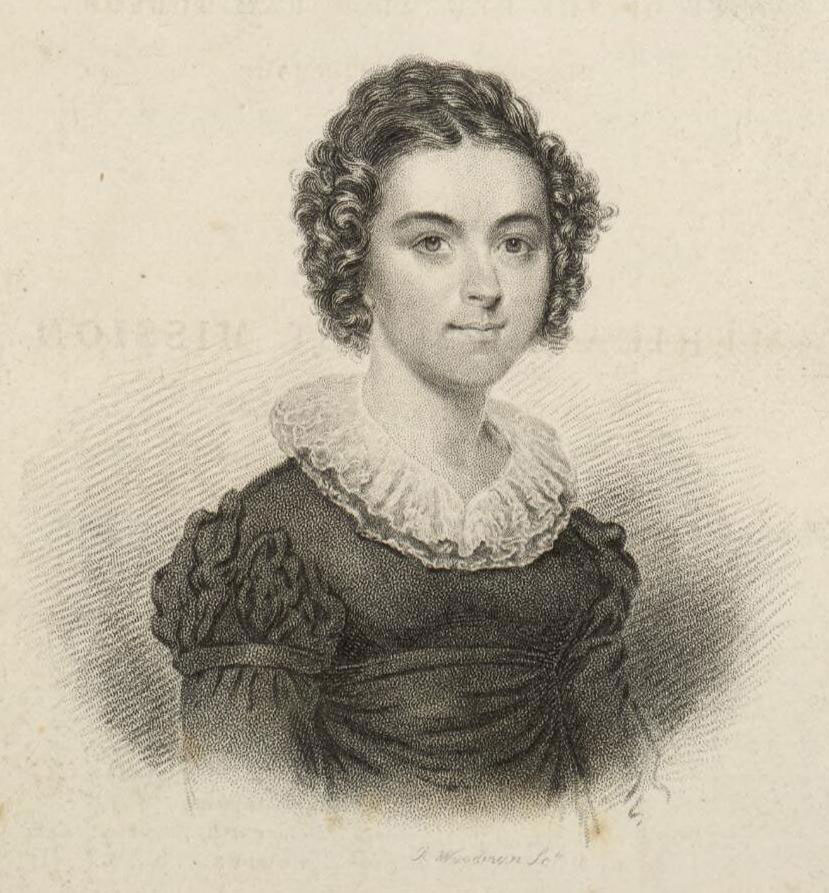
One of the most remarkable early missionaries in Asia was Ann Hasseltine Judson who set out with her husband Adoniram in 1812 to bring Christianity to India. Ann had been born in Bradford, Massachusetts in 1789. As a teenager, she developed a burning desire to spread the Gospel. She and Adoniram were married on February 5, 1812. The next day the newlyweds set sail from Salem, Massachusetts bound for Calcutta in India. The British East India Company, then based in Calcutta, did not look kindly on American missionaries and expelled the couple to Burma. They settled in Rangoon, began to learn the language, and gathered a small group of Burmese together for conversation and Bible study. Ann Judson died of a fever in 1826, but the memoir of her career in Burma28 was widely read and drew many people into the missionary movement. Her husband (whom she valiantly rescued from a Burmese prison) went on to become one of the most influential spokesman for American missions in Asia.
American missions in China began with Elijah Coleman Bridgman (1801-1861) who was encouraged by the British missionary Robert Morrison of the London Missionary Society to consider serving in China. He was appointed for service in China by the American Board of Commissioners for Foreign Mission and traveled to China in 1829 with his friend David Abeel. Bridgman studied Chinese, founded a mission press, and began publishing “The Chinese Repository,” a pioneering publication in American Chinese studies. Bridgman was part of a group that produced the first translation of the Bible into Chinese.
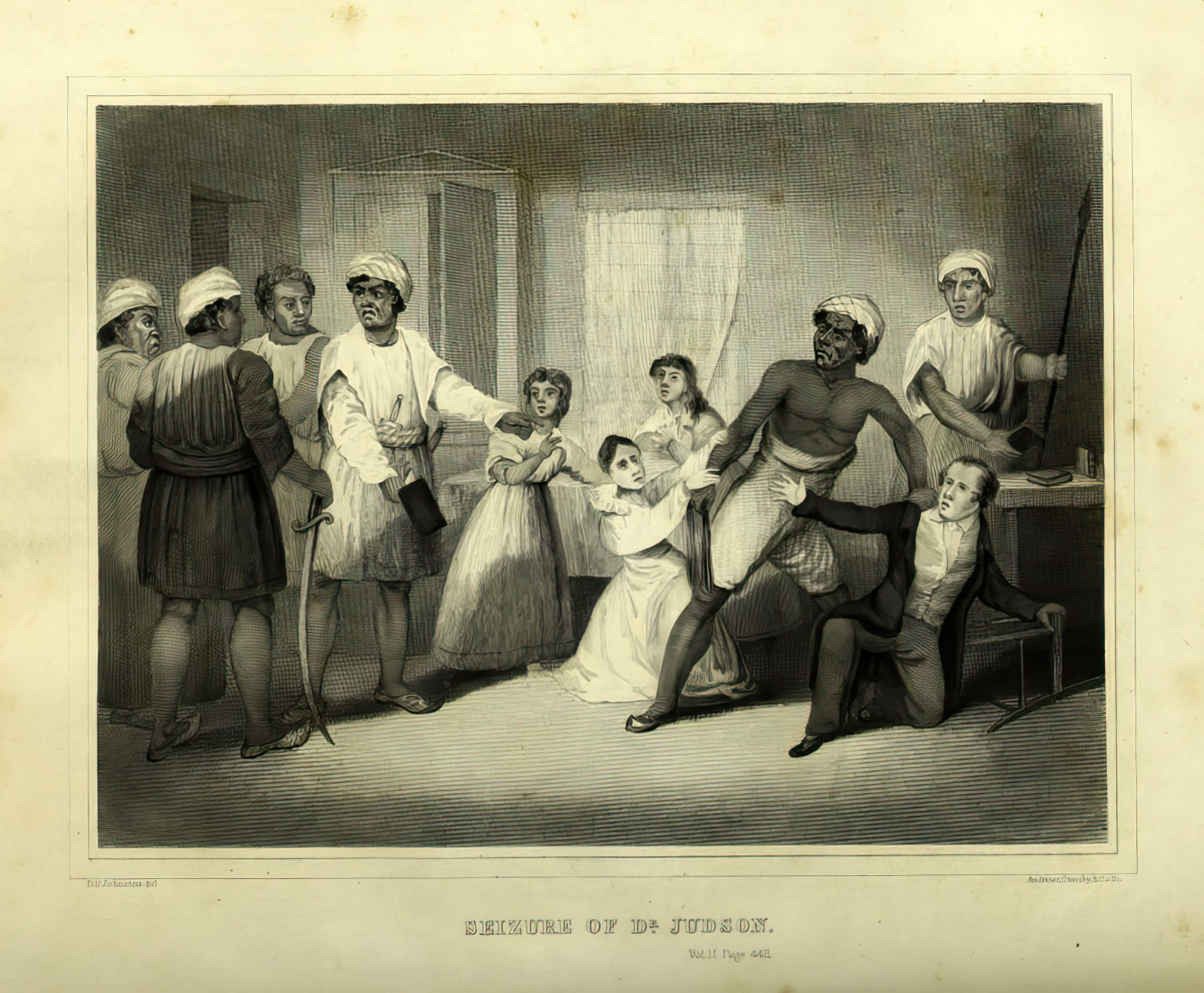
“Seizure of Dr. Judson,” frontispiece to vol. 2 of Thomas Smith and John O. Choules, The Origin and History of Missions (Boston: Gould, Kendall, and Lincoln, 1837).
The missionaries varied widely in their approach, as they did in the destination of their missions and in their sectarian orientation. Many of these early American missions focused on education, scholarship and social reform, rather than on the work of conversion. Attitudes toward the indigenous religions and cultures of Asia covered a wide spectrum, from mutual respect to rigid condemnation. While some rejected other religions outright, others expressed a sense of respect. These missionaries also were prolific authors and helped introduce the American reading public to the traditions that came to life on the platform of the Parliament in Chicago.
ASIAN RELIGIONS AND THE AMERICAN TRANSCENDENTALISTS
Early in the nineteenth century, as translations of Asian religious texts became widely available,29 Ralph Waldo Emerson and Henry David Thoreau incorporated an appreciation of Asia into the emerging tradition of American Transcendentalism. Thoreau gave an indelible image of the influence of Asian traditions in America (and vice versa), when he imagined that ice cut from the pond in front of his Massachusetts cabin on Walden Pond would be transported to India and flow together with the water of the Ganges:
Thus it appears that the sweltering inhabitants of Charleston and New Orleans, of Madras and Bombay and Calcutta, drink at my well. In the morning I bathe my intellect in the stupendous and cosmogonal philosophy of the Bhagvat Geeta, since whose composition years of the gods have elapsed, and in comparison with which our modern world and its literature seem puny and trivial, and I doubt if that philosophy is not to be referred to a previous state of existence, so remote in its sublimity from our conceptions. I lay down the book and go to my well for water, and lo! there I meet the servant of the Brahmin, priest of Brahma and Vishnu and Indra, who still sits in his temple on the Ganges reading the Vedas, or dwells at the root of a tree with his crust and water jug. . . . The pure Walden water is mingled with the sacred water of the Ganges.
– Henry David Thoreau, from the conclusion of the chapter “The Pond in Winter” in Walden; or, Life in the Woods, 1854.
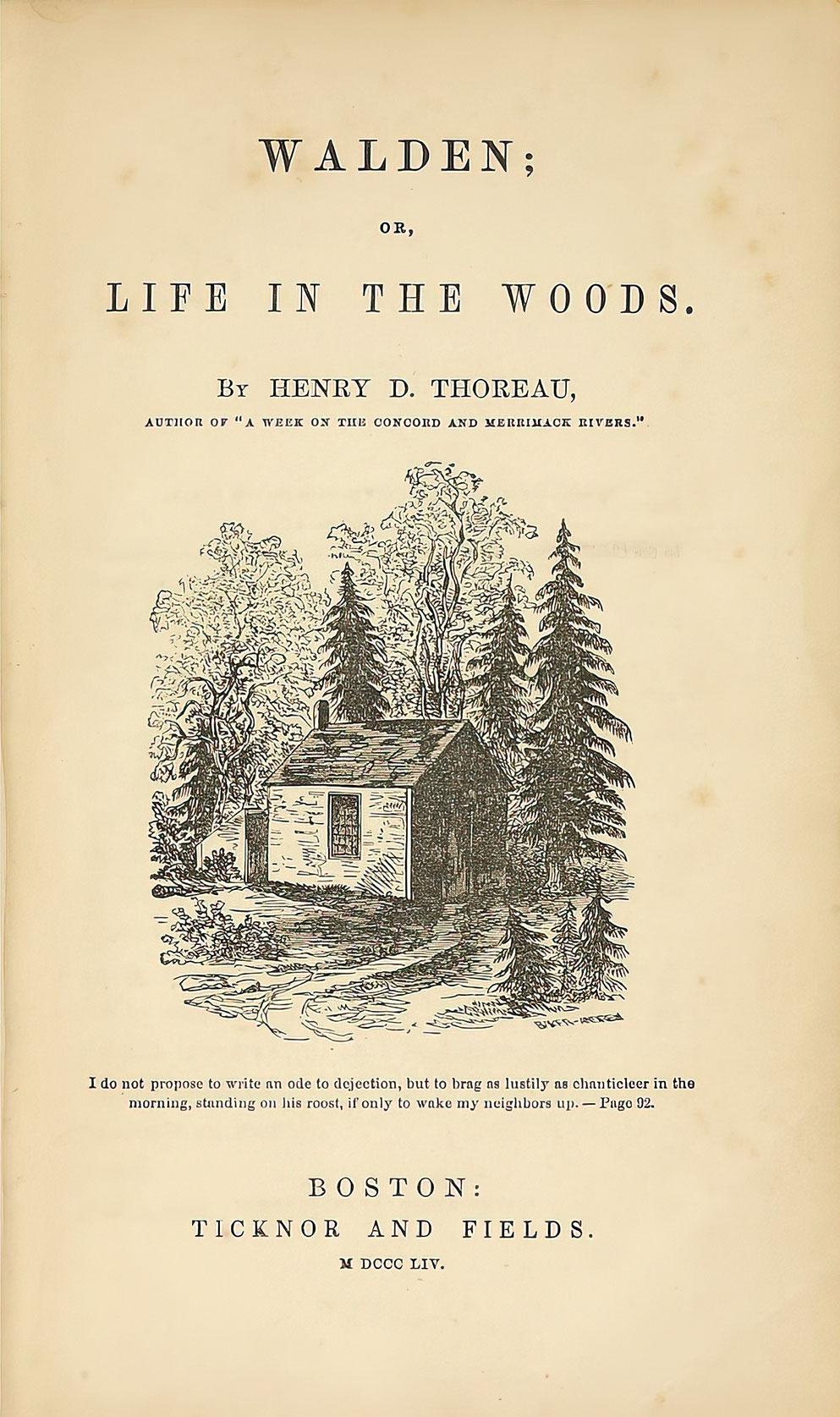
Title page from first edition of Henry David Thoreau’s Walden; or, Life in the Woods (Boston: Ticknor and Fields, 1854).
Ralph Waldo Emerson demonstrated a similar fascination with Asian traditions in his poem “Brahma,” where his first verse echoes a well-known verse in the Bhagavad Gita:
Brahma
by Ralph Waldo Emerson
If the red slayer think he slays,
Or if the slain think he is slain,
They know not well the subtle ways
I keep, and pass, and turn again.
Far or forgot to me is near;
Shadow and sunlight are the same;
The vanished gods to me appear;
And one to me are shame and fame.
They reckon ill who leave me out;
When me they fly, I am the wings;
I am the doubter and the doubt,
I am the hymn the Brahmin sings.
The strong gods pine for my abode,
And pine in vain the sacred Seven;
But thou, meek lover of the good!
Find me, and turn thy back on heaven.
THE BOSTON BUDDHISTS: ERNEST FENOLLOSA AND WILLIAM STURGIS BIGELOW
While Emerson and Thoreau developed their fascination with the religions of Asia largely through texts, some of the New England compatriots encountered the Buddhist tradition directly, in this case in Japan. In 1883 two young Bostonians, Ernest Fenollosa (1853-1908) and William Sturgis Bigelow (1850-1926), traveled to Japan under the influence of Edward Sylvester Morse (1838-1925), a resident of Salem, Massachusetts who had moved to Tokyo in 1877 to teach in the sciences at Tokyo Imperial University. Japan had only recently opened to the West, and the Japanese were eager to import the trappings of Western education. Fenollosa was recruited to teach philosophy and art history. Bigelow spent his time, under Fenollosa’s guidance, collecting Japanese art. Both were initiated into Japanese Tendai Buddhism and became lifelong Buddhists. Their collection of Japanese art became the nucleus of the collection in the Museum of Fine Arts, Boston, which is now recognized as the finest collection of Japanese art outside Japan.30
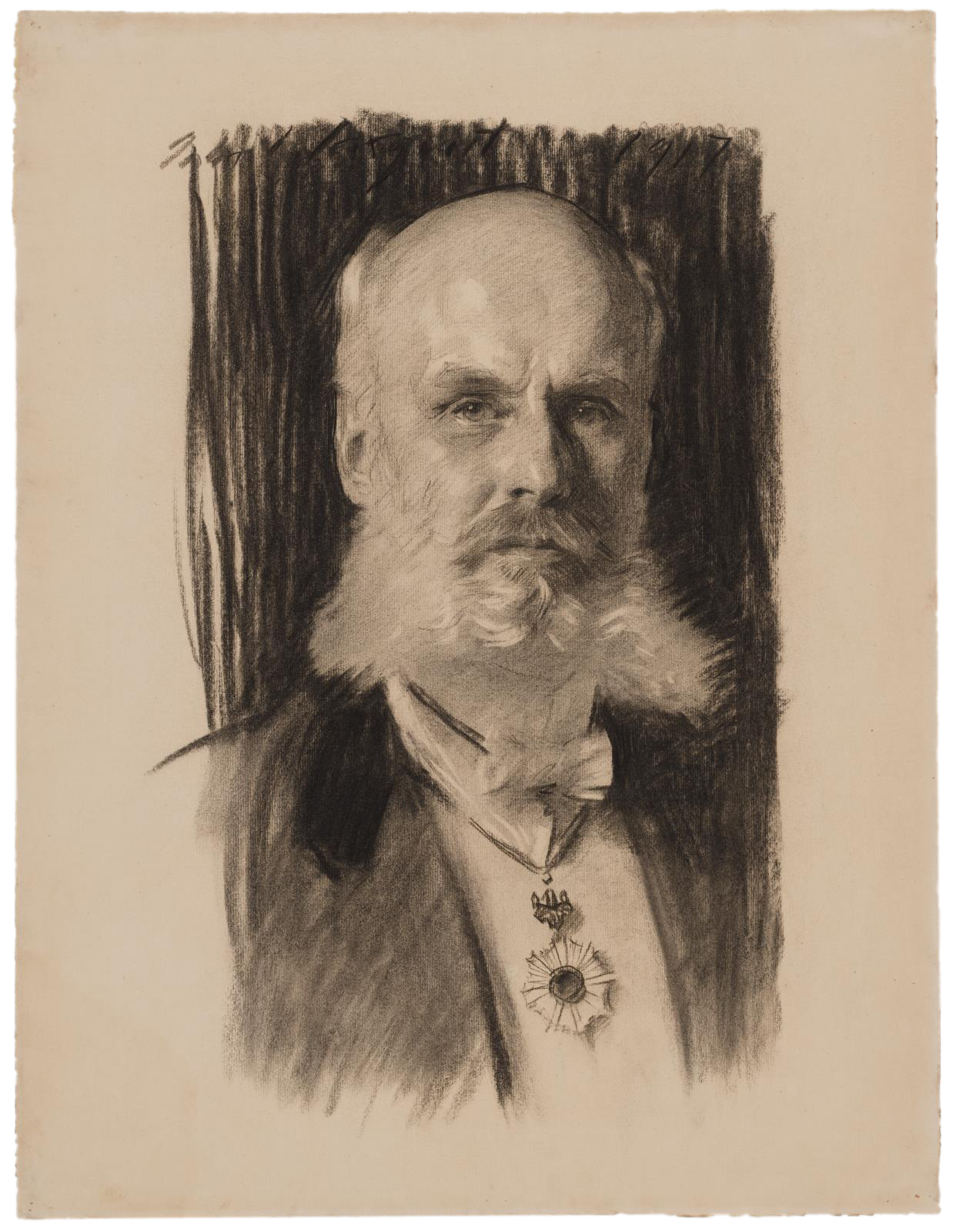
John Singer Sargent (American, 1856–1925)
1917, gift of the Committee on the Museum to the MFA. Acc. No. 17.3174. Museum of Fine Arts, Boston.
THE AMERICAN ORGANIZERS OF THE WORLD’S PARLIAMENT OF RELIGIONS
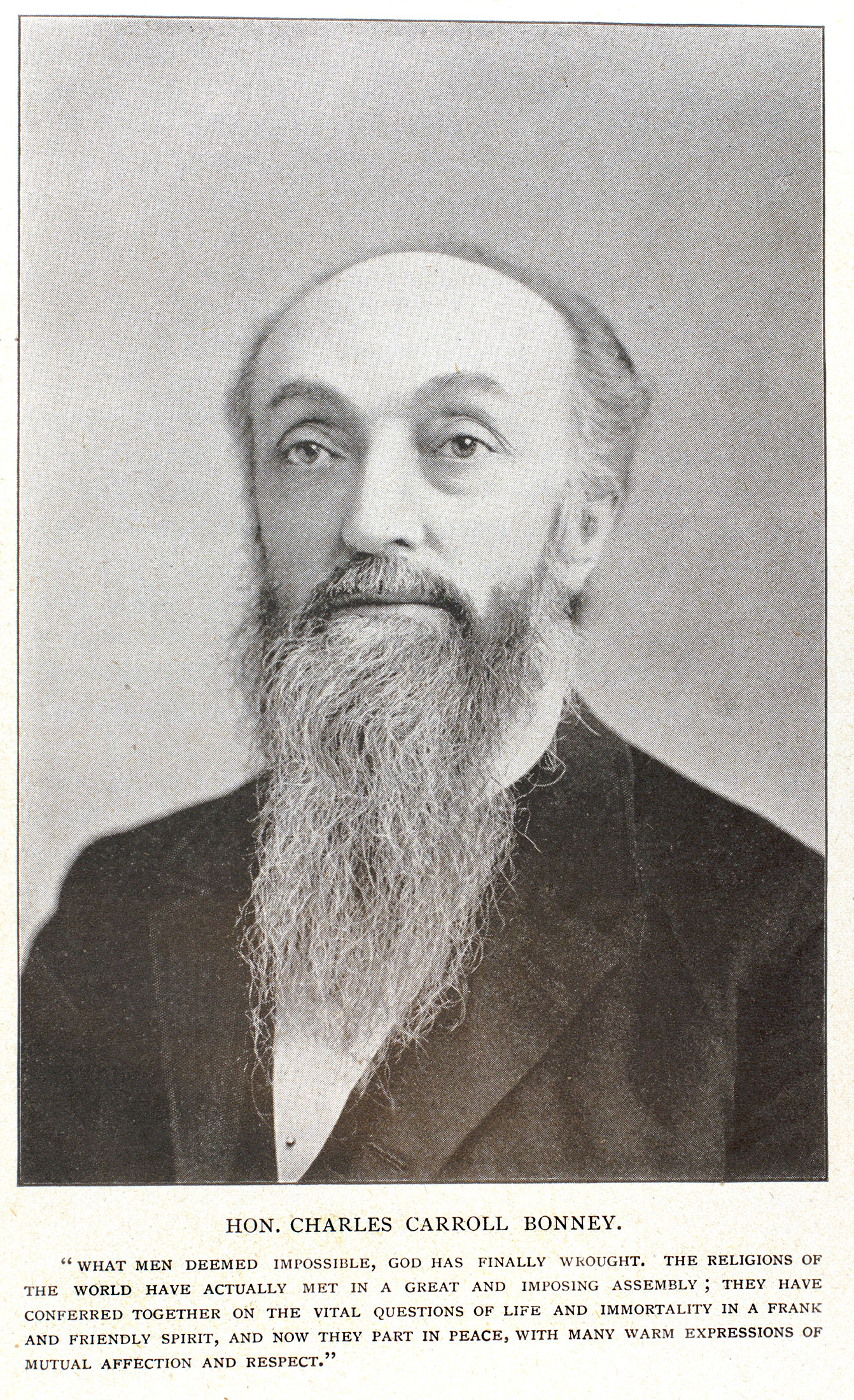
The idea for a World’s Parliament of Religions in 1893 came from the Hon. Charles Carroll Bonney (1831-1903), a well-known and successful judge on the Supreme Court of Illinois. As an active member of the New Jerusalem Church (also known as Swedenborgian), Bonney had a deep conviction about the harmony of religions. He saw the World’s Parliament as “an epoch-making event in the history of human progress, marking the dawn of a new era of brotherhood and peace.”31 Bonney’s vision reflected the vision of the Columbian Exposition as an exalted celebration of human progress, but it gave it a distinctly religious focus. Bonney hoped that the Parliament would not only bring religious leaders together in an expression of mutual sympathy but would “unite all religion against all irreligion.”32
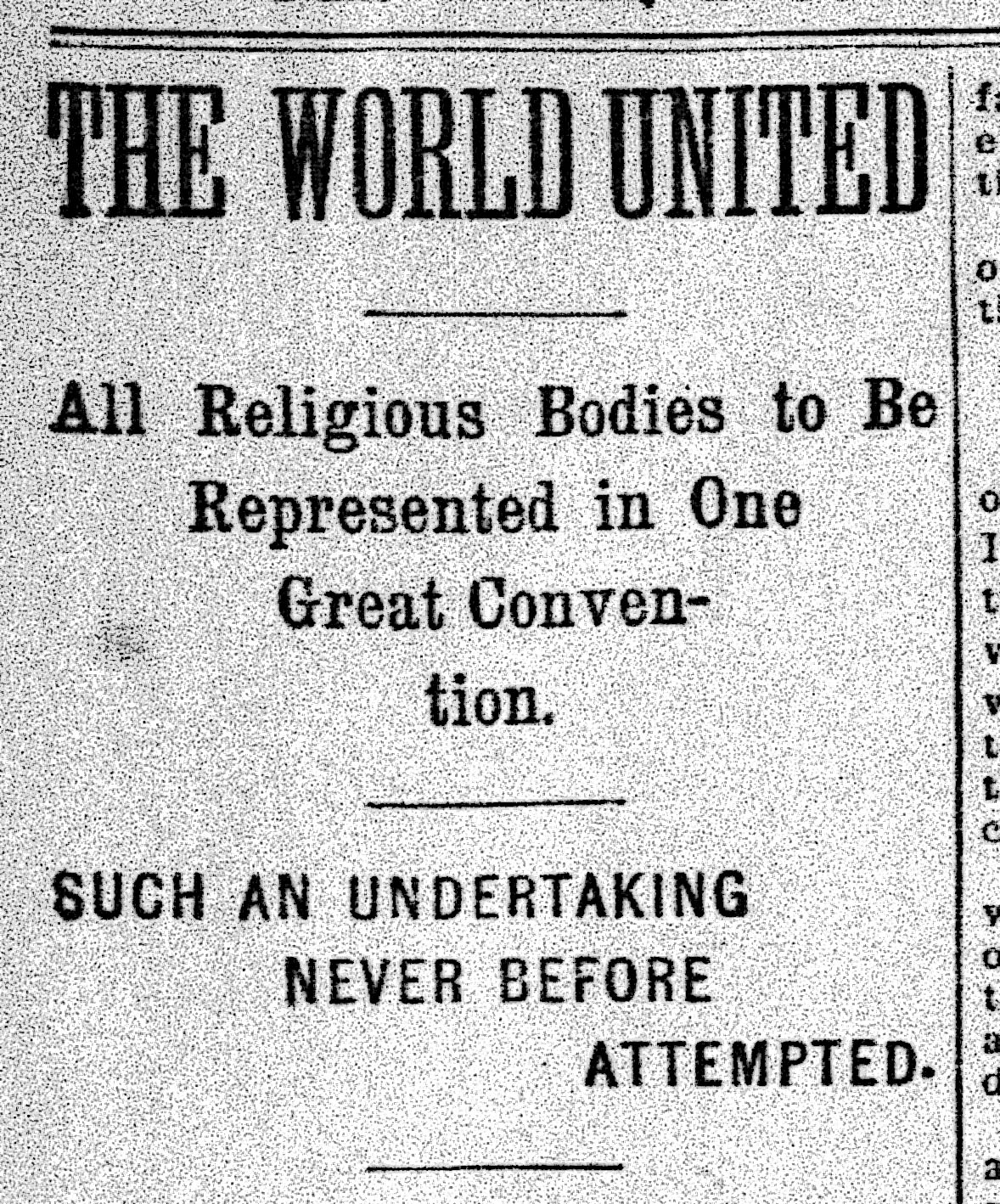
“The World United. All Religious Bodies to Be Represented in One Great Convention. Such an Undertaking Never Before Attempted.” Newspaper headline from The Dayton Herald (Dayton, Ohio), Saturday, Sept. 9, 1893, p. 1.
This had particular significance for Bonney and other religious leaders who felt both confident and overshadowed by the extraordinary technological prowess that characterized other aspects of the Exposition. To say, as some did, that “Religion is the greatest fact of History,”33 was not something that one could merely assume. Bonney and others hoped that the Parliament would be a visible demonstration of the importance of religion as a global force amidst the instability of late nineteenth-century modernity.
To help realize his goal, Bonney called on Rev. John Henry Barrows (1847-1902) of the First Presbyterian Church of Chicago as the chair of the organizing committee. Barrows himself had no doubt about the superiority of Christianity, but was a talented and tireless organizer, and he kept voluminous records.34 Barrows recruited a distinguished group of religious leaders, including a wide variety of American Christian denominations, but also a distinguished rabbi, Dr. Emil G. Hirsch of Chicago’s Sinai Temple and Professor of Rabbinic Literature at the University of Chicago. Barrows and his committee immediately began to reach out to religious leaders elsewhere in the world through the U.S. State Department and through a variety of religious organizations.
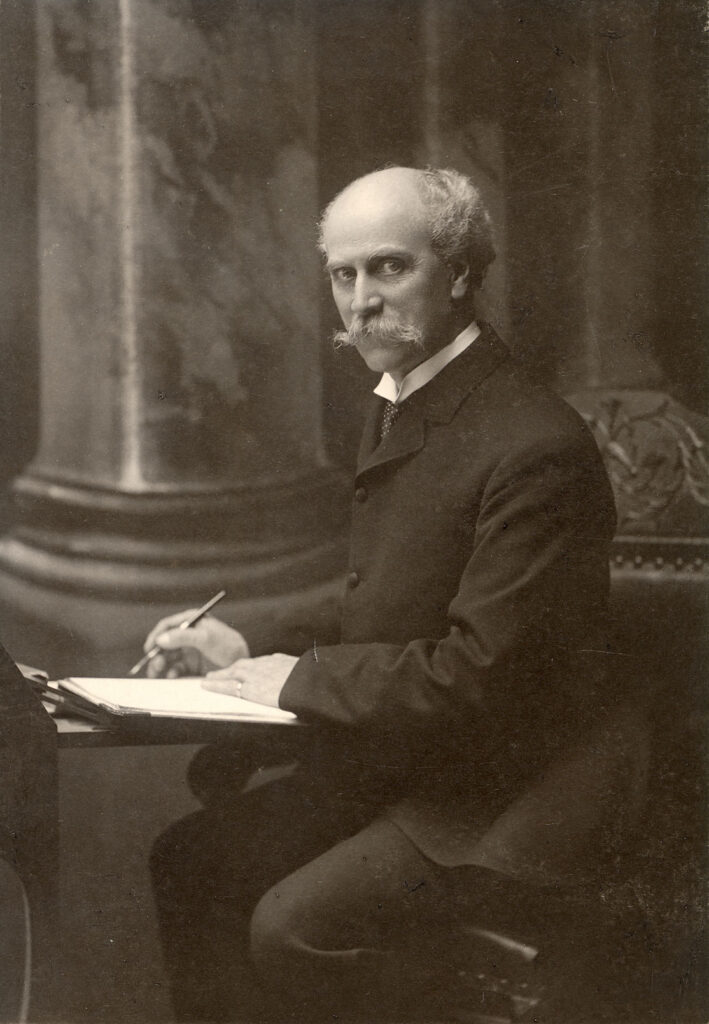
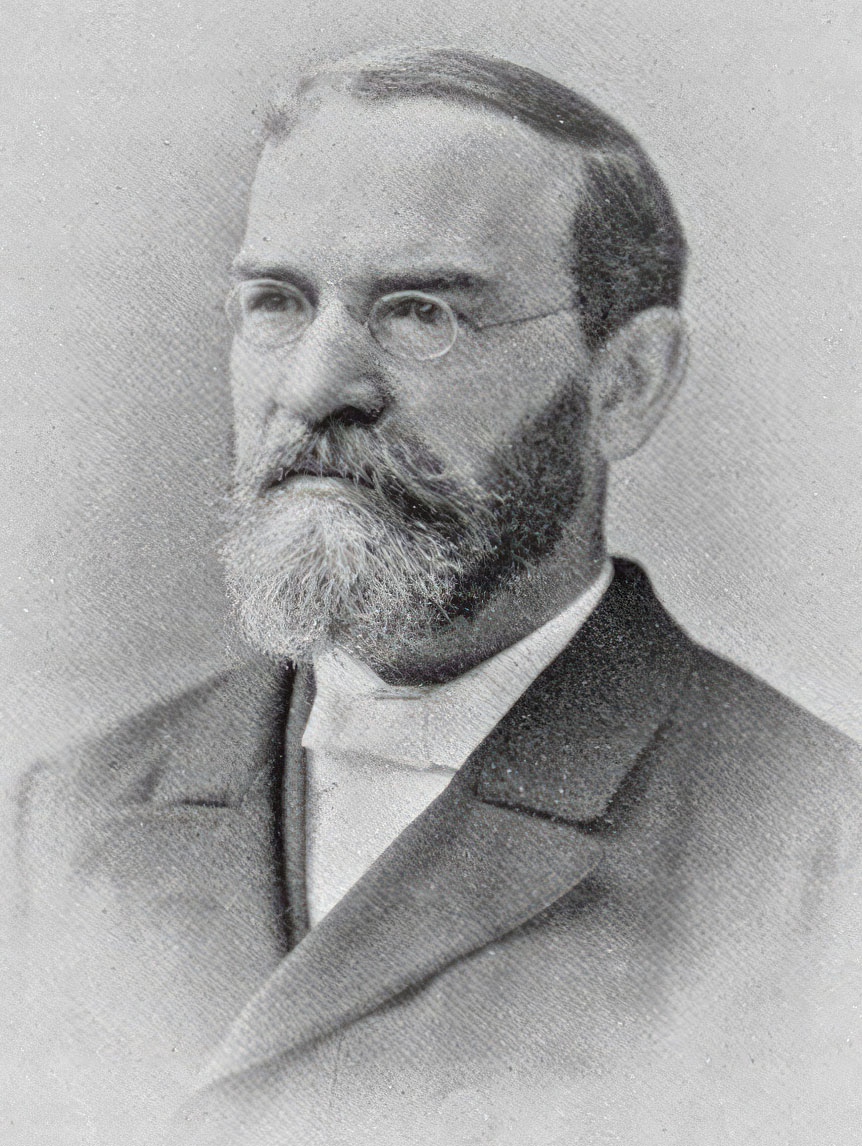
Initially Barrows thought that the idea of a World Parliament of Religions was entirely new, but he soon learned otherwise. Mr. H. Dharmapala of Calcutta, the General Secretary of the Maha Bodhi Society and a representative of the “Southern Buddhist Church” of Ceylon (now Sri Lanka), pointed out that “[t]wenty centuries ago, just such a congress was held in India by the great Buddhist Emperor Asoka, in the city of Pataliputra, modern Patna, and the noblest lessons of tolerance therein enunciated were then embodied in lithic records of his extensive empire.”35 Boston University President William Fairfield Warren (1833–1929) wrote to the leaders of the Parliament that he had once imagined holding a great convention in Tokyo to discover, if possible, the “Perfect Religion.”36 He noted how important it was not merely to present the ideas of other religious traditions, but to hear the “living word of living teachers” so that “the whole world may well pause and listen.”37 In the end, it was the presence of living teachers, some from well-known religious traditions and some from traditions that were scarcely known outside their own countries that made the Parliament such a vital and influential event.
Photograph of Boston University President William Fairfield Warren (1833–1929). (Source: Edwin Monroe Bacon, Men of Progress: One Thousand Biographical Sketches and Portraits of Leaders in Business and Professional Life in the Commonwealth of Massachusetts [Boston: New England Magazine, 1896], p. 100.)
Early in June, 1891, Barrows and his committee sent out some fifty thousand letters and brochures with a “Preliminary Address” calling attention to what they called the creative power of religion and inviting representatives of “the great historic faiths” to join them “in showing what are the supreme truths and what light religion can afford to the problems of the time.”38 The Committee’s invitation had the stamp of Barrows’ Christian convictions and echoed the language of Christian scripture, but it was meant to convey an inclusive spirit. “Convinced” it said, “that of a truth God is no respecter of persons, but that in every nation he that feareth him and worketh righteousness is accepted of him, we affectionately invite the representative of all faiths to aid us in presenting to the world at the Exposition of 1893, the religious harmonies and unities of humanity, and also in showing forth the moral and spiritual agencies which are at the root of human progress.”39
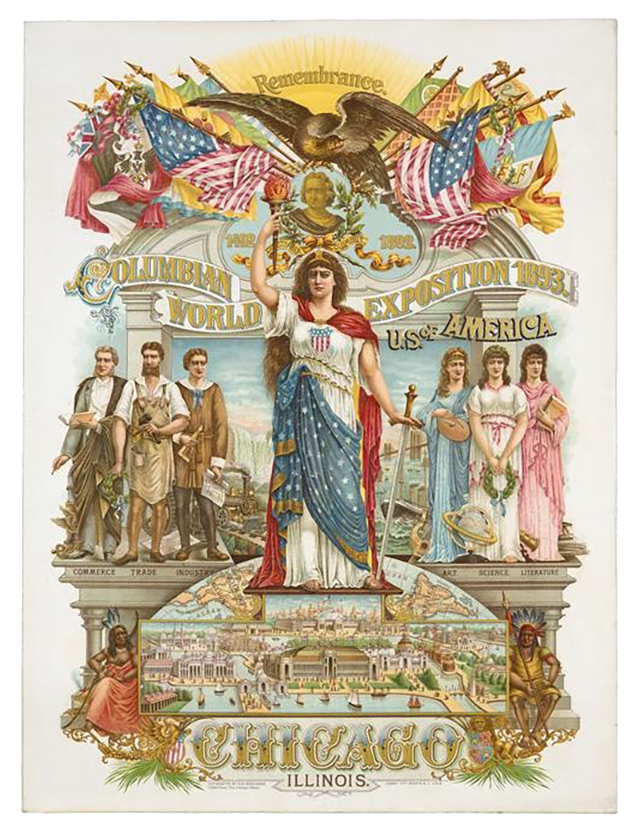
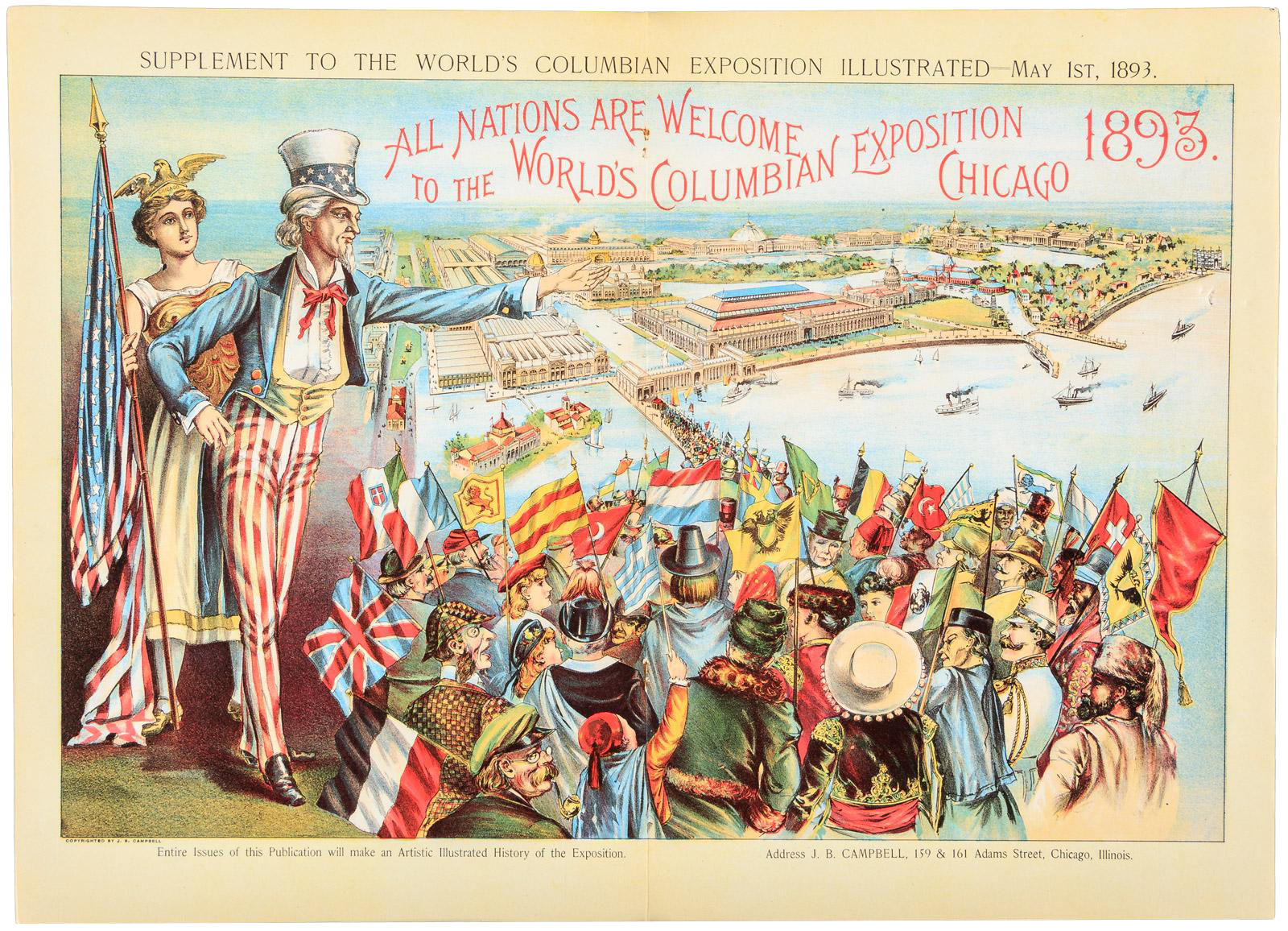
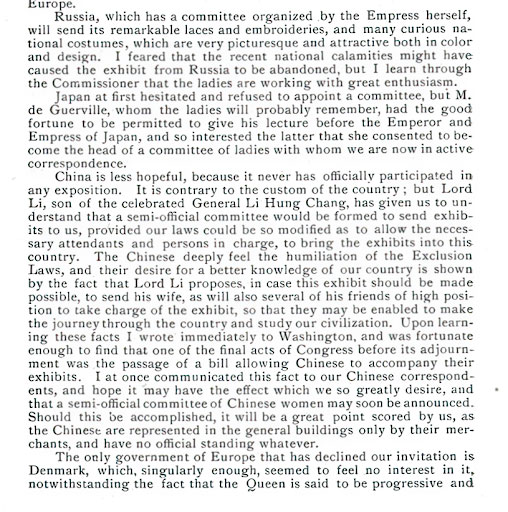
Full text of John Henry Barrows’ “Preliminary Address”
Believing that God is and that he has not left himself without witness; believing that the influence of Religion tends to advance the general welfare, and is the most vital force in the social order of every people, and convinced that of a truth God is no respecter of persons, but that in every nation he that feareth him and worketh righteousness is accepted of him, we affectionately invite the representatives of all faiths to aid us in presenting to the world at the Exposition of 1893,the religious harmonies and unities of humanity, and also in showing forth the moral and spiritual agencies which are at the root of human progress. It is proposed to consider the foundation of religious Faith, to review the triumphs of Religion in all ages, to set forth the present state of Religion among the nations and its influence over Literature, Art, Commerce, Government, and the Family Life, to indicate its power in promoting Temperance and Social Purity and its harmony with true Science, to show its dominance in the higher institutions of learning, to make prominent the value of the weekly rest-day on religious and other grounds, and to contribute to those forces which shall bring about the unity of the race in the worship of God and the service of man.
The invitation presented a challenge to religious leaders around the world. The Parliament offered a rare opportunity to speak on a global stage about their religious convictions, but could they accept Barrows’ inclusive orientation and his scarcely concealed assumption that his Christian tradition provided what Warren had called the “Perfect Religion”? Some, like the Archbishop of Canterbury, Edward White Benson (1829-1896), rejected the invitation outright, saying: “Christianity is the one true religion.”40 Others, like the members of the national organization of Buddhists in Japan, agonized over the ambiguities of the invitation. What might be gained and what might be lost by presenting one’s own cherished convictions in such a public setting?
Some Americans took their guidance from the attitudes of Christian missionaries. These attitudes were not always uniform, but if you read them carefully—for that matter, if you read carefully any Christian accounts of other religions—you find that they fall roughly into four main categories. Some advocated an exclusive position and argued that Christianity is true while the other religions are false. (This position could be made more complicated by asking what is meant by the word “religion” and what it means to be “true.” But as an opening gambit in a religious conversation this approach has a certain obvious simplicity.) Another approach is to be inclusive and argue that the other religion is somehow subsumed within your own religion. The inclusive position was often held by people who think that their own religious tradition supplements, completes, or carries the other religion to a higher level. This approach was common among Christians who thought that Christ was the fulfillment of other religious traditions, but it was also an attractive option for Hindu spokesmen like Swami Vivekananda who thought that the understanding of Brahman was a higher form of truth than the truth offered by the Christian devotion.
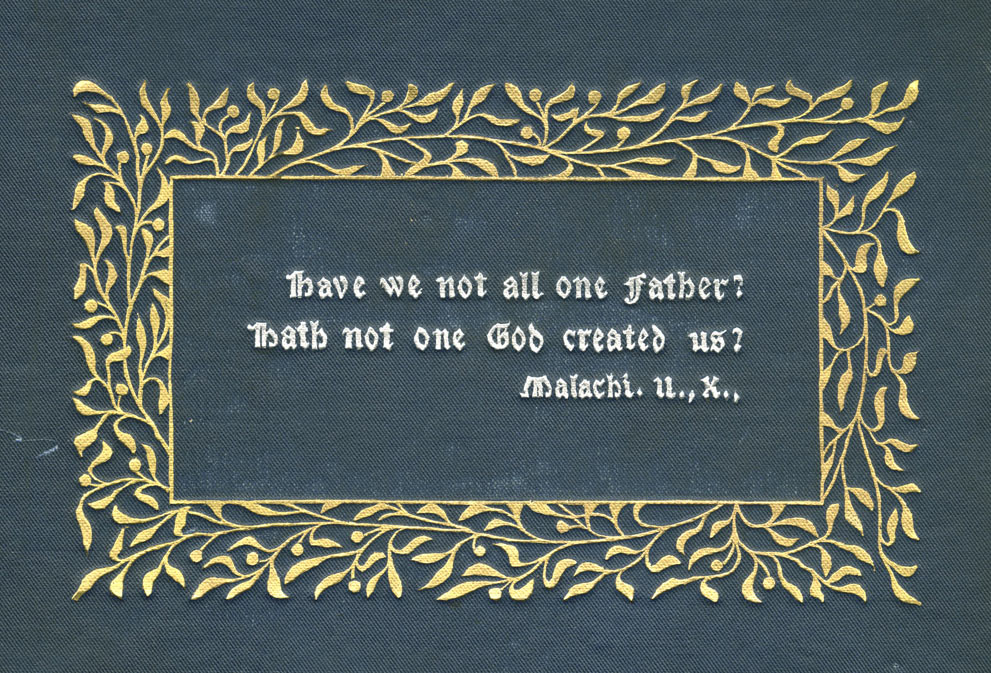
Motto on cover of book edited by John Henry Barrows, The World’s Parliament of Religions: An Illustrated and Popular Story of the World’s First Parliament of Religions, held in Chicago in connection with the Columbian Exposition of 1893.
Another possibility was to think of the two traditions as complementary opposites leading to a synthesis in which both traditions would be transformed by the encounter with the other. This idea was particularly attractive to observers who thought that “East” and “West” represented opposite cultural ideals whose encounter would produce a cultural or religious synthesis. Often the opposites were understood as the “material” West contrasted to the “spiritual” East. This contrast allowed the representatives of the East to accept the material and technological advantages of the West, while claiming that they had a higher truth that could elevate and complete the material civilization of the West. But the contrast did not always take this form. Okakura Kakuzo (1863–1913), the author of the well-known Book of Tea, held that the samurai culture of Japan represented an active, masculine ideal that could elevate and complete the feminine softness of Christianity.
J. W. Hanson, The World’s Congress of Religions: The addresses and papers delivered before the Parliament, August 25 to October 15, 1893. (Boston: Gately & O’Gorman, 1894). (Source: The Newberry Library B808_98)
![Book Cover of Hanson, J.W. 1894. The World's Congress of Religions-The addresses and papers delivered before the Parliament...Aug 25 to Oct 15, 1893. Boston. Gately & O'Gorman [book].](https://asiaworldsfairs.org/wp-content/uploads/2026/01/Hanson-JW-1894-The-Worlds-Congress-of-Religions.jpg)
Finally, there was a fourth position, in which the advocates of particular religions thought of their counterparts in other traditions not as opponents but as allies in a common struggle against the superficiality and materialism of modern culture. If we were to ask what Charles Bonney’s deepest motivation was in proposing the World Parliament of Religion, it might have been this. In the face of the unabashed celebration of technology and material success in the rest of the Columbian Exposition, Bonney wanted to assert that religion was the highest achievement of the human spirit. What better way to achieve this, Bonney thought, than to find willing allies from as many religious traditions as he could assemble in one place. Fortunately for Bonney and for many of the leaders who were present, his effort turned out to be a great success, even though it was not successful in quite the same way that Bonney himself imagined.
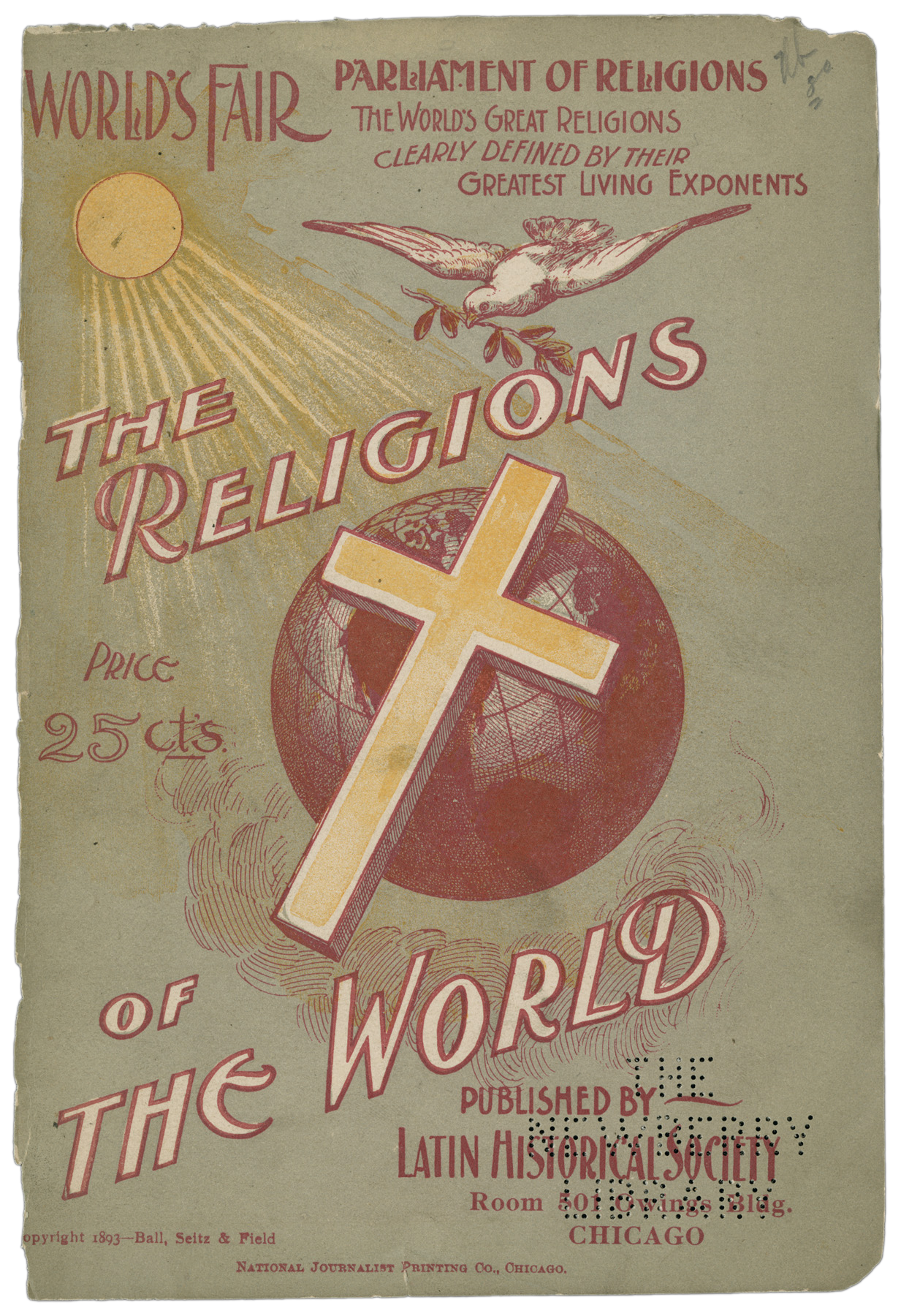
Cover from Dwight Baldwin, The Religions of the World (Chicago: Latin Historical Society, 1893) (Source: The Newberry Library)
I should add that there is a fifth position, the position known as pluralism, in which all religions are accepted as true and worthy of respect from their own perspective or in their own sphere. Some argue that the long-term significance of the Parliament was to encourage the acceptance of this perspective. Diana Eck, Professor of Comparative Religion and founder of the Pluralism Project at Harvard, would argue that the pluralistic perspective in American religion is rooted in the World’s Parliament of Religions.
Footnotes
- Kathleen M. Staggs, “’Defend the Nation and Love the Truth’: Inoue Enryō and the Revival of Meiji Buddhism,” Monumenta Nipponica 38 (3) [1983]: 271. ↩︎
- Judith Snodgrass, Presenting Japanese Buddhism to the West (Chapel Hill: University of North Carolina Press, 2003), p. 174. ↩︎
- Quoted in Judith Snodgrass, Presenting Japanese Buddhism to the West (Chapel Hill: University of North Carolina Press, 2003), p. 174. ↩︎
- John Henry Barrows, The World’s Parliament of Religions; An Illustrated and Popular Story of the World’s First Parliament of Religions, held in Chicago in Connection with the Columbian Exposition of 1893, Vol. 1, p. 64. ↩︎
- Pung’s work to improve the circumstances of Chinese laborers in the US built upon that of his former boss, Zhang Yinhuan 张荫桓 (1837-1900), and his predecessor in Washington, Cheng Tsao-ju (Zheng Zaoru 鄭藻如, 1824-1894). ↩︎
- Mary A. Giunta and J. Dane Hartgrove (eds.), Documents of the Emerging Nation: U.S. Foreign Relations, 1775-1789 (Wilmington, DE: Scholarly Resources Books, 1998), 237. ↩︎
- Marco Sioli, “Opening American Commerce with Canton: From the Empress of China to the Columbia Rediviva (1784-1793),” XVII-XVIII 77, (2020). ↩︎
- Amasa Delano, A Narrative of Voyages and Travels in the Northern and Southern Hemispheres, Comprising Three Voyages Round the World; Together with a Voyage of Survey and Discovery in the Pacific Ocean and Oriental Islands. (Boston: E.G. House, 1817), 242. ↩︎
- Amasa Delano, A Narrative of Voyages and Travels in the Northern and Southern Hemispheres, Comprising Three Voyages Round the World; Together with a Voyage of Survey and Discovery in the Pacific Ocean and Oriental Islands. (Boston: E.G. House, 1817), 243. ↩︎
- “The Panoplist.” Congregational Library & Archives. Accessed March 23, 2021. https://www.congregationallibrary.org/periodicals/panoplist. ↩︎
- Thomas A. Tweed and Stephen R. Prothero, Asian Religions in America: a documentary history (New York: Oxford University, 1999), 35. ↩︎
- Robert Morrison, “Mr. Morrison’s Letter,” Panoplist 3, (1811): 188. ↩︎
- William J. Gilmore. Reading Becomes a Necessity of Life: Material and Cultural Life in Rural New England, 1780-1835 (Knoxville: University of Tennessee Press, 1989), p. 65. ↩︎
- Hannah Adams, A Dictionary of All Religions (Boston, Cummings and Hiliard, 1817), p. 213. ↩︎
- Thomas A. Tweed, “An American Pioneer in the Study of Religion: Hannah Adams (1755-1831) and Her “Dictionary of All Religions,”” Journal of the American Academy of Religion 60 (3)(1992):440. ↩︎
- Edwin Ariyadasa, “Sir Edwin Arnold” in Light of Asia (Buddha Dharma Education Association Inc.,). Accessed on March 24, 2021: http://www.buddhanet.net/pdf_file/lightasia.pdf. ↩︎
- “Jairam Ramesh’s new book to uncover story of ‘The Light of Asia’ poem,” The Indian Express, December 16, 2020 https://indianexpress.com/article/books-and-literature/jairam-rameshs-new-book-to-uncover-story-of-the-light-of-asia-poem-7107359/. ↩︎
- Thomas A. Tweed and Stephen R. Prothero, Asian Religions in America: a documentary history (New York: Oxford University, 1999), p. 43. ↩︎
- Jim Egan. Oriental Shadows: The Presence of the East in Early American Literature (Columbus: The Ohio State University Press, 2011), 77-78. ↩︎
- Jim Egan, Oriental Shadows: The Presence of the East in Early American Literature (Columbus: The Ohio State University Press, 2011), 96-97. ↩︎
- Edgar A. Weir, “The Whiter lotus: Asian religions and reform movements in America, 1836-1933,” UNLV Theses, Dissertations, Professional Papers, and Capstones (2011): p. 77. ↩︎
- James Freeman Clarke. Ten Great Religions: An Essay in Comparative Theology (Boston and New York: Houghton, Mifflin and Company, 1888), p. 4. ↩︎
- Edgar A. Weir, “The Whiter Lotus: Asian Religions and Reform Movements in America, 1836-1933,” UNLV Theses, Dissertations, Professional Papers, and Capstones (2011): p. 78. ↩︎
- Lydia Maria Child, Aspirations of the World (Boston: Roberts Brothers, 1887), p. 41. ↩︎
- Samuel Johnson, Oriental Religions and Their Relation to Universal Religion (London: Trübner & Co., Ludgate Hill, 1879), p. 2. ↩︎
- “Timeline of Chinese Immigration to the United States” (The Bancroft Library: University of California, Berkeley), accessed March 29, 2021, https://bancroft.berkeley.edu/collections/chinese-immigration-to-the-united-states-1884-1944/timeline.html. ↩︎
- Thomas A. Tweed and Stephen R. Prothero, Asian Religions in America: a documentary history (New York: Oxford University, 1999), p. 63. ↩︎
- James Knowles, Memoir of Mrs. Ann H. Judson: Late Missionary to Burmah (Boston: Lincoln and Edmands, 1829). ↩︎
- Among the most prominent example is the 51-volume set Sacred Books of the East, edited by Friedrich Max Müller (1823-1900) and published by Oxford University Press between 1879 and 1910. Many of the most eminent scholars of the day provided the English translations and commentary, including James Legge, James Darmesteter, Samuel Beal, and many others. ↩︎
- On Fenollosa and his impact on the study of Asian art in the West, see Lawrence W. Chisolm, Fenollosa: the Far East and American Culture (New Haven: Yale University Press, 1963); Warren I. Cohen, East Asian Art and American Culture (New York: Columbia University Press, 1992); Steven Conn, “Where is the East? Asian objects in American museums, from Nathan Dunn to Charles Freer,” Winterthur Portfolio 35 (2-3), 2000, pp 157-173; Yoshiaki Shimizu, “Japan in American Museums—But Which Japan?” The Art Bulletin 83 (1) (March 2001), pp. 123-134. ↩︎
- Charles C. Bonney, “The World’s Parliament of Religions,” The Monist 5 (1895): 322. ↩︎
- Charles C. Bonney, “The World’s Parliament of Religions,” The Monist 5 (1895): 325. ↩︎
- John Henry Barrows, The World’s Parliament of Religions. 2 vols. (Chicago: The Parliament Publishing Company, 1893): vii. ↩︎
- Barrows’ massive two-volume compilation of the delegates’ speeches in The World’s Parliament of Religions; An Illustrated and Popular Story of the World’s First Parliament of Religions, held in Chicago in Connection with the Columbian Exposition of 1893, gives us our best account of the Parliament’s day-to-day events. ↩︎
- John Henry Barrows, The World’s Parliament of Religions. (Chicago: The Parliament Publishing Company, 1893), Vol. 1, p. 8. ↩︎
- John Henry Barrows, The World’s Parliament of Religions. (Chicago: The Parliament Publishing Company, 1893), Vol. 1, p.9. William Fairfield Warren, in his Baccalaureate Address to assembled students at Boston University in 1886, opened his remarks using the literary device of a dream to describe how he and the American Minister to Japan stumbled onto an enormous crowd in Tokyo, gathered for “The World’s Convention for the Definition and Promulgation of a Perfect and Universal Religion,” with “nearly every religion and sect I had heard of—except the Christian—named and provided for.” His subsequently published remarks, among the most popular and influential of his career, provide the vehicle through which he lays out his religious philosophy. See William Fairfield Warren, The Quest of the Perfect Religion (Boston: Rand Avery Company, 1887). ↩︎
- John Henry Barrows, The World’s Parliament of Religions. (Chicago: The Parliament Publishing Company, 1893), Vol. 1, p. 9. ↩︎
- John Henry Barrows, The World’s Parliament of Religions. (Chicago: The Parliament Publishing Company, 1893), Vol. 1, p. 9. ↩︎
- John Henry Barrows, The World’s Parliament of Religions. (Chicago: The Parliament Publishing Company, 1893), Vol. 1, p. 10. ↩︎
- Benson’s refusal to attend as representative of the Church of England not only reflected his objection to the implied equivalency of Christian and non-Christian faiths, but he also expressed his resentment to the prominent position of Roman Catholics at the Parliament (see James F. Cleary, “Catholic Participation in the World’s Parliament of Religions, Chicago, 1893,” The Catholic Historical Review 55 (4) (1970): 593). ↩︎