Asian Voices at the World Parliament of Religions
Room No. 1: Before the Parliament – Hindu Modernity
RAM MOHAN ROY AND
THE BRAHMO SAMAJ
When Swami Vivekananda and the other representatives of the Hindu tradition stepped onto the stage at the World’s Parliament, they brought with them a confident vision of modern Hinduism that had been forged through decades of thoughtful encounters between Indian religious leaders and those who were part of the British colonial presence in India. One of the key figures in the history of modern, reformed Hinduism was Ram Mohan Roy (1772-1833). Roy was born as a brahmin in Bengal, which was then the center of the British East India Company, the governing authority in the early years of British rule.
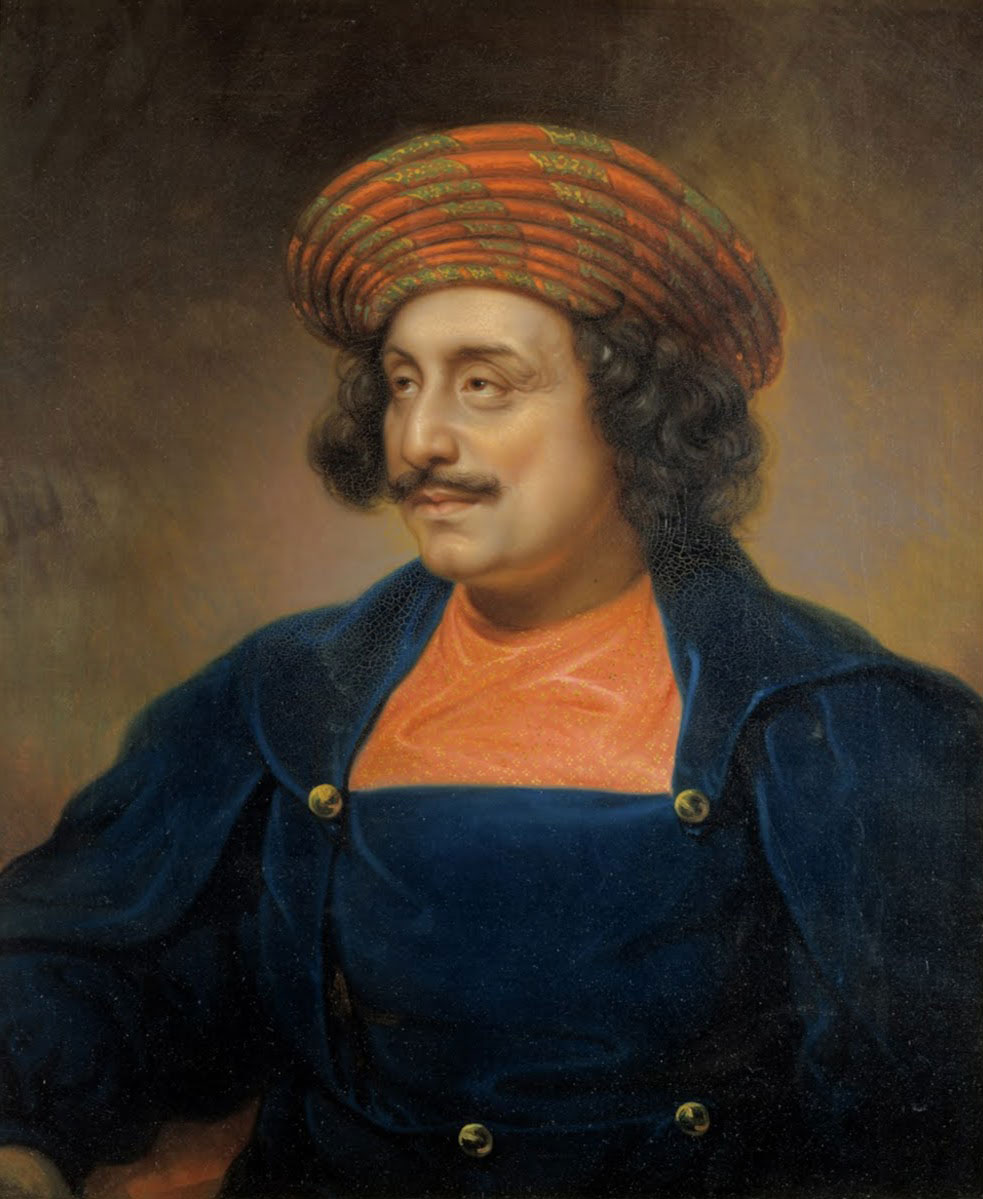
Portrait of Raja Ram Mohan Roy, painted in London in 1833 by Rembrandt Peale (American, 1778-1860). Roy wears a red and gold turban common to early 19th-century Bengali Hindus. (Source: American Decorative Arts, Peabody Essex Museum, No. 137982)
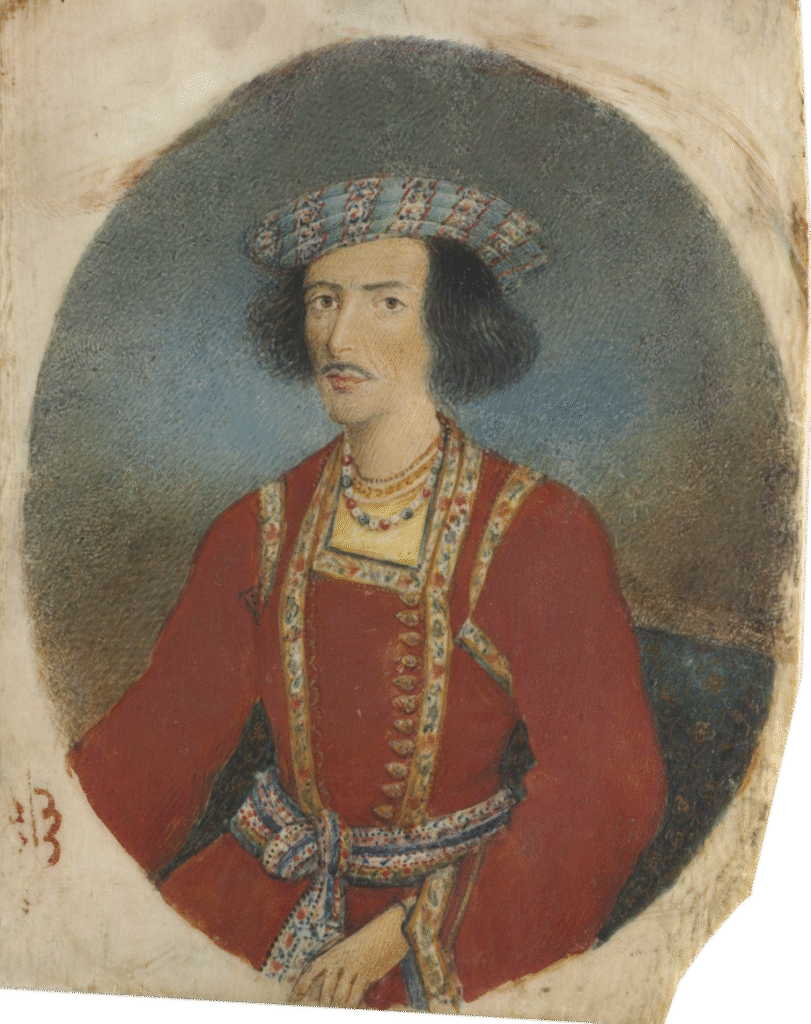
PORTRAIT OF RAM MOHAN ROY (1772–1833) Watercolour on Ivory, Delhi c. 1820. (Source: Victoria and Albert Museum, Acc. No. IM. 256-1921, Given by Sir Robert Nathan, K.C.S.I., C.I.E.)
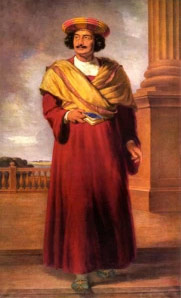
He received a traditional education in Sanskrit and Persian (the official language of the Mughal court). In conversation with the modern, reform-minded members of the British Unitarian clergy in Calcutta, he developed an interpretation of Hinduism that stressed the unity of God, based on the Vedanta philosophy of the Upanishads, the reformation of Hindu society (he disapproved particularly of the Hindu practice of sati—the burning of widows on their husbands’ funeral pyres), and the integration of Western culture with the best features of Hinduism. He gave institutional expression to his reform movement in the Brahmo Samaj, a society that was founded to carry on his work in Bengal. Roy died of a fever in Bristol, England in 1833 while visiting leading members of the Unitarian church.
The Brahmo Samaj fractured after the death of Ram Mohan Roy, but it was a major influence in the cultural and religious ferment now known as the “Bengali Renaissance.” One of the most striking and original members of the Brahmo Samaj was Keshub Chandra Sen (1838-1834). Originally he carried on Ram Mohan Roy’s teaching about the primacy of Hinduism, but he eventually split off from the Brahmo Samaj and developed his own syncretic vision of the union of Hinduism and Christianity. Sen sought to establish nothing less than a universal religion, called the “New Dispensation,” beyond the particularity of individual religious traditions. As he once explained it, “Our position is not that truths are to be found in all religions; but that all the established religions of the world are true. . . The glorious mission of the New Dispensation is to harmonise religions and revelations, to establish the truth of every particular dispensation, and upon the basis of these particulars to establish the largest and broadest induction of a general and glorious proposition.”1 These were heady ideas in their time, and they were a source of great controversy in India, but they made possible a freedom of thought and openness to thinking on a global scale that inspired B. B. Nagarkar, P. C. Majumdar and other Hindu representatives at the World’s Parliament. As Richard Hughes Seager has noted, “Sen’s ecstatic theology. . . was the ultimate driving force behind the Parliamentary quest for unity from the side of the East.”2 They were well-versed in liberal religious thought and they were confident that their own traditions could compete forcefully in an encounter with the religions of the West. One of these confident and far-sighted spokesmen for the Hindu tradition came to be the sensation of the Parliament.
SWAMI VIVEKANANDA
The boy who came to be known as Swami Vivekananda was born as Narendranath Datta in Calcutta on January 12, 1863 in a wealthy and aristocratic kshatriya or princely family. His relatives remembered him as a precocious but tempestuous child, who showed an early interest in meditation. He also had a restless and engaging intellect. In college, he came under the influence of the Brahmo Samaj, the Hindu reform movement that criticized many of the tenets of orthodox Hinduism and taught a doctrine of a single, formless God. Unlike many of his contemporaries in this movement, the young Naren wanted not only to study about God; he wanted to have a direct experience of God’s presence.
His search for an experience of the divine led him to a Hindu saint named Sri Ramakrishna who named him Vivekananda and initiated him into the life of a sannyasi or wandering Hindu monk. He also gave him a new vision of the role of a monk in Hindu life; it was not just to live in isolation, but to alleviate the suffering of the masses. This new vision became the basis of a new kind of monastic organization, the Ramakrishna Mission, named in memory of Vivekananda’s master.
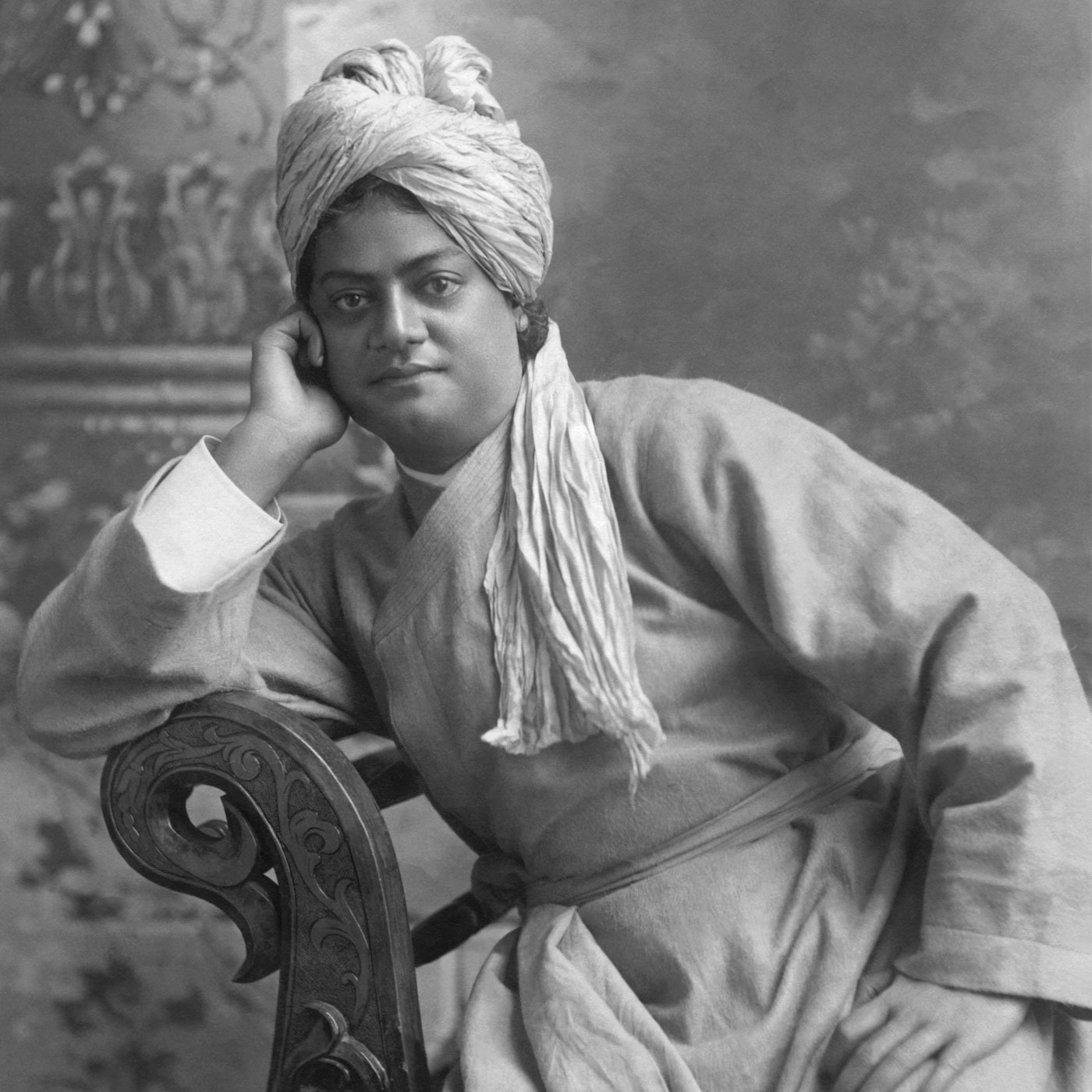
Swami Vivekananda first heard of the Parliament of Religions in the early part of 1892. His friends and followers urged him to attend to represent the Hindu tradition. In the spring of 1893, he set sail from Bombay to America.
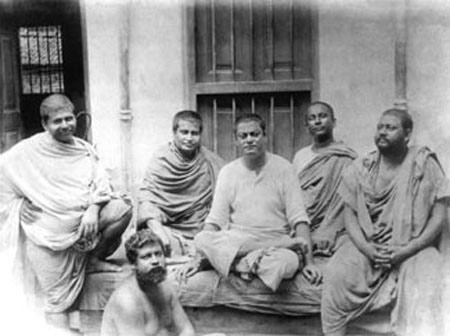
Some Monastic disciples of Sri Ramakrishna, including (rear) Trigunatitananda, Shivananda, Vivekananda, Turiyananda, and Brahmananda, and (front) Sadananda. Photo taken on June 20, 1899 at Belur Math, India, (Source: Ramakrishna Math & Ramakrishna Mission (HQ) in Belur Math, West Bengal, India)
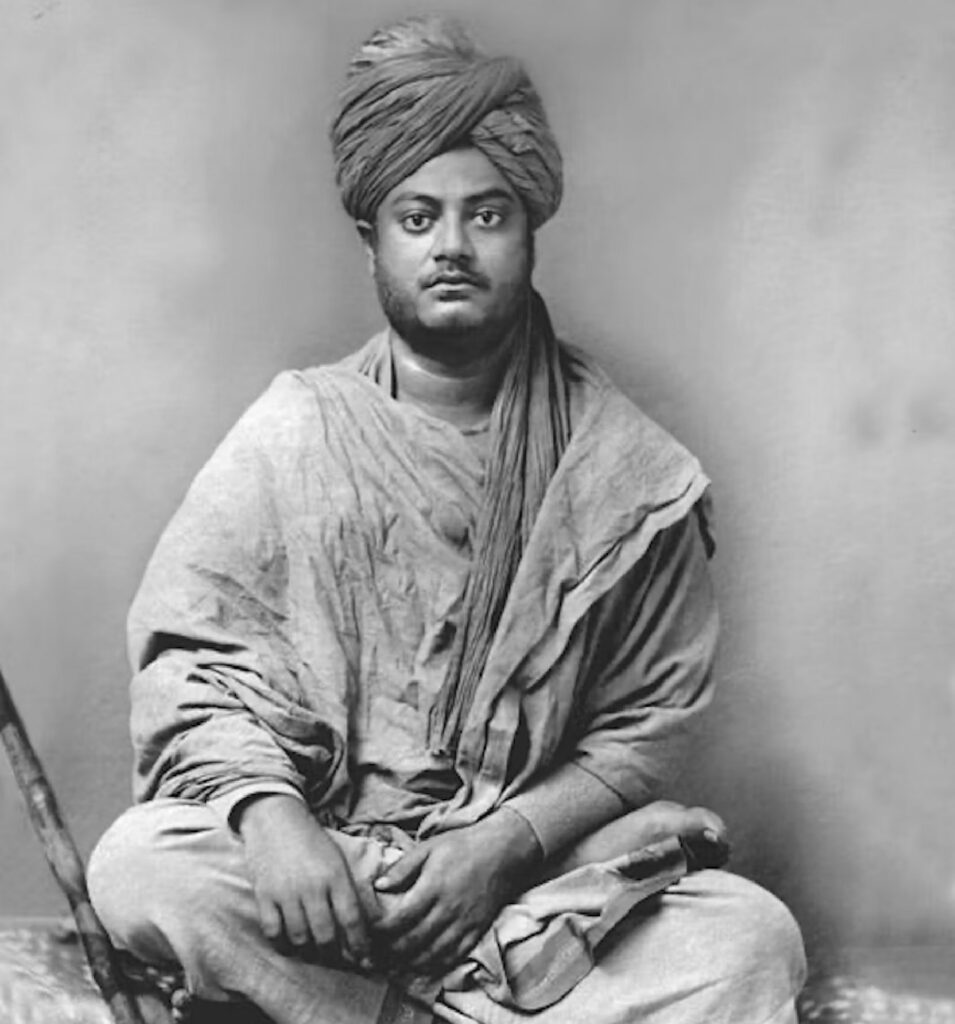
Photo of Swami Vivekananda at Jaipur between 1885 and 1895. . (Source: Collection of the Ramakrishna Mission Delhi)
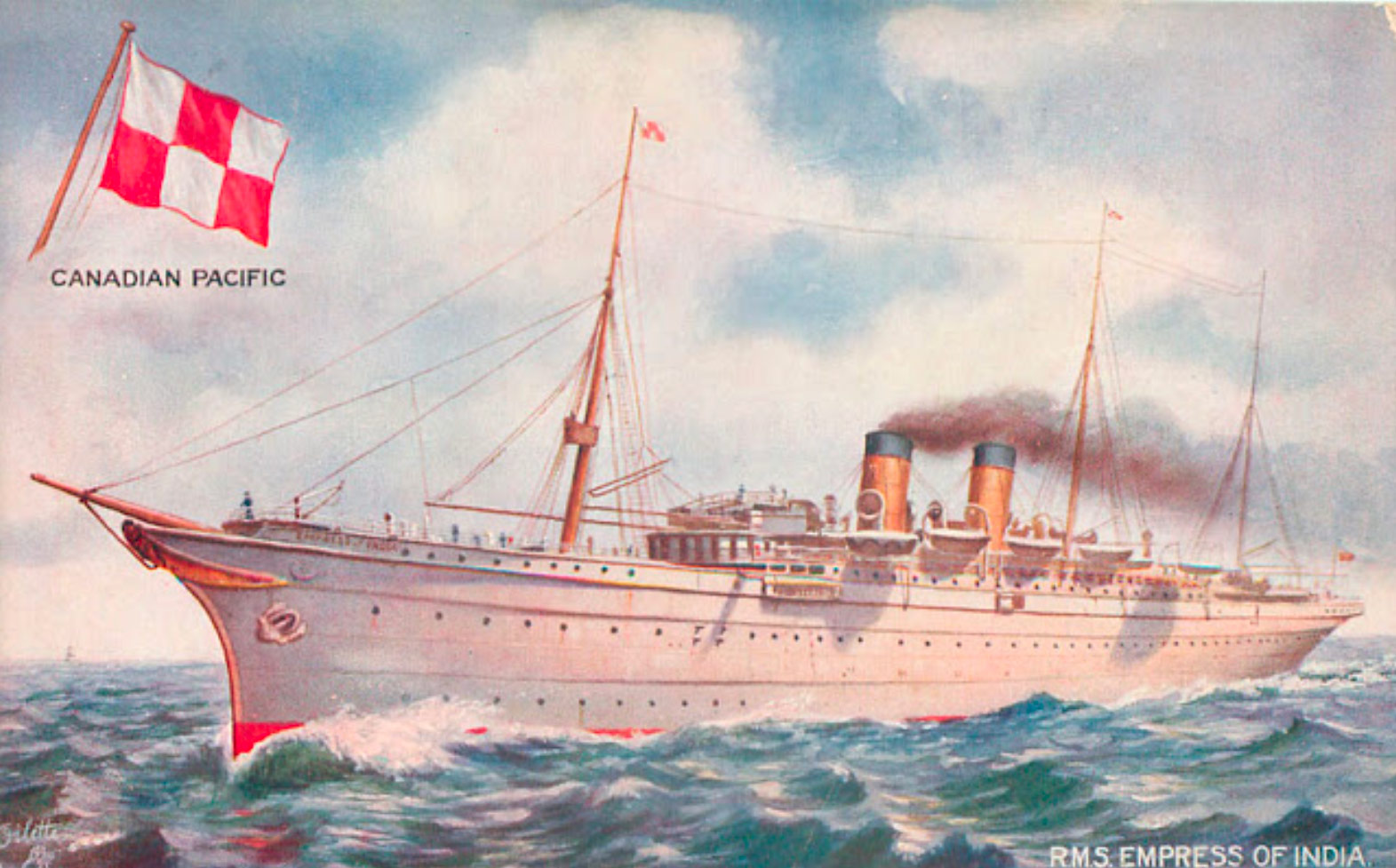
Swami Vivekananda arrived in Vancouver on July 25, 1893 aboard the RMS Empress of India and made his way by train to Chicago. Upon arrival there, he immediately faced two difficulties: First, he had no invitation to the Parliament, and, second, he did not have the money to stay in Chicago until the Parliament opened. Fortunately he had met a woman on the train from Vancouver who suggested that he go to Boston, where he might find more sympathetic support. Through a friend of a friend, he met John Henry Wright, Professor of Greek at Harvard, who invited him to his summer home in Annisquam, one of the seaside resort communities north of Boston.
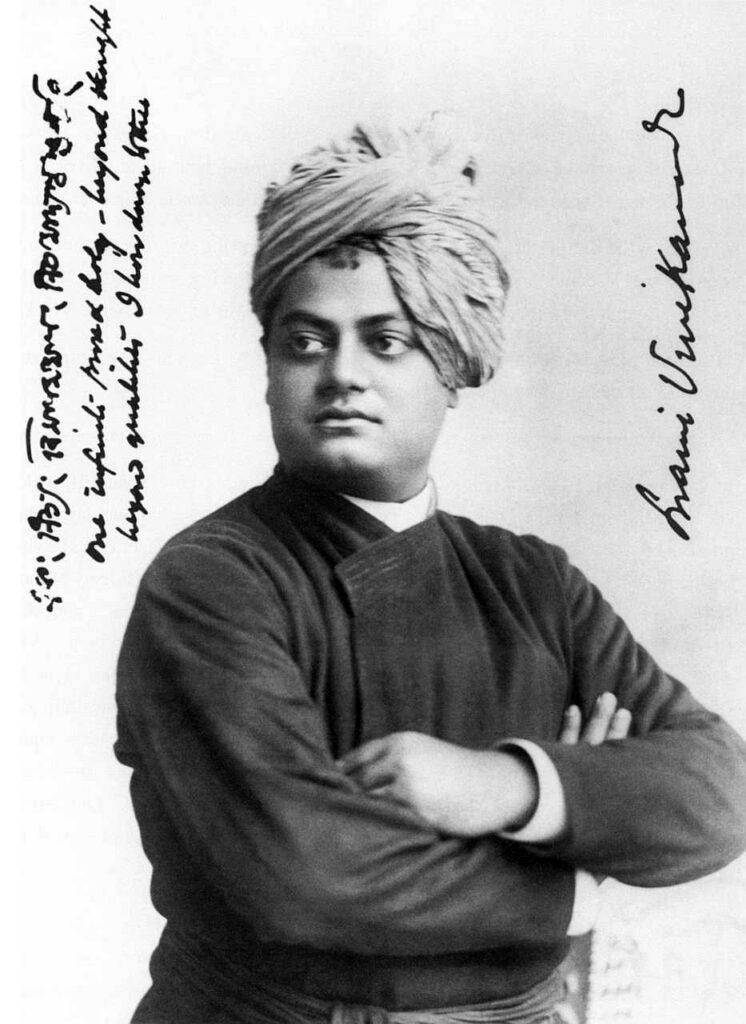
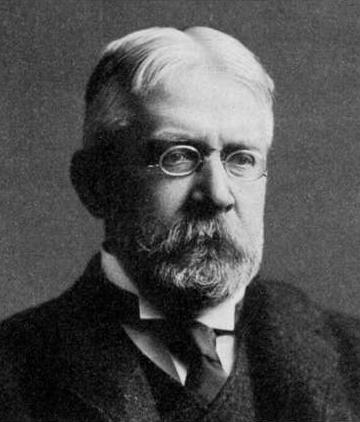
It was after long evenings of learned conversation in Annisquam that Professor Wright uttered the words that have been passed down by generations of Swami Vivekananda’s disciples: “To ask you, Swami, for your credentials is like asking the sun about its right to shine.”
Professor Wright helped Vivekananda get the credentials and support that he needed, and the young Swami was off to Chicago.
Did Swami Vivekananda Sleep in a Boxcar or a Box?
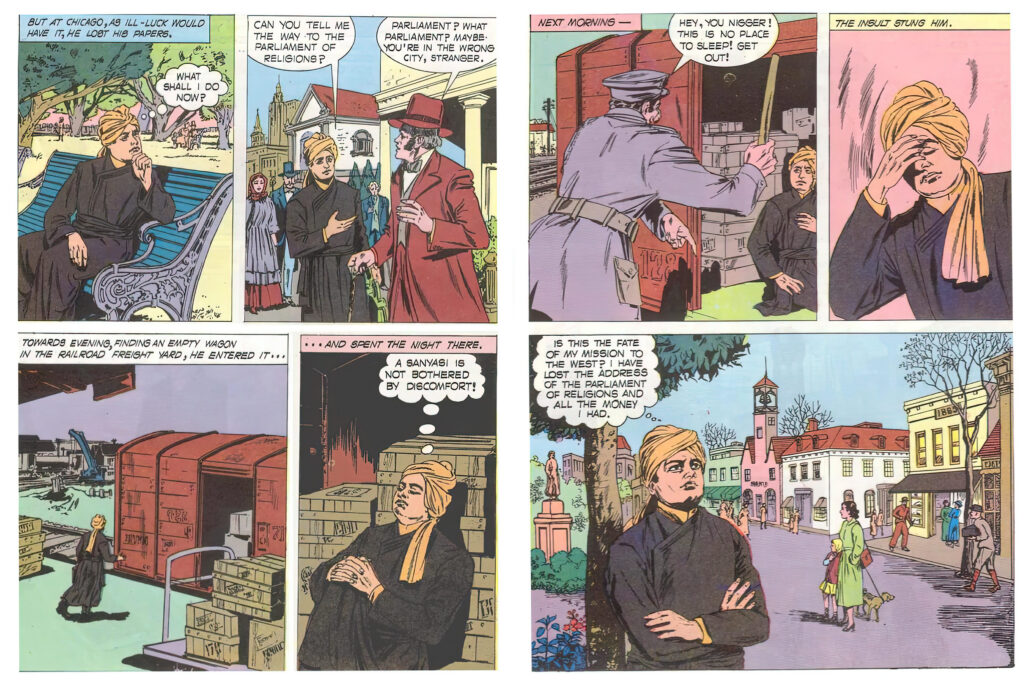
According to several biographers, Swami Vivekananda arrived in Chicago with his long-sought invitation, but he had lost the address of the Parliament office. As a wandering monk, he did what was most natural for him: he looked for a place to sleep. It is said of a sannyasin Hindu mendicant, that “the sky is thy roof, the grass is thy bed; and food, what chance may bring.” The equivalent of sky and grass in a Chicago rail yard may have been an empty boxcar, a traditional shelter for penniless wanderers. Vivekananda reportedly spent the night in a box or box car in the Chicago train station.
After waking and leaving the station the next morning Sept. 10, 1893, he was seen sitting on the curb, weary and exhausted, on North Dearborn Avenue by Ellen Hale, wife of businessman George W. Hale. Mrs. Hale reportedly asked this man wearing a yellow turban, “Sir, are you a delegate to the Parliament of Religions?” Inviting him into her home, she then took him to meet with officials at the Parliament as that congress got underway. These chance interactions between the Swami and the Hale family would lead to a close relationship between them for several years, providing him with a place to stay during his later speaking tours, and even space for the establishment of the Vivekananda Vedanta Society.
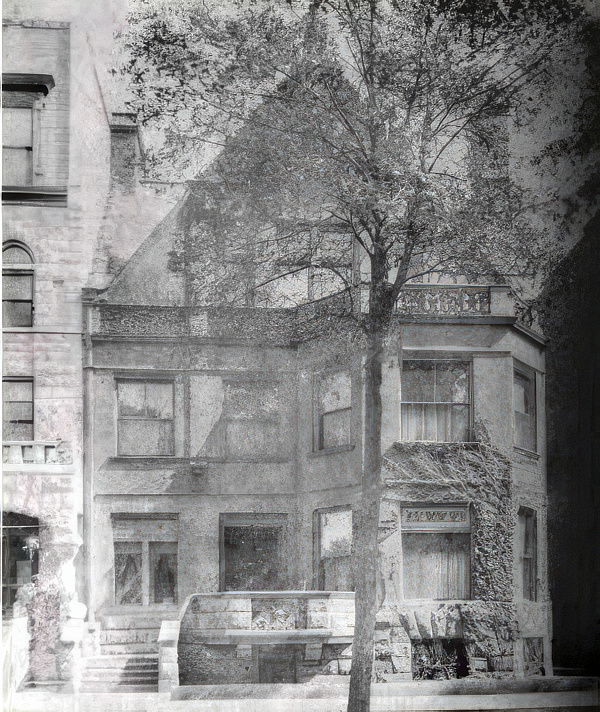
Hale residence, 541 Dearborn Avenue, Chicago
(no longer extant, now numbered 1415 North Dearborn St.) (Source: Vedanta Society of St. Louis)
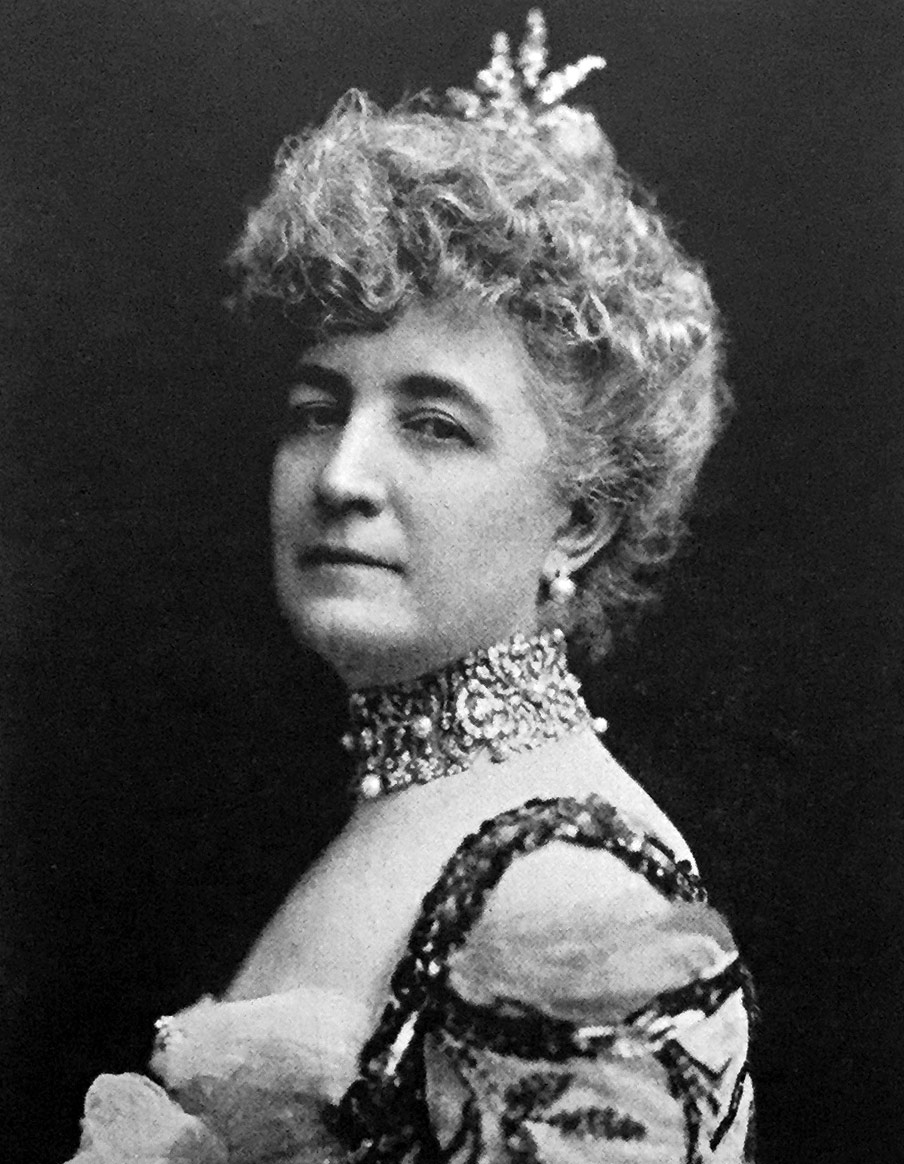
Portrait of Mrs Potter (Bertha Honore) Palmer (1849-1918), taken in 1900. (Source: Chicago History Museum, ICHi-030641)
Mrs. Hale was one of many women who played a crucial role in the success of Swami Vivekananda at the Parliament and in the months that followed.
Vivekanada’s hosts during the sixteen days of the Parliament, Mr. and Mrs. Lyon, showered him with hospitality. The Swami felt that Mrs. Lyon reminded him of his own mother. Her generosity extended beyond just her obligations as a host. She led him on several excursions around Chicago, including a trip to the Women’s Hospital, of which Mrs. Lyons was the president, and to an orchestral performance given by the Chicago Symphony Orchestra.
The official hostess of the Columbian Exposition and outspoken feminist, Bertha Honore Palmer, called on Vivekananda’s religious expertise several times during the Parliament. The Swami spoke at a September 22 event hosted by Mrs. Palmer on “Women in Oriental Religion.” Mrs. Palmer also requested that he speak at a September 14 reception hosted by herself and her husband, where he delivered an address on the “Condition of Women in India.”
ANAGARIKA DHARMAPALA
The encounter with religious reform movements of the West took a very different turn in Ceylon (now Sri Lanka). The island was absorbed by the British in the second decade of the nineteenth century and suffered the same cultural and religious stresses that affected India in the early part of the nineteenth century. Buddhism was replaced as the established religion by the Christianity of the British colonial authorities. At first the Buddhist reaction was peaceful and accommodating. In 1850, the foremost Anglican bishop in Ceylon said: “Until Christianity assumed a decidedly opposing position, even the priests [monks] looked upon that religion with respect, and upon its founder with reverence.”3 But the antagonistic posture of the Christian missionaries soon elicited a more confrontational response. Buddhists began to organize themselves along the lines of the missionaries themselves, with their own publications to counter the publications of the Christian missionaries, and with public debates.
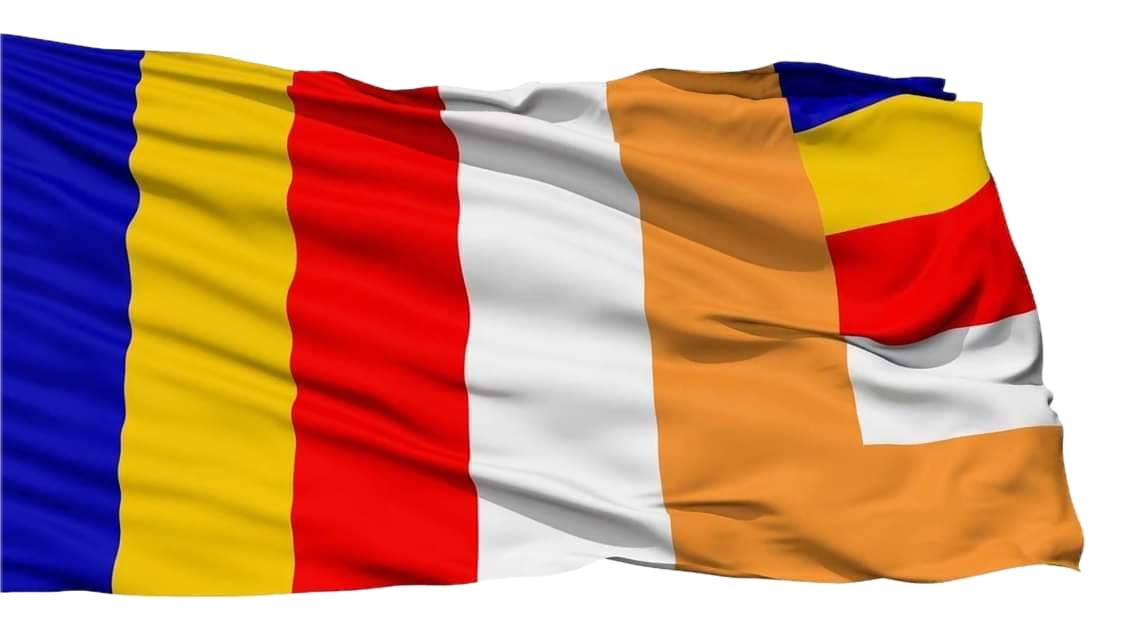
Into this controversial setting stepped an unlikely pair of religious reformers. In May 1880, Colonel Henry Steel Olcott and Madame Helena Petrovna Blavatsky arrived in Ceylon. A week after their arrival, they knelt in front of a statue of the Buddha, repeated the five precepts, and declared themselves Buddhists. Olcott and Blavatsky were representatives of the Theosophical Society, founded in New York in 1877 to pursue a form of ancient wisdom that Blavatsky considered “the synthesis of science, religion, and philosophy.” Olcott immediately founded a local branch of the Theosophical Society and assumed the role of “Western champion of Buddhism against the Christian missions.”4
Olcott’s Protestant Buddhism
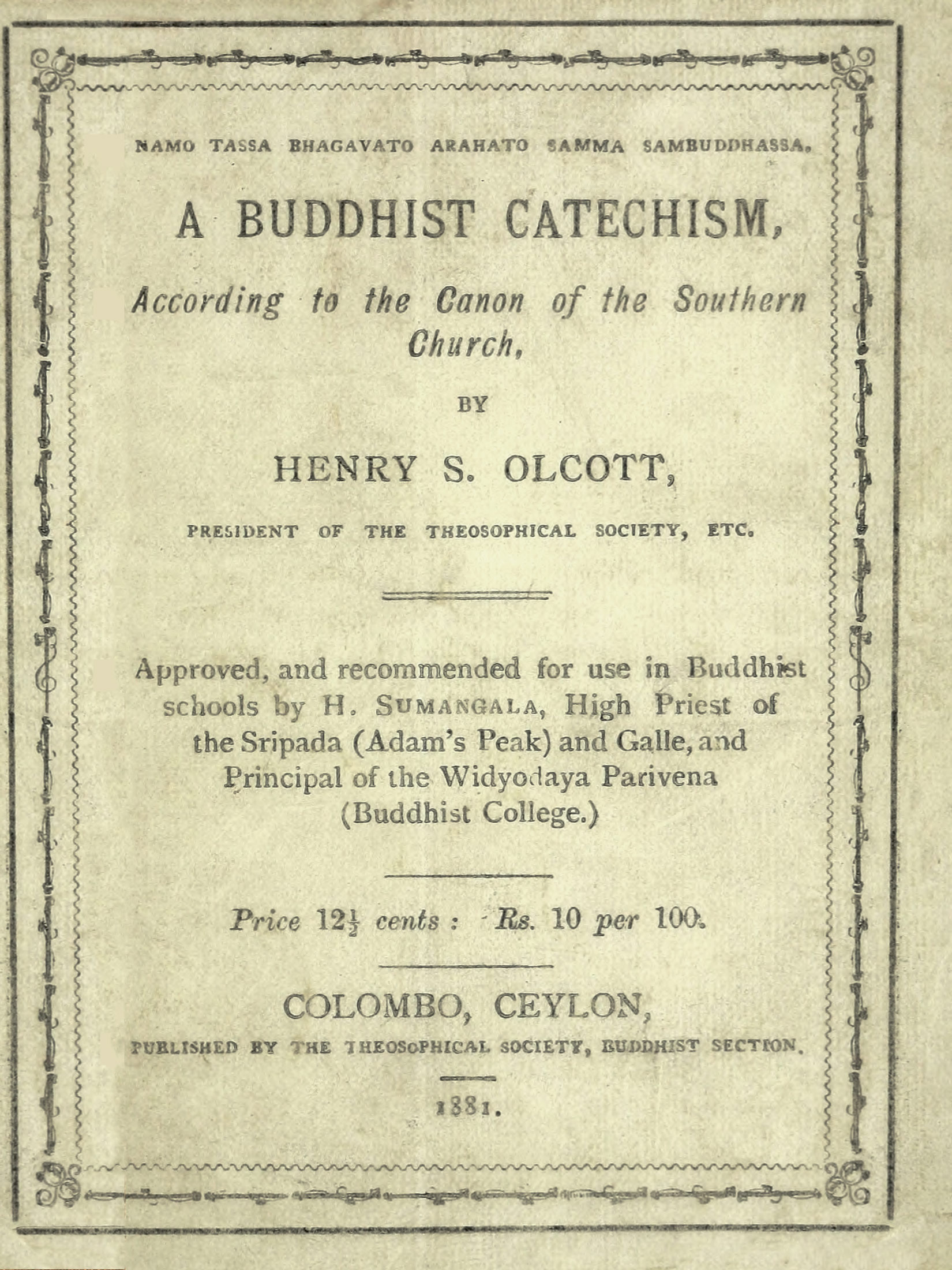
A key part of Olcott’s defense of Buddhism was the publication of a Buddhist Catechism in 1881, laying out what he understood to be the essential teachings of the Buddha. Not surprisingly, it was a Buddhism that bore a close resemblance to the rational, liberal religion that had attracted Ram Mohan Roy and his Unitarian associates in Calcutta and England. It was Buddhism stripped of the ritual and ceremonies of popular Buddhism. It was so austere that some thought it was no longer appropriate to call it “religion.”
Q: What striking contrasts are there between Buddhism and what may properly be called “religions”?
A: Among others, these: It teaches the highest good without a creating God; a continuity of line without adhering to the superstitious and selfish doctrine of an eternal, metaphysical soul-substance that goes out of the body; a happiness without an objective heaven; a method of salvation without a vicarious Saviour; redemption by oneself as the Redeemer, and without rites, prayers, penances, priests, or intercessory saints; and a summum bonum, that is, Nirvana, attainable in this life and in this world by leading a pure, unselfish life of wisdom and compassion for all beings.5
In the Buddhist Catechism, Olcott gave birth to a form of Buddhism that has immense influence throughout the Buddhist world. Some call it “Protestant Buddhism” in homage to Olcott’s Protestant roots. To others it is simply the most persuasive (and pervasive) form of Buddhist modernism.
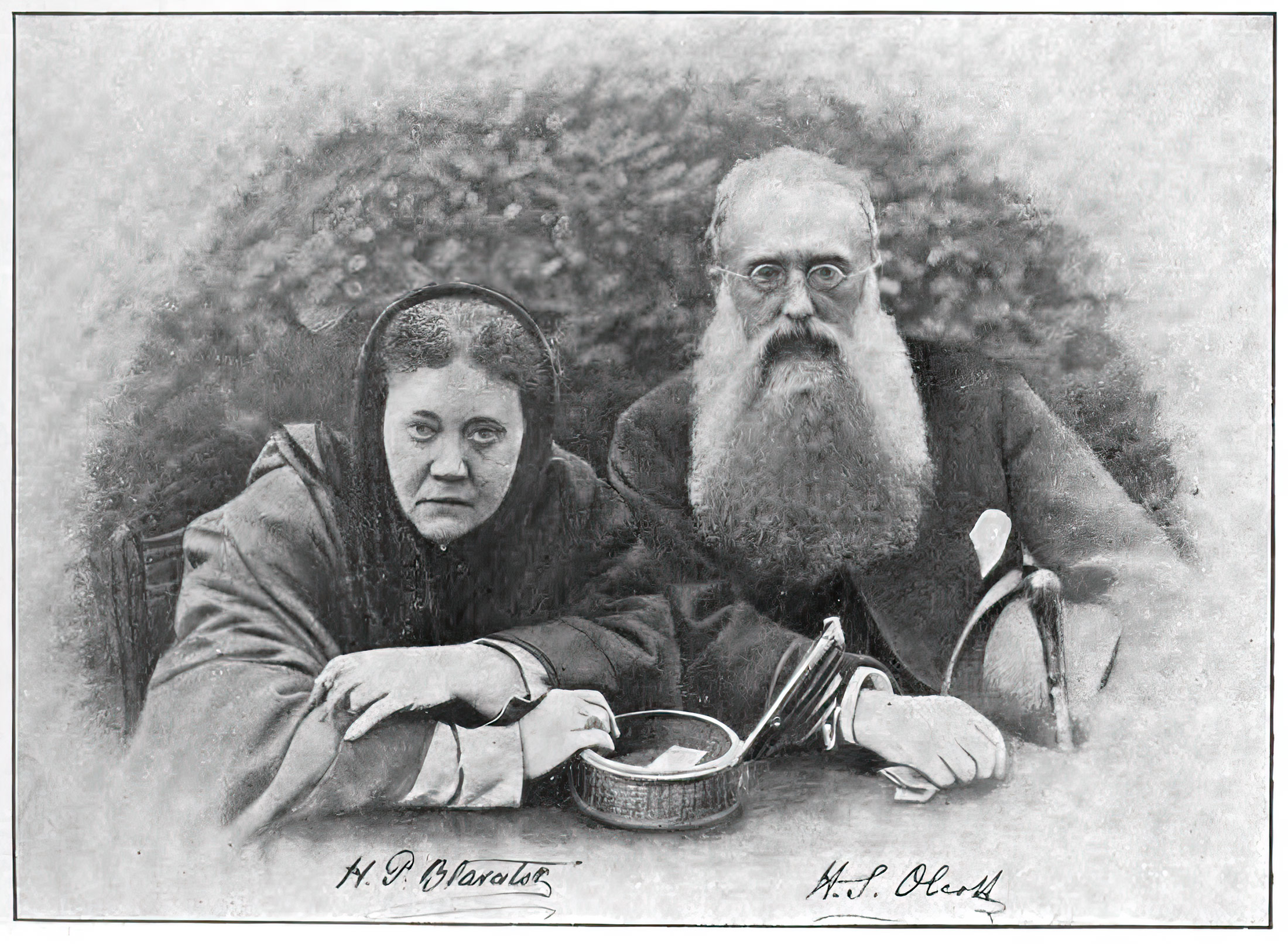
Photograph of Henry Steel Olcott and Helena Petrovna Blavatsky, founders of the Theosophical Society. From Henry Steel Olcott, Old Diary Leaves (London: The Theosophical Publishing Society), vol. 3, frontispiece.
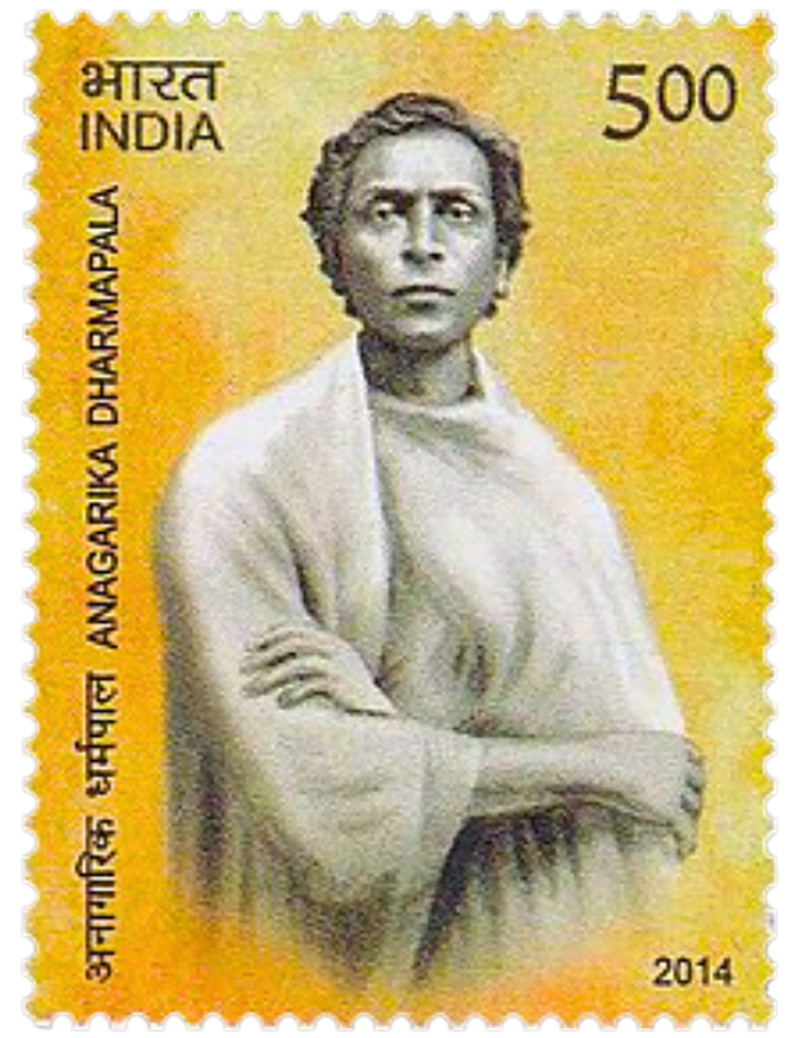
By itself, Olcott’s interpretation of Buddhism might not have had such a broad effect, if it he had not been for the influence of his most brilliant disciple, Anagarika Dharmapala (1864-1933). Dharmapala was born in a wealthy Buddhist family Ceylon, known by the name Don David Hevavitarana. He was educated at Christian missionary schools and in 1884 became interested in the teaching of Olcott and Blavatsky. He joined their Theosophical Society and traveled to the headquarters of the Theosophical Society in Adyar, Madras. Returning to Ceylon, he became manager of the Buddhist Theosophical Society and changed his name to Anagarika Dharmapala (the ascetic or homeless one who is the protector of Buddhist teachings).
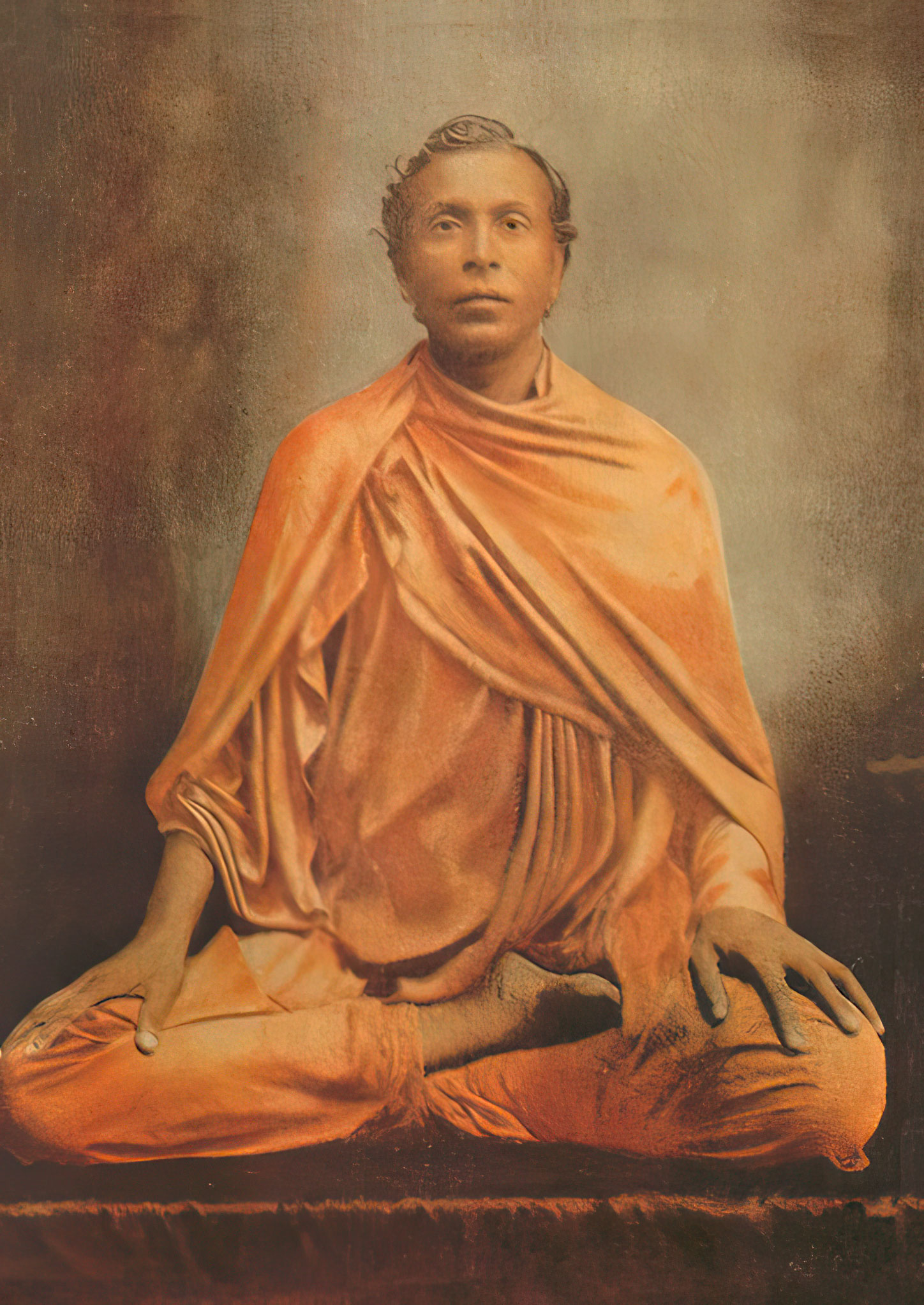
Hand-colored photograph of Srimath Anagarika Dharmapala, c. 1900. (Source: Maha Bodhi Society, via Wikimedia)
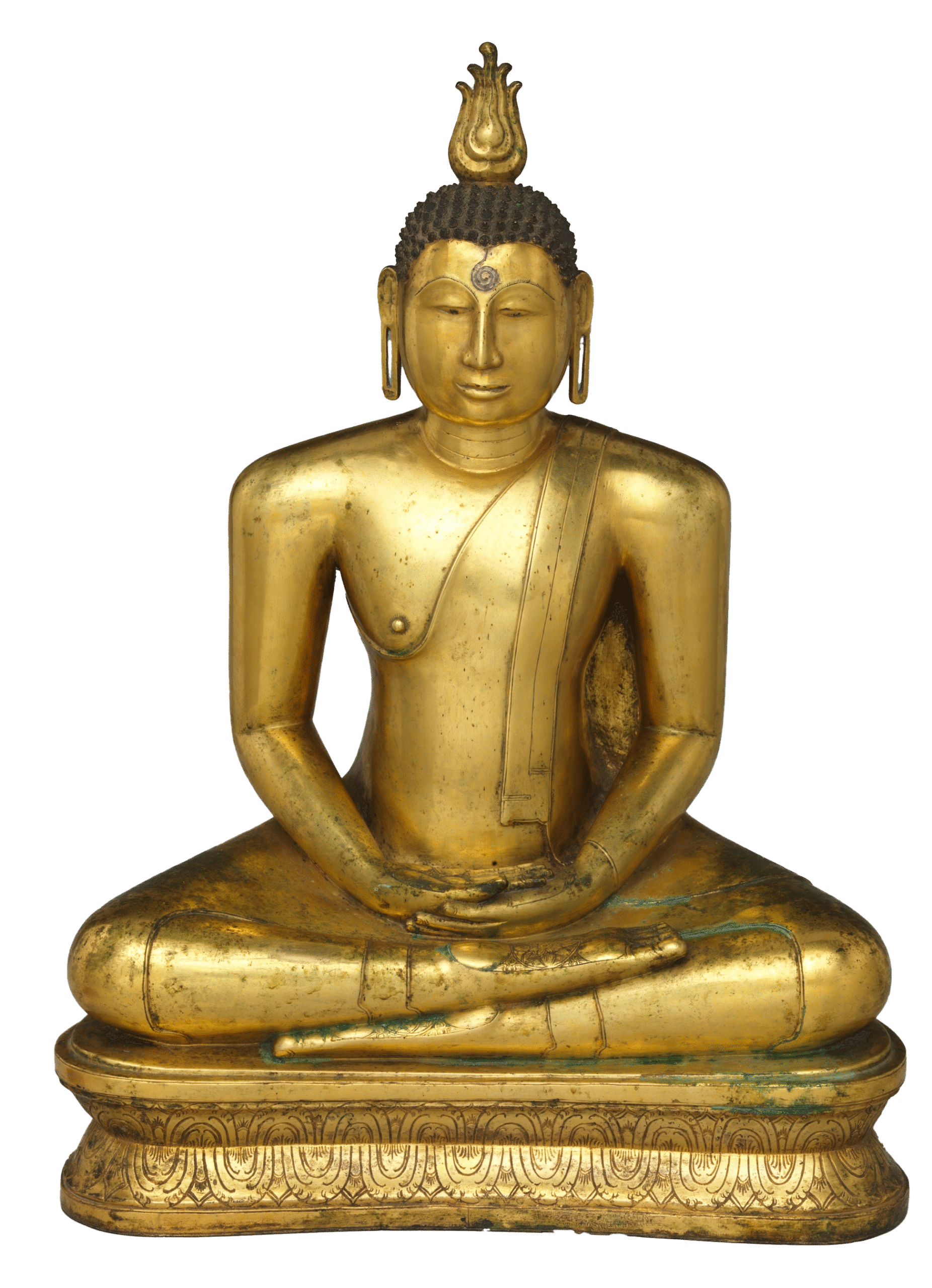
Gilded copper alloy statue of Buddha seated in meditation. Divided Kingdoms period, 16th century, western Sri Lanka. (Source: Metropolitan Museum of Art. Purchase, Louis V. Bell, Harris Brisbane Dick, Fletcher, and Rogers Funds and Joseph Pulitzer Bequest; The Miriam and Ira D. Wallach Foundation Fund; Florence and Herbert Irving, Cynthia Hazen Polsky and Anne H. Bass Gifts, 2010)
His new name and his customary white clothing signaled that he had given up family ties but had not assumed the formal status and identity of a Buddhist monk. Like Mahatma Gandhi in a later era, he was an example of what Max Weber called “inner-worldly asceticism,” an ascetic who was still involved in the affairs of this world. He traveled widely through the Buddhist countries of Asia, advocating his view of a rational, modern Buddhism. In 1891, he founded the international Maha Bodhi Society to restore the Buddhist temple on the site of the Buddha’s awakening in India. It was as the leader of this society, then based in Calcutta, that Dharmapala was invited to represent the Buddhists of Ceylon in the World’s Parliament of Religions in 1893.
Anagarika Dharmapala at the Parliament, Chicago 1893. (Source: John Henry Barrows, The World’s Parliament of Religions; An Illustrated and Popular Story of the World’s First Parliament of Religions, held in Chicago in connection with the Columbian exposition of 1893 [Chicago: The Parliament Publishing Co., 1893),vol. 2, p. 861])
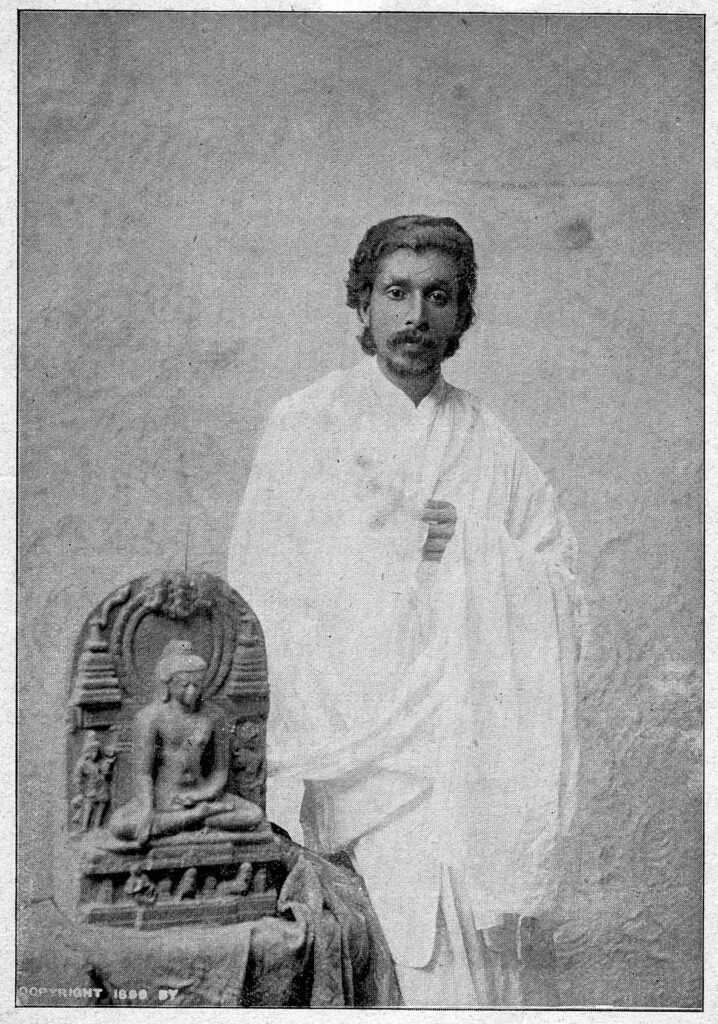
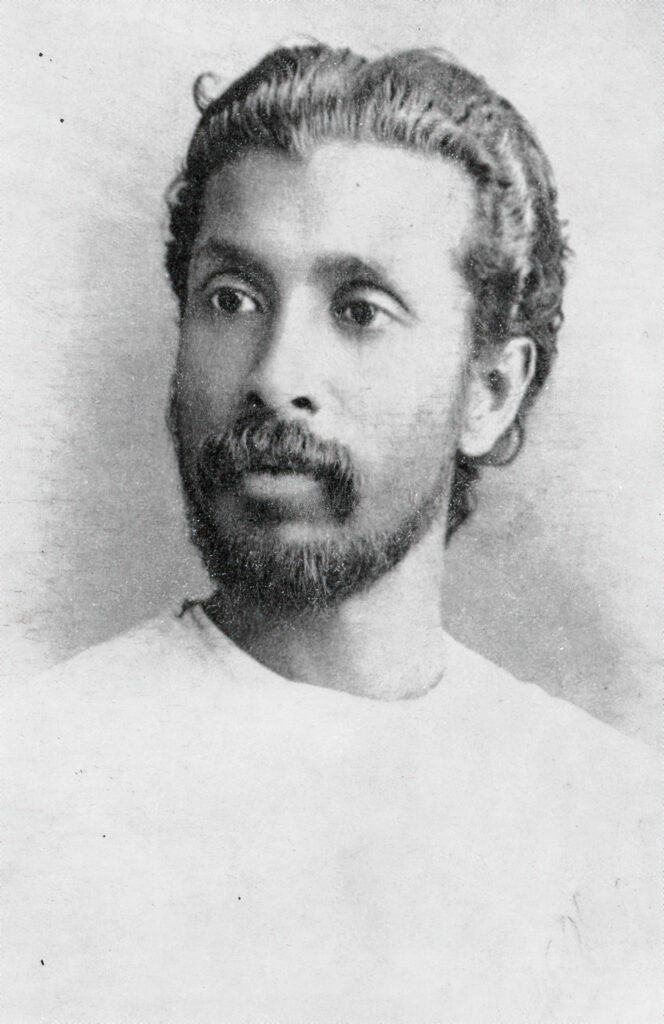
Portrait of Anagarika Dharmapala, from Blavatsky, Collected Writings Volume II
Footnotes
- John Nicol Farquhar, Modern Religious Movements in India (New York: Macmillan, 1915), 57-58. ↩︎
- Richard Hughes Seager, The World’s Parliament of Religions: The East-West Encounter, 1893 (Bloomington: Indiana University Press, 1995), p. 113. ↩︎
- Quoted by Gananath Obeyesekere in “Buddhism and Conscience: An Exploratory Essay,” Daedalus 120 (3) (Summer 1991), p. 220. ↩︎
- Obeyesekere, 221. ↩︎
- Obeyesekere, 224-225. ↩︎